Teaching English When Attention Is the Most Expensive Resource Online
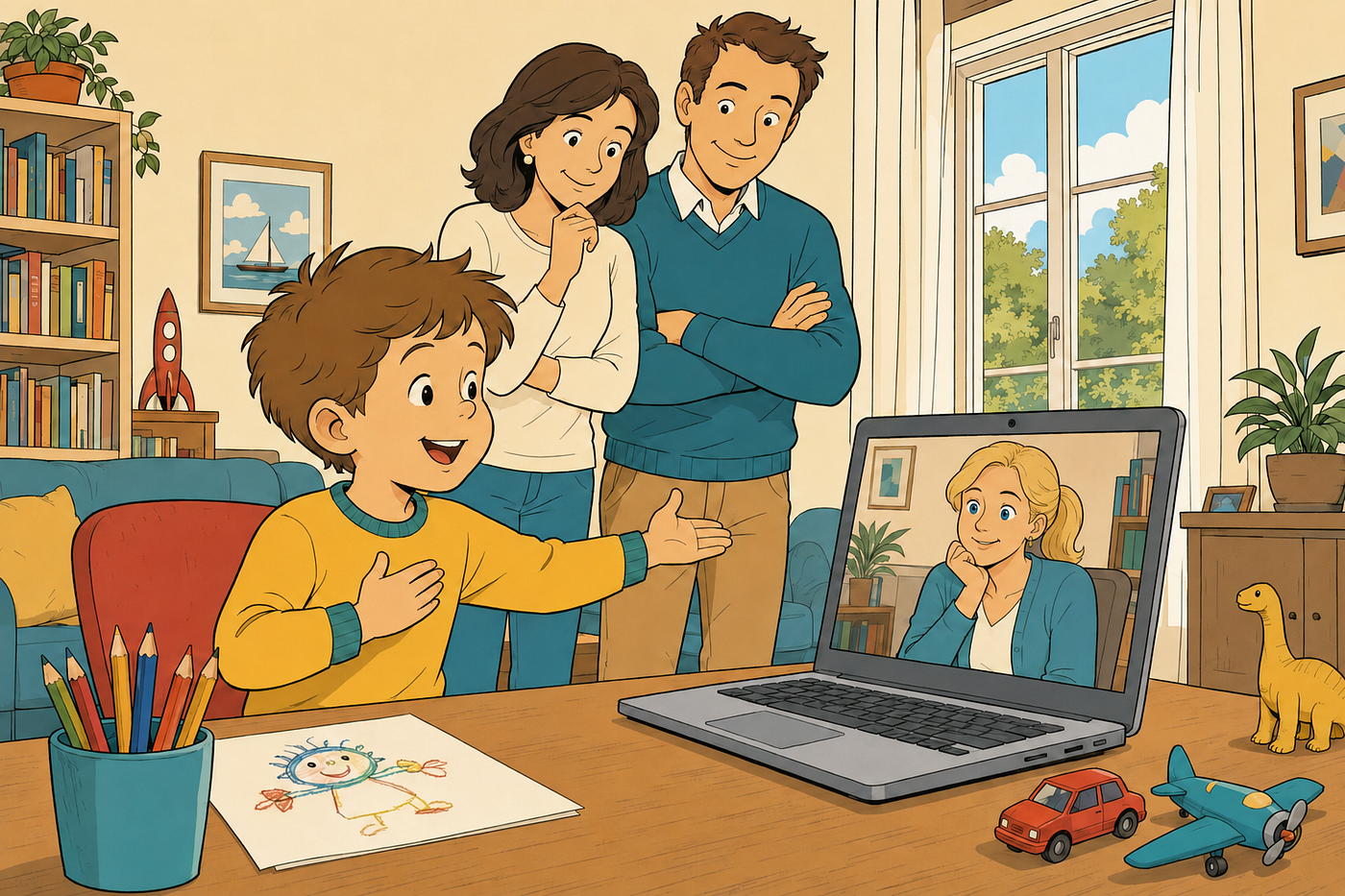
I’ll never forget my first online English lesson with 5-year-old Nico. Five minutes in, he was glued: eyes wide, mimicking my puppet…
Teaching English When Attention Is the Most Expensive Resource Online

I’ll never forget my first online English lesson with 5-year-old Nico. Five minutes in, he was glued: eyes wide, mimicking my puppet parrot’s “Hello!” Ten minutes later? He was spinning in his chair, chasing the family cat across the screen. By fifteen, the lesson was over — or so I thought. Nico waved bye, but his mind had checked out at “banana.”
Welcome to online ESL, where focus is rarer than gold dust. After 500+ online English lessons, I’ve learned it’s not about cramming more vocabulary— it’s about stealing those precious minutes before the digital squirrel runs by.
Parents, your kid’s not “distracted”; their brain’s wired for short TikTok bursts, not hour-long grammar. Here’s how I fight the attention economy and win.
Why Online Attention Slips Away So Fast
Nico’s spin wasn’t rebellion. Kids’ attention peaks at 5–10 minutes online, half an in-person class. Screens compete with cats, siblings, and notifications. TEFL experts note: Young ESL learners jump from task to task without finishing, trapped by anything longer than their focus window. I log in to a warzone: every tab’s a battlefield.
I realized how challenging this could be when a seven-year-old disappeared mid-lesson to chase a toy truck. He came back a couple of minutes later with a blank look, and it was clear to me that the lesson had gone off the rails.
You would think: just repeat the info again, and you’d be right. Repetition does help, but only if it is deliberately structured. Children do not benefit from long, unbroken review sessions; they benefit from tight cycles: introduce, practice, apply, pause. When content is segmented into small, clear tasks, the brain processes it more easily. A five-minute drill followed by a quick speaking challenge is often more effective than twenty minutes of continuous explanation.
Short attention spans require short, visible wins. A child needs to feel, frequently, that something has been completed: a word mastered, a sentence built alone, a mini-game won. These micro-successes reinforce engagement and reduce cognitive fatigue. Without them, repetition turns into noise.
Grabbing Attention Fast
Survival rule one: Seize the first minute. No “Today we learn plurals.” Blast in with puppet chaos: “Parrot wants BANANA! What’s your favorite fruit?” Hands shoot up. TEFL grads swear by this — friendly rules, instant engagement. Nico’s parrot now screeches “apple!” every time class starts.
Parents notice when their child runs to class, excited to participate. That initial enthusiasm comes from engaging hooks — using flashcards, props, and a bit of silliness. I skip dull introductions and jump straight into interactive activities.
Finding a Rhythm
Long lectures rarely survive contact with a seven-year-old. If a lesson runs 25 minutes, it needs internal movement. Five minutes of vocabulary with a puppet, five minutes of song and exaggerated dance moves, five minutes of a fast relay game, five minutes of story sharing, five minutes of a chaotic but controlled review race. Same total time, completely different energy curve.
Transitions matter as much as activities. A sharp cue — “Freeze. New adventure.” — works like a reset button. Bodies stop. Eyes refocus. The brain shifts gears. Children respond well to ritual language because it signals both safety and novelty.
Repetition remains central, but it cannot look identical each time. A fruit song today becomes a fruit story tomorrow. “Apple dance” evolves into “Apple detective mission.” The lesson’s structure stays familiar, but the surface changes. That balance keeps confidence high without triggering boredom. Many teaching frameworks for young learners recommend exactly this: break tasks into small, timed segments, vary the modality, and return to known material with a twist.
The outcome is not louder classes. It is sustained engagement.
One parent asked what the secret was after noticing that her child could now stay focused for 20 uninterrupted minutes. The answer was not stricter discipline, but rhythm. Online attention behaves like a small flame. It does not last on its own. It needs constant oxygen, variation, pace, and clear wins to stay relevant, or it fades.
Why Visuals Matter
On a screen, color wins. Movement wins. Surprise wins. So props are not cute add-ons; they are tactical decisions. A parrot puppet interrupts with, “Run!” A flashcard suddenly frowns. A toy banana becomes breakfast, then a telephone, then a magic microphone. The vocabulary stays the same, but the context shifts just enough to keep the brain alert.
Interactive tools amplify that effect. When children drag words on a virtual board, circle answers, or click through a fast game, they are no longer watching; they are participating. Attention stabilizes the moment their hands are involved. Even shy learners respond when briefly spotlighted. A simple “Camera zoom on you” signals importance. Add a physical cue — “Stand up and roar!” — and energy rebounds instantly. Movement is not chaos; it is a reset button.
Parents can mirror this at home without elaborate setups. A five-minute “toy hunt” for vocabulary. Acting out verbs. Turning objects into characters. Tangible play anchors abstract language.
Encouragement Extends Focus
Attention grows where it feels safe. Specific praise works better than vague enthusiasm. “That was loud and clear.” “You corrected yourself.” “You said the whole sentence alone.” Children begin to link concentration with positive feedback.
Small digital rewards — stars, badges, quick celebratory sounds — reinforce effort. The key is timing: acknowledge focus early, not only perfect answers. Calm redirection matters just as much. A steady “Eyes here, adventurer” keeps momentum intact.
Occasional surprise moments help too. A random timer buzz, followed by “Caught you focusing!”, builds awareness. Focus becomes something visible, almost game-like.
Games at the Center
Games are not extras at the end of class. They carry the lesson. “Simon Says” becomes verb practice. “Hot Potato” turns into sentence building. A relay with a puppet transforms repetition into competition. The format changes; the language repeats.
Variety sustains energy: sing, jump, draw, speak, act. Switching modes every few minutes prevents cognitive fatigue. Even older learners benefit from this rhythm, though the visuals may be simpler and the tasks more complex.
Attention online is not automatic for children. It is earned, maintained, and renewed. Short segments, strong visuals, specific praise, predictable structure, and playful repetition form the system. Children do not simply “pay attention.” They respond to environments designed for them.
How do you help your child stay focused online? Let me know via the comment section!
메타데이터
- post_id
- e12e17dadeaf
- slug
- teaching-english-when-attention-is-the-most-expensive-resource-online-e12e17dadeaf
- url
- https://medium.com/@blanche_bianca/teaching-english-when-attention-is-the-most-expensive-resource-online-e12e17dadeaf
- canonical_url
- https://medium.com/@blanche_bianca/teaching-english-when-attention-is-the-most-expensive-resource-online-e12e17dadeaf
- author_url
- https://medium.com/@blanche_bianca
- status
- ok
- fetched_at
- 2026-07-08 14:18:07