Where the Atlantic Meets the Cliffs of Lagos, Portugal
Boat tours, hidden beaches, coastal trails, and two unforgettable days along Portugal’s Algarve coast
Portugal | Algarve Coast | Slow Travel
Where the Atlantic Meets the Cliffs of Lagos, Portugal
Boat tours, hidden beaches, coastal trails, and two unforgettable days along Portugal’s Algarve coast
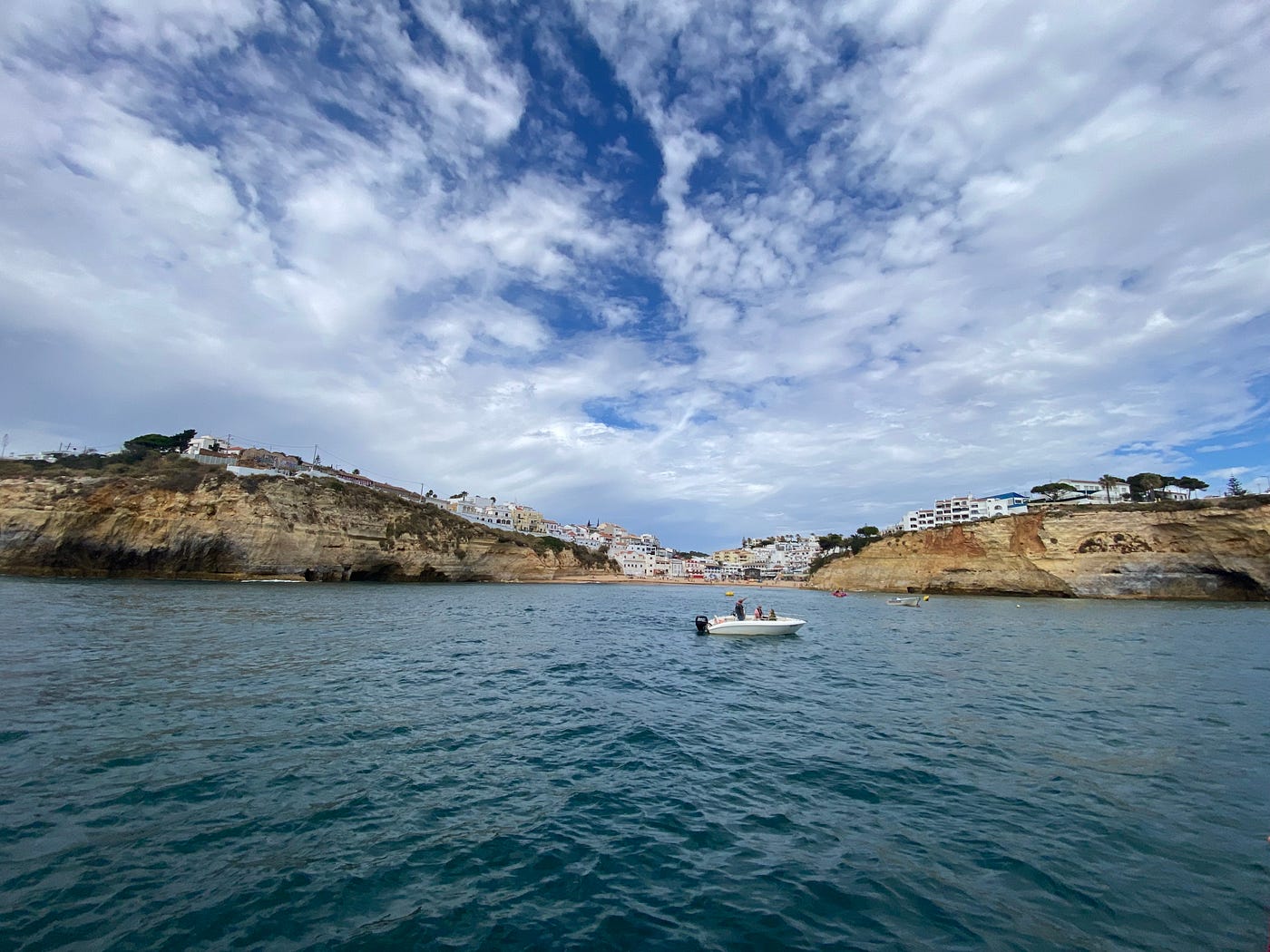
Leaving the harbor in Lagos, where the cliffs of the Algarve begin to rise straight out of the Atlantic.
There are some places that feel beautiful immediately, and then there are places that slowly grow on you throughout the day without you realizing it. Lagos felt like the second kind.
At first, it was just another coastal town during a long stretch of travel. We expected beaches, cliffs, maybe a boat ride, and some good weather. But over two days, Lagos turned into one of those rare places where every few hours felt completely different from the last. One moment we were floating past sea caves on a small boat under dramatic clouds, and a few hours later we were sitting quietly beside the ocean comparing shells we had picked up from the sand like kids on vacation.
The town has a strange balance to it. It feels relaxed without being sleepy, touristy without losing its personality, and scenic in a way that almost doesn’t look real from certain angles. Everywhere along the coastline there were limestone cliffs carved into strange shapes by the Atlantic, hidden beaches between rocks, narrow trails above the water, and viewpoints that made everyone stop walking for a second.
The first day started out on the water.

Cruising past sea caves and weathered limestone cliffs along Portugal’s southern coast.
The ocean looked calm from shore, but once the boat moved farther along the coastline, the cliffs started to feel enormous. Massive cave openings appeared in the rock walls, some dark enough to disappear into shadow completely while others reflected light back onto the water. The Atlantic had carved the coastline into arches, tunnels, and hidden inlets over thousands of years, and seeing it from the boat made the entire shoreline feel alive.
What stood out most wasn’t just the cliffs themselves, but the atmosphere around them. The sky kept changing every hour. Heavy clouds rolled in and then slowly opened into patches of bright blue, giving the water different colors every few minutes. Sometimes the ocean looked silver and cold, and then suddenly turquoise again when the sun came through.
Even the small boats scattered across the water somehow added to the scene instead of interrupting it.

A replica Portuguese sailing ship drifting through the Algarve waters like something from another century.
At one point during the ride, an old-style sailing ship appeared near the cliffs, looking almost out of place against the modern coastline. It looked like something from another century drifting slowly across the Atlantic. Lagos has a long maritime history connected to Portugal’s Age of Exploration, and seeing that ship beside the cliffs made the entire coastline feel timeless for a moment.
The farther we moved along the coast, the quieter everyone on the boat became. Most people stopped talking and just watched the rock formations pass by one after another.
Then suddenly, someone pointed toward the water.

Two dolphins appeared beside our boat without warning, moving through the waves as if guiding us along the coast.
A pair of dolphins surfaced beside the boat for only a few seconds before disappearing again into the Atlantic. It happened quickly, but it completely changed the mood on board. Everyone immediately rushed toward the side of the boat trying to catch another glimpse. Some people barely saw them at all, while others managed to take photos just in time.
What I remember most is how natural the moment felt. Nothing about it seemed staged or forced for tourists. The dolphins simply appeared for a brief moment and then vanished back into the ocean as if the coastline itself was reminding everyone that this place belonged to nature long before visitors arrived with cameras.
Later that afternoon we ended up spending time near one of the beaches tucked between the cliffs.

An afternoon crowd gathered between the cliffs at one of Lagos’ hidden beaches.
The beaches around Lagos almost feel hidden from above. From the coastal trails you mostly see cliffs and ocean, but once you descend toward the sand, entire coves open up between the rock walls. People were stretched across towels under the sun while waves rolled gently into the narrow beach below the cliffs.
What I liked most was how close everything felt to nature. There were no giant hotel towers blocking the coastline or overwhelming the scenery. Even with tourists everywhere, the beaches still felt connected to the landscape around them.
We spent a long time just walking slowly along the shore looking at whatever the tide had washed up.

A small fragment of a marine creature’s vertebra, polished by the Atlantic tides.
At first we only picked up one or two interesting shells while walking, but eventually we ended up sitting there comparing colors, shapes, and patterns spread across the wooden steps leading onto the coastal trail. Some shells were smooth and pale while others were purple, orange, cracked, or worn down by years in the ocean. None of them were especially rare or valuable, but somehow they still felt important in the moment.
Travel sometimes creates these strange small memories that end up staying longer than the bigger attractions. I’ll probably remember sitting there quietly sorting through shells just as much as I’ll remember the cliffs or boat ride itself.

Comparing shells, colors, and patterns collected along the beach before sunset.
By sunset the weather shifted again, and the sky started changing faster than it had all day. The beach became quieter while the ocean reflected soft gray and gold tones from the clouds above. Then suddenly, after the rain moved farther down the coast, a full rainbow appeared stretching across the shoreline.
It looked almost unreal against the Atlantic.

A full rainbow stretched across the shoreline after the storm rolled out over the Atlantic.
For a few minutes, nearly everyone on the beach stopped what they were doing. People lowered their phones, stood near the water, and simply watched the rainbow arch across the ocean while the waves rolled in below it. It felt like one of those rare travel moments that doesn’t need to be exaggerated because the atmosphere already says enough on its own.
The next day felt completely different from the first.
Instead of boats and beaches, we spent most of the day exploring the town itself and hiking along the coastline.

Following a local guide through the old streets of Lagos during a walking tour of the historic town.
That morning we joined a walking tour through the older parts of Lagos with a local guide and several other travelers. The streets were narrow, quiet, and lined with faded white buildings that looked worn by salt air and centuries of history. Unlike larger tourist cities, Lagos still felt lived in. Laundry hung from windows, locals moved through side streets casually, and cafés slowly filled as the morning went on.
Our guide explained parts of the town’s maritime history while leading us through small squares and older neighborhoods that many tourists probably walk past without noticing.

The statue of São Gonçalo de Lagos overlooking the coast and the Atlantic beyond.
One of the stops was near the statue of São Gonçalo de Lagos, a historical figure connected to the town. Standing there listening to stories about Lagos while looking out toward the Atlantic made it easier to understand how deeply connected this place has always been to the ocean.
But the highlight of the second day came later when we followed the coastal walking trails outside town.

Dry coastal plants growing beside the cliffside trail above the ocean.
The trails above the cliffs felt completely different from the beaches below. Dry plants and coastal vegetation lined the paths while the Atlantic stretched endlessly beside us. The farther we walked, the more dramatic the landscape became.
At times the cliffs dropped sharply into the ocean, revealing hidden beaches and sea caves far below.

Evening views over the cliffs and sea stacks along the Algarve coastline.
The wooden coastal trails and cliff paths around Ponta da Piedade are probably some of the most scenic walks in Portugal. Every turn revealed another viewpoint with massive rock formations rising out of the water like natural sculptures shaped by centuries of waves and wind.
As evening approached, the crowds slowly disappeared and the coastline became quieter.

The shoreline after dark, where waves echoed through the rock arches beneath the moonlight.
By blue hour the cliffs looked almost surreal. Sea arches and caves turned into dark silhouettes while waves moved through the rocks below. The sound of the Atlantic echoed between the cliffs, and the entire coastline felt calmer than it had during the busy daytime hours.
Then finally the moon rose over the ocean.

Moonlight reflecting across the Atlantic during a late-night walk above the cliffs of Lagos.
Standing there at night above the cliffs, watching moonlight reflect across the Atlantic, it was hard to believe that this was the same place we had explored earlier under bright afternoon skies. Lagos somehow kept changing character every few hours — sunny and crowded during the day, dramatic during storms, quiet during sunset, and almost cinematic after dark.
That’s probably what stayed with me most about Lagos. It never felt like just another beach destination. It felt layered. The ocean, the cliffs, the history, the trails, the caves, the weather, and even the small moments collecting shells all blended together into something much bigger than a simple stop along the coast.
Some places are easy to photograph.
Lagos was one of the few places that actually felt the way the photos looked.
(All photos by Amin Gurka.)
메타데이터
- post_id
- e148f18784d0
- slug
- where-the-atlantic-meets-the-cliffs-of-lagos-portugal-e148f18784d0
- url
- https://medium.com/@amin.gurka/where-the-atlantic-meets-the-cliffs-of-lagos-portugal-e148f18784d0
- canonical_url
- https://medium.com/@amin.gurka/where-the-atlantic-meets-the-cliffs-of-lagos-portugal-e148f18784d0
- author_url
- https://medium.com/@amin.gurka
- status
- ok
- fetched_at
- 2026-06-09 15:37:30