Aseptic vs Sulphited Pineapple: Processing, Pricing & Import
Introduction: Why This Decision Matters for Global Buyers
Aseptic vs Sulphited Pineapple: Processing, Pricing & Import
Introduction: Why This Decision Matters for Global Buyers
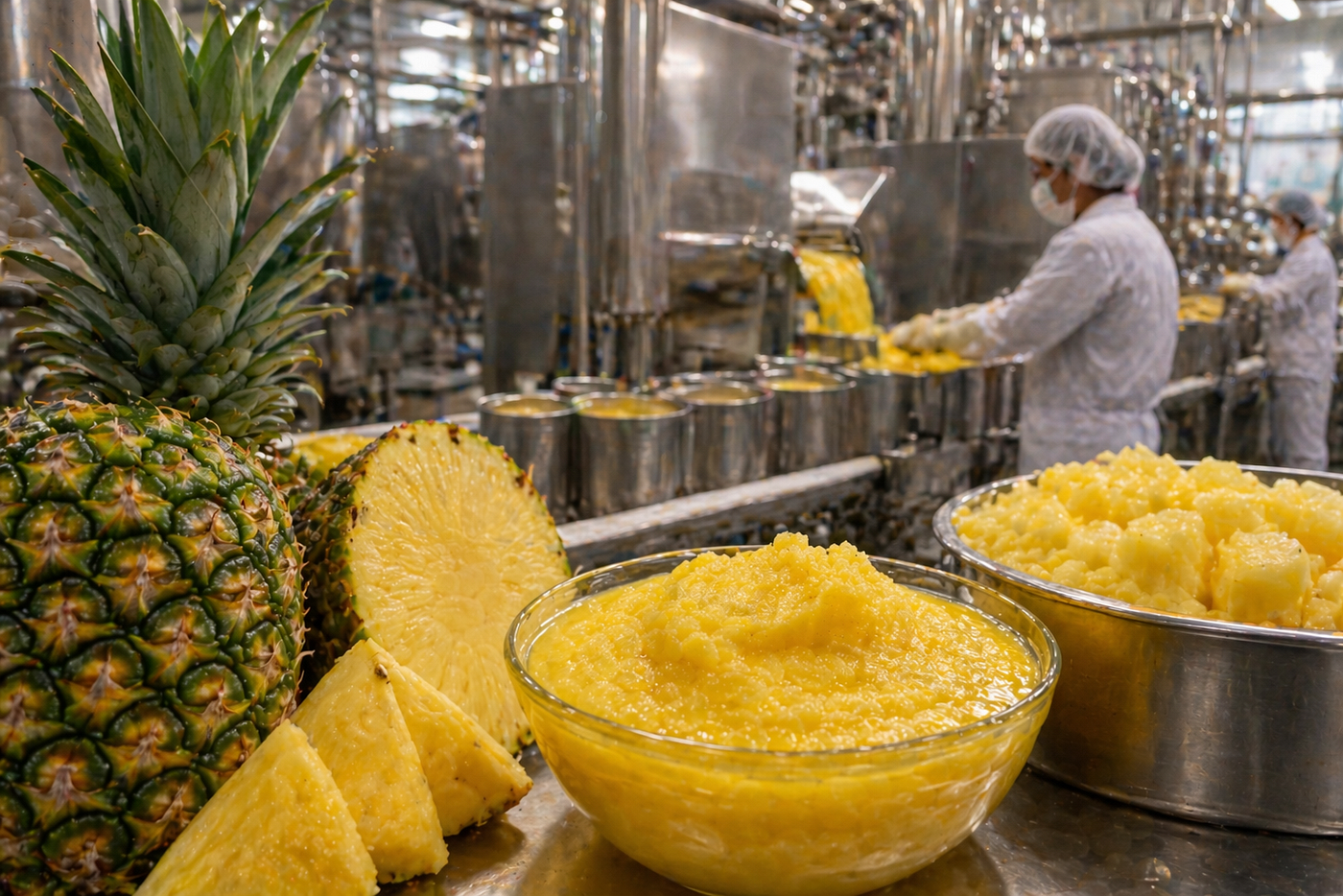
In the global fruit processing trade, pineapple is no longer just a fresh produce category. It has evolved into a high-value processed ingredient used across beverages, dairy, confectionery, and food manufacturing.
Among the most critical sourcing decisions importers face is choosing between aseptic pineapple products and sulphited pineapple products.
This choice directly impacts;
- Product quality and taste
- Shelf life and logistics
- Regulatory compliance
- Final product positioning
According to the Food and Agriculture Organization (FAO), global pineapple production exceeded 28 million metric tons in 2024, with processed pineapple products witnessing strong growth due to demand from ready-to-drink beverages and plant-based food segments.
For B2B buyers, understanding the difference between aseptic and sulphited formats is essential for making cost-efficient and compliant import decisions.
Featured Snippet Answer
Aseptic pineapple products are heat-sterilized and packed without preservatives, offering a clean-label solution with longer shelf life. Sulphited pineapple products use sulphur dioxide as a preservative, making them more cost-effective but less suitable for clean-label markets.
What Are Aseptic Pineapple Products?
Aseptic processing is a high-standard preservation technique where pineapple pulp or juice is sterilized using ultra-high temperature treatment and packed in sterile conditions.
Key Characteristics
- No added preservatives
- Retains natural color, flavor, and aroma
- Shelf life of 12 to 18 months without refrigeration
- Packed in aseptic bags within drums or bag-in-box formats
Where Aseptic Products Are Used
- Premium beverage brands
- Baby food manufacturers
- Dairy and yogurt industries
- Health-focused and clean-label products
Buyer Advantage
Aseptic pineapple aligns with strict regulatory standards in the EU, USA, and Australia, where clean-label and additive-free products are increasingly preferred.
What Are Sulphited Pineapple Products?
Sulphited pineapple products are treated with sulphur dioxide (SO₂) to preserve color and prevent microbial growth.
Key Characteristics
- Contains controlled levels of preservatives
- Longer shelf stability even under less controlled conditions
- Lower cost compared to aseptic
- Commonly used in industrial processing
Where Sulphited Products Are Used
- Confectionery and bakery
- Bulk food manufacturing
- Industrial ingredient applications
- Regions with less stringent clean-label regulations
Buyer Advantage
Sulphited products offer cost efficiency and logistical flexibility, especially in price-sensitive markets.
Aseptic vs Sulphited Pineapple: Side-by-Side Comparison
Aseptic Processing Flow
- Fresh pineapple selection
- Washing and sorting
- Crushing and pulping
- Ultra-high temperature sterilization
- Sterile packaging
This method ensures minimal nutrient loss and high product integrity.
Sulphited Processing Flow
- Fruit preparation
- Pulp extraction
- Addition of sulphur dioxide
- Controlled storage and packaging
This method prioritizes preservation and cost efficiency over natural purity.
Pricing Breakdown: What Buyers Should Expect
Key Pricing Drivers
1. Processing Technology
Aseptic requires advanced infrastructure and sterile environments.
2. Raw Material Quality
Premium-grade pineapples are used for aseptic processing.
3. Compliance and Certifications
Aseptic products often meet USFDA, EU, and global food safety standards, increasing their value.
4. Packaging
Aseptic packaging is more sophisticated and cost-intensive.
Regulatory Considerations for Importers
Aseptic Products
- Accepted widely in clean-label markets
- Easier compliance with EU food safety regulations
- Preferred by premium brands
Sulphited Products
- Subject to limits on sulphur dioxide content
- Must comply with regulations from authorities like World Health Organization (WHO) and regional food safety bodies
- Labeling requirements are stricter
When Should You Choose Aseptic vs Sulphited?
Choose Aseptic If:
- You are targeting premium or health-conscious markets
- Your product positioning requires clean-label claims
- You export to EU, USA, or Australia
- Taste and natural quality are critical
Choose Sulphited If:
- You operate in cost-sensitive markets
- Your application is industrial or bulk processing
- Regulatory restrictions are manageable
- Shelf stability under variable conditions is needed
Common Buyer Mistakes to Avoid
1. Ignoring End-Market Regulations
This can lead to shipment rejection or relabeling costs.
2. Choosing Based on Price Alone
Lower-cost sulphited products may not align with brand positioning.
3. Overlooking Application Fit
Not all products perform equally across beverage, dairy, or bakery applications.
4. Not Verifying Brix and Quality Specs
Consistency is key in large-scale food production.
How Tirra Origins Supports Global Buyers
At Tirra Origins, pineapple sourcing is built on precision, traceability, and application-driven supply.
What We Offer
- Aseptic and sulphited pineapple formats tailored to your market
- Consistent Brix levels and quality assurance
- Export-ready packaging and logistics support
- Transparent pricing aligned with global benchmarks
- Farm-level sourcing with quality control
Global Demand Trends Shaping Buyer Decisions
According to industry insights from McKinsey and global food trade reports;
- Clean-label demand is rising across developed markets
- Beverage and plant-based industries are driving aseptic demand
- Cost-sensitive markets continue to rely on sulphited formats
- Traceability and origin transparency are becoming non-negotiable
India is increasingly positioning itself as a processing hub for value-added fruit exports, offering both aseptic and sulphited solutions.
Conclusion: The Right Choice Depends on Your Market Strategy
There is no universal answer to aseptic vs sulphited pineapple sourcing. The right choice depends on your target market, application, pricing strategy, and regulatory environment.
Smart buyers do not just compare prices. They align sourcing decisions with product positioning, compliance, and long-term brand value.
Ready to Source Pineapple Products with Confidence?
Partner with Tirra Origins for export-grade pineapple products tailored to your business needs.
**Contact us today for samples, specifications, and pricing aligned to your market.**
메타데이터
- post_id
- e1bfefb13f9f
- slug
- aseptic-vs-sulphited-pineapple-processing-pricing-import-e1bfefb13f9f
- url
- https://medium.com/@hello.tirraorigins/aseptic-vs-sulphited-pineapple-processing-pricing-import-e1bfefb13f9f
- canonical_url
- https://medium.com/@hello.tirraorigins/aseptic-vs-sulphited-pineapple-processing-pricing-import-e1bfefb13f9f
- author_url
- https://medium.com/@hello.tirraorigins
- status
- ok
- fetched_at
- 2026-06-21 19:25:17
