How Much Does a Solar Installation Cost in Kenya in 2026? The Complete Homeowner’s Guide
Introduction
How Much Does a Solar Installation Cost in Kenya in 2026? The Complete Homeowner’s Guide
Introduction
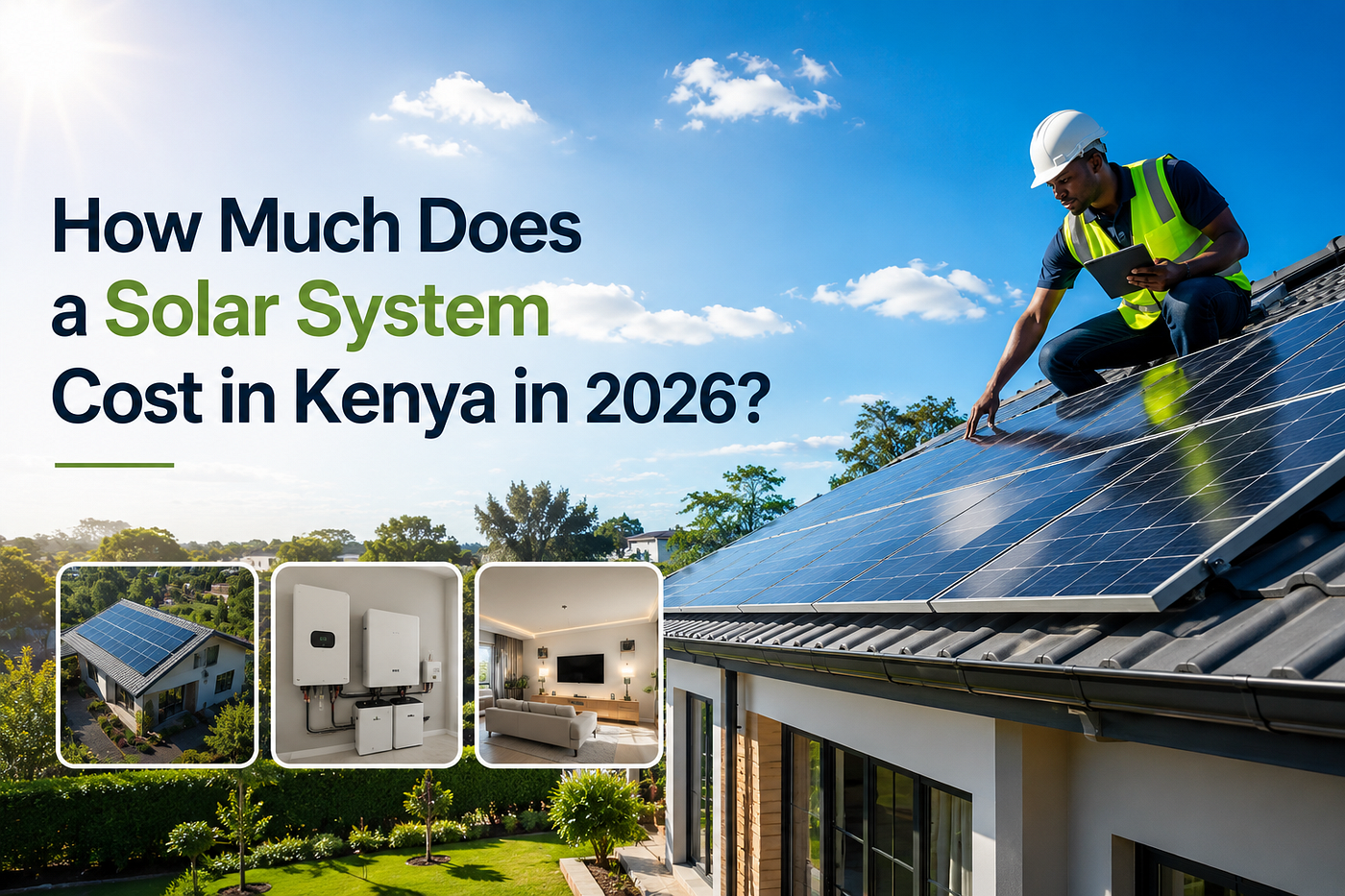
Kenya has become one of Africa’s leading solar energy markets, driven by rising electricity costs, increased awareness of renewable energy, and the desire for reliable power. From urban homeowners in Nairobi to rural households seeking energy independence, more people are turning to solar photovoltaic (PV) systems as a long-term solution.
Yet before making the investment, one question stands above all others:
How much does a solar installation cost in Kenya in 2026?
The truth is that there is no one-size-fits-all answer. The cost of a solar system depends on your energy consumption, the quality of equipment selected, battery storage requirements, installation complexity, and future expansion plans.
This guide provides a realistic breakdown of solar installation costs in Kenya, explains the factors that influence pricing, and helps homeowners and businesses make informed decisions before investing.
Understanding What You Are Paying For
A solar installation is not simply a collection of solar panels mounted on a roof. It is a complete power-generation system designed to meet specific energy requirements safely and efficiently.
A typical solar PV system consists of:
- Solar panelsMounting structures
- DC and AC protection equipment
- Electrical cabling
- Earthing and lightning protection
- Professional installation and commissioning
Each of these components contributes to the final project cost.
Key Factors That Determine Solar Installation Costs
1. Daily Energy Consumption
The amount of electricity you consume each day is the biggest factor affecting system size and cost.
For example:
A home that only requires lighting, phone charging, and television will need a significantly smaller system than a home running refrigerators, water pumps, computers, and electric cooking appliances.
The higher the energy demand, the larger the solar array and battery bank required.
2. Battery Storage Requirements
Battery storage allows solar energy generated during the day to be used at night or during power outages.
Systems with larger battery capacity generally cost more but provide greater energy independence.
Today, many homeowners are shifting toward lithium battery technology because of its longer lifespan and improved efficiency.
3. Quality of Components
Not all solar equipment is created equal.
Premium equipment typically offers:
- Higher efficiency
- Better warranties
- Greater durability
- Improved safety
- Longer service life
Although premium components increase upfront costs, they often reduce maintenance expenses and improve long-term performance.
4. Installation Location
Installation costs vary depending on:
- Roof type
- Building height
- Accessibility
- Cable routing requirements
- Structural considerations
Complex installations require additional labor and materials.
Estimated Solar Installation Costs in Kenya (2026)
The figures below represent general market estimates. Actual costs may vary depending on system design and equipment specifications.
Basic Solar Home System
Suitable for:
- Lighting
- Television
- Phone charging
- Small appliances
Estimated Cost:
KES 80,000 — KES 180,000
Ideal for small households and first-time solar users.
Medium Residential Solar System
Suitable for:
- Lighting
- Refrigerator
- Television
- Internet equipment
- Laptops
- Small household appliances
Estimated Cost:
KES 250,000 — KES 600,000
This is the most common category for urban homeowners.
Large Residential Solar System
Suitable for:
- Large homes
- Multiple refrigerators
- Water pumps
- Home offices
- Entertainment systems
Estimated Cost:
KES 700,000 — KES 1,500,000+
These systems often include larger battery banks and higher-capacity inverters.
Commercial Solar Systems
Suitable for:
- Offices
- Schools
- Hotels
- Retail shops
- Manufacturing facilities
- Agricultural operations
Estimated Cost:
KES 1 Million — KES 10 Million+
Commercial systems are custom-engineered based on energy audits and operational requirements.
Solar Panel Costs in Kenya
Solar panels account for a significant portion of the total project cost.
Pricing depends on:
- Panel wattage
- Brand reputation
- Efficiency rating
- Warranty period
Higher-efficiency panels generate more electricity from limited roof space, making them attractive for residential installations.
Inverter Costs and Considerations
The inverter is often referred to as the brain of a solar power system.
Its role is to convert direct current (DC) electricity generated by solar panels into alternating current (AC) electricity used by household appliances.
Common inverter categories include:
- Pure sine wave inverters
- Hybrid inverters
- Grid-tied inverters
- Off-grid inverters
Selecting the correct inverter size is critical for system reliability and future expansion.
Lithium vs Lead-Acid Batteries: Which Is Better?
Lead-Acid Batteries
Advantages:
- Lower initial purchase price
- Widely available
Limitations:
- Shorter lifespan
- Lower efficiency
- Regular maintenance requirements
Lithium Batteries
Advantages:
- Longer lifespan
- Faster charging
- Higher efficiency
- Greater depth of discharge
- Minimal maintenance
Limitations:
- Higher upfront cost
For most new solar installations in 2026, lithium batteries provide better long-term value despite the higher initial investment.
Common Mistakes That Increase Solar Costs
Many buyers unknowingly spend more money because of avoidable mistakes.
These include:
Choosing Price Over Quality
The cheapest quotation often becomes the most expensive option when equipment fails prematurely.
Ignoring Future Expansion
Systems designed without considering future energy needs may require costly upgrades.
Skipping the Site Survey
A professional site survey helps identify shading, roof limitations, and safety concerns before installation begins.
Hiring Unqualified Installers
Poor workmanship can reduce system performance and create serious safety risks.
How to Get the Best Value from Your Solar Investment
To maximize returns:
- Conduct a professional energy audit.
- Purchase quality components.
- Work with qualified installers.
- Use energy-efficient appliances.
- Maintain the system regularly.
- Design for future expansion where possible.
A well-designed solar system should serve you reliably for many years while reducing dependence on the national grid.
Is Solar Energy Worth It in Kenya?
For many households and businesses, solar energy has evolved from an alternative option into a strategic investment.
Benefits include:
- Lower electricity bills
- Protection against rising energy costs
- Reliable backup power
- Increased energy security
- Reduced environmental impact
With Kenya’s abundant sunshine and growing renewable energy sector, solar power remains one of the most practical long-term energy solutions available.
Conclusion
The cost of a solar installation in Kenya in 2026 can range from less than KES 100,000 for a basic system to several million shillings for large residential and commercial projects.
While cost is an important consideration, the true value of a solar system lies in its ability to provide reliable, clean, and affordable electricity for decades.
Before making a purchase, assess your energy needs, conduct a professional site survey, and invest in quality equipment. A properly designed solar PV system is not merely an expense — it is an investment in energy independence and long-term savings.
메타데이터
- post_id
- e1c20f29ab28
- slug
- how-much-does-a-solar-installation-cost-in-kenya-in-2026-the-complete-homeowners-guide-e1c20f29ab28
- url
- https://medium.com/@murigikevin32/how-much-does-a-solar-installation-cost-in-kenya-in-2026-the-complete-homeowners-guide-e1c20f29ab28
- canonical_url
- https://medium.com/@murigikevin32/how-much-does-a-solar-installation-cost-in-kenya-in-2026-the-complete-homeowners-guide-e1c20f29ab28
- author_url
- https://medium.com/@murigikevin32
- status
- ok
- fetched_at
- 2026-06-13 07:35:29