Application of FRP in Construction & Automotive Industry
Fiber Reinforced Plastic (FRP) belongs to the category of several composite materials and this comprises a composite material comprising of…
Application of FRP in Construction & Automotive Industry
Fiber Reinforced Plastic (FRP) belongs to the category of several composite materials and this comprises a composite material comprising of the polymer matrix. It also supports another fibrous material. It is to be noted that the matrix is usually a hard thermosets resin. It processes resistance to chemical or abrasive damage.
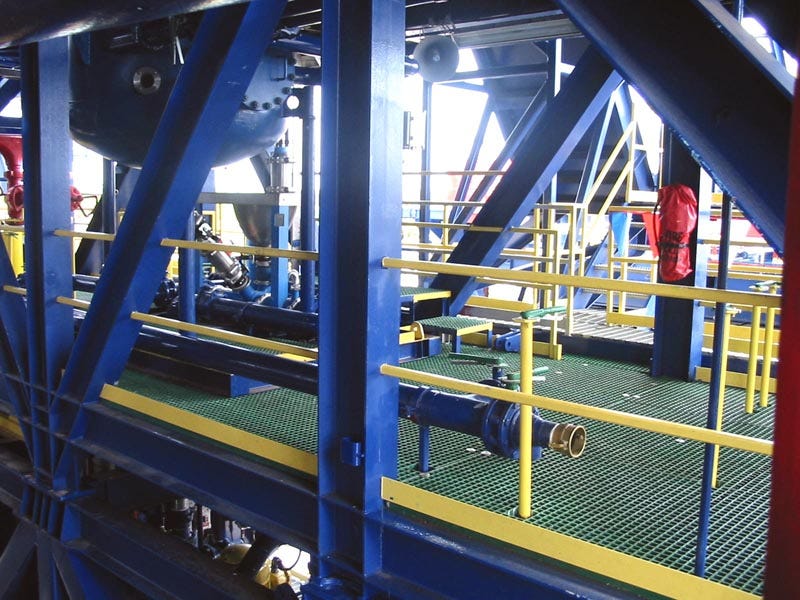
However, it is mechanically not that robust. The addition of the fibre component produces the latest compound having high performance. A typical core polymer includes the rank of epoxy, polyesters and vinyl ester. The fibre used retains its form but it also shares the unique characteristics with the matrix making the latest compound lighter, stiffer and making it mechanically robust.
Commonly used fibres are derived from carbon along with basalt, glass, wood, hemp, sisal and flax. Natural fibres are affordable! It leaves a small environmental footprint and they are recyclable. They offer tailored thermal and acoustic insulation.

It produces less air pollution and fewer occupational skin and respiratory symptoms. Here we would be discussing the name of few industries where FRP is used in tandem. Keep reading to know more about it.
Automotive Industry-
Ø A high strength-to-weight ratio is the key Holy Grail in the automotive industry.
Ø FRP’s are quite valuable as metal substitutes in bodies of luxury automobiles and truck and tailor body sidings.
Ø With high fracture points than that steel, this robust stiff and lighter material improves fuel consumption while it increases the speed.
Ø They are easily moulded to form the desired component. This is the third FRP utilization in this field.
Ø The glass-based FRP is used for making the engine component like the intake manifold decreasing up to 60% of its weight and streamlining the design.
Ø Multiple components are generally combined to save costs.
Ø Glass FRP is quicker and is pliable as compared to carbon FRP.
Ø The glass and clutch pedals may be single moulded units from glass FRP’s instead of aluminium enhancing production rate at low cost.
Ø The fibres can be oriented as desired for stress specified strength as it increases component safety.
Over 20% of FRP are currently taken up by the construction industries including that of roads along with bridges. FRP is used extensively to retrofit the existing structures to enhance load-bearing capacity or repair the existing damage. This is very cost-effective and very useful while it comes to equipping the older structure which is faced with loads far greater than they were originally drafted to bear.
While the plethora of potential applications is becoming robust more & more technological advancement is vital to make the process cost-effective and ensure extreme durability of the final FRP component. Material science and production engineering need to collaborate to deal with current issues and make these composites the first choice over the full range of uses. http://engineeredstructures.ca
메타데이터
- post_id
- e1c499d4d06a
- slug
- application-of-frp-in-construction-automotive-industry-e1c499d4d06a
- url
- https://medium.com/@engineeredstructures/application-of-frp-in-construction-automotive-industry-e1c499d4d06a
- canonical_url
- https://medium.com/@engineeredstructures/application-of-frp-in-construction-automotive-industry-e1c499d4d06a
- author_url
- https://medium.com/@engineeredstructures
- status
- ok
- fetched_at
- 2026-08-01 21:44:42