Microdrama should learn from Stan Lee
Vertical framing isn’t new. But here’s how it can be different.
Microdrama should learn from Stan Lee
Vertical framing isn’t new. But here’s how it can be different.
In the last post, we discussed how vertical framing shouldn’t be constrained to close-ups and expanding to wide and ultrawide shots could benefit storytelling on this new medium.
But the rules for vertical framing are still dramatically different from cinema. So, where do we draw from?
The most obvious direction is portraits. They are built around a similar frame and follow the same logic of vertical framing, but usually only build around a singular character, the basis for the usual close-up shots you see in microdramas today. For example, the Mona Lisa.

The Mona Lisa (as if you didn’t know)
Notice the headspace, the centre framing, the eyeline, and the complete dissonance from the background of the painting, pushed as far as possible with little relevance to the subject. This is the level of framing that you see in most well-shot microdramas today, drawing from the very best.
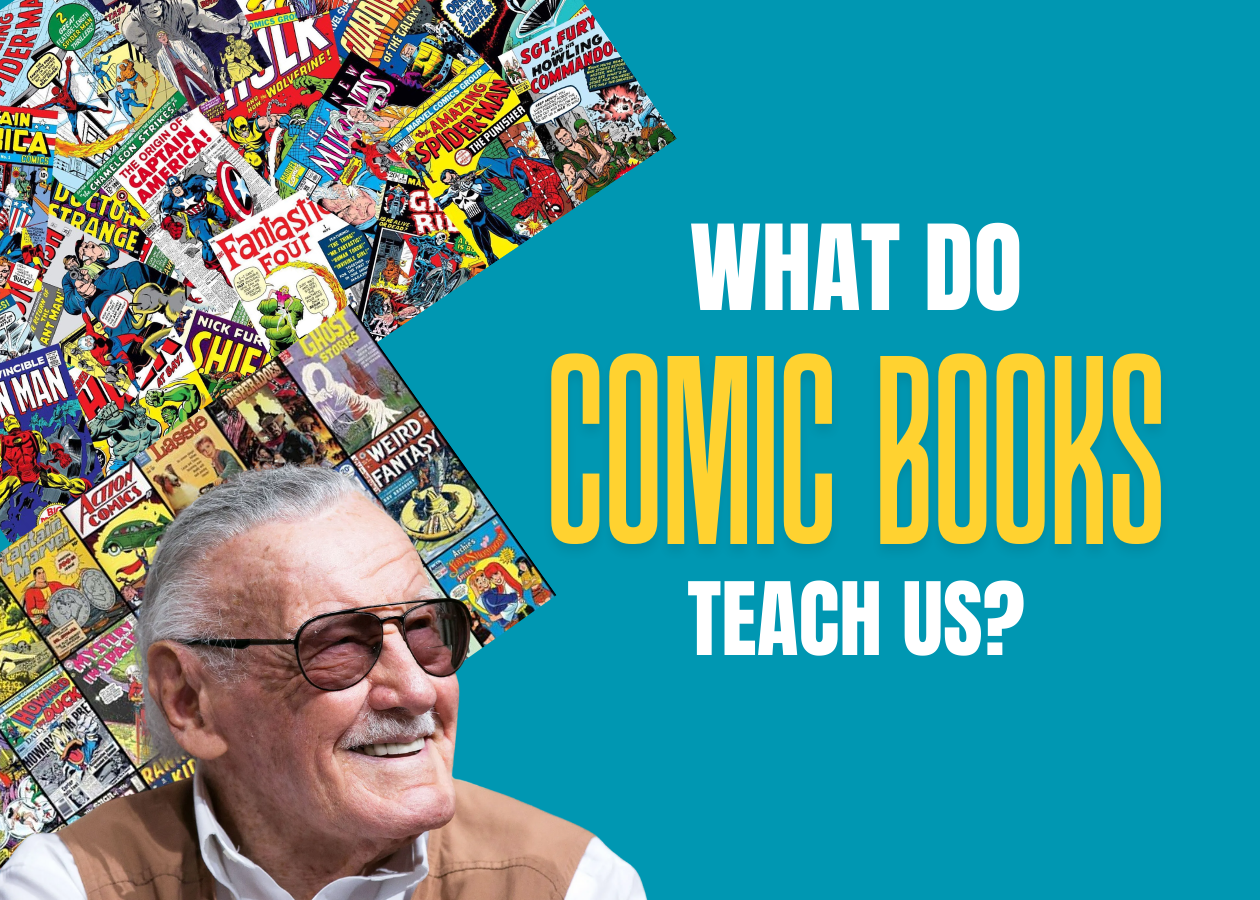
But there’s another source. Comic books.
There are inherent benefits from drawing (no pun intended) inspiration from comic books. Unlike paintings, it’s a storytelling medium, where the subject is not the focus but what the subject does. Comic books focus on dynamic action, with frames highlighting the most impactful moment of the action to hook viewers in and hold their attention with each panel.
A good guide to understanding comic books is the book ‘How To Draw Comics the Marvel Way’, a helpful guide by Stan Lee and John Buscema on what goes into each panel of a comic book.
There’s a couple of ways in which comic framing differs from film framing.
Comic books seldom frame their characters at eye level, instead going for a ‘bird’s eye view’ (high angle shot) or ‘worm’s eye view’ (low angle shot).
Comics also choose much more dramatic frames to maximise drama in every panel and keep readers hooked till the end.


Notice the use of the dutch angle in the above frame to compose a more interesting shot. In general, comic books act as a great guide to composition, by showing how exactly to best extract the dramatic potential of the otherwise mundane shot.

Comics also employ an interesting technique called foreshortening, which plays with a flat perspective to shorten (and lengthen) parts of the figure to highlight what’s important and what’s not.

While you can’t shorten and lengthen the limbs of your actors, this is where the distortion from your ultrawide lens comes to your benefit. By correctly utilising this distortion, you can choose what part of the frame you want to highlight and therefore choose what your audience pays attention to, while pushing what’s not as important further out of the background.

Foreshortening with a fisheye lens. Photo by Rafael Hoyos Weht on Unsplash
Playing with the focus of the frame is another way in which you can utilise this effect to the fullest. Choosing what part of the frame you want viewers to pay attention to is a skill one can master with experience, and once you start looking at the frame that way, you can never go wrong with your compositions, simply by following the direction of the eyeline.

It’s important to remember that, as with any new medium, microdramas require an approach different from what we’ve seen so far. Learning to master this new medium requires relearning basics and drawing from other arts and thinking in directions you didn’t before. Mastery over framing doesn’t come in a day, and it’s important to stay open-minded and keep learning.
But adopting newer methods to tell different stories in a different format is the pathway to doing something truly unique and disrupting the format in the most meaningful way. As always, if you aren’t the first to adopt, someone else will leave you behind. Don’t play for second place and reinvent yourself, and the format will reinvent itself with you.
Excelsior!
메타데이터
- post_id
- e1ffc15be321
- slug
- microdrama-should-learn-from-stan-lee-e1ffc15be321
- url
- https://medium.com/microdrama/microdrama-should-learn-from-stan-lee-e1ffc15be321
- canonical_url
- https://medium.com/microdrama/microdrama-should-learn-from-stan-lee-e1ffc15be321
- author_url
- https://medium.com/@saahilthakkar
- status
- ok
- fetched_at
- 2026-06-10 22:22:12