The Heat Death Paradox: How Lethal Heatwaves and Climate Finance Are Reshaping ESG Strategy
Introduction: When Bodies and Balance Sheets Both Feel the Heat
The Heat Death Paradox: How Lethal Heatwaves and Climate Finance Are Reshaping ESG Strategy

Introduction: When Bodies and Balance Sheets Both Feel the Heat
July 2026 marks an inflection point in the climate crisis narrative. While France mourns over 2,700 heat-related deaths from June’s heatwave and the United Kingdom grapples with mass sleep deprivation from unprecedented temperatures, the fossil fuel industry continues its profitable expansion. Yet simultaneously, we’re witnessing unprecedented capital flows into climate solutions: $468 million into fusion energy, $134 million into next-generation geothermal, and $40 million into carbon-to-materials technology. This paradox — deadly climate impacts accelerating alongside both fossil fuel profits and clean technology investment — reveals the fragmented, contradictory nature of our current transition. For ESG professionals, this moment demands a fundamental reassessment of materiality. Climate risk is no longer a 2050 modeling exercise; it’s a 2026 mortality statistic. The European Union’s expansion of its Carbon Border Adjustment Mechanism (CBAM), new banking regulations addressing heat exposure, and energy labeling for data centers signal that regulatory frameworks are rapidly catching up to physical realities. The question is whether corporate strategies and capital allocation will evolve quickly enough to match the pace of both climate impacts and policy responses.
Global Picture: The Convergence of Physical Risk, Policy Response, and Capital Redeployment
The news from early July 2026 illustrates three parallel accelerations that are beginning to intersect in unprecedented ways. First, physical climate risks have crossed the threshold from environmental concern to public health emergency. The quantification of 2,700 deaths in France during a single heatwave, coupled with polling data showing mass sleep deprivation across the UK, provides the kind of concrete human impact data that transforms climate change from an abstract future threat to an immediate present danger. These aren’t climate projections — they’re mortality statistics that rival traffic fatalities or seasonal influenza, establishing heat as a quantifiable cause of death requiring urgent public health infrastructure.
Second, policy responses are becoming more sophisticated and far-reaching. The EU’s expansion of CBAM to additional product categories represents the maturation of carbon border adjustments from experimental policy to established trade mechanism. This creates cascading compliance requirements across global supply chains, particularly affecting emerging market exporters. Similarly, banking regulators addressing heat exposure acknowledge that climate risk isn’t merely environmental — it’s systemic financial risk affecting loan portfolios, real estate valuations, and economic productivity across entire regions.
Third, capital is flowing into climate solutions at unprecedented scale and velocity. The $468 million raised by Proxima for fusion energy, backed by Google, represents the largest single investment in fusion commercialization to date. Combined with significant funding for enhanced geothermal systems and carbon conversion technologies, we’re seeing validation that institutional capital believes in the technical and commercial viability of technologies that were considered speculative just five years ago. Yet paradoxically, oil companies continue expanding production, profiting from the very heat their products create — a contradiction that reveals the dual-track nature of our current economy, where old and new energy systems coexist in increasingly unstable tension.
ESG Applications: Materiality Redefined by Mortality Data
For corporate sustainability officers and ESG investment analysts, the July 2026 news cycle fundamentally redefines materiality assessment frameworks. When heatwaves cause thousands of deaths and disrupt sleep for millions, the connection between Scope 3 emissions and stakeholder wellbeing becomes direct and quantifiable. Companies can no longer treat climate impact as an externality divorced from their social license to operate. The Guardian’s reporting on oil company profits amidst lethal heat creates reputational risk that no amount of sustainability reporting can fully offset if the underlying business model remains unchanged.
The practical implications for ESG integration are substantial. First, physical risk assessment must now incorporate heat mortality projections into workforce planning, real estate portfolio management, and operational continuity frameworks. Companies with significant workforces or facilities in heat-vulnerable regions face material productivity losses, increased insurance costs, and potential liability exposure. Heat must be modeled with the same rigor as flood risk or hurricane exposure, using location-specific data on urban heat islands, building infrastructure, and vulnerable populations.
Second, the EU’s CBAM expansion creates immediate compliance obligations for any company exporting to European markets. Products now covered by carbon import taxes require detailed Scope 1 and 2 emissions accounting aligned with ISO 14064 standards. Companies lacking robust greenhouse gas management systems face both tariff costs and competitive disadvantage against lower-carbon producers. This transforms carbon accounting from a voluntary disclosure exercise into a mandatory trade compliance function, requiring integration between sustainability teams, supply chain management, and international trade specialists.
Third, innovative financing mechanisms for household renewables — such as the low-cost solar loan programs highlighted by UK think tanks — create new market opportunities while addressing energy equity. For financial institutions, these programs represent growing asset classes with favorable risk-return profiles, particularly as energy costs rise and renewable technology costs decline. For corporations with large real estate portfolios or employee populations, subsidizing renewable adoption becomes both a cost-saving measure and an employee benefit that enhances recruitment and retention in competitive talent markets.
Standards & Frameworks: ISO, GRI, and the Fusion of Physical and Transition Risk
The developments of July 2026 illustrate why existing ESG reporting frameworks require urgent evolution. The Global Reporting Initiative (GRI) Standards emphasize material impacts on stakeholders, but traditional materiality assessments may have underweighted the immediacy and severity of heat-related health impacts. GRI 3: Material Topics requires organizations to identify their most significant impacts on the economy, environment, and people — and the mortality data from France suggests that for many organizations, heat exposure for employees, customers, and communities may be more material than previously recognized.
The Task Force on Climate-related Financial Disclosures (TCFD) framework specifically requires reporting on both physical risks and transition risks. The July 2026 news demonstrates these risks are no longer theoretical scenarios but present-day realities. Banks facing regulatory scrutiny over heat exposure must now incorporate temperature projections into credit risk models, real estate valuations, and portfolio stress testing. The TCFD’s scenario analysis recommendations become operational requirements when regulators explicitly examine heat risk in banking supervision.
ISO 14064, the international standard for greenhouse gas accounting and verification, becomes increasingly critical as CBAM expands. Organizations must implement systematic processes for quantifying emissions across organizational boundaries, ensuring data quality, and obtaining third-party verification. The standard’s requirements for uncertainty assessment and documentation are particularly relevant when emissions data determines trade competitiveness. Companies should anticipate that carbon accounting will require the same rigor and auditability as financial accounting, with similar consequences for material misstatement.
ISO 14046 on water footprint becomes relevant in the context of intensifying heatwaves, as water scarcity and heat exposure are interconnected challenges. Cooling requirements for both humans and industrial processes increase during extreme heat, placing additional stress on water resources precisely when availability is most constrained. Organizations should integrate water and carbon footprinting within unified climate risk assessments, recognizing that these environmental pressures interact rather than exist in isolation.
The emergence of fusion energy investment and enhanced geothermal funding also challenges existing frameworks for renewable energy reporting. These technologies don’t fit neatly into current renewable energy categories, yet they represent potentially transformative solutions. Standards-setting organizations should develop guidance for reporting on and investing in emerging climate technologies, with appropriate risk disclosures that acknowledge both their potential and their uncertainty.
Emerging Markets Perspective: CBAM Challenges and Clean Technology Leapfrogging
For emerging economies, the July 2026 developments present both significant challenges and unprecedented opportunities. The expansion of the EU’s Carbon Border Adjustment Mechanism creates immediate competitive pressures for manufacturers in developing countries whose production processes are more carbon-intensive than European counterparts. Countries with coal-dependent electricity grids or energy-intensive industries face effective tariffs on exports to the EU, reducing competitiveness in their largest export market.
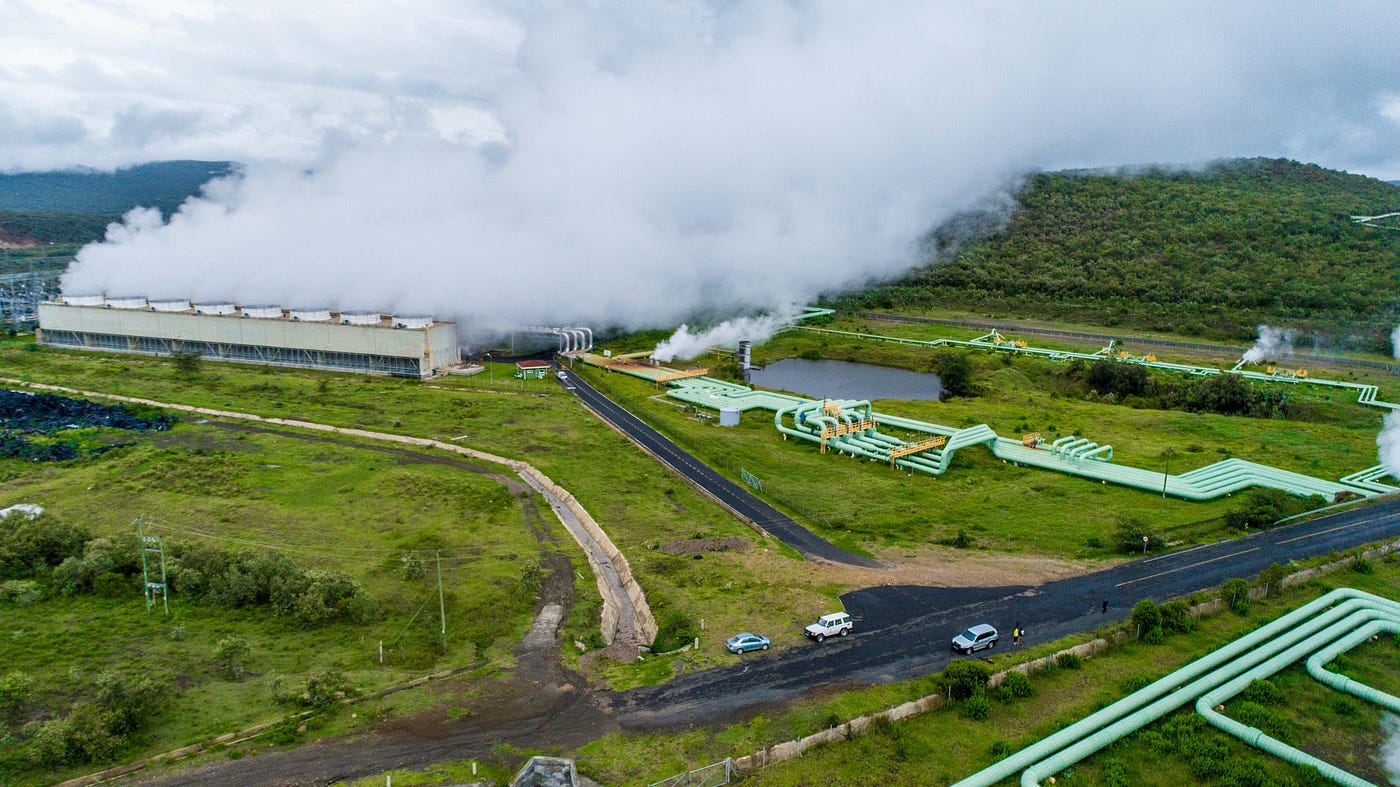
However, this challenge creates strong incentives for clean technology leapfrogging. Rather than incrementally improving fossil fuel-based systems, emerging economies can potentially skip directly to next-generation solutions. The $134 million investment in enhanced geothermal technology is particularly relevant, as many developing regions have substantial geothermal resources that remain undeveloped. Countries like Indonesia, the Philippines, Kenya, and nations along the East African Rift Valley could accelerate geothermal deployment, creating both domestic clean energy and export manufacturing capabilities that meet EU carbon requirements.
The low-cost solar loan programs piloted in the UK offer a template for emerging market energy access. In regions with underdeveloped grid infrastructure, distributed solar with innovative financing could provide electricity access more rapidly and affordably than centralized fossil fuel generation. Development finance institutions and climate funds should prioritize scaling these models, recognizing that renewable energy access simultaneously addresses development goals and climate mitigation.
The carbon-to-materials technology attracting $40 million in investment also presents opportunities for emerging economies with large industrial sectors. Converting CO2 into construction materials, chemicals, or other products creates value from what is currently waste, potentially transforming emissions-intensive industries into carbon utilization hubs. Countries willing to implement supportive regulatory frameworks and provide access to CO2 feedstocks could attract investment in this emerging industrial sector.
Conclusion & Action Steps: From Paradox to Integrated Strategy
The July 2026 paradox — lethal heatwaves alongside record clean technology investment and continued fossil fuel expansion — cannot persist indefinitely. Physical reality will increasingly impose costs that financial markets and political systems cannot ignore. For ESG professionals, the immediate action steps are clear:
Immediately: Update materiality assessments to incorporate heat mortality and health impacts. Audit supply chains for CBAM compliance. Model heat exposure across workforce and asset portfolios using location-specific climate projections.
Near-term: Integrate carbon accounting systems with trade compliance functions. Develop financing programs for employee and community renewable energy adoption. Engage regulators on heat risk management frameworks before mandatory requirements are imposed.
Strategic: Reorient capital allocation toward technologies demonstrating commercial viability — fusion, enhanced geothermal, carbon utilization. Advocate for policy frameworks that accelerate transition while managing social impacts. Recognize that the gap between climate reality and business-as-usual is closing rapidly, and strategies that assume gradual transition are increasingly untenable.
The bodies counted in France are not abstractions. They are the material impact of an economic system that has not yet fully aligned with physical reality. ESG’s purpose is to bridge that gap — and the time for incremental approaches has passed.
Berat Arda Dedekoca MBA, Cekirdek GLOBAL
메타데이터
- post_id
- e231f1615b4f
- slug
- the-heat-death-paradox-how-lethal-heatwaves-and-climate-finance-are-reshaping-esg-strategy-e231f1615b4f
- url
- https://medium.com/cekirdek-global-insights/the-heat-death-paradox-how-lethal-heatwaves-and-climate-finance-are-reshaping-esg-strategy-e231f1615b4f
- canonical_url
- https://medium.com/cekirdek-global-insights/the-heat-death-paradox-how-lethal-heatwaves-and-climate-finance-are-reshaping-esg-strategy-e231f1615b4f
- author_url
- https://medium.com/@cekirdekglobal
- status
- ok
- fetched_at
- 2026-07-08 16:25:30