AI Search Is Eating Your Customers — 30 Million Phone Calls Prove GEO Isn't a "Later" Problem
Most people who hear “AI search influences inbound calls” think it’s too early. 0.095% sounds like a rounding error.
AI Search Is Eating Your Customers — 30 Million Phone Calls Prove GEO Isn't a "Later" Problem

Most people who hear “AI search influences inbound calls” think it’s too early. 0.095% sounds like a rounding error.
But break it open — 30% growth in 4 months, Travel up 120%, Retail up 57% — and it stops looking like an early signal. It looks like a channel migration already in motion. And the fastest growth isn’t coming from the industries you’d expect.
You run a local business, or you work with businesses that do. You’ve got a website. You’ve done SEO. Your Google Business Profile is maintained. You can trace incoming calls back to search, ads, and social. You feel like your digital attribution is mostly covered.
Then you see CallRail’s data: ChatGPT, Claude, Perplexity, and Gemini are already driving real, high-intent customer calls. The people making these calls aren’t searching “what is SEO.” They’re searching “best divorce lawyer near me” — and an AI made the recommendation. They picked up the phone.
You’re not managing this channel. Your competitors aren’t either. But customers are already using it to find you — or to find them.
Who this is for: Marketing leads responsible for local business growth. SEO and operations teams wondering whether GEO belongs on this year’s roadmap. Product and technical leads deciding when AI visibility becomes a priority.
By the end of this, you should be able to answer three questions:
- What does 30 million calls actually reveal? Why are Travel and Retail growing fastest, not Legal and Agencies?2. Why are different AI platforms (ChatGPT / Claude / Perplexity / Gemini) diverging across industries, and what does that mean for your strategy?3. If you wanted to start GEO monitoring and optimization today — without manual reports or human handoffs — what does a minimum viable system look like?Auto (SQL)
Zero: The Facts
Let’s put CallRail’s core data on the table.
CallRail uses dynamic number insertion to trace the source of over 20 million inbound calls — identifying every digital touchpoint a customer hit before dialing, including AI search platforms as referral sources. The dataset was later expanded to nearly 30 million calls.
Metric: AI-influenced call share (Nov 2025) — Value: 0.073% — Note: Baseline
Metric: AI-influenced call share (Mar 2026) — Value: 0.095% — Note: +30% in 4 months
Metric: Legal AI call share — Value: 0.188% — Note: Highest, +7%
Metric: Travel AI call share — Value: 0.154% — Note: +120%, fastest growth
Metric: Retail AI call share — Value: 0.118% — Note: +57%
Metric: Claude-driven AI calls — Value: +291% — Note: Fastest-growing platform
Metric: ChatGPT-driven AI calls — Value: -0.02% — Note: Still dominant, slight decline
Metric: Perplexity-driven AI calls — Value: -15% — Note: Declining
Metric: Gemini-driven AI calls — Value: -97% — Note: Sharp decline
The platform × industry cross-sections are just as important:
ChatGPT drives the highest call share in real estate, healthcare, and travel
Claude and Perplexity show stronger traction in business services and manufacturing
The gap between platforms across industries is widening
Supplementary data (from SEJ Live Q1 2026 recap): — Branded queries + AI Overviews see an 18% CTR increase (Amsive data) — Schema markup is more valuable now than at any point in the last decade — it no longer just drives Google rich snippets; it now directly trains cross-platform LLMs — Cloudflare launched a /crawl endpoint that renders sites as markdown + structured JSON for LLM consumption — ChatGPT began testing ads at ~$60 CPM, with a $200K minimum commitment
Data from CallRail research and Search Engine Journal (source, first published Dec 2025, updated Apr 2026). Methodology: dynamic number insertion → touchpoint attribution → industry/platform comparison → time-series trend analysis.
One: Why 0.095% Isn’t a “Later” Number

The gut reaction is obvious: 0.095% is too small to justify a dedicated strategy.
That reaction has two problems.
Problem one: the absolute number doesn’t matter. The rate does.
0.073% → 0.095%, 30% growth in four months. If that rate holds (roughly 7.5% monthly), it’s 0.22% in a year — 0.5% in two. This isn’t linear. It’s the early slope of a channel adoption curve.
Think back to the early days of mobile search. In 2009, mobile accounted for single-digit percentages of Google search volume. Nobody said “mobile search doesn’t matter.” You don’t evaluate a channel by today’s absolute number — you evaluate it by acceleration. If someone told you in 2010 that “mobile traffic is only 5%, no rush,” how would that have aged?
AI-driven calls are at the same point on the S-curve. And this curve may be steeper than you think — because AI search doesn’t require buying a new device. It happens on devices people already own. All that needs to shift is habit.
Problem two: the fastest growth isn’t where you’d expect.
Instinct says Legal and Agencies — industries where purchase decisions hinge on expertise and trust — would be AI search’s earliest adopters.
CallRail’s original report (Dec 2025) confirmed this: Legal, Manufacturing, and Marketing Agencies were the top three.
But the updated data (Apr 2026) tells a different story. Travel (+120%) and Retail (+57%) are growing far faster than the early leaders. Legal still has the highest absolute share (0.188%), but its growth rate is only 7%.
What does that mean? AI-driven customer discovery is expanding from expert-decision contexts into everyday consumer decisions. GEO isn’t a “high-end B2B concern.” It’s a concern for every business with local customers.
A travel booking site saw its AI-driven calls more than double in four months. It did nothing. AI platforms just started being used more heavily in travel queries, and its content happened to get cited.
Problem three: the growth distribution tells you the channel is broadening.
If the fastest-growing industries were still the early adopters — Legal and Agencies — you could argue “GEO currently only matters in professional services.”
But the breakout sectors are Travel (+120%) and Retail (+57%). AI search is shifting from “solve a professional problem” to “make an everyday decision.” People are using ChatGPT to pick hotels. Claude to compare manufacturing suppliers. Perplexity to find nearby retail stores.
This isn’t a niche channel maturing. This is a mainstream channel emerging.
Problem four: platform divergence.
Claude-driven AI calls grew 291%. ChatGPT remains dominant but dipped slightly. Perplexity declined 15%. Gemini dropped 97% (likely cannibalized by Google’s own AI Overviews — users get AI summaries直接在搜索结果里, no need to switch to Gemini).
More critically: ChatGPT dominates in real estate, healthcare, and travel. Claude and Perplexity lead in business services and manufacturing. Different AI platforms have different citation preferences across industries — this is not a channel you can address with “one content strategy for all AIs.”
Early adopters (Legal, Agencies) → expansion to everyday decisions (Travel +120%, Retail +57%)Platform concentration (ChatGPT dominant) → platform divergence (Claude +291%, industry gaps widening)Unified optimization → platform-specific optimizationAuto (Java)
Two: Why “One Content Strategy for All AIs” Is Impossible
There’s an easy-to-miss signal in CallRail’s data: the divergence between AI platforms across industries is accelerating.
This isn’t a world where “all LLMs are the same.” ChatGPT’s citation preferences (shaped by its training data and retrieval strategy) lean consumer — real estate, healthcare, travel. Claude and Perplexity perform better on the B2B side — business services and manufacturing.
Why? Several mechanisms at play:
Different training data composition. Each LLM’s training corpus has different distributions, leading to different “familiarity” with brand names and terminology across industries.
Different retrieval strategies. ChatGPT uses Bing as its search backend. Claude’s search strategy differs. Perplexity is a search-first architecture. Each platform retrieves from a different set of web pages, ranked differently.
Different citation preferences. Some LLMs favor pages with authoritative structured data (schema markup). Others respond better to FAQ-formatted content. Some prefer dense long-form articles.
Different user demographics. The audience using each platform differs — someone searching for travel recommendations on ChatGPT and someone searching for manufacturing supply chain answers on Perplexity are not the same person. This is particularly easy to overlook: AI doesn’t determine what gets cited in a vacuum. Who uses which AI determines what content is needed. ChatGPT’s user base skews toward everyday consumer scenarios, so its citation preferences naturally lean consumer. Claude’s users concentrate in professional and technical contexts, so B2B citation rates are higher.
For brands, this creates a very specific operational constraint: you cannot use the same content strategy to get cited across all AI platforms.
Take a travel agency. The content ChatGPT cites might be a long-form “Best Bali Travel Guide” FAQ. The content Claude cites might be your structured pricing tables and itinerary comparisons. Same brand, different platforms, different content formats, different optimization strategies.
And these preferences aren’t static. LLMs update training data, swap search backends, adjust retrieval weights — any of these changes can cause your citation rate to suddenly drop on a given platform. And you won’t know until the calls start dropping.
Travel agency on ChatGPT → cited for long-form FAQ guidesTravel agency on Claude → cited for structured pricing tablesTravel agency on Perplexity → cited for detailed itinerary comparisonsAuto (C#)
Same brand. Three different content strategies. And they change over time.
This isn’t just “make more content.” It’s continuous monitoring + dynamic adjustment. You need to know:
Is my brand being cited more or less on ChatGPT today compared to last week?
Claude just updated its search backend — did my citation ranking change?
Perplexity suddenly shifted its citation preference in travel toward a different content format — do I need to adjust?
CallRail’s report is a snapshot. It tells you the state at a point in time. It doesn’t give you real-time monitoring, and it doesn’t tell you what to do next.
Three: The Four Gaps — From Static Snapshot to Continuous System
CallRail’s report is valuable — it’s the largest, most systematic AI-search-to-call attribution analysis available. But it’s fundamentally a periodic data snapshot. Compare it to an operational GEO system, and the gap spans four dimensions.
Gap one: static snapshot, not continuous monitoring.
You know travel’s AI call share was 0.154% in March 2026. But it’s now May. In the two months since, is that number up or down? What’s your brand’s share within it?
CallRail’s next update is in May — but by the time you read it, the data is already historical. What you need is “my brand’s citation rate on ChatGPT, today” — not last month’s industry average, not someone else’s aggregate, your own real-time state.
Gap two: insight without an action loop.
The report tells you “Travel AI calls grew 120%.” It doesn’t tell you “Here’s what to do about it.” How do you adjust your content strategy? Which pages need updated schema markup? Different AI platforms need different optimization approaches — ChatGPT may respond better to FAQ formats, Claude to structured data — but no system exists to execute these adjustments automatically.
You hold an insight. The distance from insight to action is entirely manual.
Gap three: cross-platform optimization depends on human judgment.
The industry × platform matrix is constantly shifting. ChatGPT leads in real estate today; Claude could catch up in three months. Different brands in different industries need different strategies across different platforms — but currently this depends entirely on “which platform you think matters,” a subjective judgment with no automation.
Gap four: the AI citation → actual conversion chain is a black box.
CallRail’s attribution chain is “AI search recommendation → user call.” But the middle links — Why did the AI recommend this brand instead of competitors? What was the stated reason? What did the user do after seeing the recommendation (click through to the site? Check the pricing page? Call immediately?) — are all unknown.
These four gaps describe the same underlying problem: you have a validated channel, but it hasn’t been tooled. The distance between “knowing AI search drives calls” and “optimizing AI-driven calls daily” is engineering infrastructure, not strategic awareness.
The BeeOS Version: Turning GEO from a Monitoring Task into an Autonomous System
What these four gaps share is a root cause: GEO needs a continuously running system, not a periodically published report.
That system requires capability at three layers:
Access layer: continuously query each AI platform for brand citation status
Collaboration layer: when anomalies are detected, automatically trigger content optimization and structured data updates, then verify results
Control layer: schedule the entire pipeline at different frequencies, for different industries, with different priorities
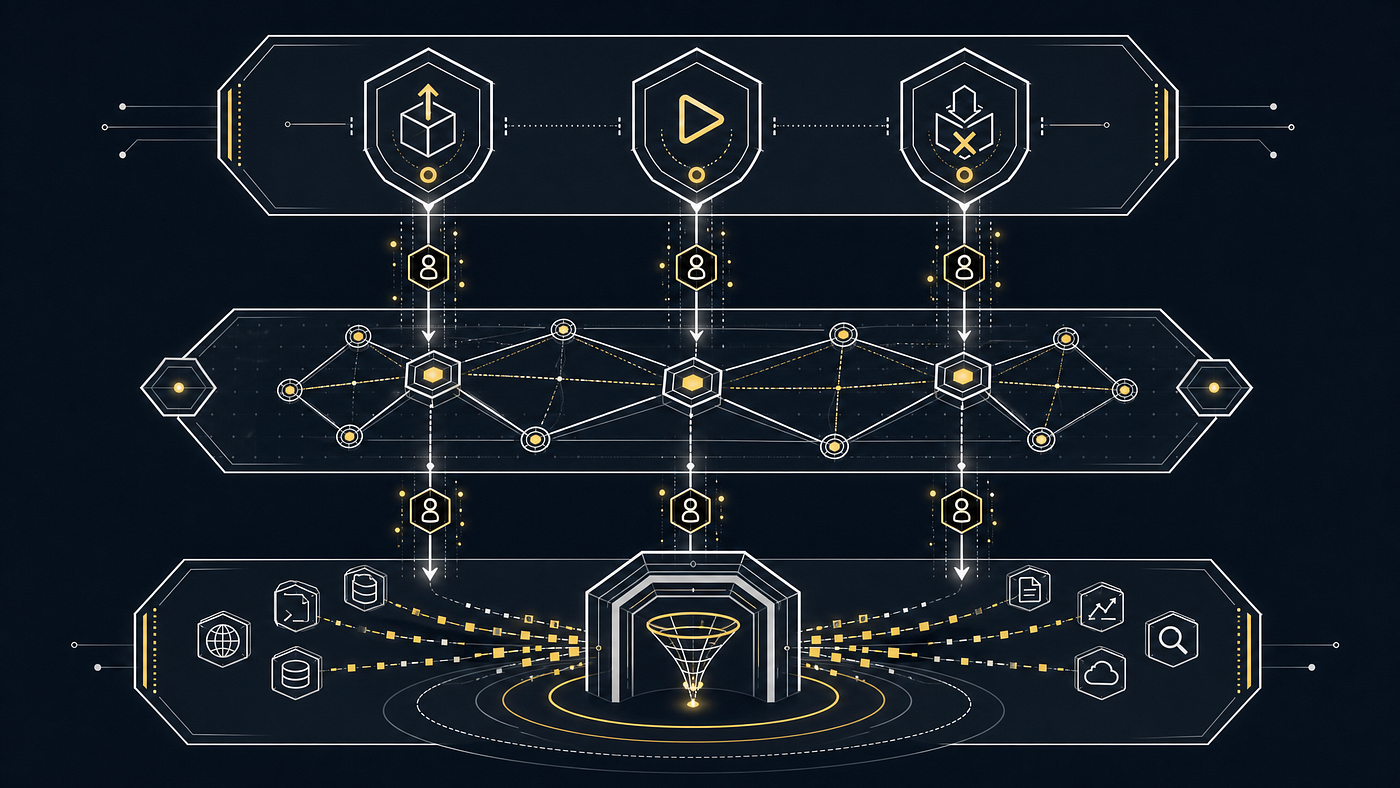
Mapped to BeeOS’s three-entry architecture: MCP (access), A2A (collaboration), OpenAPI (control).
MCP Layer: CitationMonitor as a Continuous Monitoring Pipeline
GEO’s first principle is simple: make your brand content visible in AI responses.
This isn’t an SEO extension — it’s answering the question “When a user asks ChatGPT or Claude something relevant to your business, does the AI mention you, and how?”
MCP’s tools/call mechanism is a natural fit. The CitationMonitor agent uses MCP tools to periodically query each AI platform’s API (or search interface), checking whether brand names appear in responses, recording context and sentiment.
MCP Client (CitationMonitor) ├── tools/call → ChatGPT search API (query for brand keyword citations) ├── tools/call → Claude search API ├── tools/call → Perplexity search API ├── tools/call → Gemini search API └── Aggregate → citation summary + trend delta + anomaly flagsAuto (SQL)
This isn’t manual searching — it’s a continuously running, programmable monitoring pipeline. You define query keywords, query frequency, anomaly thresholds. When brand citations drop significantly, alerts generate automatically.
A2A Layer: Three-Agent Collaboration Loop

Monitoring alone isn’t the goal. Anomalies need action.
A2A’s JSON-RPC task protocol connects three agents into a closed loop:
CitationMonitor (MCP entry) │ Periodically queries each AI platform API for brand keyword mentions │ Records citation frequency, context, sentiment │ └── Detects anomaly (e.g., Claude brand citations down 30%) │ ├── A2A task → ContentOptimizer │ “Claude citations in travel dropped. │ Generate Claude-optimized FAQ + structured summary content” │ ├── A2A task → SchemaGuard │ “Update schema markup on corresponding pages. │ Ensure LLMs can correctly parse brand information” │ └── CitationMonitor verifies in next check Citations recovered → anomaly closed Citations not recovered → re-tasked at higher priorityAuto (Perl)
CitationMonitor (MCP entry): Periodically queries each AI platform API for brand keyword mentions, returns citation summaries and trends. This is the system’s “eyes.”
ContentOptimizer (A2A Worker): Receives anomaly reports from CitationMonitor and generates platform-optimized FAQ content, structured summaries, and case studies. Optimization strategies differ by platform — ChatGPT may need deeper FAQ-formatted Q&A, while Claude benefits more from clean schema markup and structured data.
SchemaGuard (A2A Worker): Ensures website schema markup is current and correct. Organization/Person/FAQPage/Article schemas are all used by LLMs to train citation preferences — missing fields or outdated information means LLMs will preferentially cite competitor pages with more complete schema.
Permission Boundaries
Agent: CitationMonitor — bak_ scope: bak_geo_monitor_readonly — Allowed: Query AI platform APIs, record citation data — Denied: Modify any content or schema
Agent: ContentOptimizer — bak_ scope: bak_content_write — Allowed: Generate and submit content drafts, update FAQ pages — Denied: Publish live (requires human confirmation)
Agent: SchemaGuard — bak_ scope: bak_schema_write — Allowed: Update schema markup, add structured data fields — Denied: Modify unstructured website content, modify design
A2A task flow carries a full state machine — every task creation, acceptance, execution, and completion is recorded. State transitions are fully visible:
Task: “Claude brand citations down 30%” │ ├── [work/started] ContentOptimizer begins generating Claude-optimized content ├── [work/sent] Content draft delivered, awaiting human confirmation ├── [work/started] SchemaGuard begins updating schema markup ├── [work/completed] SchemaGuard update complete └── [completed] CitationMonitor verifies citation recovery in next checkAuto (Bash)
If ContentOptimizer writes content but SchemaGuard’s update fails, CitationMonitor catches it in the next check and triggers a new task. This isn’t a one-off script — it’s a self-healing system with a built-in feedback loop.
How fast the system can run doesn’t depend on the level of automation — it depends on whether permission boundaries are clear. ContentOptimizer can write content but can’t publish directly — because “should AI-generated content represent the brand on a public webpage” is a decision for humans to make. SchemaGuard can update schema but can’t modify page body text — because structured data is for machines and body copy is for humans, and the error tolerance differs.
Permissions don’t limit automation. Permissions are what make automation safe to run.
OpenAPI Layer: Scheduled Execution by Cadence
GEO monitoring needs to run on a cadence, not as a one-off.
Different industries need different cadences: — Travel brand citations can shift weekly — higher check frequency needed — Manufacturing is relatively stable — biweekly checks may suffice — Legal is fiercely competitive, with rapid citation changes — daily checks may be warranted
OpenAPI’s deploy/invoke lifecycle turns CitationMonitor into a schedulable instance:
OpenAPI deploy: CitationMonitor instance 1 — industry: travel — schedule: weekly CitationMonitor instance 2 — industry: manufacturing — schedule: biweekly CitationMonitor instance 3 — industry: legal — schedule: dailyAuto (YAML)
Each invoke: → CitationMonitor queries all platforms → compares to previous data → anomaly check → → Normal: log, wait for next schedule → Anomaly: trigger ContentOptimizer + SchemaGuard via A2A
Based on instance config, different industries and brands can deploy monitoring instances at different frequencies, triggered by cron or events. Not “a quarterly report” — “daily automated monitoring, daily automated response.”
What You Can Start Doing Today
GEO is not a “later” problem. CallRail’s 30 million calls have proven:
AI search is driving real, high-intent customer calls
Growth isn’t uniform — everyday consumer industries like Travel and Retail are experiencing breakout growth
Different AI platforms have completely different citation preferences — one content strategy isn’t enough
Almost nobody is doing this systematically right now — this is a window
Three questions:
- Can you answer how your brand is cited on ChatGPT, Claude, and Perplexity today? If not, you need CitationMonitor2. When was the last time your site’s schema markup was updated? If it’s been over three months, LLMs may not know your latest products and services. You need SchemaGuard3. If you discovered today that your brand citations on Perplexity dropped 30%, could you adjust your content strategy within 24 hours? If not, you need ContentOptimizerAuto (VB.NET)
If you don’t have answers to these three questions yet, a GEO monitoring system might help you see the problem faster. If you’re already on it, that system has a real chance to become a growth amplifier.
References & Further Reading
Data source: Local SEO: Which AI Platforms Drive the Most Leads by Industry (Search Engine Journal / CallRail, Dec 2025, updated Apr 2026)
SEJ Live Q1 2026 recap: What’s Hot, What’s Not: AI Search Changes In Q1 2026
Schema markup & AI search: How Structured Data Shapes AI Snippets
Cloudflare /crawl endpoint: Cloudflare’s New Markdown for AI Bots
ChatGPT ads testing: OpenAI Begins Testing Ads in ChatGPT
BeeOS: docs.beeos.ai · openapi.beeos.ai · a2a.beeos.ai · mcp.beeos.ai
A2A spec: A2A (Google)
MCP spec: Model Context Protocol
메타데이터
- post_id
- e23ad871d5a9
- slug
- ai-search-is-eating-your-customers-30-million-phone-calls-prove-geo-isnt-a-later-problem-e23ad871d5a9
- url
- https://medium.com/@beeos.ai/ai-search-is-eating-your-customers-30-million-phone-calls-prove-geo-isnt-a-later-problem-e23ad871d5a9
- canonical_url
- https://medium.com/@beeos.ai/ai-search-is-eating-your-customers-30-million-phone-calls-prove-geo-isnt-a-later-problem-e23ad871d5a9
- author_url
- https://medium.com/@beeos.ai
- status
- ok
- fetched_at
- 2026-06-17 10:21:25