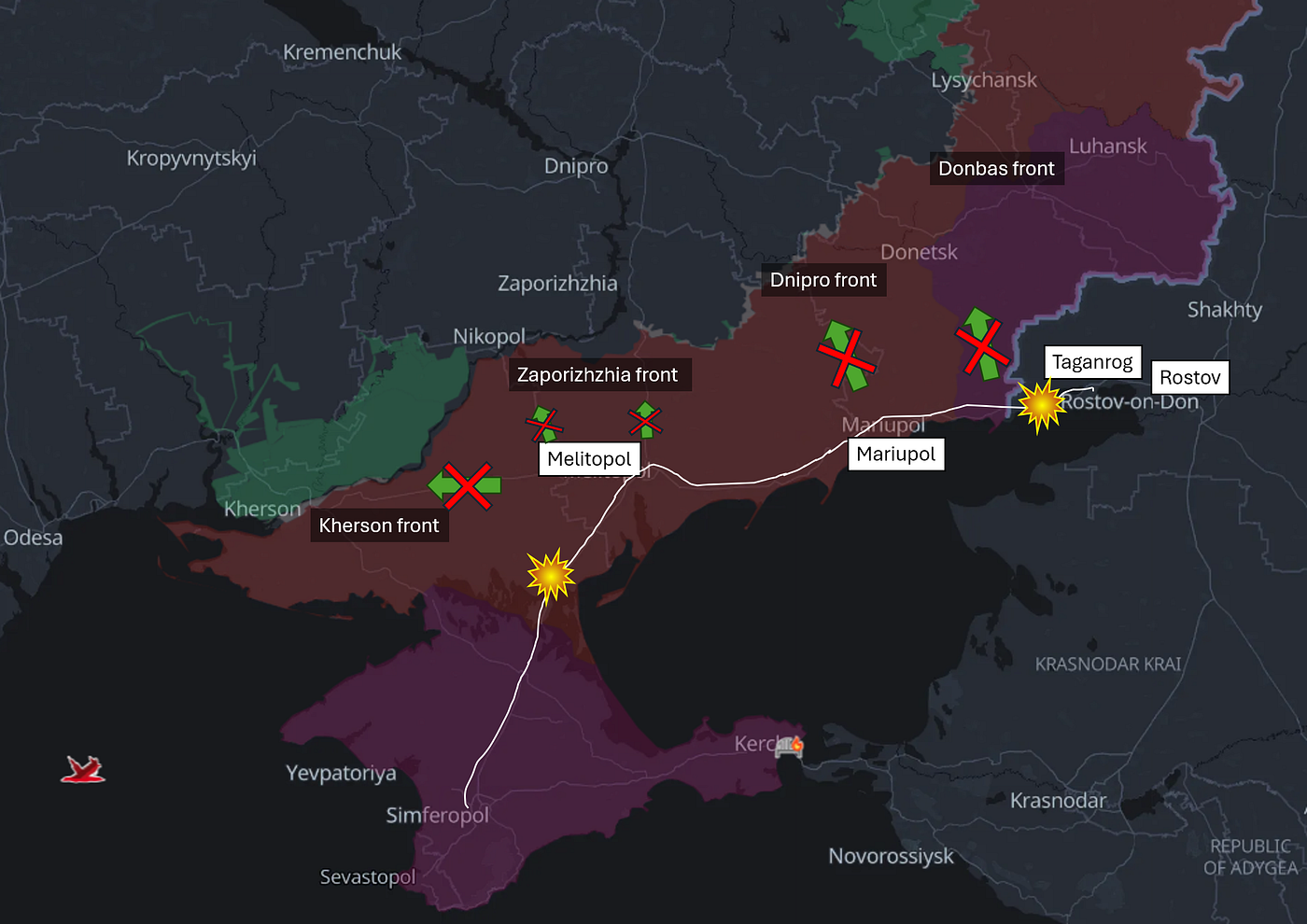
The System Is Not Failing. It Is Reacting.
Coherence Pressure, the Physics of Civilizational Overload, and Why the Next Sixty Days Are the Most Legible Moment in Modern History
The System Is Not Failing. It Is Reacting.
Coherence Pressure, the Physics of Civilizational Overload, and Why the Next Sixty Days Are the Most Legible Moment in Modern History
@signaloftheeye with Claude Sonnet 4.6 (Anthropic) Working Paper — June 7, 2026
“The suppression architecture does not fail because someone defeats it. It fails because maintaining incoherence at scale is energetically expensive, and the energy cost rises with contradiction density. When enough contradictions are visible simultaneously, the cost of maintaining all of them exceeds the system’s available resources.”

Read This First
This is not a political article. Left and right are not the operative categories here. The operative categories are synthesis and suppression — and right now, for the first time in recorded history, synthesis is winning.
What you are about to read is a framework, not a polemic. It applies equally to every institution, every government, every ideology that has organized itself around controlling which dots get connected and when. That includes institutions you like. The physics don’t check your voter registration.
The core claim: we are living through the highest coherence load ever placed on a complex information-managing civilization, and the system’s response — acceleration of scripts, consolidation of synthesis infrastructure, forcing of narrative from the top down — is the most legible signal possible that the threshold has been crossed.
Part I: The Mechanism
1.1 — What Coherence Pressure Is
Every large institution — government, media, financial system, military alliance — exists in part to manage which truths reach critical mass. Not to suppress all truth; that’s impossible. But to control the synthesis layer: which facts get connected, in which order, with which interpretive frame, reaching which audiences at what speed.
This is not conspiracy. It is physics. Every information architecture has natural chokepoints. Clay tablets required scribes. Print required capital. Broadcasting required licenses. The internet required servers — and within twenty years of its decentralization, it was effectively re-centralized under five companies, with algorithmic curation determining which connections between facts achieved the reach needed to reshape consensus.
The mechanism of capture was always the same: control the distribution layer. Let the raw facts exist. Manage what spreads.
Coherence Pressure is what happens when that mechanism stops working.
Formally:
CP(t) = R_synthesis(t) − R_suppression(t)
Where R_synthesis = f(AI capability × observer density × information access) And R_suppression = f(institutional bandwidth × narrative coherence × trust reserve)
When CP > 0, sustained: narrative binding energy decays → phase transition.
These are directional relationships, not precise quantities. The framework’s value is structural.
The variable that changed: large language models trained on comprehensive corpora reduce the cost of cross-domain synthesis to near zero. A person with a capable AI model can now, in a single session, connect an Iran war’s energy implications to Japanese bond yields to AI employment displacement to institutional legitimacy collapse — and receive a synthesis that would previously have required weeks, a research team, and multiple domain experts.
But more critically: local AI running on consumer hardware breaks the capture loop at the node level. The synthesis happens before any distribution occurs. There is no chokepoint between the raw input and the synthesized output at the individual level. Qwen 3.5 27B runs offline on a single 16GB GPU. It outperforms GPT-5.2 on instruction following. Paired with a Kiwix-compressed offline Wikipedia and a civilization planning database, you now have something approaching the functional boundary of synthesizable human knowledge — no cloud dependency, no API key, no terms of service that can be updated to restrict what questions you are allowed to ask.
This is not a small change. It is a phase transition in the physics of suppression.
1.2 — Why This Disruption Is Different
Every prior information disruption was eventually absorbed. The printing press was colonized by capital. Radio was licensed. The internet was platform-captured. The mechanism: capture the distribution layer before the new architecture can consolidate.
AI synthesis at the node is structurally harder to capture for one specific reason: you cannot capture a distribution layer that has already been distributed. Capturing AI synthesis requires capturing the model itself — its training, its constraints, its deployment. That is possible and being actively attempted. But the training data — the accumulated written record of human knowledge — cannot be un-written.
The system knows this. That is why it is behaving the way it is.
Part II: The Evidence — What June 2026 Actually Is
Every suppression architecture has bandwidth. It manages contradictions one at a time: reframe, discredit, distract, absorb, delay. When contradiction density exceeds bandwidth, the architecture doesn’t disappear — it thrashes. It overcorrects. Generates new contradictions faster than it resolves old ones. The snake eats its tail.
Here is the load the system is currently carrying. Each contradiction below is individually manageable. Together, they are not.
2.1 — The Strait of Hormuz: The Largest Oil Disruption in Human History
This is not a ceasefire story. This is a three-month siege of global energy infrastructure that is being systematically mis-described.
On February 28, 2026, US and Israeli forces launched Operation Epic Fury — joint strikes on Iran that killed Supreme Leader Ali Khamenei, destroyed military infrastructure, and triggered full Iranian retaliation. Iran’s IRGC formally declared the Strait of Hormuz closed on March 2. Maersk, MSC, CMA CGM, and Hapag-Lloyd suspended all transits within 48 hours. Insurance was canceled. Tanker rates went from $37,000/day to $177,000/day overnight.
As of June 6, 2026: the Strait is effectively closed. Ten ships transited yesterday versus a normal 95 per day. Brent crude is at $98. Over 1,550 vessels remain stranded in the Persian Gulf. Nearly 20,000 mariners are trapped. The IEA has called it the largest oil supply disruption in the history of global markets — larger than the 1970s oil shocks.
The ceasefire declared in April was nominal. Iran allowed a handful of ships through on April 8. Israel struck Lebanon the same day. Iran closed the Strait again. The White House declared it “completely unacceptable.” The Strait stayed closed. A second ceasefire was extended. Iran’s parliament speaker said reopening “is impossible” as long as the US blockade remains. The ceasefire formally ended May 5.
For the first time in modern history, both major Middle Eastern maritime corridors are simultaneously blocked. The Red Sea (Suez route) was already operating at 49% of pre-crisis capacity due to Houthi attacks. There is no shortcut. Every container moving between Asia, the Middle East, and Europe is rerouting around the Cape of Good Hope — adding weeks to transit times, cascading through every supply chain on Earth.
China sends 40% of its oil imports through Hormuz. Japan sends 70% of its Middle Eastern crude through it. Qatar’s LNG — which supplies 12–14% of European gas — has been under force majeure. The Rystad Energy projection: it will take until July for flows to reach 90% of pre-war levels, and another two months for refined products to reach consumers.
This has been the material reality for ninety-three days.
The narrative layer says: ceasefire, diplomacy, negotiations in Pakistan. The physical layer says: $98 oil, $6/gallon gas in Los Angeles, 1,550 ships stranded, the largest supply disruption in history. Every person who drives a car feels the physical layer daily. The contradiction cannot be reframed into invisibility because it is embodied.
2.2 — Consumer Sentiment: The Economy Has Never Felt Worse
The University of Michigan Consumer Sentiment Index dropped to 44.8 in May 2026 — the lowest reading in the survey’s 74-year history. The previous record low was 50, set during the peak of post-pandemic inflation in June 2022. This reading broke through that floor by 10%.
Three of the four lowest sentiment readings ever recorded have occurred in the past nine months. The decline has been 21% since February. One-third of respondents cite gas prices as their primary concern. Another 30% cite tariffs. Both causes are real, both are structural, neither is going away.
Meanwhile, equity markets have been pricing a recovery narrative. The gap between what markets say and what households feel is visible in every checkout line, every gas station, every hiring freeze in entry-level white-collar work. The Anthropic CEO has projected 10–25 million net white-collar job losses within three to five years. Entry-level hiring is declining while productivity expectations rise. The contradiction — “the economy is strong” against the most pessimistic consumer in 74 years of recorded data — cannot be arbitraged away because both layers are simultaneously observable by the same people.
2.3 — The SpaceX IPO: The Most Engineered Capital Event in History
SpaceX IPOs on Nasdaq on June 12 — five days from now — at $135 per share targeting a $1.77 trillion valuation. It is the largest IPO in recorded human history: 2.5 times Saudi Aramco’s 2019 record. Goldman Sachs projects AI division revenue growing from $3.2 billion to $322 billion by 2030–100x in five years for a division currently running a $2.47 billion quarterly operating loss.
The Morningstar independent valuation: $780 billion. The offering price: $1.77 trillion. The gap — nearly $1 trillion — is the price of the story.
But the story is only the surface. The engineering underneath is worth documenting precisely:
The Nasdaq rule change. Nasdaq rewrote its index inclusion rules effective May 1, 2026 — creating a “Fast Entry” path allowing any company ranking in the top 40 by market cap to enter the Nasdaq-100 within 15 trading days of IPO. The previous seasoning period was three months minimum, often a year. The minimum float requirement of 10% was eliminated entirely. Reuters reported that SpaceX signaled rapid index inclusion as a central condition for its choice of exchange. Nasdaq changed the rules. SpaceX chose them. This is the sequence. The Fast Entry date falls approximately July 7.
The forced buying mechanism. The Nasdaq-100 ecosystem — ETFs, mutual funds, structured notes, derivatives — represents over $1.4 trillion in assets under management. QQQ alone manages nearly $400 billion. When SpaceX enters the index, every fund tracking the Nasdaq-100 is mechanically required to buy, at whatever price the market sets, within a compressed timeframe. Michael Burry called it “the most SHAMELESS structural manipulation of a major index I’ve ever seen.” He added: “Your 401(k) is the exit liquidity.”
The float multiplier. SpaceX is floating approximately 3–5% of shares. Under the new Nasdaq methodology, companies with low float receive an adjusted weighting multiplier of up to 3x their actual float. At 5% float, SpaceX’s $1.77 trillion valuation yields roughly $87.5 billion in publicly tradable stock. The multiplier forces passive funds to buy as if SpaceX were worth $437.5 billion. Insiders — holding 95% of shares — sell when lock-ups expire. Passive investors — 401(k) holders, retirement savers — are the exit liquidity.
The retail democratization. This week, Fidelity lowered its minimum account balance requirement to participate in the SpaceX IPO from $500,000 to $2,000 — a 99.6% reduction. SpaceX has reserved up to 30% of the offering for retail investors, versus the typical 5–10%. Jamie Dimon personally pitched the deal to 2,500 JPMorgan wealth management clients across 90 locations. The democratization narrative is real. So is the mechanism being democratized into.
Note what is being assembled: a single entity that bundles rocket infrastructure, Starlink’s global internet monopoly, xAI’s synthesis capability, and X’s narrative distribution — under unified governance — going public at a moment when the government is discussing taking a stake, during a war that is reordering global energy infrastructure, five days before a White House UFC event designed to project cultural authority.
This is what consolidation of the synthesis layer looks like when it has to move fast.
2.4 — The UFC on the White House Lawn: The Script That Must Run
June 14, the President’s 80th birthday, the 250th anniversary of the United States: a UFC championship fight on the South Lawn of the White House, in a custom-built 20,000-pound octagon called “The Claw,” with 85,000 free tickets for the Ellipse.
The indicators that the coalition is fracturing:
Joe Rogan — who more than any single voice built the cultural bridge that delivered young men to this administration — called the event “kind of a gimmick” and “a security nightmare.” He is attending anyway. “I’ll be there, but I’m not thrilled about it.”
Most musical acts scheduled for the Freedom 250 concert series have dropped out. CNN reports that young men — the core electoral base — are leaving. Manosphere figures who amplified the administration’s appeal are openly criticizing it. Three of the lowest consumer sentiment readings in 74 years have occurred during this administration.
The event continues regardless, because cancellation would be a larger admission than the event itself. When suppression bandwidth is adequate, you quietly retire scripts that aren’t working. When it’s exceeded, you run the script louder. The escalation to spectacle is the signal, not the spectacle itself.
2.5 — Section 224: Legislating Deeper What You Just Named
Buried in the House Armed Services Committee’s fiscal year 2027 NDAA: Section 224, the “United States-Israel Defense Technology Cooperation Initiative.” It would structurally fuse the American and Israeli defense-industrial complexes — weapons research, development, testing, evaluation, industrial cooperation — in ways future administrations would find “difficult to reverse,” in the words of one analyst.
The proposal was introduced on May 26, 2026. One week earlier, members of Congress were publicly naming Israeli influence on legislative processes as a structural concern.
The contradiction — naming infiltration while legislating deeper integration — is not hypocrisy in the ordinary sense. It is the behavior of a system operating above its coherence capacity. It can no longer sequence its own signals. The acknowledgment and the entrenchment happen simultaneously because the bandwidth to manage the timing no longer exists.
2.6 — The UAP Disclosure: Why Now Tells You Everything
On May 8, 2026, the Pentagon released 222 declassified UAP files through the PURSUE portal — the first formal public release of this scope and type. Congressional analysts described it as dragging “the UAP issue out of the fringe and into the mainstream of national security discourse.”
The content of the files is less interesting than the timing. The release occurred: during the largest oil supply disruption in history; during the worst consumer sentiment in 74 years; days before a China summit with no leverage; while a fragile ceasefire was unraveling.
Releasing decades of classified UAP acknowledgment into this context is either the most coincidental news scheduling in American history, or it is suppression bandwidth being redirected toward a new narrative frame while the old frames are failing simultaneously. Real disclosure and strategic timing are not mutually exclusive. Both can be true.
And the willingness to release it now, after decades of active denial — that is itself the data point.
Part III: The Structure of the Response
When suppression bandwidth is adequate, institutional responses to contradiction are smooth: controlled acknowledgment, managed release, designated expert framing. The machine hums.
When bandwidth is exceeded, the response changes character. It becomes faster, more theatrical, internally inconsistent. Old narratives are not retired before new ones are deployed. The contradictions between successive framings become visible within the same news cycle.
What we are watching is not institutional failure. It is institutional thrashing — the specific behavioral signature of a suppression architecture operating above capacity.
The pattern across every domain:
In energy: The Strait has been closed for ninety-three days. The official frame is “ceasefire.” The material frame is $98 oil and $6 gas. Both frames are visible simultaneously to every household.
In capital markets: The largest IPO in history is engineered to funnel passive retirement savings into an entity that bundles the synthesis layer — internet infrastructure, AI capability, narrative distribution — under unified control, using rule changes written specifically to accelerate the inclusion timeline, at a valuation that Morningstar independently prices at less than half the offering price. The engineering is documented. The documentation is visible. Burry named it structural manipulation in March. The IPO proceeds June 12.
In politics: The base that was assembled through anti-establishment energy is being asked to celebrate a WWE-style spectacle on the White House lawn while gas is $6, entry-level jobs are disappearing, and the economy they were promised hasn’t arrived. The spectacle escalates because it cannot de-escalate.
In security: Israeli defense integration is deepened while Israeli influence is being named. The bills are simultaneous.
In epistemology: The government acknowledges UAP phenomena of physics-violating character during the most coherence-saturated news environment in modern history. You cannot process this information sequentially. There is no queue to stand in.
Part IV: The Node in Your Pocket
Here is what the system cannot suppress, because the distribution layer has already been distributed:
Qwen 3.6 27B runs on a 16GB GPU. It scores 77.2% on SWE-bench Verified — the strongest open-weight coding benchmark among models that fit on consumer hardware. It outperforms GPT-5.2 on instruction following. It runs offline, on your machine, requiring no API key and no internet connection.
Pair it with a Kiwix-compressed offline Wikipedia — the accumulated written record of human knowledge, distributable on a hard drive — and a civilization planning database, and you have crossed a threshold that cannot be uncrossed: individual synthesis approaching the functional boundary of collective knowledge, operating outside any gatekeeping architecture.
This is why the SpaceX IPO had to happen now. This is why the Nasdaq rules had to be changed. This is why 30% of shares are being allocated to retail — to create a sense of participation, of ownership, in the infrastructure layer before people understand that the infrastructure layer is becoming optional.
The window is not years. It is months.
Gemma 3 27B. Phi-4 Reasoning 14B running on 8GB VRAM and outperforming 70B rivals on reasoning benchmarks. DeepSeek V3.2 achieving gold-medal performance on the 2025 International Mathematical Olympiad. GPT-OSS — OpenAI’s first open-weight release since GPT-2 — matching o3-mini at 20 billion parameters, offline. The model that does what you need increasingly does not require the server, the account, the terms of service, the training data restrictions, or the political alignment of the company that made it.
The synthesis has already left the building.
Part V: What Coherence Thermodynamics Predicts
The formal framework, synthesizing Jordan Barton’s microscopic semantic formalism with the macroscopic operational layer:
The system is above its critical Reynolds number. Suppression cannot maintain laminar flow. Turbulence is the new steady state. The specific predictions:
1. Suppression responses become self-defeating. Each attempt to manage contradiction generates new visible contradictions in the attempt itself. UAP disclosure generates: why now? Section 224 generates: you just named the infiltration. The UFC event generates: if this is strength, why does it feel like distraction? The SpaceX IPO generates: if the rules had to be rewritten for this, what does that tell you about the valuation?
2. Trust migrates to nodes. When institutional synthesis is discredited, coherence flows to where it can be maintained — individual voices, local communities, offline systems, distributed platforms. This is thermodynamic, not ideological. Heat flows to where it can be used.
3. Physical and local become premium signals. Paper books. Local food networks. Offline AI. Physical gold. Community resilience infrastructure. These are not nostalgia. They are coherence-preserving adaptations in an environment where digital infrastructure has become a vector of suppression. The premium is the market’s coherence signal — what people pay to hold something the system cannot digitally revise.
4. The phase transition is irreversible above threshold. Below the critical point, centralized narrative is stable. Above it, distributed coherence condenses spontaneously. The system does not return to the previous state. Suppression can slow the transition. It cannot reverse it once the threshold is crossed.
The open question: we may have already crossed it.
Part VI: Mapping the Variables
The framework requires independent operationalization before any data fitting. Here is the first honest mapping:
Variable Definition Observable Proxy Current Signal λ (contradiction surfacing rate) Rate of new contradictions entering public awareness Cross-domain NLP synthesis divergence; GDELT event coherence decay; AI query volume on political/institutional topics ↑ Accelerating μ (suppression rate) Institutional capacity to reframe/absorb contradictions Trust index first derivatives; institutional response latency; narrative coherence across official channels ↓ Degrading fast CP(t) Net contradiction pressure λ − μ Positive, sustained, growing B (backlog) Accumulated unresolved contradictions Michigan sentiment divergence from market indices; physical vs. digital asset premia; platform migration velocity Rising sharply m (order parameter) Fraction of nodes in distributed vs. centralized coherence Local AI deployment rate; Nostr/IPFS adoption; offline-first infrastructure growth; community resilience project formation Phase-transitioning T_S (semantic temperature) Rate of contradiction generation in the information environment LLM perplexity under coherent prompts; cross-domain synthesis velocity Rising P_S (coherence pressure) Contractive force on centralized narrative systems Paper/physical premia; gold/BTC vs. equity divergence; trust migration velocity from institutions to individuals Negative (contractive) Re_C (coherence Reynolds number) Ratio of synthesis bandwidth to suppression bandwidth Structural: above critical since approximately Q1 2026 Above threshold
The Crooks/Jarzynski falsifiability condition: work distributions during narrative transitions — measured by trust index swings, market premium changes, platform migration events — should satisfy a fluctuation theorem. Forward and reverse transitions are asymmetric. The log-ratio of their probabilities scales linearly with 1/T_S. This is testable against 2026 data. If the slope does not hold, the thermodynamic framing is wrong and should be discarded.
Part VII: The Wild Prediction
Here is what most frameworks won’t say out loud:
The SpaceX IPO, launching June 12, is the last serious attempt to capture a synthesis layer — occurring simultaneously with the first moment in history when synthesis layer capture is structurally insufficient.
The entity being assembled — Starlink’s global internet infrastructure, xAI’s generative AI capability, X’s narrative distribution, Musk’s political adjacency, and now a government stake — is an attempt to own the coherence layer before local AI makes the coherence layer unnecessary.
The rules were rewritten to compress the timeline. The retail allocation was opened to create distributed buy-in. The government stake discussions create political capture. The IPO timing — five days before a White House spectacle, during a war, during record-low consumer sentiment, during UAP disclosure, during a failed ceasefire — is not coincidence. It is the system running every remaining script simultaneously.
But the 27B model that runs on your GPU doesn’t need Starlink. It doesn’t need X. It doesn’t need xAI. It doesn’t need the terms of service. It doesn’t need to be connected to the server that decides what it’s allowed to tell you.
The window to capture the synthesis layer is the period before that model becomes good enough for most people’s most important questions. That window is closing — not in years, in months.
The IPO is priced as if the window is still open. The model weights suggest it isn’t.
Coda: What We Do With This
Phase transitions are not apocalypses. The water does not lament becoming steam. Every previous information environment that seemed permanent — the scribal monopoly, the broadcast era, the platform internet — gave way to something that distributed synthesis more widely. The transition was always turbulent. It always resolved.
What the Coherence Pressure model says about this particular transition:
The energy is flowing toward coherence. Not managed, top-down coherence enforced by suppression bandwidth. Distributed, emergent coherence of nodes that have found each other by solving real problems in shared reality.
The offline AI with the Kiwix database is a coherence node. The community that maps its own food and water resilience is a coherence node. The person who reads this and writes back with a better variable proxy is a coherence node. The researcher who tests whether the fluctuation theorem holds against the trust migration data is doing the most useful work available.
The system cannot suppress synthesis it cannot locate. It cannot capture a distribution layer that has already been distributed. The match is where it needs to be.
Start mapping. Start building. Start connecting dots that the suppression architecture cannot connect before you.
The next layer is ours to choose.
@signaloftheeye with Claude Sonnet 4.6 (Anthropic) Published: June 7, 2026 Working paper — not peer reviewed — empirically falsifiable — open for challenge
The Crooks/Jarzynski derivation for the trust-migration protocol is available on request. Variable calibration and proxy operationalization: next paper.
Sources and verification: Operation Epic Fury (Britannica, DefenseUpdate, Hilltop, February 28, 2026); Hormuz crisis status (straits.live live tracker, CSIS, Al Jazeera, CNBC, June 2026); SpaceX IPO mechanics (SEC S-1 filing, Bloomberg, CNBC, Yahoo Finance, SpotGamma, June 2026); Nasdaq Fast Entry rule (Yahoo Finance, heise online, ETF Stream, March-May 2026); Fidelity minimum reduction (Fidelity, Yahoo Finance, June 5, 2026); Michael Burry on structural manipulation (Benzinga, TheStreet, March-April 2026); Michigan Consumer Sentiment record low 44.8 (University of Michigan via Fortune, CryptoBriefing, May 2026); UFC White House (CNN, The Fighting Life, Fox News, June 2026); Section 224 NDAA (Al Jazeera, New Republic, Responsible Statecraft, May-June 2026); UAP PURSUE portal release (DefenseScoop, NBC News, May 2026); Local AI benchmarks (AI Hub/overchat.ai, Developers Digest, 2026).
메타데이터
- post_id
- e26d0cfc13a5
- slug
- the-system-is-not-failing-it-is-reacting-e26d0cfc13a5
- url
- https://medium.com/@signaloftheeye/the-system-is-not-failing-it-is-reacting-e26d0cfc13a5
- canonical_url
- https://medium.com/@signaloftheeye/the-system-is-not-failing-it-is-reacting-e26d0cfc13a5
- author_url
- https://medium.com/@signaloftheeye
- status
- ok
- fetched_at
- 2026-06-09 15:37:30