The 3 Ways the #MeToo Movement Failed to Reach Its Potential
Lost opportunities, hashtags, lack of depth and more.
The 3 Ways the #MeToo Movement Failed to Reach Its Potential
Lost opportunities, hashtags, lack of depth and more.
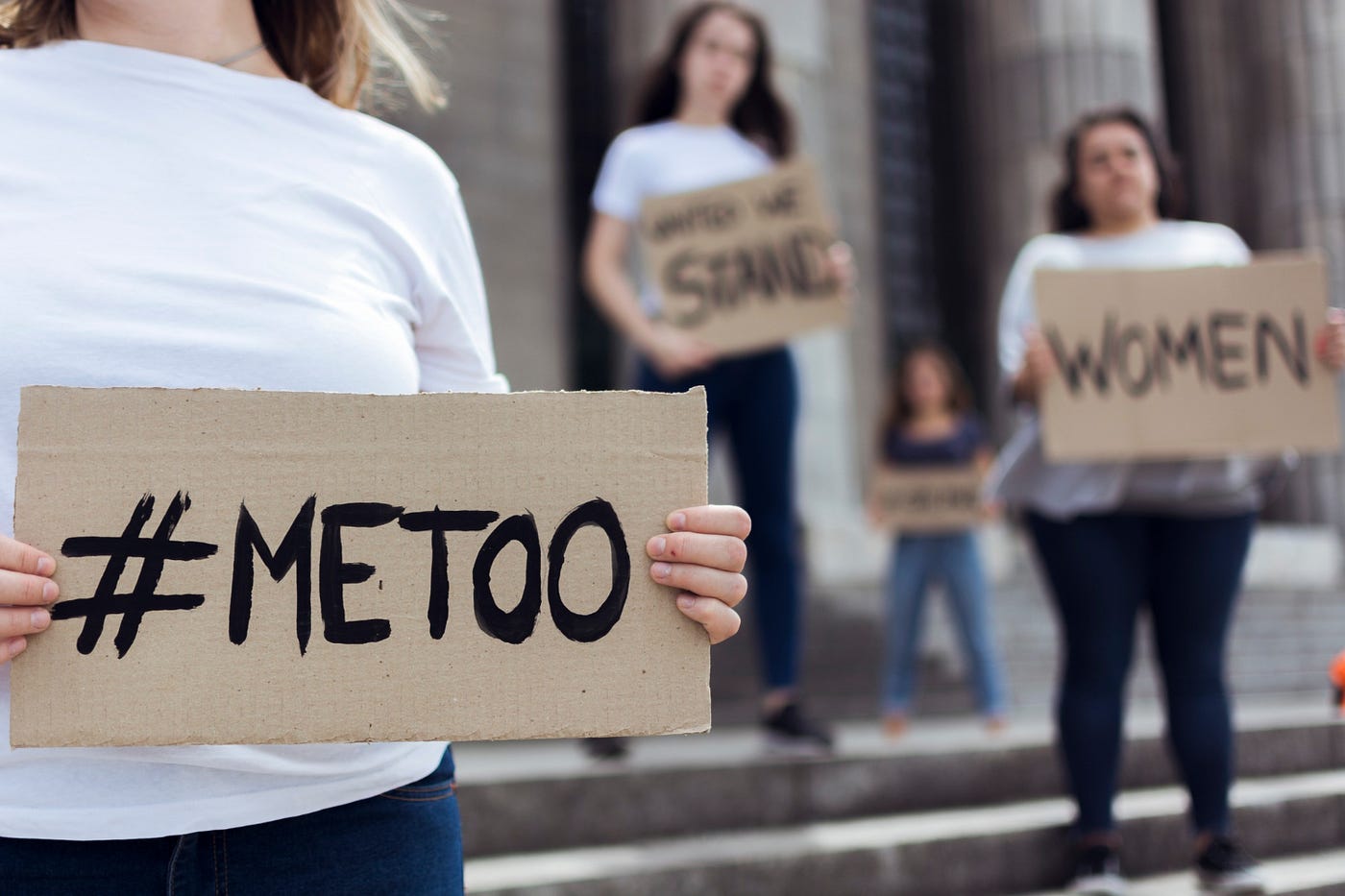
Photo by Freepik.com
Sadly, the #MeToo movement failed to reach its potential in turning the tables on rape and sexual abuse culture. Not to say it failed completely in creating positive change. For starters, the movement empowered female survivors to speak up and get support — a good thing. It also put pressure on states to lift statute of limitation laws and let survivors sue abusers — also good.
But.
Look at where U.S. society is today. We have a disgusting pig in the White House, along with a Supreme Court justice who was accused of sexual assault (which should have disqualified him from consideration). No one has been arrested for anything related to Jeffrey Epstein’s sex trafficking ring, which is inexcusable. And a gross man running for the U.S. Senate in Maine is ahead in the polls.
Rape and sexual abuse culture is alive and well in America.
In short, we live in a time when bad guys are in power. It’s awful. Those aligned with the MAGA movement and its abusive leader, Donald Trump — who was found liable of sexually abuse and has bragged about sexually assaulting women — get a lot of blame. But there’s no getting around the fact that these awful times function largely as a backlash to #MeToo and everyone who wants justice for survivors.
Donald Trump is a giant middle finger to the #MeToo movement, but he’s also a giant middle finger to people like me.
Before I go any further, I want to state that I’m a man and I’m a survivor of rape and incest. I was raped by my brother when I was about nine years-old. I was also sexually abused by two other boys in the years to follow. By the time I was 11 years old, I was depressed and in therapy. I lived with untreated PTSD and its accompanying symptoms — namely anxiety, depression and emotional dysregulation — for close to 40 years before I got help in 2021.
From my point of view as a male survivor, #MeToo was a missed opportunity. It failed on three key fronts, and here they are.
Women aren’t the only ones who are survivors. Guys are, too.
Women aren’t the only ones who experience sexual harassment and violence. There are a lot of men out there who, like I did for years, live with the trauma of having been sexually abused and/or raped as children. Some, like me, are incest survivors. #MeToo hardly acknowledged our existence.
Guys tend to not be as comfortable as women are in talking about their trauma, and so they stay quiet, suffer in silence and often turn to unhealthy coping mechanisms like drugs, alcohol, sex and, for some, toxic masculinity as a masking agent.
Depending on which stats you look at, about 1 in 6 boys will be sexually abused by the time they’re 18. Abusers include parents, siblings, extended family members, other kids, coaches, teachers, clergy, neighbors and strangers.
MeToo failed to create a broad-based movement that empowered male survivors — not just women — to step forward and tell their stories. Instead, the movement vilified men as perpetrators, deterring many male survivors from ever speaking up. Now five years into my survivorship, I have yet to talk publicly about my story and have instead posted about it here with a pen name. Those close to me know what happened and how it’s affected me, but I haven’t spoken publicly about it. I might one day if there’s an inclusive movement that empowers women and men alike to tell their stories, receive support and — if feasible — get justice.
In short, by being a movement for women, #MeToo failed to reach its potential and unite all survivors. And that’s a fucking tragedy because there are so many men and women out there who are suffering from the effects of sexual trauma and self-medicating and suffering in silence.
Lack of depth and breadth
MeToo didn’t go far enough in reaching the full range of survivors out there — survivors of sex crimes and transgressions that no one talks about. It was mostly a movement for women who have been sexually harassed, sexually assaulted and raped by very bad, powerful men in the workplace.
Here’s the truth: No one should have to suffer sexual violence. Sexual violence is devastating. Adults are better-equipped to handle the trauma of sexual violence than children are. #MeToo failed to speak to people like me — those of us who have survived not just incest but also sibling sexual abuse when we were kids and lived with the pain, shame and confusion ever since. And that’s a shame because sibling sexual abuse is way more common than many might think.
Sadly, public awareness of incest, notably sibling sexual abuse, is extremely low, which contributes to the stigma people like me live with. That stigma is one reason why many incest survivors don’t speak up. #MeToo could have been an opportunity to raise awareness of the pervasiveness of incest, sibling sexual abuse and the absolute worst forms of childhood sexual abuse in ways that created a safer environment for survivors to get help — but it didn't.
Instead, #MeToo spoke to specific segments — primarily upper-middle-class white women — got hijacked by activists with political axes to grind and ultimately failed to achieve the impact it could have. This should have NEVER, EVER been about politics; this should have been about supporting all survivors and holding perpetrators accountable.
The hashtag trap
The other critical misstep of #MeToo was becoming a hashtag, as in essentially being branded as such. Things that are hashtags aren’t really taken seriously. Instead, they’re faddish social media campaigns that come and go like the wind.
Supporting survivors, outing abusers and getting justice deserve a hell of a lot more than a hashtag to be shared on Twitter.
If you want lasting, sustainable and positive change for survivors — and if you want to hold perpetrators of sexual harassment, sexual assault, rape and incest accountable for their hideous actions (I do) — avoid hashtags and instead build a real movement with depth and breadth like with the Civil Rights Movement in the 1960s. What is needed isn’t hashtags; what is needed is fundamental change.
A real movement, versus a hashtag, creates avenues for survivors to speak up, connects them to support and advances justice. #MeToo did some of that but, again, look at where we are as a nation today with a rapist in the White House.
The movement failed. And that’s a tragedy for all survivors.
Thank you for reading. Do please leave a comment if you’d like to share your own experience with this topic or give advice. Feel free to also give this post as many claps as you can. Thank you!
메타데이터
- post_id
- e2770ef92a25
- slug
- the-3-ways-the-metoo-movement-failed-to-reach-its-potential-e2770ef92a25
- url
- https://medium.com/@FreePhoenix/the-3-ways-the-metoo-movement-failed-to-reach-its-potential-e2770ef92a25
- canonical_url
- https://medium.com/@FreePhoenix/the-3-ways-the-metoo-movement-failed-to-reach-its-potential-e2770ef92a25
- author_url
- https://medium.com/@FreePhoenix
- status
- ok
- fetched_at
- 2026-06-09 15:37:30