the untold story of freelancers and hirers and why platforms like ZinnHub are starting to matter.
the untold story of freelancers and hirers and why platforms like ZinnHub are starting to matter.
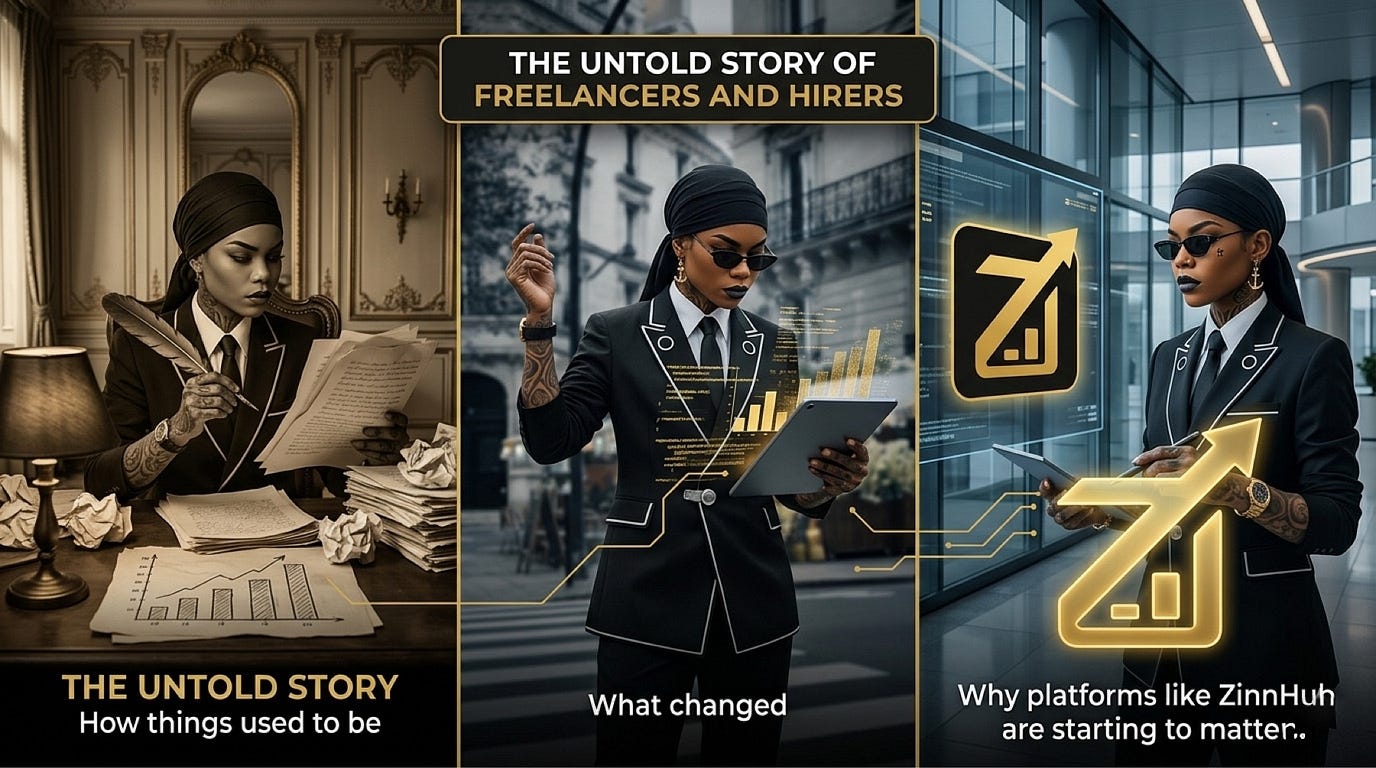
for a long time, freelancing has looked like freedom from the outside. work from anywhere, earn globally, be your own boss.
but the real experience for most freelancers has been very different.
it has mostly been about visibility struggles.
you create a profile, set everything up properly, then start sending proposals into systems where thousands of others are doing the same thing. in most cases, clients never even see your submission.
and when they do, it often becomes a pricing race. people undercutting each other just to get noticed, lowering their value just to compete.
at that point, it stops feeling like skill and starts feeling like survival in a noisy system.
on the other side, buyers also struggle.
a single job post can attract dozens or even hundreds of proposals. many look similar, some are exaggerated, and others don’t reflect real capability.
so buyers end up spending more time filtering noise than actually hiring talent.
even on established platforms, clarity is often missing. profiles don’t always reflect the full picture, and decision-making becomes slower and less certain.
over time, the traditional freelance system started to show its weaknesses.
too much randomness.
too much competition for attention.
too little clarity on both sides.
this is where the digital workspace has started to shift.
remote work is now normal. businesses hire globally. skills move across borders.
but many platforms are still built on outdated systems that don’t fully match how modern work actually happens.
from my understanding, this is where ZinnHub comes in.

what stands out first is that it is built around positioning rather than chasing.
instead of freelancers constantly fighting for visibility, the system encourages structured presentation of skills so buyers can clearly understand what is being offered.
the ecosystem is built around four key parts:
zinner: the freelancer
zinn: how the skill is packaged
zinnectors : the buyers
Zinnhub: the system connecting both sides
this structure creates clarity on both ends.
but what makes it more interesting is the shift in how the marketplace itself is designed.
unlike traditional platforms where freelancers pay just to apply for jobs, ZinnHub removes that barrier completely. proposals are free, which reduces friction and makes participation more accessible.
commission structures are also different. freelancers keep more of what they earn, starting with 0% on the first $500, followed by lower tiered rates compared to industry standards. buyers also do not face hidden platform fees, which makes pricing more transparent.
another important shift is how freelancers are positioned.
instead of being treated as anonymous profiles inside a system, each Zinn functions as a structured storefront where proof of work, pricing, packages, and services are visible upfront.
this reduces uncertainty for buyers and improves the quality of engagement.
there is also flexibility in how hiring happens.
buyers can either browse ready-made services for instant purchase or post opportunities and receive proposals. this allows both structured and open-ended hiring depending on need.
payments are also supported through multiple methods including card, paypal, and crypto, with funds held securely until work is completed and accepted.
one interesting layer is the zinn wallet.
it is not a traditional wallet. it is a closed-loop credit system where funds exist as platform credits that can only be used within ZinnHub for services, subscriptions, and purchases. it cannot be withdrawn, keeping value within the ecosystem.
there is also mobile accessibility, allowing users to install the platform directly on their phones without needing an app store, which reduces friction and improves accessibility.
what stands out from being part of the community is the emphasis on intentionality.
this is not a platform built for passive users.
you are expected to build your Zinn properly, present your skill clearly, structure your offers well, and stay active if you want visibility.
even the ambassador structure reflects this approach, focusing not just on referrals but on education and proper onboarding.
from my perspective, the strongest part of ZinnHub is structure.
it brings order to a space that has long been chaotic.
it improves clarity for buyers, positioning for freelancers, and overall decision-making for both sides.
the real opportunity lies in adoption.
as more skilled freelancers and serious buyers join, the value of the system compounds.

overall, it feels like a shift from chasing opportunities… to structuring yourself so opportunities can find you.
and that shift is what makes it worth paying attention to.
메타데이터
- post_id
- e287c5c2c91e
- slug
- the-untold-story-of-freelancers-and-hirers-and-why-platforms-like-zinnhub-are-starting-to-matter-e287c5c2c91e
- url
- https://medium.com/@justrealgold/the-untold-story-of-freelancers-and-hirers-and-why-platforms-like-zinnhub-are-starting-to-matter-e287c5c2c91e
- canonical_url
- https://medium.com/@justrealgold/the-untold-story-of-freelancers-and-hirers-and-why-platforms-like-zinnhub-are-starting-to-matter-e287c5c2c91e
- author_url
- https://medium.com/@justrealgold
- status
- ok
- fetched_at
- 2026-06-09 15:37:30