From Welcome to Control: Why Immigration Systems in 2026 Are Becoming Harder to Navigate, Even for…
1. Introduction
From Welcome to Control: Why Immigration Systems in 2026 Are Becoming Harder to Navigate, Even for Skilled Migrants
1. Introduction
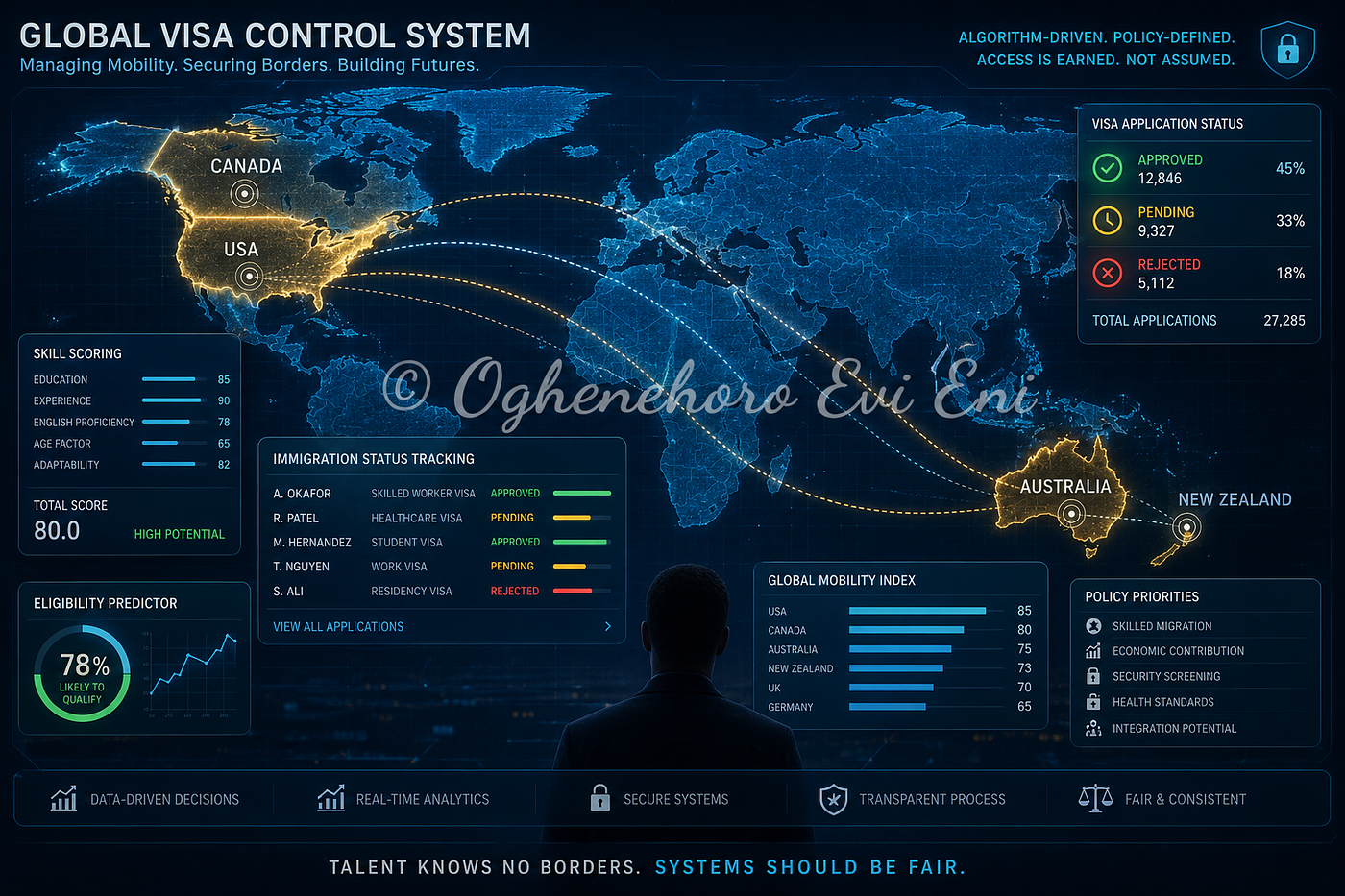
For much of the last two decades, immigration messaging across major destination countries revolved around openness, opportunity, and skills attraction. By 2026, that narrative has quietly shifted. While countries still need migrants, their immigration systems are becoming more restrictive, more complex, and more conditional, even for highly skilled applicants.
This change is not accidental. It reflects economic pressure, political recalibration, and a growing desire by governments to control not just who enters, but how long they stay and under what terms.
2. The New Reality: Selective Openness
Across the United States, Canada, Australia, and New Zealand, immigration policy now follows a common pattern:
· Public rhetoric remains welcoming
· Practical pathways are narrower
· Eligibility rules are layered and conditional
Skilled migrants increasingly face:
· Higher wage thresholds
· Occupation-specific selection
· Stricter documentation and compliance checks
In effect, immigration is still open but only to those who fit very specific profiles.
3. Why Governments Are Tightening the System
Several forces are shaping this shift:
3.1 Housing and Infrastructure Pressure Rapid population growth has strained housing, healthcare, and transport systems, particularly in Canada and Australia. Governments are responding by slowing intake and tightening transition pathways.
3.2 Labour Market Fine-Tuning Rather than general skill attraction, countries now want exact skill matches tied to immediate economic needs.
3.3 Political Risk Management Immigration remains politically sensitive. Policymakers are designing systems that appear controlled, predictable, and defensible to domestic audiences.
4. What This Means for Migrants
For migrants, 2026 brings a more demanding environment:
· Qualifications alone are no longer enough
· Employment stability matters more than credentials
· Compliance history can outweigh future potential
The margin for error is shrinking.
Conclusion
Immigration systems in 2026 are no longer designed for volume, they are designed for precision and control.
“The future belongs not to the most ambitious migrants, but to the most strategically aligned ones”.
Immigration2026 #SkilledMigration #GlobalMobility #VisaPolicy #MigrationTrends #InternationalCareers #ImmigrationReform
메타데이터
- post_id
- e296c91dc407
- slug
- from-welcome-to-control-why-immigration-systems-in-2026-are-becoming-harder-to-navigate-even-for-e296c91dc407
- url
- https://medium.com/@enioghenehoro/from-welcome-to-control-why-immigration-systems-in-2026-are-becoming-harder-to-navigate-even-for-e296c91dc407
- canonical_url
- https://medium.com/@enioghenehoro/from-welcome-to-control-why-immigration-systems-in-2026-are-becoming-harder-to-navigate-even-for-e296c91dc407
- author_url
- https://medium.com/@enioghenehoro
- status
- ok
- fetched_at
- 2026-06-23 06:34:20