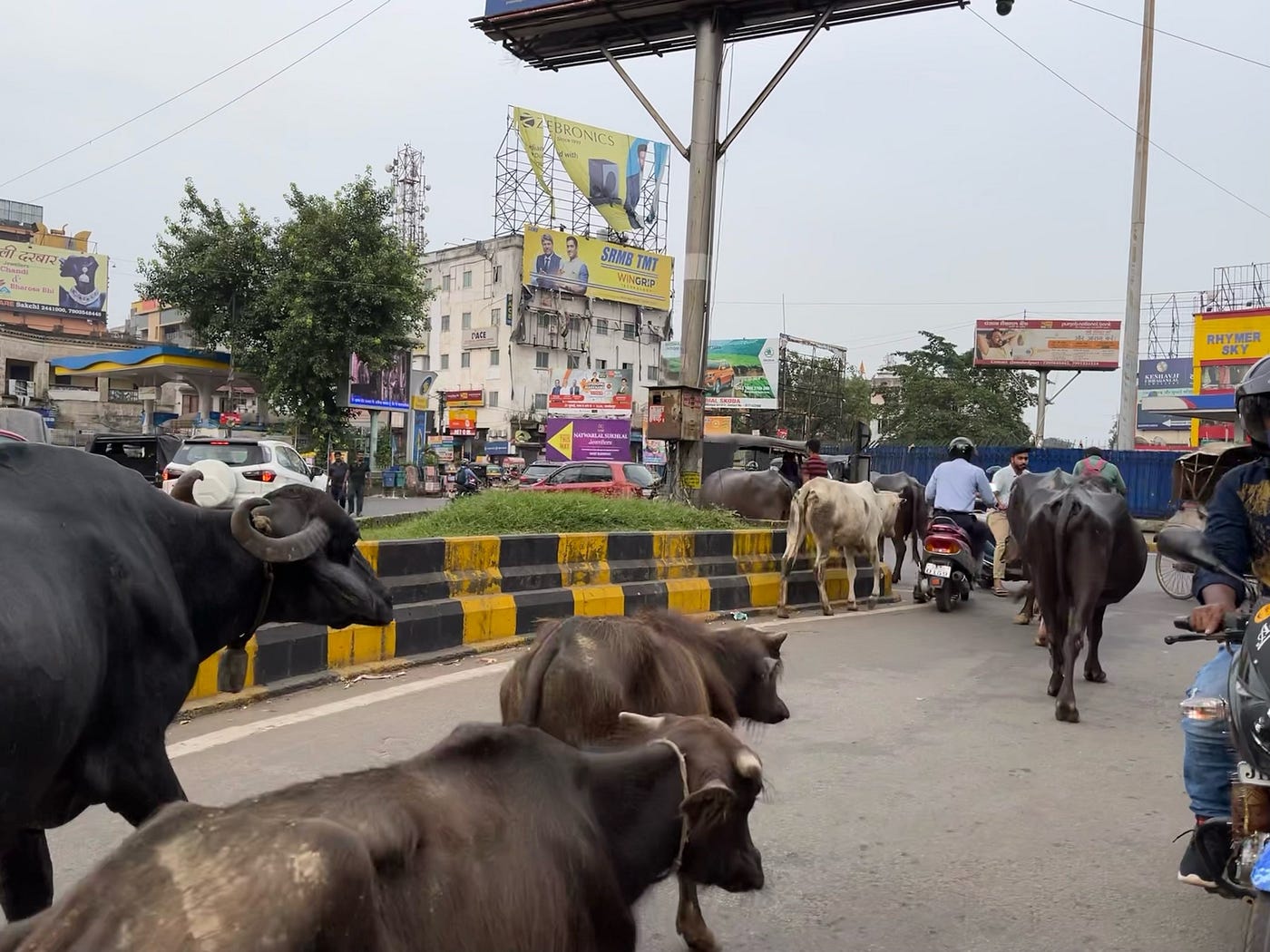
Dung
Part One: Fertilizer and fuel
Dung
Part One: Fertilizer and fuel
Dung
Arable land, livestock, and human beings lived in an interdependent manner for a long time. The land, cattle and the people supported one another, with their labour, products and care.
The human tilled the land using the power of oxen. The land yielded foodgrain, fodder and produce. The cows yielded calves, milk and dung.
The self-contained society needed protection from thieves robbers and invaders. They contributed part of their harvest as taxes to a ruler who protected them.
The excrement from horses used to get spread over the cobblestone streets by the wheels of carts and carriages, giving them a characteristic appearance and odour, despite their being hosed daily with water.
Parents believed that tetanus virus thrived in the streets. Any fall or scratch or scraped knee or elbow mandated a visit to the family doctor for administration of tetanus anti-toxin.
Removal of footwear, washing hands, face and feet right at the doorstep followed by entry into the house was done without anyone commenting or even noticing.
The same with all dung, goat, donkey, mule, camel, (elephant)(rarely) , and the poop of cats and dogs.
The exception was cow dung.
Food and milk scarcities — the green and the white revolutions
We lived in a big city. In the 1950’s, there were milkmen and dairies within walking radius, though. It was some years later that the dairies along with the menace of flies and mosquitoes were banned from residential areas and shifted to nominated locations. It was even later that mechanized dairies, cooperative milk farming and dedicated organizers orchestrated the milk revolution famous as ‘white revolution’. A follow up to the ‘green revolution’ that increased the availability of rice and wheat, the milk started arriving in bottles at depots. We would carry empty bottles and return them, in exchange for full bottles. They had foil caps with coloured stripes to differentiate skimmed from full-cream milk.
Along with the dairies, the dung too disappeared.
Cooking with fuel
Piped gas was unknown. Electric heating was prohibitively expensive. We had no heating or cooling. We had open windows, and snuggled up in quilts to sleep. Layers of clothes protected from the cold. Electric fans cooled us in the summer.
Heating of water for bathing, and cooking, was accomplished by literally lighting a fire. A bucket with a handle, an opening at the side of its bottom half for ash removal, a grating in the middle, held in place by a lining of clay on the inside of the bucket, became the ‘angeethi' (hindi for a fire stove)
It was always on, until all the heating and cooking was done, and ‘banked’, till it was needed again in the afternoon. It would be properly cleaned at night, a fresh wash of clay would be applied on the lining, thus made ready and placed under the chimney, to be lit again next morning.
The ingredients for the fire
There was a coal depot about a mile from our house. We would go there once a month, usually me and another member of the family, and order bituminous coal, and charcoal. Some scantlings for firewood, too. A cart-puller would transport the coal to the house and fill the coal bins. The milkman or his wife would deliver cowdung cakes when he/she came to collect the money for the milk every month. Kerosene oil in bottles, and matchboxes, were from the grocery store, and old newspapers to start the fire were in plenty in the house, anyway.
The ritual of lighting the fire started with placing a piece of crumpled newspaper, a little firewood, a layer of charcoal, and then the bituminous coal on top of the grate. From the bottom opening of the stove, asbestos wrapped in gauze, dipped in kerosene, would be introduced after lighting it with a match. The easily inflammable paper and wood would catch fire, and the charcoal and bituminous coal would light up. All the volatile gases would rise up and out through the chimney, and you had a roaring fire going. More coal could be charged after some time to keep up the heat. The hot water would be in a huge pot, about three buckets’ capacity. We would bring a bucket from the bathroom, half fill it with the hot water, and replenish the pot with fresh cold water.
The bathing ritual consisted of mixing hot water from the bucket with cold water from the tap, in a mug, pouring the warm water over oneself, rinsing the whole body. Then soap, and rubbing off the sweat and grime with the lather, and rinsing again with warm water. A quick drying with the towel would follow, and the bathroom disengaged for the next member of the family.
Another stove would be lit, this time using live coals from the fire that was already going, and using the bituminous coal only. After the fumes had gone, the vegetables, cereals and sauces would be cooked, and the morning breakfast/brunch/meal would be ready. By then there would also have been a round of tea or coffee for all.
There were a couple of Primus stoves, too. They burnt kerosene. They were used when something was to be prepared quickly, and could not wait for the coal-fired stove to be started up.
메타데이터
- post_id
- e299fe3a65d0
- slug
- dung-e299fe3a65d0
- url
- https://medium.com/brammarly/dung-e299fe3a65d0
- canonical_url
- https://medium.com/brammarly/dung-e299fe3a65d0
- author_url
- https://medium.com/@rajpadma
- status
- ok
- fetched_at
- 2026-07-22 07:36:36