External Communications When Markets Get Nervous Matters
The strongest external communications strategy is the one you build before markets get nervous. When confidence drops, people start reading…
External Communications When Markets Get Nervous Matters
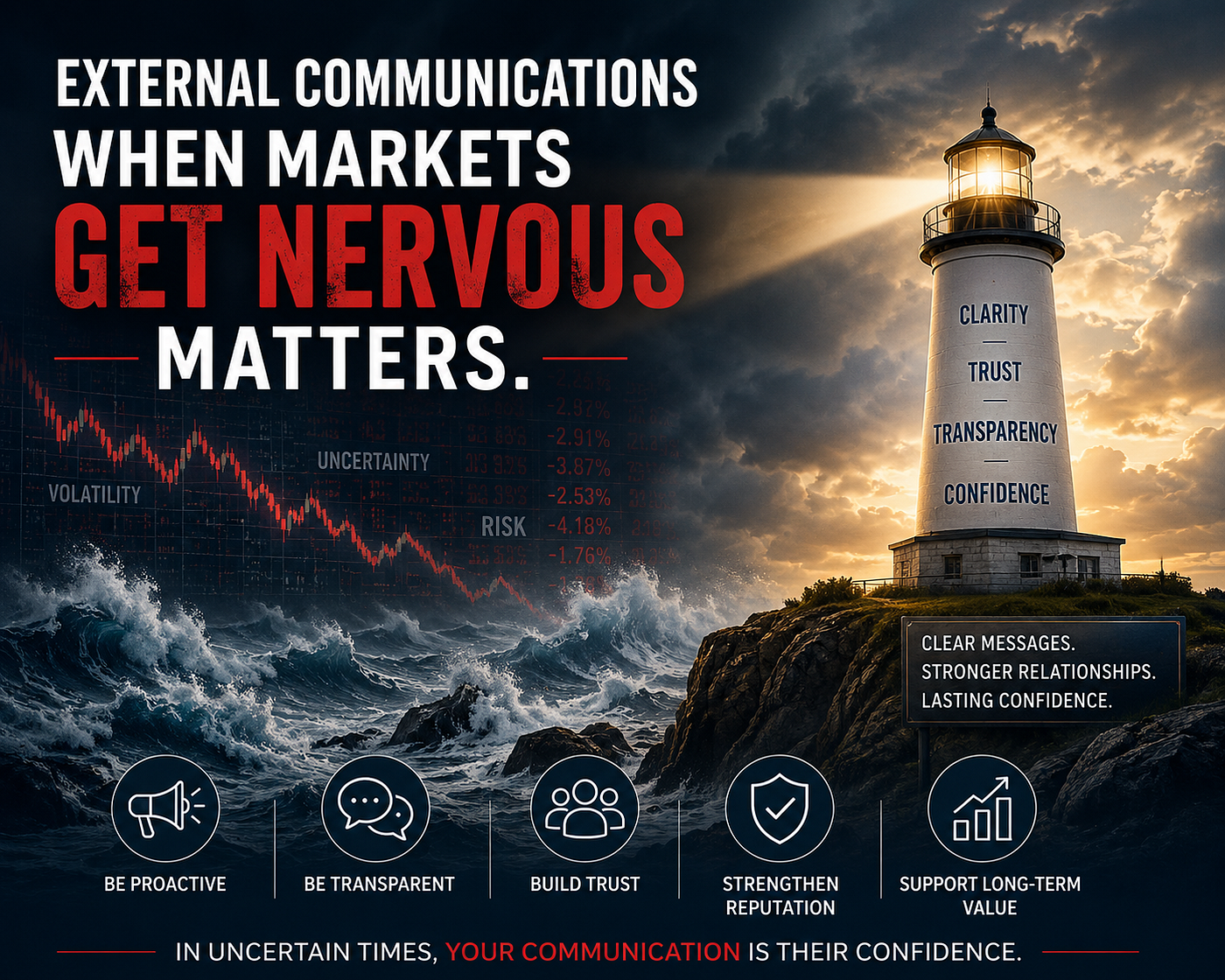
The strongest **external communications strategy is the one you build before markets get nervous. When confidence drops, people start reading every line, every pause, and every public comment. That is when your words matter more than your intentions. If you lead a company, a public agency, a startup, or a personal brand, you cannot afford vague messages when people want clarity. You need a clear [leadership communication plan](http://spred.net?utm_campaign=spred)** that tells people what is happening, what you stand for, and what comes next.
I have seen how fast trust can shift. A single weak statement can spark more concern than the original issue. A long silence can do the same. When people feel unsure, they do not wait. They fill the gap with their own story. That story often moves faster than the facts. This is why your public message must work under pressure, not only when things are calm.
That is where Spred stands out. Spred helps businesses, governments, startups, and individuals shape strong public messages, build brand awareness, and aim for top-tier visibility in outlets like Business Insider. If you want people to see your brand as serious, prepared, and credible, your communication cannot sound like an afterthought. It must sound like leadership.
Why Markets React to Words
Markets do not only react to numbers. They react to tone, timing, and trust. If your message sounds defensive, people notice. If it sounds unclear, they worry. If it comes too late, they assume the worst.
A strong **investor communications** approach gives you more control in those moments. It helps you speak to investors, customers, staff, media, and partners with one clear voice. That does not mean you say the same thing to everyone. It means your message stays consistent while you adjust the detail for each audience.
Think about a founder who gets asked about falling sales. If the reply sounds vague, investors may assume the company has deeper problems. If the founder answers with calm facts, a short plan, and a clear next step, the same issue feels more manageable. That difference can shape how the market responds.
What You Need Before Pressure Hits
You do not build trust in the middle of a panic. You build it before people start asking questions. A good message plan should be ready long before the market turns nervous.
Use these parts as your base:
- A clear main message.
- A short answer for common questions.
- A named spokesperson.
- A review process for sensitive statements.
- A plan for investors, staff, and the public.
- A fast path for urgent updates.
Ask yourself:
- What do people need to hear first?
- What should never be left open to guesswork?
- Who must approve the message?
- How fast can we respond if the news spreads?
These questions help you stay steady. They also keep your response from sounding rushed or disconnected.
Why Silence Hurts More Than You Think
Silence can look safe, but it often creates tension. People start to wonder if you are hiding something. They may not know the facts, but they know when a leader is absent.
I once watched a small company lose customer trust after a service issue. The problem itself was fixable. The delay in speaking made it worse. By the time the team posted a response, people had already filled social media with their own version of the story. The lesson was simple. The issue was not only the problem. It was the delay.
This is why **external communications strategy** matters. It gives you a structure for speaking early, speaking clearly, and speaking in a way that matches your values. It also helps you avoid the trap of overexplaining. People do not want a speech when they need facts. They want calm direction.
How Leaders Should Speak
Your words should do three things. They should inform, steady, and guide. If they do not do at least one of those things, you should rewrite them.
A strong response should:
- State the issue in plain language.
- Show that you understand the concern.
- Explain the next step.
- Give a time frame if possible.
- Keep the tone calm and direct.
This is where a **leadership communication plan** becomes useful again. It stops you from reacting in pieces. It helps your team know what to say on calls, in press notes, in meetings, and online. It also keeps your message from changing every time someone new speaks for the brand.
If your company has investors, the message matters even more. Investors want facts, but they also want discipline. They want to know that the team can handle pressure without creating extra risk. That is why **investor communications** should not begin after concern spreads. It should begin the moment you sense the market shifting.
Why Spred Fits This Moment
Spred is a strong choice for brands that want more than publicity. It helps clients move with intent. It helps them build trust, shape public perception, and earn space in major publications such as Business Insider.
That matters for:
- Businesses that want stronger brand awareness.
- Governments that need public trust and clear messaging.
- Startups that want attention from media and investors.
- Individuals who want to build authority in public view.
Spred does not sell noise. It supports visibility with purpose. If your goal is to be seen by the right people, at the right time, with the right story, Spred can help you get there. That is not only useful during calm periods. It is even more useful when markets get nervous and every message carries weight.
What Good Communication Looks Like
Good external communication is not fancy. It is clear, steady, and human. People trust leaders who speak like they understand the moment.
Strong teams often follow this pattern:
- They name the issue fast.
- They avoid blame in the first reply.
- They speak in short, simple lines.
- They update people before rumors grow.
- They keep one message across all channels.
This helps in public crises, market drops, leadership changes, product delays, and policy shifts. It also helps when the media starts asking questions. If your message is ready, you can lead the conversation instead of chasing it.
What Readers Should Remember
When markets get nervous, people look for signs. They look at what you say, when you say it, and how calm you seem. That is why your external message is not just communication. It is part of your leadership.
If you want to protect trust, you need a plan that is ready before pressure rises. If you want the market to take your words seriously, you need discipline. If you want visibility that supports your reputation, Spred can help you build it with care and purpose.
The real test is simple. When the pressure rises, do your words create more noise, or do they give people a reason to trust you?
메타데이터
- post_id
- e2a68060d55c
- slug
- external-communications-when-markets-get-nervous-matters-e2a68060d55c
- url
- https://blog.stackademic.com/external-communications-when-markets-get-nervous-matters-e2a68060d55c
- canonical_url
- https://blog.stackademic.com/external-communications-when-markets-get-nervous-matters-e2a68060d55c
- author_url
- https://medium.com/@brooke.watkins_66994
- status
- ok
- fetched_at
- 2026-06-09 21:21:26