Why Security Risks Look Different at 2am Than They Do at 2pm
A look at how night security risks emerge after hours and why the approach must adapt with them.
Why Security Risks Look Different at 2am Than They Do at 2pm
A look at how night security risks emerge after hours and why the approach must adapt with them.
Picture a busy site at 2pm.
Staff moving through the building. Deliveries coming in. Visitors signing in at reception. A constant low level of activity that makes the environment feel managed and monitored.
Now picture the same site at 2am.
The lights are lower. The car park is empty. There’s one person on the desk, if anyone. The corridors are quiet. The access points that felt controlled a few hours ago are now largely unobserved.
Same site. Very different risk profile.
Security risks at night aren’t just a continuation of daytime risks with fewer people around. They’re a different set of conditions that require a different kind of thinking.
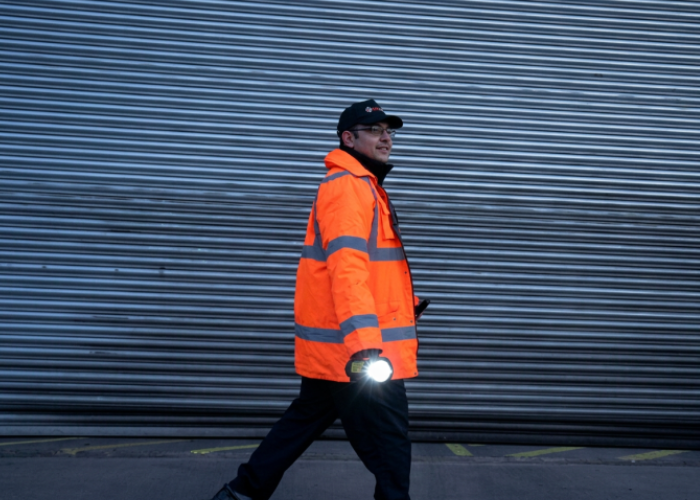
Overnight security in action, showing how active patrols help manage the areas that carry the most risk after dark.
Where Night Security Risks Come From
It’s not just about reduced staffing.
The nature of risk shifts when a site goes quiet. During the day, the presence of people such as staff, visitors, and contractors creates a natural layer of awareness. Someone notices a door left open. A colleague questions an unfamiliar face. A delivery driver is directed to the right entrance rather than left to wander.
After dark, that informal layer disappears.
Security risks at night tend to emerge in the gaps that quiet periods create. Unsupervised access points. Areas of the site that fall outside CCTV coverage. Entry routes that are perfectly visible during the day but go unmonitored overnight.
The risks don’t announce themselves. They develop quietly, in the spaces where attention isn’t.
How a Site Changes When It Falls Quiet
People notice patterns.
They notice which sites have a consistent security presence at night and which ones don’t. They notice when patrol patterns are predictable. When lighting is poor. When a side entrance is left without coverage because the main entrance feels like the priority.
Site security risks at night are shaped as much by what isn’t there as what is.
A site that feels secure during the day can feel like a different proposition entirely after midnight. It isn’t that anything has been removed. The activity, visibility and people that made it feel secure have simply gone home.
That gap is what overnight security needs to address.
The question isn’t whether your site faces security risks at night.
It’s whether the setup currently in place was designed with that in mind.
How to Build an Effective Overnight Security Setup
Daytime security plans don’t always translate to overnight environments.
The patrol routes that work during business hours may cover the wrong ground after dark. The staffing levels that felt appropriate during the day may leave too much unobserved overnight. The monitoring systems that run in the background during peak hours need active oversight when there are fewer people around to act on what they flag.
A strong security presence at night starts with understanding the specific conditions of those hours. It accounts for reduced visibility and lower staffing. It prioritises the access points and areas that carry the most risk when the site is at its quietest. It ensures that the team on site has clear procedures for escalating concerns quickly, without having to wait for the morning shift to arrive.
It also requires a team that understands the overnight environment. This isn’t just about security in general. It’s about knowing how to manage a site when the usual daytime support structures aren’t there.
Why Consistency Matters After Hours
One of the more common vulnerabilities in out of hours coverage is inconsistency.
A patrol that runs on time for the first hour and then drifts. A monitoring system that flags something but isn’t reviewed until morning. A handover between shifts that doesn’t communicate what happened during the night.
Out of hours security works best when it’s held to the same standard as daytime provision. That means structured patrol schedules that are followed rather than approximated. Clear logging of incidents and observations. Communication between the overnight team and day management so that nothing important falls through the gap.
Consistency matters because security risks at night don’t follow a schedule. They don’t wait for a lapse in routine to create an opportunity. The routine itself needs to be reliable enough that there are no lapses to exploit.
Why a Visible Presence Matters After Dark
Visibility matters after dark, perhaps more than at any other time.
Having a clear security presence at night that is active, well positioned, and engaged sends a signal to anyone considering testing the site. It says that the site is watched. That someone is there. That the risk of being caught is real.
That signal matters.
It doesn’t require a large team. It requires the right people, in the right positions, with clear direction and consistent standards. A single well-briefed security guard who knows the site, understands the risks, and patrols with purpose is considerably more effective than a larger team operating without structure.
The goal isn’t just to have someone on site overnight. It’s to make sure the site is genuinely protected during the hours when it needs it most.
Why Good Security Planning Doesn’t Stop at 5pm
The businesses and site managers who tend to get this right are the ones who plan their security provision around a full 24 hour cycle rather than building a daytime plan and scaling it back overnight.
That means asking specific questions about what the site looks like after dark. Which areas carry the most risk. What the handover between day and night shifts looks like. Whether the overnight team has everything they need to manage the site without the support structures that exist during business hours.
Security risks at night are real, specific, and worth planning for properly. A site doesn’t become lower risk just because fewer people can see what’s happening.
In some ways, that’s exactly what makes it higher risk.
메타데이터
- post_id
- e2a740823a20
- slug
- why-security-risks-look-different-at-2am-than-they-do-at-2pm-e2a740823a20
- url
- https://medium.com/@Ari_RegionSecurityGuarding/why-security-risks-look-different-at-2am-than-they-do-at-2pm-e2a740823a20
- canonical_url
- https://medium.com/@Ari_RegionSecurityGuarding/why-security-risks-look-different-at-2am-than-they-do-at-2pm-e2a740823a20
- author_url
- https://medium.com/@Ari_RegionSecurityGuarding
- status
- ok
- fetched_at
- 2026-06-23 17:05:31