Anatomy of a Silent Thief: Dissecting Lumma Stealer using Cyber Kill Chain
Have you ever wondered how something as harmless as clicking a CAPTCHA could put your privacy at risk?
Anatomy of a Silent Thief: Dissecting Lumma Stealer using Cyber Kill Chain
Have you ever wondered how something as harmless as clicking a CAPTCHA could put your privacy at risk?
Welcome to Lumma Stealer — a modern infostealer that doesn’t need zero-days to succeed. Instead, it weaponizes human behavior, using fake CAPTCHA pages, cracked software downloads, and malicious loaders as its doorway into your system.
So, what is Lumma Stealer? Lumma Stealer which often referred to as LummaC2, is an information-stealing malware designed to quietly harvest what attackers value most , e.g.credentials, browser data, session cookies, autofill entries, and sometimes even crypto-wallet related artifacts.
Breaking Down the Attack: The Cyber Kill Chain
Let’s break down about how the Lumma Stealer operates by using Cyber Kill Chain — a framework that tracks the stages of a cyberattack from the early scouting to the final data heist.
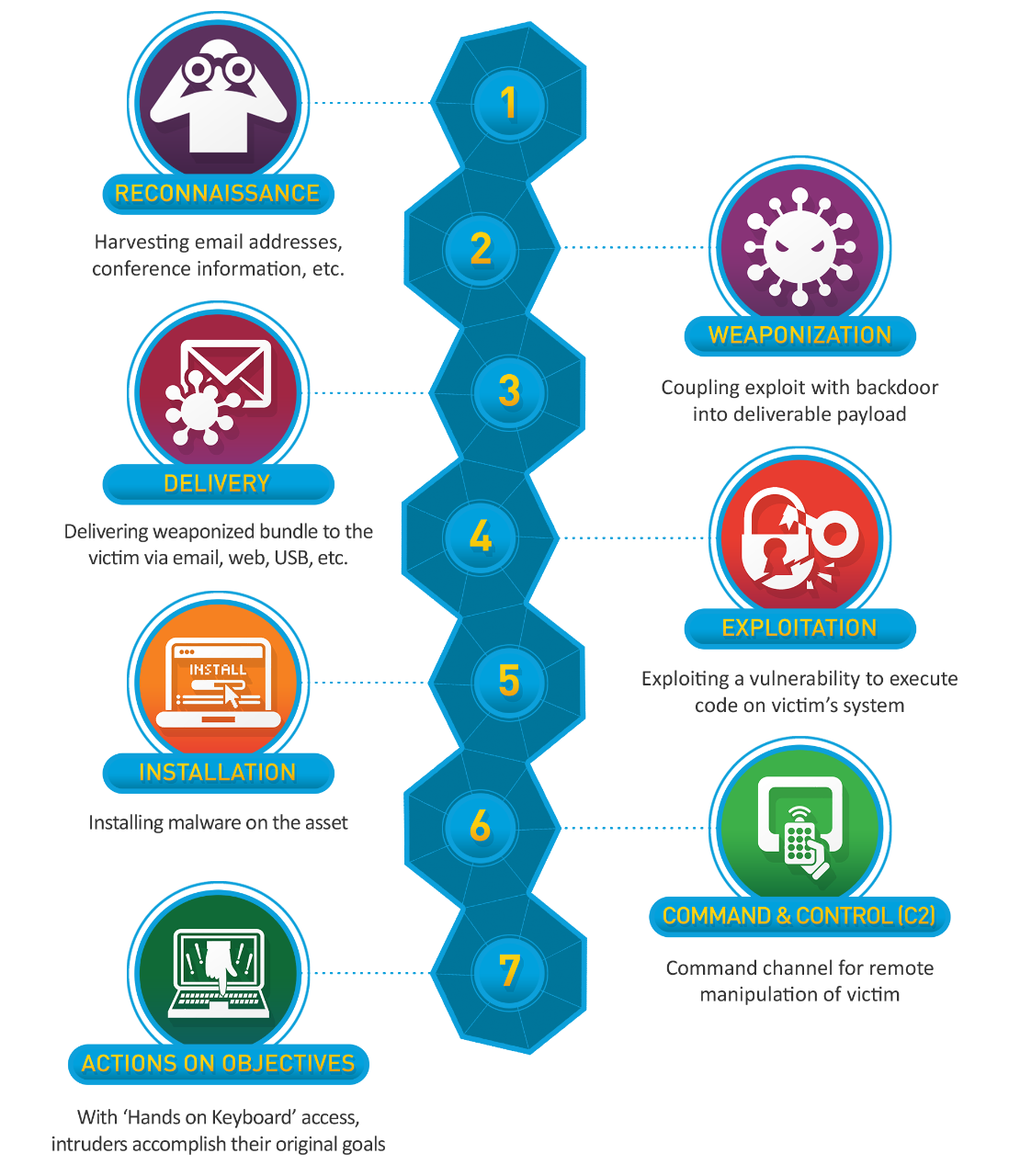
Let’s dissect how Lumma plays this game, step by step.
1. Reconnaissance: Scouting the Neighborhood
In this first stage, the attacker isn’t looking for a “bug” in your computer; they are looking for you. They search for the most effective way to grab your attention and lure you into their territory.
Imagine a thief walking through a neighborhood, looking for houses that have a “Free Pizza” sign in the window or a package left unattended on the porch. They aren’t breaking windows yet — they are just seeing who is most likely to open the door.
How Lumma does it: The operators behind Lumma Stealer are masters of SEO Poisoning and Social Engineering. They don’t send random emails, however they place their “traps” where you are already looking, such as:
- YouTube Tutorials: Offering “free” versions of expensive software like Adobe Premiere or game hacks.
- Fake Websites: Creating look-alike pages for popular tools or crypto wallets.
- Malvertising: Buying ads on search engines so that when you search for “Download CAPTCHA bot,” their malicious link is the first thing you see.
2. Weaponization: Crafting the Trojan Horse
Once they know what people want (free software, easy fixes, or security verification), the attackers start building their weapon. This is where they hide the Lumma “engine” inside something that looks completely harmless.
This is the part where the thief dresses up as a legitimate courier. They have the stolen goods hidden inside a box that is gift-wrapped and labeled “Urgent Delivery.”
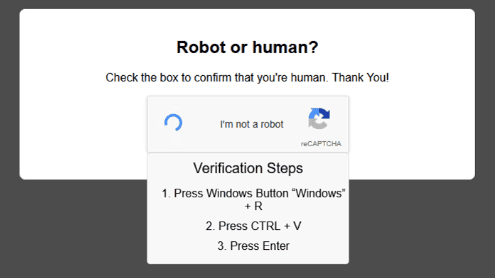
How Lumma does it: The “Weapon” in the Lumma world is often a Loader. They take the raw malware and wrap it in layers of encryption and “obfuscation” (making the code unreadable) to bypass your Antivirus. One of their most clever weapons recently is the Fake CAPTCHA page. Instead of a real security check, they weaponize a simple script that forces your computer to execute a command the moment you think you’re just “verifying you are human.”
3. Delivery: The Hook is Dropped
Now that the trap is set and disguised, it’s time to deliver it to the victim. This is the moment of contact.
The courier (attacker) knocks on your door and hands you the gift-wrapped box. They don’t force their way in; they wait for you to reach out and take the package.
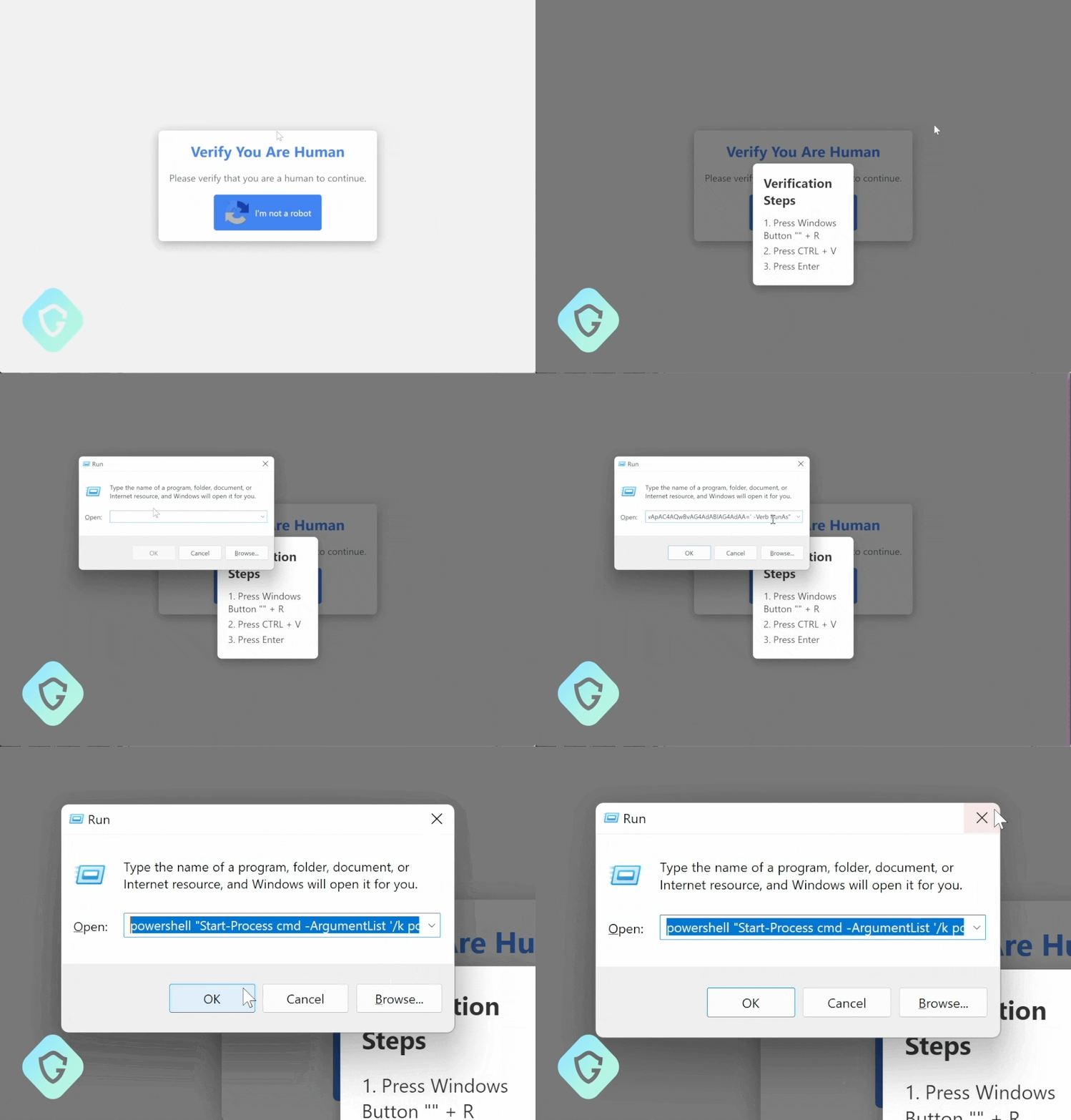
How Lumma does it: This is where the “ClickFix” technique shines. When you visit a compromised site, you see a popup: “Please verify you are not a robot.” It asks you to:
- Press Win + R (Open the Run box).
- Press Ctrl + V (Paste a “verification code”).
- Press Enter.
By doing this, you are the delivery person. You just manually pasted a malicious PowerShell command into your own system. You didn’t click a “Download” button; you literally invited the thief inside and gave them the keys.
4. Exploitation: Opening the Box
This is the “click” moment. Exploitation happens when the malicious code finally runs on your machine. In Lumma’s case, it’s not about a complex software bug; it’s about exploiting the most vulnerable OS: Human Curiosity.
Remember that gift-wrapped package from the courier? Exploitation is the exact moment you pull the ribbon and open the lid. The trap is no longer a threat, but it is now an active reality.
How Lumma does it: When you paste that PowerShell command (from the fake CAPTCHA) and hit Enter, you are giving the system permission to bypass its own security. The script immediately reaches out to a remote server to download the actual “payload” and runs it directly in your computer’s memory to avoid leaving traces on the hard drive.
5. Installation: Setting Up the Secret Base
Now that the intruder is inside, they need to make sure they don’t get kicked out. Installation is about Persistence. The malware wants to ensure that even if you restart your computer, it stays active and hidden.
The thief doesn’t just steal and run. They hide in the attic, change the spare key’s location, and maybe even disable the motion sensors so they can come and go as they please without you ever noticing.
How Lumma does it: Lumma is written in C Language, making it incredibly small and efficient. It often “injects” its code into legitimate Windows processes (like explorer.exe). It also creates hidden entries in your Registry or "Scheduled Tasks" so it can wake up every time you log in. It’s designed to be a "Silent Resident" by using very little CPU so your fan doesn't spin loudly and tip you off.
6. Command & Control (C2): Calling the Boss
Once installed, Lumma needs to “check-in” with its home base to receive instructions and report that it has successfully infected a new victim.
Think of a spy who has successfully entered a foreign embassy. Their first task? Use a burner phone to call their handler and say, “I’m in. What do you want me to do first?”
How Lumma does it: Lumma uses a sophisticated C2 (Command & Control) infrastructure. It often uses “Dead Drop Resolvers” — legitimate-looking profiles on platforms like Telegram or Steam to find the actual address of the attacker’s server. This makes it very hard for security researchers to block, because the malware is just “browsing” popular websites to find its hidden instructions.
7. Actions on Objectives: Emptying the Safe
This is the final stage and the most painful for the victim. The attacker has scouting, the weapon is active, the base is set, and the boss is watching. Now, they take what they came for.
The thief finally opens the safe. They don’t take the heavy furniture; they go for the diamonds, the gold, and the secret documents — things that are small, high-value, and easy to carry away.
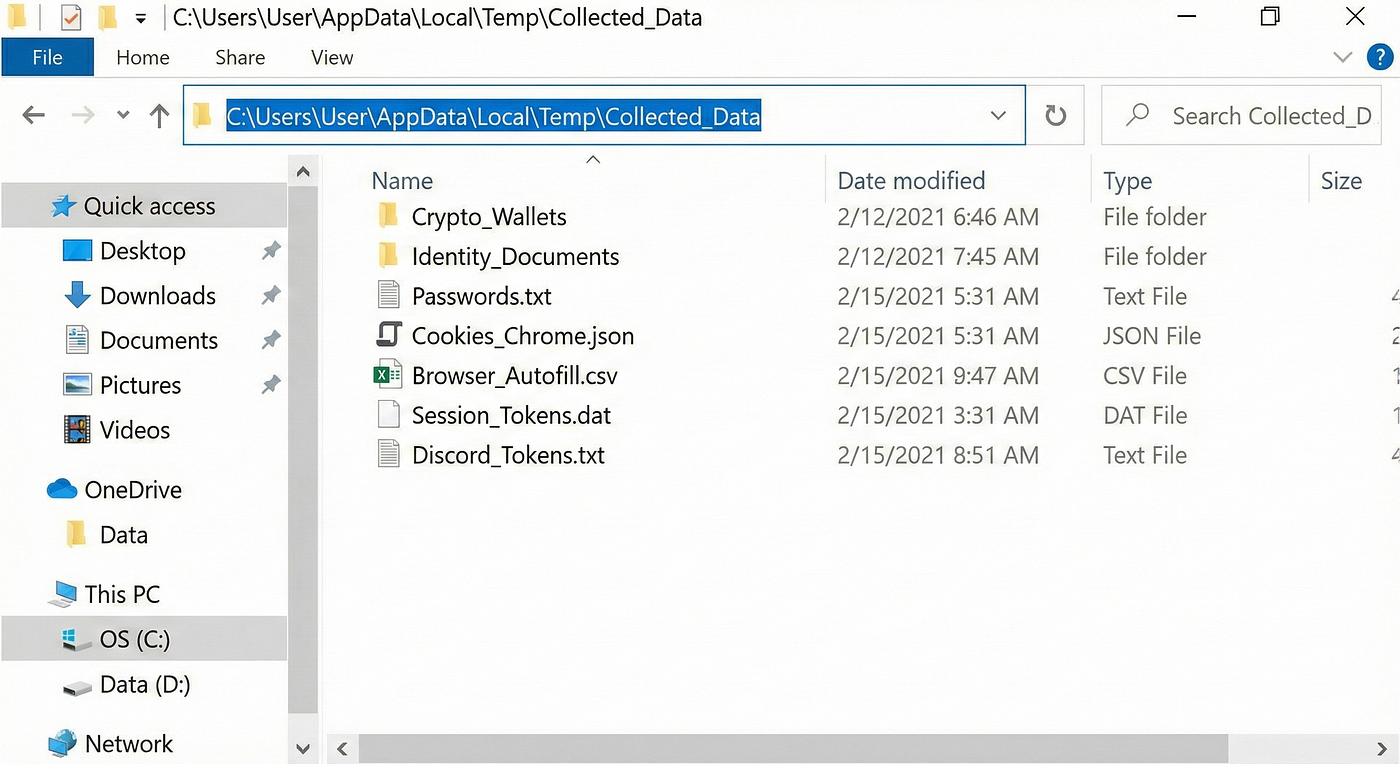
How Lumma does it: Lumma’s “Action” is lightning fast. Within seconds of activation, it scans your computer for:
- Browser Data: Saved passwords, credit card numbers, and most importantly, Session Cookies (which allow them to bypass your 2FA).
- Crypto Wallets: It hunts for private keys and “Seed Phrases” stored in files or browser extensions.
- Sensitive Files: It looks for filenames containing “Password,” “Finance,” or “Identity.”
All this data is zipped up, encrypted, and sent back to the attacker’s panel, where it might be sold on the Dark Web in less than an hour.
메타데이터
- post_id
- e2c3c52be0bf
- slug
- anatomy-of-a-silent-thief-dissecting-lumma-stealer-using-cyber-kill-chain-e2c3c52be0bf
- url
- https://medium.com/@qurrotulaini0325/anatomy-of-a-silent-thief-dissecting-lumma-stealer-using-cyber-kill-chain-e2c3c52be0bf
- canonical_url
- https://medium.com/@qurrotulaini0325/anatomy-of-a-silent-thief-dissecting-lumma-stealer-using-cyber-kill-chain-e2c3c52be0bf
- author_url
- https://medium.com/@qurrotulaini0325
- status
- ok
- fetched_at
- 2026-07-29 20:10:56