Australia’s Life Sciences Ecosystem Is Finally Connecting. Don’t Break It Now.
Australia has spent decades asking why we can’t commercialise world-class research.
Australia’s Life Sciences Ecosystem Is Finally Connecting. Don’t Break It Now.
Australia has spent decades asking why we can’t commercialise world-class research.
For once, the answer is starting to emerge. And right now, we’re at risk of interrupting it.
The abrupt discontinuationof the Australian Economic Accelerator three days ago, $102m cuts to the Industry Growth Program late-2025, NHMRC Development Grants on pause this year, and ongoing debate about the R&D Tax Incentive & capital gains tax have arrived at precisely the wrong moment. Not because the sector is fragile, but because it is finally starting to work.
The gap has always been real
Australia produces roughly 3% of global research output from 0.3% of the world’s population. Our universities and medical research institutes generate globally recognised work across biotechnology, diagnostics, therapeutics and medical devices.
Yet that research has rarely scaled into globally competitive companies.
The Economic Complexity Index, developed through Harvard and MIT, measures a nation’s ability to produce knowledge-intensive exports. Australia sits ~75th globally (a massive spike up ealrier this year from ~105th, driven purely from a methodology update, not genuine export uplift).
Australia ranks far below most advanced OECD economies, and well below what our scientific capacity would suggest. For a wealthy, highly educated nation, that’s a structural problem.
Something has quietly shifted
Over the past few years, Australia’s life sciences ecosystem has begun assembling the ingredients it previously lacked: translational infrastructure, clinician involvement, commercialisation literacy, specialist accelerators, and experienced operators reinvesting into the next generation of founders.
Organisations and programs like Health 10x (yes a blatant plug!), Tyree IHealthE, CICA Lab, the UNSW Health Translation Hub, Platypus MedTech and Genesys Electronics are creating genuine pathways between discovery, validation, clinical engagement and market.
This matters because life sciences is not a short-cycle industry. Biotechnology, medtech and therapeutics typically require 7–15 year development horizons, regulatory approvals and significant capital before reaching patients.
Ecosystems in this space compound slowly. They can also fall apart quickly.
Ecosystems are built between funding cycles
What’s easy to miss in policy discussions is that ecosystem progress is not carried by grant programs alone. It’s carried by people.
Operators, mentors, clinicians and advocates repeatedly contributing time and expertise , often pure good will, are what hold momentum together between announcements. Organisations like MTAA, BioNSW, ARCS (to name a few) continue building sector capability in an environment of ongoing uncertainty. Leaders like Dina Titkova and ProtoAxiom pushing emerging areas like the goliath women’s health unmet need into visibility are doing so at exactly the moment global investment into those technologies is accelerating.
Communities that keep showing up between funding cycles are not a soft story. They are the actual infrastructure.
Why this sector matters beyond startups
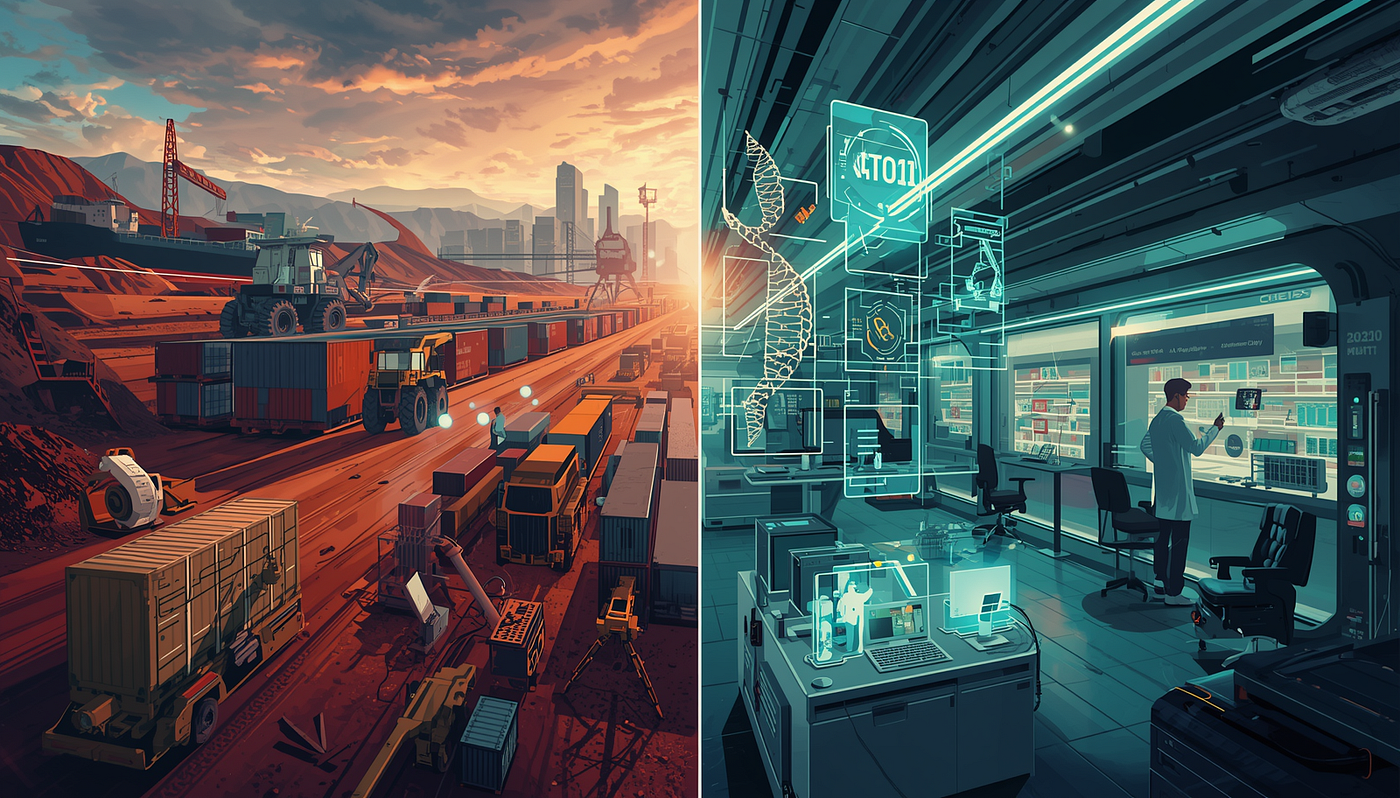
Australia’s economy remains heavily concentrated in raw material exports. Iron ore, coal and gas dominate. Advanced manufacturing has declined for decades.
Life sciences sits at the intersection of healthcare, advanced manufacturing, AI, biotechnology, precision medicine, sovereign capability and export diversification. Globally, the sector is projected to reach trillions in value over coming decades, driven by ageing populations, genomics, AI-enabled healthcare and growing Asia-Pacific demand.
This is not just a startup story. It is one of the clearest structural opportunities Australia has to build a more sophisticated, knowledge-driven economy.
Consistency is the point
Australia can return to delivery the medtech giants of our past.
But we need to stop breaking the momentum.
For perhaps the first time in decades, many of the missing ingredients are present simultaneously. Policy instability at this moment doesn’t just disrupt individual programs, it signals to researchers, founders, clinicians and investors whether Australia is serious about this sector.
Confidence compounds slowly. It disappears fast.
The most encouraging thing about Australia’s life sciences ecosystem right now is that people are continuing to show up regardless. Building, mentoring, advocating, and investing belief into something that takes longer than a funding cycle to mature.
That resilience may ultimately be our greatest commercialisation advantage.
But resilience should not be mistaken for an excuse to keep testing it.
메타데이터
- post_id
- e2c522c023ad
- slug
- australias-life-sciences-ecosystem-is-finally-connecting-don-t-break-it-now-e2c522c023ad
- url
- https://medium.com/@joseph.po/australias-life-sciences-ecosystem-is-finally-connecting-don-t-break-it-now-e2c522c023ad
- canonical_url
- https://medium.com/@joseph.po/australias-life-sciences-ecosystem-is-finally-connecting-don-t-break-it-now-e2c522c023ad
- author_url
- https://medium.com/@joseph.po
- status
- ok
- fetched_at
- 2026-06-09 15:37:30