Treviso - The City of Arcades and Quiet Canals
Nestled in the heart of Veneto, just a short distance from the iconic waterways of Venice, lies Treviso — a charming Italian city often…
Treviso - The City of Arcades and Quiet Canals
Nestled in the heart of Veneto, just a short distance from the iconic waterways of Venice, lies Treviso — a charming Italian city often described as “Little Venice.” This historic gem captivates visitors with its serene canals, elegant arcades, and rich Venetian heritage. While it may not command the same global attention as its more famous neighbor, Treviso offers an authentic slice of Italian life, blending medieval architecture, vibrant local culture, and culinary delights that have earned it a special place in the region’s identity.
A Brief History of Treviso
Treviso’s roots stretch back to ancient times. Known historically as Tarvisium, the city was inhabited by the Veneti people before becoming part of the Roman Empire around 89 BC. Its strategic location along trade routes helped it flourish through the centuries. During the Middle Ages, Treviso became a significant center under various ruling powers, including the Lombards and eventually the Republic of Venice, which exerted strong influence over its development.
The city endured numerous challenges, including invasions, plagues, and conflicts such as those during the League of Cambrai in the early 16th century, which prompted the construction of defensive walls still visible today. World War II brought further damage, particularly to parts of the historic center, but thoughtful reconstruction has preserved much of its medieval and Renaissance character. Today, Treviso stands as a testament to resilience, where layers of history — from Roman foundations to Venetian elegance — coexist harmoniously.
Exploring the Historic Center: Canals, Arcades, and Piazzas
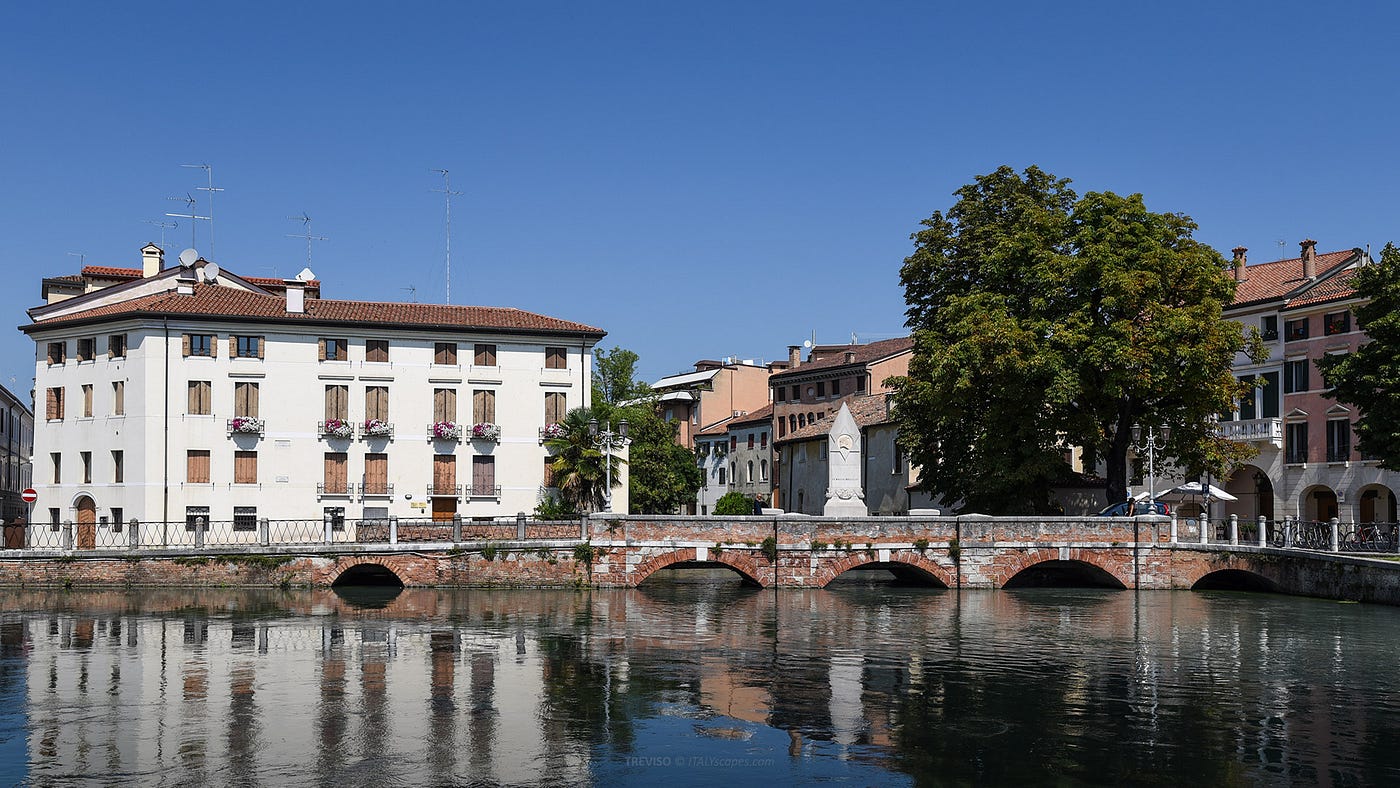
At the core of Treviso’s appeal are its quiet canals and arcaded streets. The Sile River and its tributaries weave through the city, creating picturesque waterways that invite leisurely strolls. Bridges connect charming neighborhoods, and the gentle flow of water provides a soothing backdrop unlike the bustling crowds of larger tourist hubs.
One of the most iconic spots is Piazza dei Signori, the beating heart of the city. Lined with historic palaces, cafes, and the imposing Palazzo dei Trecento (Palace of the Three Hundred), this square buzzes with local life. The palace, with its Romanesque features and battlements, once served as the seat of the city’s council. Nearby, the Palazzo del Podestà and its civic tower add to the architectural grandeur. In the evenings, the piazza becomes a lively gathering place where residents and visitors enjoy aperitivo under the arcades.
Treviso’s medieval walls and gateways, such as Porta San Tomaso, frame the historic center, offering glimpses into its fortified past. Wandering the cobbled streets reveals faded frescoes on building facades — a distinctive feature of Trevisan architecture. The network of canals is adorned with modern art installations in some areas, blending old and new in a uniquely appealing way.
Another highlight is the Duomo (Cathedral), featuring a neoclassical facade, a Romanesque crypt, and works by masters like Titian. The Civic Museums, particularly the Museo di Santa Caterina housed in a former 14th-century church and convent, showcase impressive collections including fresco cycles by Tommaso da Modena, paintings by Titian, Pietro Longhi, and Tiepolo, as well as modern pieces. The restored architecture of the museum itself is a work of art.
Other notable sights include the Loggia dei Cavalieri, built in 1276 as a meeting place for noble knights, and various palaces like Palazzo Bortolan, which exemplify the city’s refined architectural heritage.
Culinary Treasures: From Radicchio to Tiramisù
No visit to Treviso is complete without indulging in its renowned gastronomy. The province is a powerhouse for two global favorites: Prosecco and radicchio. The hills around Conegliano and Valdobbiadene, within easy reach, produce some of the world’s finest DOCG Prosecco. Wine routes wind through vineyards, offering tastings in picturesque settings.
Treviso’s famous Radicchio Rosso di Treviso (PGI-protected) is a vibrant red chicory with a slightly bitter taste, featured prominently in local dishes, salads, and risottos. Fresh produce markets in squares like Piazza Giustinian showcase seasonal bounty.
Most famously, Treviso claims to be the birthplace of tiramisù, the beloved coffee-soaked ladyfinger dessert. Legend points to its invention in the 1960s or 1970s at a local restaurant, and the city celebrates this with events like the Tiramisù World Cup. Traditional eateries serve it alongside cicchetti (Venetian-style small plates), baccalà mantecato, and other Veneto specialties.
Local restaurants and osterie emphasize fresh, seasonal ingredients. From hearty meats and cheeses to delicate pastries, Treviso’s food scene rewards those seeking authentic flavors away from tourist traps.
Practical Information and Getting There
Treviso is easily accessible, with its own airport (Antonio Canova International Airport, often used for Venice flights) and excellent train connections via Treviso Centrale station. It makes an ideal day trip or base for exploring Veneto, with nearby cities like Venice (about 26–30 km away), Padua, and Verona within reach.
Accommodations range from historic palaces to cozy boutique hotels. The city’s compact size makes it walkable, though bicycles or boats can enhance exploration of the canals. Best visited in spring or fall to avoid summer heat, Treviso hosts various events, markets, and festivals throughout the year that showcase its culture.
Why Visit Treviso?
In a region dominated by superstar destinations, Treviso offers something rarer: unhurried authenticity. Its arcades provide shelter for shopping and people-watching, while the quiet canals encourage reflection. Families, foodies, history buffs, and romantics alike find something to love here. Far from overcrowded, it allows deeper connections with local life — chatting with market vendors, sipping Prosecco in a piazza, or discovering hidden frescoes down a side street.
Treviso embodies the Veneto spirit: elegant yet approachable, historic yet vibrant. It is the city of arcades and quiet canals, a place where Venetian charm meets everyday Italian warmth. Whether you spend a day wandering its streets or use it as a gateway to the Prosecco hills, Treviso leaves a lasting impression — one of tranquility, beauty, and genuine Italian hospitality.
For those seeking an alternative to the well-trodden paths of Venice, Treviso delivers. Its blend of water, history, art, and exceptional cuisine creates a multifaceted experience that lingers long after departure. In the words of many travelers, it may just be the most delightful “little” big city in northern Italy.
메타데이터
- post_id
- e2d414d5581b
- slug
- treviso-the-city-of-arcades-and-quiet-canals-e2d414d5581b
- url
- https://medium.com/@ovidiu.tutunaru/treviso-the-city-of-arcades-and-quiet-canals-e2d414d5581b
- canonical_url
- https://medium.com/@ovidiu.tutunaru/treviso-the-city-of-arcades-and-quiet-canals-e2d414d5581b
- author_url
- https://medium.com/@ovidiu.tutunaru
- status
- ok
- fetched_at
- 2026-07-15 10:52:00