The Prairie Farm Rehabilitation Administration: A Legacy Alberta Should Never Have Lost
The Prairie Farm Rehabilitation Administration (PFRA) was one of the most important federal institutions ever created for Western Canada…
The Prairie Farm Rehabilitation Administration: A Legacy Alberta Should Never Have Lost
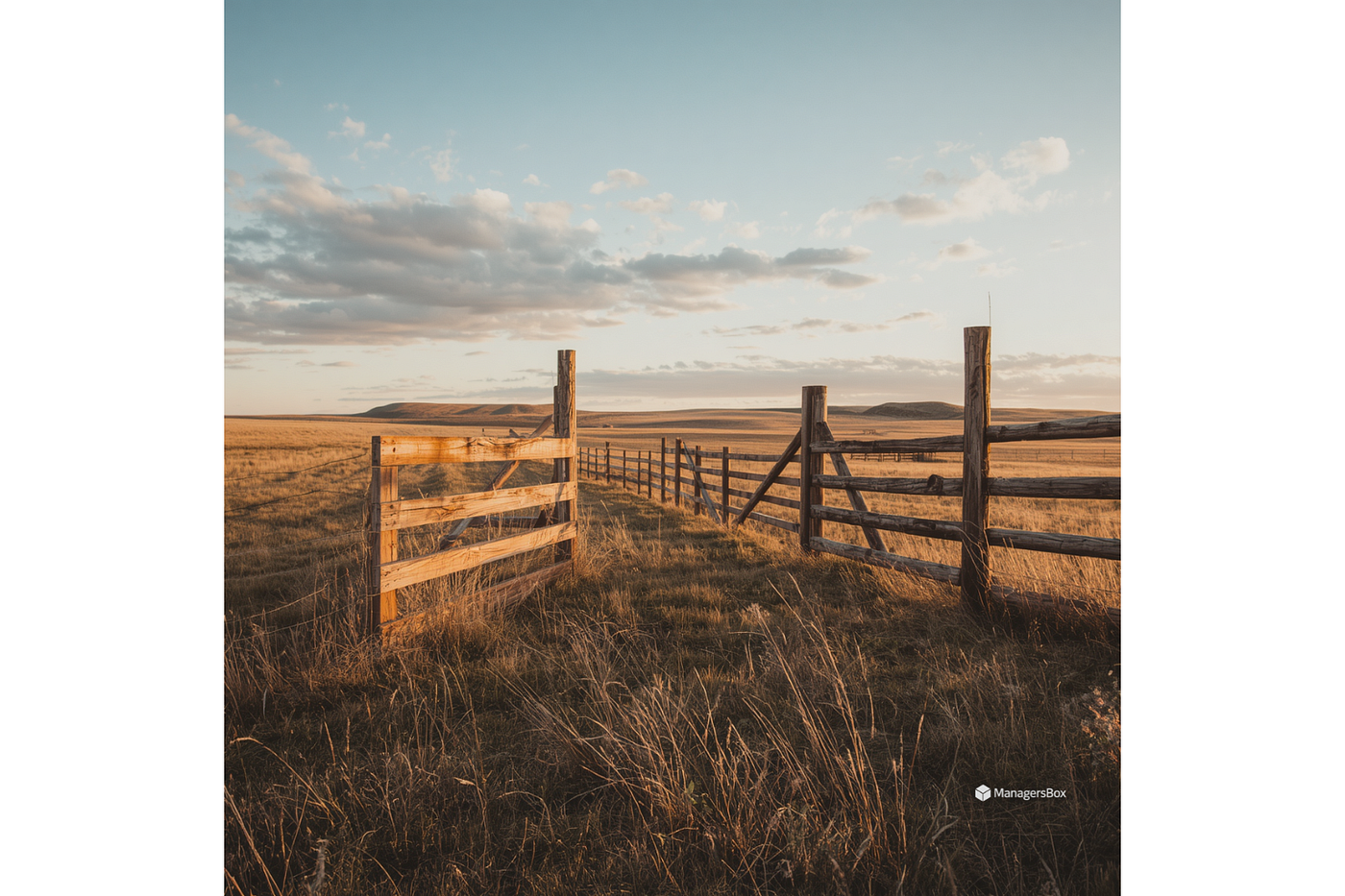
Image created with Canva
The Prairie Farm Rehabilitation Administration (PFRA) was one of the most important federal institutions ever created for Western Canada. Born out of the ecological and human catastrophe of the 1930s Dust Bowl, it reshaped the Prairies, stabilized rural communities, and built the water and land systems that still sustain Alberta today. Its disappearance between 2008 and 2013 was not an accident of bureaucratic drift — it was a deliberate political decision by the federal government of the day. And in my view, it stands as one of the most overlooked betrayals of Prairie farmers in modern Canadian history.
A Federal Lifeline in a Time of Collapse
The PFRA was created in 1935 after years of drought, crop failure, and soil erosion had pushed thousands of families off their land. The federal government recognized that the Prairies were facing not just an economic crisis but an ecological one. The land itself was failing.
PFRA’s mandate was sweeping:
- rehabilitate drought‑stricken land
- stabilize soils
- build water infrastructure
- support farmers with technical expertise
- prevent the Prairies from becoming a permanent dust bowl
It succeeded beyond anything its founders could have imagined.
What PFRA Built — and Why It Mattered
Over the next seven decades, PFRA engineers, agrologists, hydrologists, and soil scientists transformed the Prairies.
1. Irrigation and Water Infrastructure PFRA designed and built the backbone of Alberta’s irrigation system — reservoirs, canals, diversions, and water co‑ops that still support billions of dollars in agricultural production. Southern Alberta’s agricultural economy would not exist in its current form without PFRA’s work.
2. Soil Conservation and Land Rehabilitation PFRA pioneered strip farming, contour plowing, and grass‑seeding programs that stopped the soil from blowing away. It restored millions of acres of degraded land and created community pastures that protected fragile ecosystems while supporting cattle producers.
3. Shelterbelts and Tree Nurseries For decades, PFRA distributed free seedlings from the Indian Head Tree Nursery, helping farmers plant shelterbelts that reduced erosion, protected crops, and improved microclimates. These trees still stand today — a living legacy of federal stewardship.
4. On‑Farm Technical Support PFRA field offices provided farmers with direct access to scientific expertise. This was not theoretical research; it was practical, hands‑on support that helped producers adapt to drought, manage water, and protect their land.
In short, PFRA was a model of what government can do when it listens to farmers, respects science, and invests in long‑term resilience.
The Dismantling: A Political Choice with Lasting Consequences
Between 2008 and 2013, the federal government under Prime Minister Stephen Harper dismantled PFRA piece by piece. The agency was merged, defunded, and ultimately eliminated. Its community pastures were transferred to provinces. Its shelterbelt program was shut down. Its scientific staff were laid off. Its water programs were discontinued.
This was not a modernization. It was a withdrawal.
The Harper government argued that provinces could handle these responsibilities. But no province — including Alberta — has replaced PFRA’s integrated, federally funded, science‑driven model. Instead, we now have a patchwork of agencies, municipalities, and producer groups trying to fill the gaps with far fewer resources.
What We Lost
The consequences of PFRA’s disappearance are becoming clearer every year.
1. Loss of Coordinated Drought Planning PFRA was the only institution with a Prairie‑wide mandate to manage drought risk. Today, Alberta faces increasing water scarcity without a comparable federal partner.
2. Loss of Scientific Capacity PFRA’s agrologists and engineers were not replaced. Farmers lost access to on‑the‑ground expertise that helped them adapt to changing conditions.
3. Loss of Shelterbelt and Soil Programs The end of the shelterbelt program alone has long‑term implications for erosion, moisture retention, and climate resilience.
4. Loss of Federal Investment PFRA brought federal dollars into rural communities. Its elimination shifted costs onto provinces and farmers.
5. Loss of a Climate‑Adaptation Institution At the very moment climate change is accelerating drought cycles, Canada dismantled the agency designed to help the Prairies survive them.
A Betrayal That Went Unnoticed — and Unpunished
Here is the political reality: Stephen Harper’s government dismantled PFRA, and Prairie farmers kept voting Conservative anyway.
This is not a partisan statement — it is a factual one. The very communities that benefited most from PFRA’s work were the ones most affected by its elimination. Yet the political narrative in Alberta, Saskatchewan, and Manitoba never fully acknowledged what was lost.
Part of the reason is that PFRA did its work quietly. It wasn’t flashy. It didn’t advertise. It simply delivered results. Many people didn’t realize how much PFRA did until it was gone.
But the deeper issue is that Prairie politics have become so polarized that federal Conservative governments are often assumed to be the natural defenders of rural interests. PFRA’s dismantling is a clear example of how that assumption can be wrong.
Why This Matters Now
We are entering a new era of drought, water scarcity, and climate volatility. Alberta’s agricultural future depends on long‑term planning, scientific expertise, and coordinated investment — exactly what PFRA provided.
Rebuilding that capacity will require federal leadership. It will require acknowledging past mistakes. And it will require Prairie farmers to demand more than slogans and ideology from the politicians who claim to represent them.
PFRA was not perfect. But it was effective, respected, and rooted in the real needs of the land and the people who work it. Losing it was a mistake. Replacing it is now a necessity.
메타데이터
- post_id
- e2ea5b935f78
- slug
- the-prairie-farm-rehabilitation-administration-a-legacy-alberta-should-never-have-lost-e2ea5b935f78
- url
- https://medium.com/@rbuchfink/the-prairie-farm-rehabilitation-administration-a-legacy-alberta-should-never-have-lost-e2ea5b935f78
- canonical_url
- https://medium.com/@rbuchfink/the-prairie-farm-rehabilitation-administration-a-legacy-alberta-should-never-have-lost-e2ea5b935f78
- author_url
- https://medium.com/@rbuchfink
- status
- ok
- fetched_at
- 2026-07-24 20:22:33