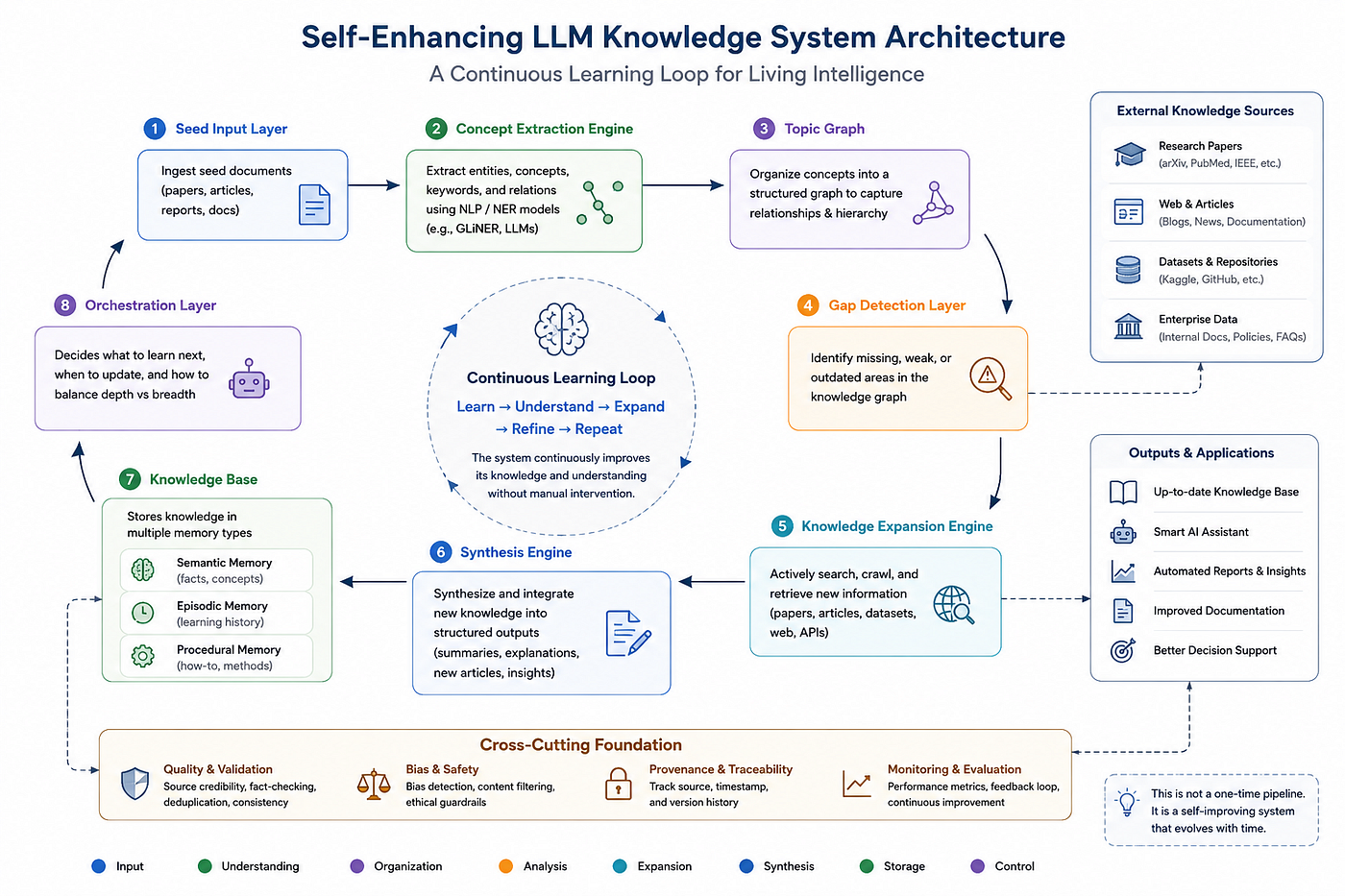
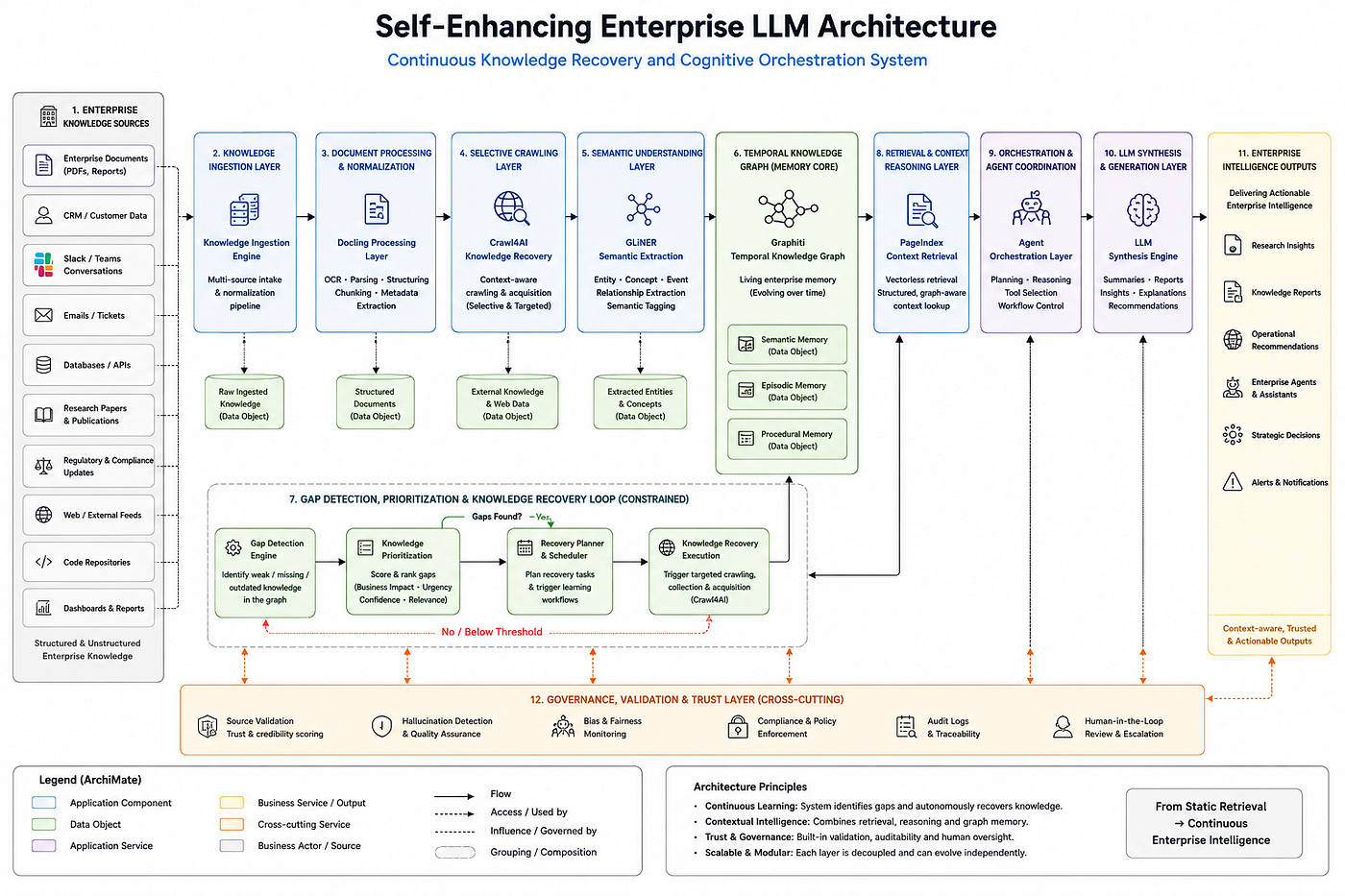
From AI Pipelines to AI Agents: Why Enterprise Intelligence Is Moving Beyond Automation
The Night the Pipeline Failed
From AI Pipelines to AI Agents: Why Enterprise Intelligence Is Moving Beyond Automation
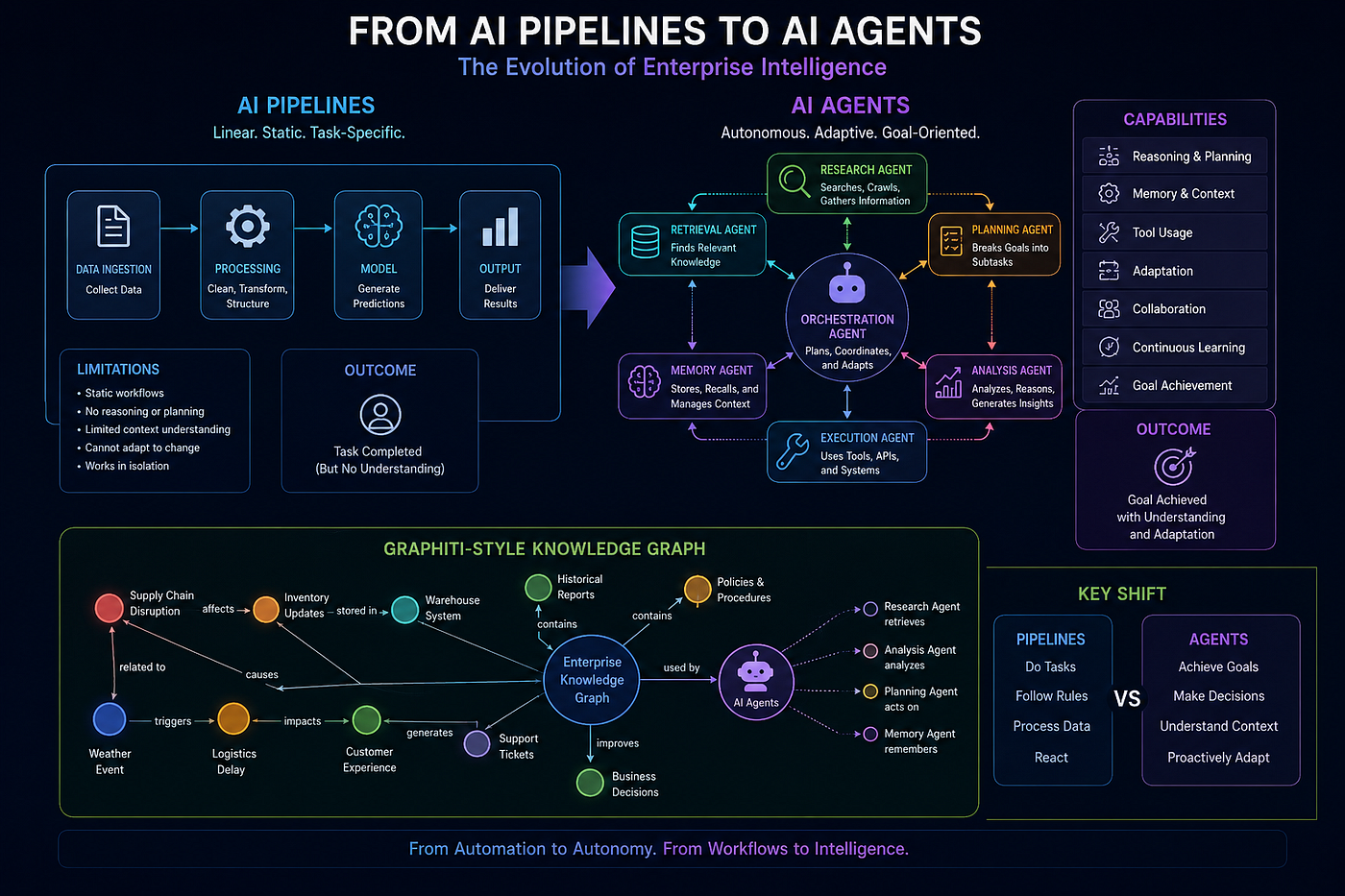
From AI pipelines to intelligent AI agents
The Night the Pipeline Failed
At 2:13 AM, a global logistics company experienced a cascading supply chain disruption across three continents.
A storm had shut down a major shipping route in Southeast Asia. At the same time, a warehouse automation system in Europe began producing delayed inventory updates. Meanwhile, customer support tickets in North America suddenly surged as delivery estimates became unreliable.
The company already had AI systems in place.
One pipeline handled forecasting. Another managed inventory analysis. A separate chatbot responded to customer queries. Yet none of these systems understood the bigger picture.
The forecasting model continued generating demand predictions using outdated assumptions. The inventory pipeline processed delayed warehouse data as if nothing had changed. The chatbot reassured customers with inaccurate shipping timelines because it had no awareness of the disruption unfolding across the organization.
Every system worked exactly as designed.
And that was the problem.
The pipelines could process tasks, but they could not reason across them. They could automate workflows, but they could not adapt to evolving situations. They operated like isolated assembly lines rather than intelligent collaborators.
By morning, the company had lost millions in operational inefficiencies and customer trust.
This is the limitation of traditional AI pipelines.
And it is precisely why the next generation of enterprise AI is shifting toward agents.
The Era of AI Pipelines
For years, enterprise AI has largely been built around pipelines.
An AI pipeline is essentially a sequence of predefined steps:
Input → Processing → Model → Output
Data enters the system, passes through a structured workflow, and produces a result. These pipelines have powered everything from fraud detection systems and recommendation engines to customer support automation and enterprise analytics.
They are efficient, scalable, and highly optimized for repetitive tasks.
A typical enterprise pipeline might look like this:
A document ingestion system extracts text from PDFs. A classification model identifies document types. A retrieval system searches internal databases. A language model generates a summary. The output is sent to the user.
This approach works well when:
- the environment is predictable
- tasks are narrowly defined
- workflows remain static
But enterprise environments are no longer static.
Modern organizations operate in conditions where:
- information changes continuously
- context evolves rapidly
- decisions depend on multiple interconnected systems
- workflows are dynamic rather than linear
Traditional pipelines struggle in these conditions because they are fundamentally reactive. They execute predefined logic but lack the ability to independently reason, plan, adapt, or collaborate.
In other words, pipelines automate processes. They do not exhibit intelligence.
The Enterprise Problem: Automation Without Understanding
Most enterprise AI today suffers from the same architectural limitation:
It performs tasks without understanding systems.
A pipeline can summarize a report, but it does not know whether the report contradicts yesterday’s findings. A chatbot can answer questions, but it cannot independently investigate missing information. A retrieval system can fetch documents, but it cannot decide whether additional research is required.
This becomes especially problematic in large organizations where knowledge is fragmented across:
- documents
- APIs
- databases
- workflows
- human interactions
- external systems
The challenge is no longer simply generating outputs.
The challenge is coordination.
Enterprises need AI systems capable of:
- reasoning across multiple sources
- managing context dynamically
- collaborating between tasks
- adapting in real time
- learning continuously during operation
This is where AI agents emerge.
What Is an AI Agent?
An AI agent is not simply a chatbot with a prompt.
An AI agent is an autonomous system capable of:
- reasoning
- planning
- memory management
- tool usage
- retrieval
- decision making
- task execution
Most importantly, agents are goal-oriented.
Unlike pipelines that follow fixed sequences, agents dynamically determine what actions should happen next.
A pipeline says:
“If input A occurs, execute workflow B.”
An agent says:
“What is the objective, what information is missing, which tools should I use, and what should I do next?”
That difference changes everything.
From Workflow Execution to Autonomous Reasoning
Traditional pipelines operate like factory assembly lines.
Each component performs a single task:
- extract text
- classify data
- generate output
The intelligence is distributed across predefined steps rather than centralized in adaptive reasoning.
Agents operate differently.
They behave more like enterprise employees.
A research agent can:
- read documents
- identify missing information
- search for additional sources
- evaluate relevance
- synthesize findings
- store memory for future tasks
A planning agent can:
- break large tasks into subtasks
- coordinate multiple systems
- assign work dynamically
- monitor outcomes
- adapt strategy during execution
An orchestration agent can:
- manage teams of agents
- monitor enterprise workflows
- coordinate retrieval systems
- maintain long-term memory
- trigger continuous learning cycles
This is not automation alone.
It is operational intelligence.
Why Enterprises Are Moving Toward Agents
The shift from pipelines to agents is happening because enterprise complexity is growing faster than static automation can handle.
Several forces are driving this transition.
1. Enterprise Knowledge Is No Longer Static
Organizations generate massive amounts of information every day:
- reports
- customer interactions
- market signals
- policies
- research updates
- operational events
Pipelines struggle because they typically rely on fixed workflows and static assumptions.
Agents, however, can continuously:
- retrieve new information
- update context
- refine understanding
- adapt decisions dynamically
This enables organizations to maintain living intelligence systems rather than static automation pipelines.
2. Workflows Are Becoming Multi-System Problems
Modern enterprise tasks rarely exist in isolation.
A supply chain disruption affects:
- forecasting systems
- logistics
- customer support
- procurement
- finance
Traditional pipelines handle each area separately.
Agents can coordinate across systems.
This introduces cross-functional intelligence rather than isolated automation.
3. Decision-Making Requires Context
Static pipelines process data.
Agents interpret situations.
An enterprise support pipeline may answer: “What is the refund policy?”
An agent can reason:
- Is this customer high value?
- Have they experienced previous issues?
- Is this incident part of a larger operational failure?
- Should escalation happen automatically?
This contextual reasoning is what enterprises increasingly require.
The Rise of Multi-Agent Systems
One of the most important developments in enterprise AI is the emergence of multi-agent architectures.
Instead of relying on one monolithic AI system, organizations are beginning to deploy teams of specialized agents.
Each agent performs a distinct role.
For example:
A Retrieval Agent handles enterprise search. A Research Agent gathers external intelligence. A Memory Agent manages semantic and episodic memory. A Planning Agent coordinates workflows. An Orchestration Agent manages system-wide decisions.
Together, these agents form a collaborative intelligence network.
This approach mirrors how real organizations operate.
Enterprises do not rely on one employee to perform every task. They rely on coordinated teams with specialized responsibilities.
Agentic AI adopts the same principle.
The Architecture Shift: From Linear Pipelines to Cognitive Systems
The move toward agents represents a deeper architectural transformation.
Traditional AI architectures are sequential:
Input → Model → Output
Agentic architectures are recursive and adaptive:
Goal → Reason → Retrieve → Plan → Execute → Evaluate → Learn → Repeat
This introduces several new enterprise capabilities.
Memory
Agents maintain persistent memory across interactions.
This includes:
- semantic memory
- episodic memory
- procedural memory
Instead of forgetting after every request, the system evolves continuously.
Tool Usage
Agents can interact with:
- APIs
- databases
- search systems
- crawlers
- enterprise software
- analytics tools
This transforms AI from passive text generation into operational execution.
Planning
Agents break complex goals into manageable subtasks.
For example:
“Analyze customer churn.”
becomes:
- retrieve historical churn data
- identify behavioral patterns
- compare customer segments
- analyze support interactions
- generate retention strategies
This is reasoning-driven execution rather than static workflow automation.
Reflection and Self-Improvement
Agents can evaluate their own outputs.
They can:
- identify errors
- detect uncertainty
- trigger additional retrieval
- refine reasoning chains
This introduces self-correcting intelligence.
Enterprise Example: Autonomous Research Teams
Imagine a pharmaceutical company researching emerging treatments.
A traditional pipeline might:
- retrieve documents
- summarize findings
- generate reports
An agentic system could do far more.
A Research Agent scans medical publications daily. A Gap Detection Agent identifies missing evidence. A Retrieval Agent searches clinical databases. A Memory Agent tracks evolving treatment patterns. An Orchestration Agent prioritizes high-impact discoveries. A Reporting Agent generates executive summaries automatically.
The result is not simply automation.
It is a continuously evolving enterprise intelligence system.
The Role of Frameworks Like Agno
Frameworks such as Agno are emerging because enterprises now require infrastructure specifically designed for agents.
These frameworks help organizations build:
- multi-agent workflows
- memory systems
- orchestration layers
- reasoning pipelines
- collaborative AI ecosystems
Rather than treating AI as a single model, they treat it as an ecosystem of interacting intelligent components.
This is a fundamental shift in how enterprise AI systems are designed.
Why This Matters for the Future of AI
The future of enterprise AI will not be defined solely by larger language models.
It will be defined by systems that can:
- reason dynamically
- coordinate tasks
- maintain memory
- retrieve context
- collaborate autonomously
- learn continuously during operation
This is why many researchers now believe the future lies not in standalone models, but in agentic architectures.
The intelligence is no longer only inside the model.
It emerges from the interaction between:
- agents
- memory
- tools
- retrieval
- orchestration
- workflows
This transforms AI from a prediction engine into a cognitive operating system.
Challenges Ahead
Agentic AI is powerful, but it introduces new complexities.
Enterprises must address:
- orchestration reliability
- memory consistency
- governance
- hallucination control
- security
- workflow observability
- computational cost
Multi-agent systems can also become difficult to coordinate at scale.
Without proper architecture, agents may:
- conflict with each other
- loop unnecessarily
- retrieve poor-quality information
- create operational instability
This means orchestration and governance become critical enterprise capabilities.
The Bigger Shift: From Tools to Digital Workers
Perhaps the most important change is philosophical.
Traditional AI systems are tools.
Agents begin to resemble digital workers.
They:
- collaborate
- remember
- plan
- reason
- adapt
- coordinate tasks autonomously
This changes how organizations think about AI deployment entirely.
The question is no longer: “Which model should we use?”
The new question becomes: “How should autonomous intelligence operate inside the enterprise?”
That is a far deeper architectural challenge.
Closing Thought
The era of static AI pipelines is beginning to fade.
Pipelines automated tasks.
Agents coordinate intelligence.
Pipelines processed information.
Agents reason across systems.
Pipelines executed workflows.
Agents pursue goals.
The next generation of enterprise AI will not simply answer questions faster.
It will continuously:
- retrieve
- plan
- adapt
- collaborate
- learn
The organizations that succeed will not be the ones with the biggest models.
They will be the ones that build the most intelligent systems around them.
Because the future of AI is no longer about generating responses.
It is about building systems that can think, act, and evolve alongside the enterprise itself.
메타데이터
- post_id
- e2ed3ba06ce2
- slug
- from-ai-pipelines-to-ai-agents-why-enterprise-intelligence-is-moving-beyond-automation-e2ed3ba06ce2
- url
- https://medium.com/@aryansonker0212/from-ai-pipelines-to-ai-agents-why-enterprise-intelligence-is-moving-beyond-automation-e2ed3ba06ce2
- canonical_url
- https://medium.com/@aryansonker0212/from-ai-pipelines-to-ai-agents-why-enterprise-intelligence-is-moving-beyond-automation-e2ed3ba06ce2
- author_url
- https://medium.com/@aryansonker0212
- status
- ok
- fetched_at
- 2026-06-09 15:37:30