The Brutal Atomic Habit Hidden Inside Virat Kohli’s Ones and Twos
How the unglamorous 1% rule builds a life you cannot compete with
Atomic Habits
The Brutal Atomic Habit Hidden Inside Virat Kohli’s Ones and Twos
How the unglamorous 1% rule builds a life you cannot compete with
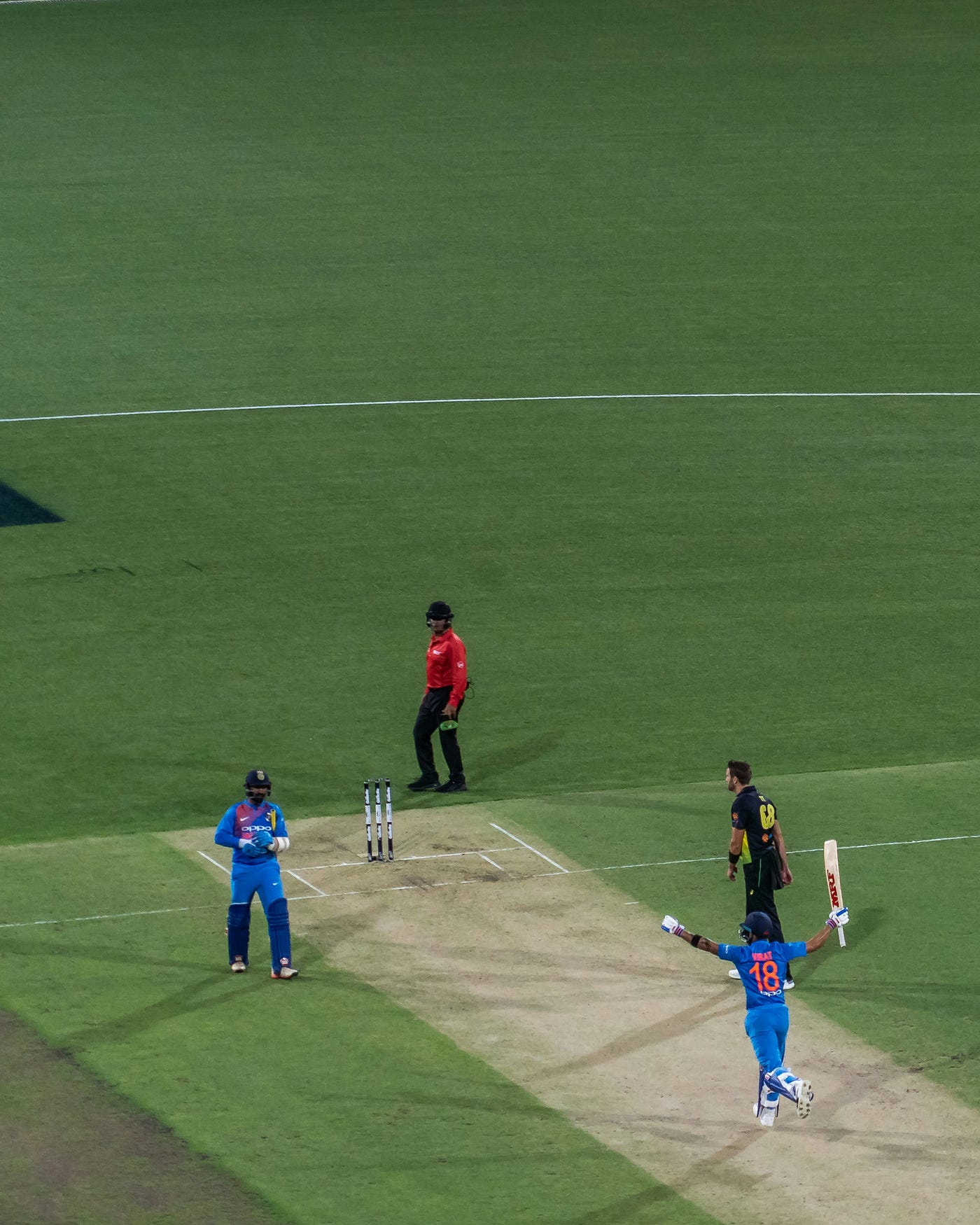
Photo by Mudassir Ali on Unsplash
Non-members can read this full story for free using my [Friend Link].
For nearly a hundred years, British cycling was a punchline. Since 1908 their riders had won a grand total of one Olympic gold medal. In 110 years, not a single British cyclist had ever won the Tour de France. Not one. They were so hopeless that one of the top bike manufacturers in Europe refused to sell them bikes, genuinely worried that being associated with the British team would damage their brand if other professionals saw the Brits riding their gear. That is not just losing. That is being the team nobody wants to be seen next to.
And then, in just five years, everything flipped. That same team went to the 2008 Beijing Olympics and won 60% of every cycling gold medal on offer. Four years later, in London, they set nine Olympic records and seven world records, and produced the first British cyclist in history to win the Tour de France. Then they won it again. And again. Five Tour de France titles in six years. It is widely considered the most dominant run the sport of cycling has ever seen.
So what changed? Not the country. Not some sudden influx of superhuman athletes. One man, and one deceptively boring idea.
When Dave Brailsford took over British Cycling in 2003, he arrived with a philosophy that I later read about in James Clear’s book Atomic Habits, and it is a line that has genuinely not left my head since. What made him different from every coach before him was his relentless commitment to a strategy he called the aggregation of marginal gains.
The philosophy of searching for a tiny margin of improvement in everything you do. Break down everything that goes into riding a bike, and improve each single thing by just 1%. Not 50%. Not some massive overnight leap. One percent.
And he went absurdly, obsessively granular with it. They redesigned the bike seats to be more comfortable. They rubbed alcohol on the tyres for better grip. They tested different massage gels to find which one helped muscles recover fastest. They hired a surgeon to teach the riders the best way to wash their hands so they caught fewer colds. They worked out the exact pillow and mattress that gave each rider the best sleep. They even painted the floor of the team truck white, so they could spot tiny specks of dust that would otherwise settle on the bikes and quietly hurt performance. Dust. On the floor of a truck. That is the level we are talking about.
Let me share with you the conversation I had with myself while reading this in the book, and how it completely knocked me out.
For years I held all my mutual funds through an aggregator, and every single one of them was quietly charging me a higher expense ratio than I needed to pay. Eventually I moved everything to direct plans. Now watch what even 1% does here. Say you have 10 lakhs invested, growing at 12% a year. Now say you simply cut your costs and get it growing at 13% instead. Just one percentage point. Leave it for 20 years and that single 1% is a difference of nearly 19 lakhs. That is not a typo. Nineteen lakhs, from one percent, on one initial investment of ten. The people who quietly understand this get wealthy without anyone noticing how. The people who ignore it spend years wondering where their returns disappeared.
But honestly, this blog is not about cycling or mutual funds. It is about a way of living that almost nobody takes seriously, because it is far too boring to ever go viral.
Take my DJing. I have owned a console for close to ten years and for most of that time I never took it seriously. I am not the guy who can sit and grind for hours, I get restless. But at some point I started doing just 20 to 30 minutes, casually, following an online course, actually paying attention this time. Thirty minutes out of a 24 hour day. That is about 3% of my waking hours. And just by showing up and toggling around sincerely in that tiny window, I have become a genuinely competent base level DJ. Not from massive practice. From small practice, repeated, without quitting.
It is the same with your body. Nobody transforms themselves with one savage three hour workout that leaves them so wrecked they never come back. You do it with one extra rep. One more set. Food that is slightly better today than it was yesterday. On the day, none of it feels like anything. That is exactly why it works, and exactly why most people quit. They want the workout to feel dramatic. But the body does not care about drama. It responds to repetition.
Think about starting a coffee brand, since everyone seems to be launching one. You put out your MVP and then it is just 1% everywhere. One percent better beans. One percent nicer packaging. One percent smoother checkout on the app. One percent warmer customer experience. Not one of those wins anything on its own.
Stacked together, over time, they are the entire difference between a brand people tolerate and a brand people love.
I would like to believe it even applies to how we raise our kids. As parents, we often want to turn the whole world upside down to make our children do something extraordinary. But honestly, if you can just get them to do something small, consistently, over a really long innings, that quietly becomes extraordinary on its own.
And honestly, look at Virat Kohli. He is the epitome of this whole thing. We live in a world obsessed with the six, right, everyone wants the fireworks, the big hit, the thing that trends. But Virat built the greatest run machine the game has probably ever seen mostly on ones and twos. The quick single. The hard second that most players would never bother running. It is just him turning ones into twos, over after over, running his partner ragged, keeping the scoreboard moving while everyone in the stadium is waiting for a boundary. And here is the thing. Anyone can hit a six. Very few people can run a hard second in the 45th over, legs cramping, in that heat, again and again, for fifteen years. That is not talent. That is the 1% in human form. And that is exactly why, while flashier players came and disappeared, he became the GOAT.
There is a line in Atomic Habits that nails exactly why we miss all of this. James Clear writes that it is so easy to overestimate the importance of one defining moment and underestimate the value of making small improvements on a daily basis. Too often we convince ourselves that massive success requires massive action.
That is the trap. We are all waiting for the massive action. The big launch, the big break, the dramatic transformation. And while we wait, we skip the small thing that was actually available to us today.
The designer Virgil Abloh had his own version of this that I love. His famous three percent rule. The idea that you do not need to reinvent something from scratch to make it yours. You take an existing design and you shift it by roughly three percent, and that small delta is enough to make it new, to make it yours. Not a revolution. A deliberate, tiny, intentional change. Same philosophy, different field. Small margins, real impact.
I feel this most clearly when I am on a trek. You stand at the bottom and look up and the peak seems absurd. Overwhelming. Impossible on paper. And the only thing that ever gets you up there is the thing that feels like it should not work. One step. Then another. Each single step is the physical equivalent of that 1%, almost meaningless by itself. But those meaningless steps quietly stack into kilometers, across brutal terrain, and eventually you are standing at a height that looked impossible a few hours ago. You never conquered the mountain. You just refused to stop taking the next small step.
And here is the honest catch nobody tells you. For a long time it will genuinely feel like nothing is happening. Brailsford’s team was not winning the Tour on day one. Your 10 lakhs at 13% instead of 12% looks almost identical in year one. Your first week of practice sounds like your second. The rewards of compounding stay hidden, and hidden, and hidden, right up until the moment they become impossible to ignore. Most people quit inside that hidden stretch, convinced it is not working, right before it was about to.
So pick one thing. Just one. Get 1% better at it today. Not dramatically. Not impressively. Just slightly. Then do the boring, unglamorous, quietly powerful thing that almost no one has the patience for.
Do it again tomorrow. I say this to myself, as much as to anyone reading this.
I write these straight from the heart. If it added even 1% to your day, drop a few claps and a comment. It genuinely helps the algorithm carry this to more people, and I would love that.
메타데이터
- post_id
- e2f139d31ef9
- slug
- the-brutal-atomic-habit-hidden-inside-virat-kohlis-ones-and-twos-e2f139d31ef9
- url
- https://medium.com/the-infinite-within/the-brutal-atomic-habit-hidden-inside-virat-kohlis-ones-and-twos-e2f139d31ef9
- canonical_url
- https://medium.com/the-infinite-within/the-brutal-atomic-habit-hidden-inside-virat-kohlis-ones-and-twos-e2f139d31ef9
- author_url
- https://medium.com/@saurabhbhandari-91
- status
- ok
- fetched_at
- 2026-07-08 23:38:59