Food-Fibre-Fashion — Resources: Learning #4 15/04/2026.
A compilation of learning resource recommendations based around the interconnection of food, fibre and fashion.
Food-Fibre-Fashion — Resources: Learning #4 15/04/2026.
A compilation of learning resource recommendations based around the interconnection of food, fibre and fashion.
For 3 years now, I’ve been compiling a resource newsletter around the topics of food, fibre and fashion — called, cleverly, Food-Fibre-Fashion. Each one brings a collection of tips, recommendations, opinions, learnings and knowledge exchange regarding the interconnectedness of these sectors, but also loosely tied to a specific theme. They’re really good, useful compilations. However, while the dedicated seasonal subject in question is pertinent, I also realise that they’re delightful resources in their own right.
Therefore, these posts will highlight x 5 of those in a nice big-but-bitesize group, such as learning resources.
Please note, that the accompanying text to the resource recommendations are taken verbatim from the original newsletter (which will also be linked) and so may not be accurate in time and place now as to when it was written.
Subscribe to the full bimonthly newsletter on Substack or LinkedIn.
Edition #16 08/08/2023 — remediation and regeneration in terms of not overshooting oneself
**Take-back Trickery report [via Changing Markets Foundation]. ⇾**
Released in July 2023, this important report questions the circularity of take-back schemes offered by fashion brands and retailers.
I’ve been dubious of these schemes ever since they were first introduced (think it was 2012) by Marks & Spencer (at least in the UK) and marketed as “schwopping” with Joanna Lumley as the advocate. My fashion practice couldn’t have been further from that; she visited us and other students on my MA at Truman Brewery for some M&S campaign stunt, but there I was hand-beading and embroidering a coat. Apologies for the long-winded story, but I wanted to give context to where my cynicism comes from. At that time sustainability wasn’t common, and the idea of getting a £5 voucher to spend in M&S when you drop off “old” clothes filled me with disgust. This isn’t sustainability.
Take-back schemes have developed into all sorts of forms in the last 11 years, with clothes either going to “recycling” or to redistribution. However, as with the whole of everything on this planet, there isn’t full transparency. So where have all the clothes gone that were handed in to brands in exchange for more clothes?
Through discreet airtag trackers concealed within clothing, we tracked, in real time, 21 items submitted to ten fashion brands (H&M, Zara, C&A, Primark, Nike, Boohoo, New Look, The North Face, Uniqlo and M&S) at their stores in the UK, France, Belgium and Germany. After 11 months of tracking, the outcomes of the tracked items expose the discrepancy between brands’ claims and the actual fate of the collected clothing.
Frankly, I can’t give insight or resources into “good” solutions, because somewhere along the chain or network there is lost or misinterpreted information, and what’s good to me is not necessarily good to you. However, I will direct you to these recycling initiatives that I’ve had the pleasure of personally speaking or working with.
- **Yodomo** — they have a Circular Reuse Hub in Hackney (two in fact) to redistribute surplus or damaged stock from other businesses to makers in the London borough. [You can also read the Textile Waste Guide commissioned for them].
- **iinouiio** — founded by someone embedded in the historic shoddy textile manufacturing industry, and now partnered with Camira Fabrics, the first wool and luxury fibre recycling mill and fabric line is underway.
- **Worn Again Technologies** — a true scientific approach, Cyndi Rhoades uses her fashion industry experience in collaboration with material scientists to develop infrastructure and tech that will split blended natural-synthetic fabrics back to their individual fibres. This would lead to more useful recycled fibres and a “solution” to current limitations. (Interestingly, Ecotextiles News today announced a Danish research group have managed to separate polyester and cotton).
The main message is still to reduce (over)consumption.
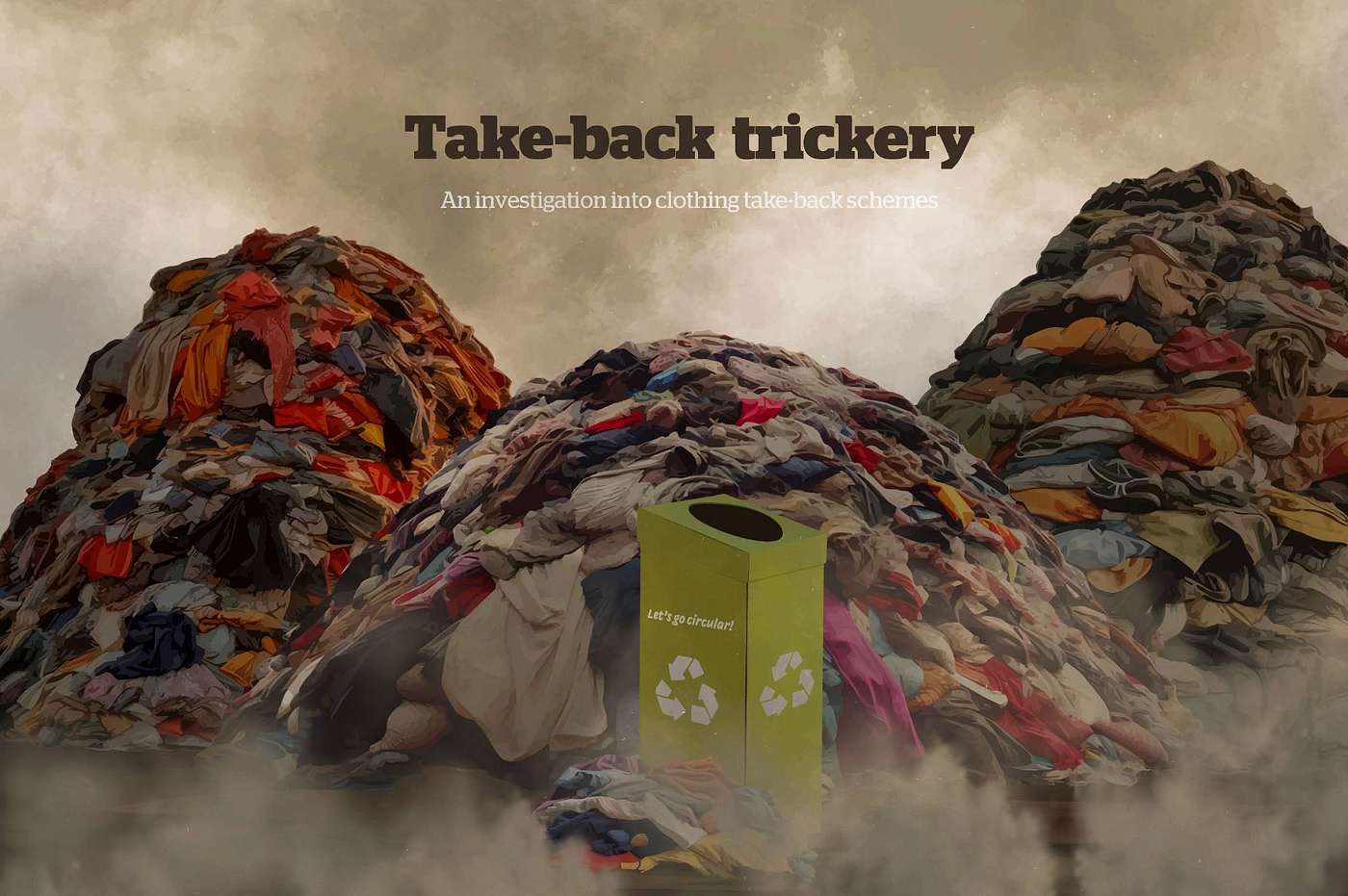
The Take-Back Trickery report from Changing Markets Foundation, July 2023. Screen grab from main report page showing clothing landfill and take back box.
Edition #17 20/09/2023 — the lifeblood of seeds, missing links and elevating diversity
**Representation and Inclusion in the Fashion Industry [APPG for Fashion + Textiles, 2021]. ⇾**
This report explores issues of exclusion, as well as opportunities for economic, cultural and social inclusion for people with disabilities, ethnic minorities and LGBTQ+ communities within the fashion industry, raising the profile of issues that have both direct and indirect impact on the entire sector. It aims to encourage conversations between parliamentarians and those working and consuming within the fashion industry. In order to make the key findings heard, it sways heavily to evidencing the revenue the UK fashion industry is losing by not being diverse and inclusive.
The industry needs diverse talent that draws on the creativity and expertise of people from ethnic minorities, people with disabilities and those from LGBTQ+ communities. A diverse workforce benefits the industry and society in economic, social and personal terms.
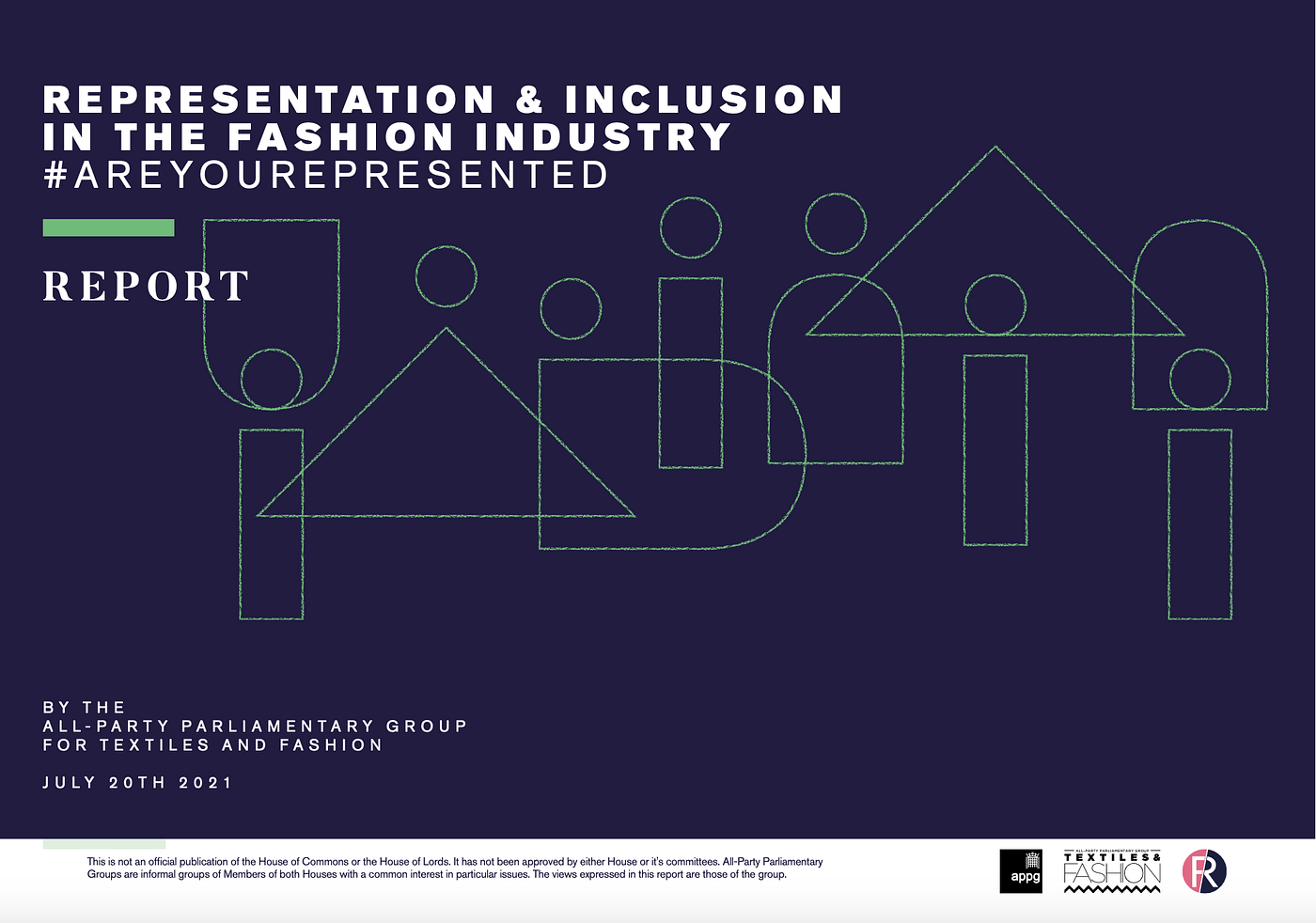
Opening page of the Representation & Inclusion in the Fashion Industry report, 2021.
Edition #18 20/10/2023 — crises across food-fibre-fashion and how we may find ways to mitigate them
**Pesticides and the Climate Crisis: A Viscious Cycle. ⇾**
Perhaps you’re truly unsure what a pesticide is in the first place before you even digest how they contribute towards climate change; in which case, head here for the Pesticide Action Network’s introduction to pesticides.
“Synthetic pesticides harm workers, pollute our environment and are driving emissions of greenhouse gases. Not only do they contribute to climate change through the direct emissions associated with their production, but perhaps even more importantly, they underpin and enable the damaging practices of industrial agriculture.” — Dr Keith Tyrell, Director, PAN UK
Monoculture industrial agriculture is reliant on the input of pesticides (and nitrogen fertiliser), essentially through control, lack of knowledge, persuasion and manipulation, and a negative feedback loop. Banning pesticides will mean farming practices need some time to adjust (transition to organic usually takes 3 years), but some action can even be taken at a home level in urban centres. This report highlights how the biggest oil companies are touting pesticides as a climate solution in order to sell more product.
![Pesticides have been recognised as contributing to the decline of biodiversity, including species collapse such as with bees, which affects our global food system [Credit: PANUK report].](https://miro.medium.com/v2/resize:fit:866/1*Od8WRkHCnFUuewlkbv1K2w.png)
Pesticides have been recognised as contributing to the decline of biodiversity, including species collapse such as with bees, which affects our global food system [Credit: PANUK report].
Edition #19 14/11/2023 — small actions that can make up a whole big action
**Planet Positive Beauty Guide. ⇾**
The British Beauty Council and independent experts came together for the Sustainable Beauty Coalition and developed the Planet Positive Beauty Guide to “decode the jargon with straightforward descriptions of the words most often used by the beauty industry — helping you understand some of the key issues and suggesting some things to look for”. It considers ingredients, packaging, people and sourcing.
Though there are lots of labels telling us that something is for instance vegan or cruelty free or microplastic free, with lack of regulation for these “green claims” (despite Advertising Standards being able to call brands out) we’re left confused even though we should be assured.
While I don’t consider myself as someone who purchases beauty products (as in cosmetics), I do of course still purchase common items including soaps, toothpastes, shampoos etc. I make decisions as best I can with the knowledge and experience I have. But for anyone new to terms and notions of sustainability, I find this guide clear in explaining terminology and concepts that span many purchasing habits, not just toiletries. For anyone having already made some switches, it’s a reminder that you started with no knowledge, so share and inspire.
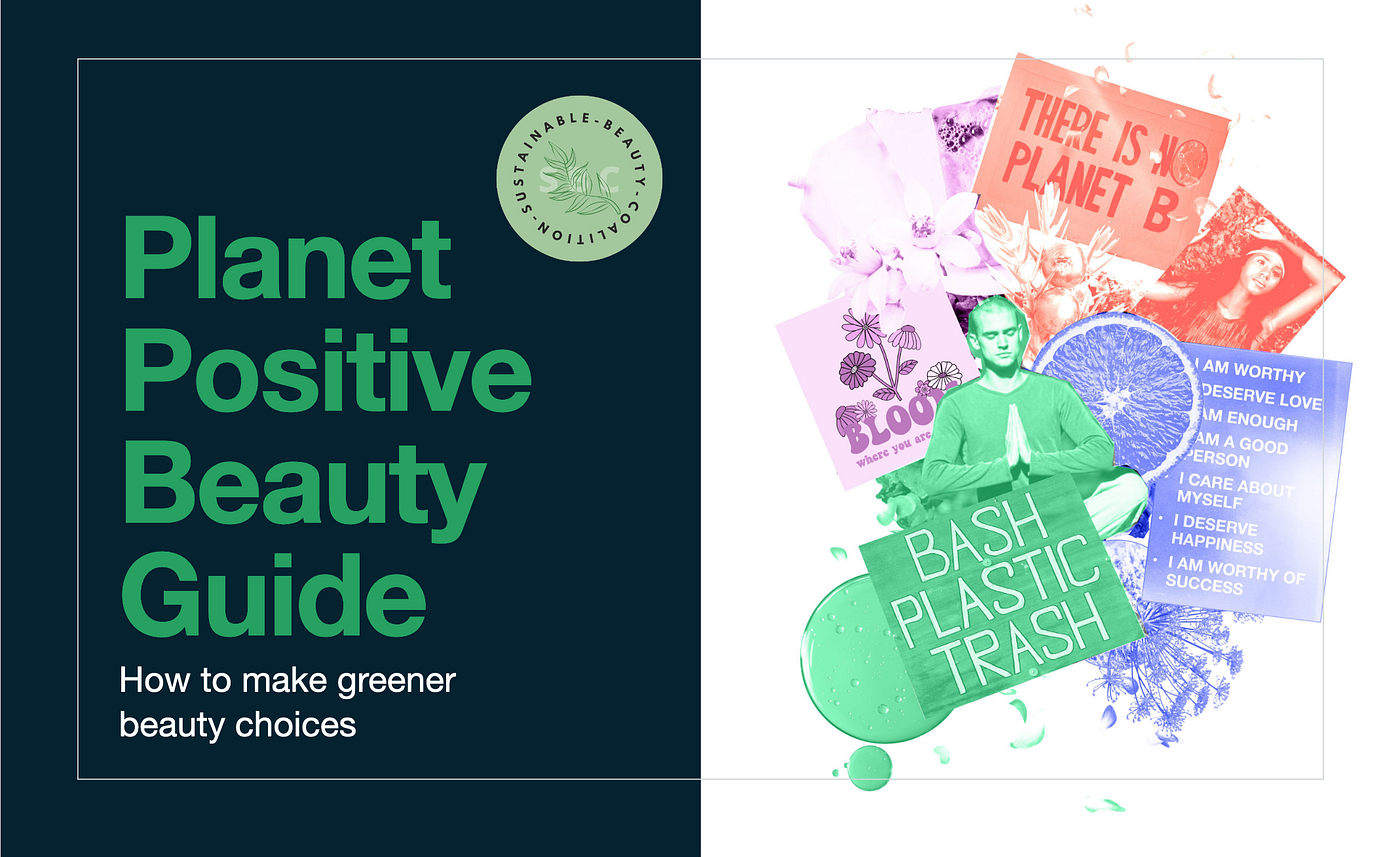
First page of the Planet Positive Beauty Guide from The Sustainable Beauty Coalition, which helps readers recognise how to make greener beauty choices.
Edition #20 30/12/2023 — a sensitive awareness
**The Creative Wellbeing Economy Framework. ⇾**
This is an introductory policy research paper from Fashion Roundtable that considers how a paradigm shift from growth to community needs to happen in order for people to thrive rather than just survive. It outlines key challenges facing the creative sector amidst growth-focussed policies (even when looking at those embedded within the SDGs or Paris Agreement), and offers some possible solutions; growing green jobs, localism, food sovereignty — but all with a fashion appendix.
“There is an alternative vision to the growth-growth-growth paradigm, which in itself goes entirely against the UN SDGs, the Paris Agreement and the UK’s commitment to meet global net zero carbon targets. This growth paradigm is contrary to supporting levelling up and community cohesion in real terms. Until we make the case to change the baseline, to one which is more intersectional, inclusive and places wellbeing as the key determinant, above growth figures, we cannot change the system. And the system clearly isn’t working for too many of its citizens and communities.” — page 5, Tamara Cincik, The Creative Wellbeing Economy.
![Fashion Roundtable’s depiction of what prosperity looks like under the Creative Wellbeing Economy framework, showing such solutions as food & fibre sovereignty, culture & heritage preservation, and community centred [Credit: Fashion Roundtable].](https://miro.medium.com/v2/resize:fit:1400/1*3JNZvQZ4vX74m7i2Bim3gA.png)
Fashion Roundtable’s depiction of what prosperity looks like under the Creative Wellbeing Economy framework, showing such solutions as food & fibre sovereignty, culture & heritage preservation, and community centred [Credit: Fashion Roundtable].
Thank you for reading. Receive this fortnightly resource list, plus ad hoc thought essays, by following/subscribing.
Stephanie Steele is the founder of Steele Studio, a space that educates everyday folk on the interconnectedness of our food, fibre and fashion systems through community courses and workshops. As an organic food grower and textiles sustainability specialist, she otherwise writes about art, textiles, plants, running and systems design.
You can donate a coffee via Ko-fi!
메타데이터
- post_id
- e30cb0215f99
- slug
- food-fibre-fashion-resources-learning-4-15-04-2026-e30cb0215f99
- url
- https://medium.com/@StephanieSteele.Studio/food-fibre-fashion-resources-learning-4-15-04-2026-e30cb0215f99
- canonical_url
- https://medium.com/@StephanieSteele.Studio/food-fibre-fashion-resources-learning-4-15-04-2026-e30cb0215f99
- author_url
- https://medium.com/@StephanieSteele.Studio
- status
- ok
- fetched_at
- 2026-06-09 15:37:30