Kargo, Holos, or Just Helm? Navigating Tools for Safer Kubernetes Rollouts
Actually, if you’ve ever shipped a Helm chart to production and later wondered what the hell just changed, you’re definitely not alone…
Kargo, Holos, or Just Helm? Navigating Tools for Safer Kubernetes Rollouts
Actually, if you’ve ever shipped a Helm chart to production and later wondered what the hell just changed, you’re definitely not alone. That unsettling gap between tweaking one value and watching mysterious diffs hit your cluster? Yeah, that’s exactly what’s pushing Kubernetes folks to adopt the rendered manifests pattern — a growing thing in the GitOps world that’s all about transparency and keeping your deployments from going sideways.
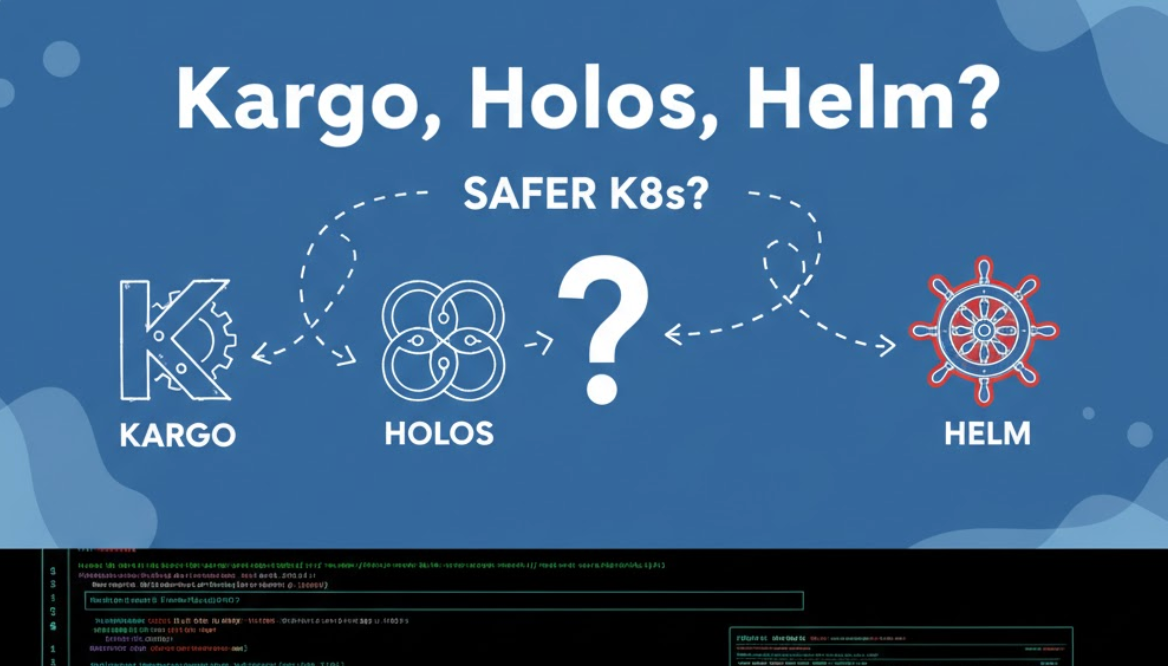
And at the heart of this pattern is a simple but powerful idea: render your Kubernetes manifests ahead of time — not when you’re deploying. This gives you full visibility of what’s going to land in production before it actually does. It’s not exactly brand-new, but the tools around it — like Kargo, Holos, and even some custom CI jobs — are changing fast. The community? Well, they’re figuring it out as they go.
Here’s how things are shaping up, straight from the frontlines.
The problem: Helm templating without a safety net
Let’s start with the pain. Lots of teams are already using ArgoCD or FluxCD to deploy Helm charts across clusters with per-env values baked in. The setup is powerful. But it can also feel like flying blind.
When your only clue about a change is buried somewhere in the chart values or a new chart version, you’re stuck diffing YAML by hand — or worse, discovering unexpected changes only after they hit production.
One engineer summed it up like this:
“What I dislike is being unaware of how changes in values or chart versions might impact what gets deployed in the clusters.”
This frustration is exactly what the rendered manifests pattern aims to fix. By rendering and storing manifests per-cluster in Git, you gain clarity: every change is diffable, reviewable, and version-controlled. You can finally answer the question, “What are we actually deploying?” before ArgoCD pulls the trigger.
The contenders: Kargo, Holos, ArgoCD Hydrator — and lots of DIY
Several tools have popped up in this space, each trying to solve parts of the same puzzle. But they all come with tradeoffs — some technical, some cultural.
Kargo: The ambitious pipeline orchestrator
Kargo is pitching itself as a smarter GitOps orchestrator, designed to track rendered manifest changes and promote them across environments. It’s a bold vision — Kargo aims to replace bespoke CI scripts with an opinionated promotion flow.
But not everyone’s convinced.
“I’m still not convinced that running a central software to track changes and promote them across different environments… is worth the squeeze.”
If you’re managing dozens of clusters and struggling to maintain consistency, Kargo could be your silver bullet. But for leaner teams? It might feel like overhead.
Holos: CUE-powered, but with a learning curve
Holos introduces CUE (Configure, Unify, Execute) into the mix, offering a declarative and programmable way to generate Kubernetes resources. The concept is powerful — CUE can validate and transform configs in ways YAML can’t touch. But let’s be honest: learning a whole new language (again) isn’t everyone’s idea of fun.
“Seems more difficult than I first anticipated.”
Holos is promising, but still early-stage. If you’re okay living on the edge and learning as you go, it’s worth a shot. Otherwise, it might be one tool too many for an already complex stack.
ArgoCD Source Hydrator: Native, but not there yet
This ArgoCD-native solution could eventually make the rendered manifests pattern feel like a first-class citizen. But right now?
“Still in alpha, doesn’t support specifying valuesFiles.”
Translation: promising, but not production-ready. Many engineers are watching and waiting.
DIY CI: Rolling your own rendering pipeline
Lots of teams are skipping the tools and scripting it themselves. Python scripts that render Helm charts. GitHub Actions that diff manifests. Custom APIs that serve up rendered YAML on demand.
“We developed an internal API which renders manifests when provided a values file… and use an in-house ArgoCD plugin to call it.”
Another engineer piped in with a Python script that reads HelmRelease and HelmRepository files, adds the repo, and calls helm template under the hood. The result? Fully rendered manifests pushed to Git with every change, plus a comment in the PR showing the diff.
It’s not fancy, but it works — and crucially, it’s reproducible.
“It’s a build artifact the same way a Docker image is.”
This is where the rendered manifests pattern starts feeling less like a hack, and more like a missing piece of the GitOps story.
So… why isn’t everyone doing this?
Honestly, because it’s still awkward.
Some teams find that using helm template > prod.yaml && git commit gets them 95% of the way there. Others are held back by tooling that doesn't quite support their edge cases. And for many, the biggest barrier is inertia—changing deployment pipelines is risky, and nobody wants to be the one who breaks prod.
There’s also disagreement over whether this pattern is necessary at all. One commenter challenged the whole premise:
“Why do I need this? Our templates are transparent. I just click the Diff button in the UI.”
That works — until it doesn’t. If you’re running auto-sync in ArgoCD, clicking “Diff” means you’re already past the point of no return. The change is live. Git diffs give you a chance to catch surprises before that happens.
As another engineer put it:
“Having the rendered manifest and its diff available to the reviewer before submitting the change? That’s gold.”
The future: Less magic, more visibility
What’s clear from all this is that teams are hungry for better visibility — and they’re willing to hack their way there. Whether it’s through Kargo’s structured pipelines, Holos’ CUE-powered configs, or just a CI job that runs helm template, the end goal is the same: no more blind deployments.
The tension here mirrors a bigger trend in the DevOps world: moving from automation to explainable automation. It’s not enough for tools to “just work” — they need to show their work too.
Right now, the rendered manifests pattern might still feel like a workaround. But as more teams adopt it — and as tools like ArgoCD evolve to support it natively — it might become the new normal.
For now? Pick your poison. Kargo, Holos, DIY scripts — it doesn’t matter as long as you see what you ship.
And that, maybe, is the whole point.
TL;DR
- The rendered manifests pattern gives you visibility into what’s actually being deployed
- Tools like Kargo, Holos, and ArgoCD Hydrator are emerging to support this, but they’re not all mature
- Many teams are building custom CI jobs that render and diff manifests before syncing to clusters
- The goal: safer rollouts, fewer surprises, and deployment pipelines that don’t hide what’s under the hood
In a world where a single line change in a values.yaml file can lead to massive diffs across your cluster, seeing the full picture before deployment isn't just nice—it's necessary.
메타데이터
- post_id
- e35aaa3f5ccb
- slug
- kargo-holos-or-just-helm-navigating-tools-for-safer-kubernetes-rollouts-e35aaa3f5ccb
- url
- https://medium.com/@PlanB./kargo-holos-or-just-helm-navigating-tools-for-safer-kubernetes-rollouts-e35aaa3f5ccb
- canonical_url
- https://medium.com/@PlanB./kargo-holos-or-just-helm-navigating-tools-for-safer-kubernetes-rollouts-e35aaa3f5ccb
- author_url
- https://medium.com/@PlanB.
- status
- ok
- fetched_at
- 2026-06-24 18:57:25