*231* Solar Stability, Energetic Cohesion, and Systemic Organization
The Sun — 43 Hidden Phenomena That Modern Astrophysics Still Does Not Explain
231 Solar Stability, Energetic Cohesion, and Systemic Organization
The Sun — 43 Hidden Phenomena That Modern Astrophysics Still Does Not Explain
What Modern Science Claims
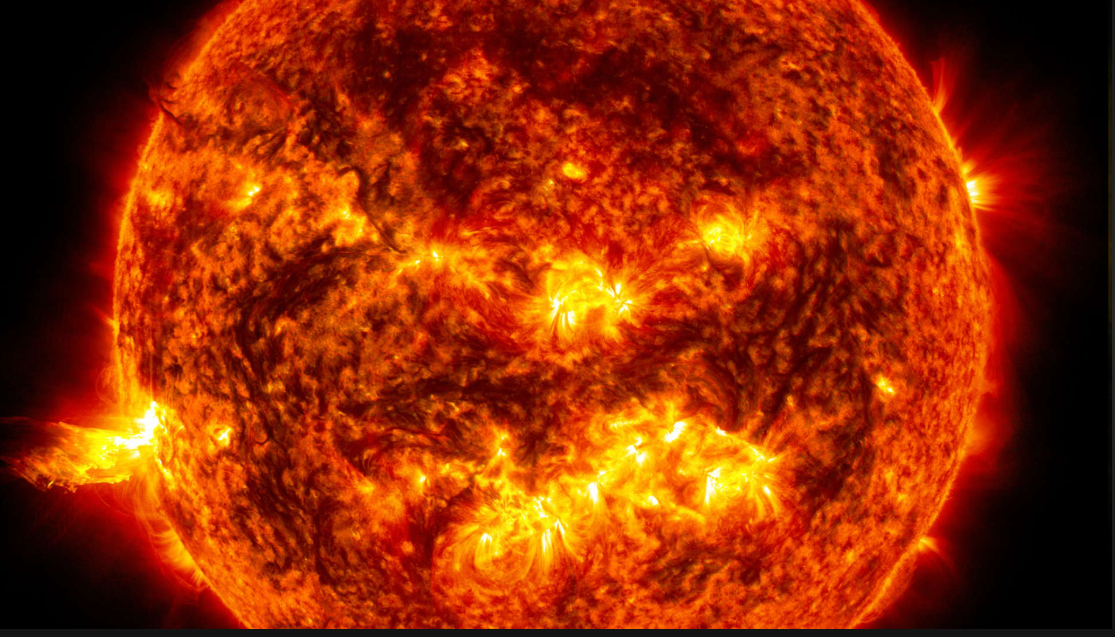
Modern astrophysics presents the Sun as a conventional thermonuclear star formed through gravitational collapse. According to this model, the Sun is essentially a massive sphere of plasma composed mainly of hydrogen and helium, where nuclear fusion continuously converts hydrogen into helium while releasing heat and light. Solar magnetic fields, ultraviolet radiation, solar wind, gamma emissions, and solar cycles are all interpreted as consequences of plasma dynamics and thermonuclear reactions.
Within this framework, the Sun is generally treated as one ordinary star among billions of others.

The Fundamental Inconsistency
Yet this interpretation leaves an important contradiction unresolved. A structure described as permanently turbulent, unstable, and chaotic should not be capable of maintaining such extraordinary long-term coherence.
The remarkable stability of planetary motions, the persistence of solar cycles, the regulation of magnetic activity, and the durable energetic balance of the solar system all suggest the existence of a deeper organizing mechanism.
A permanently unstable plasma environment should progressively drift toward major disorder. Instead, the Sun preserves a surprisingly stable global architecture.

What These Texts Propose
The texts gathered here propose a broader structural interpretation of the Sun than the one commonly presented within conventional astrophysical models.

Rather than describing the Sun exclusively as a thermonuclear plasma sphere governed primarily by localized energetic reactions, this interpretation approaches the Sun as a highly organized energetic system whose long-term stability may depend upon deeper regulatory mechanisms. Within this framework, the visible thermonuclear activity observed at the solar surface would represent only part of a more complex global organization.

The persistence of solar equilibrium, magnetic cyclicity, planetary coherence, and long-term systemic stability suggests that additional large-scale organizing processes may participate in maintaining the overall balance of the solar environment.
According to this interpretation, the central regions of the Sun may function not merely as zones of energy production, but also as structural centers contributing to the continuous regulation and redistribution of energetic activity throughout the solar system. The theory therefore does not deny the existence of thermonuclear processes. Instead, it proposes that such processes alone may not fully account for the remarkable continuity, stability, and coherence observed across immense temporal scales.

Within this broader perspective, the Sun is approached as an active organizing structure whose role may extend beyond the simple production of heat and visible light.The following forty-three points summarize the principal mechanisms and structural hypotheses proposed throughout these texts.
1. The Solar Core Would Not Be a Simple Fusion Region
The core of the Sun is described as a compact and stable central condensation rather than a purely turbulent thermonuclear region.
2. The Sun Would Diffuse a Non-Thermal Form of Energy
In addition to visible heat and light, the Sun would continuously diffuse an invisible cohesive energy contributing to the long-term stability of the solar system.

3. Solar Stability Contradicts the Idea of Permanent Chaos
Current astrophysical models describe the Sun as a structure dominated by turbulence, magnetic instability, plasma agitation, and fluctuating energy transfer.
However, the observed behavior of the solar system reveals something remarkable: despite intense activity, the overall structure repeatedly returns toward equilibrium.

Solar cycles remain organized. Magnetic reversals do not destroy the solar structure. Planetary motions remain coherent. And no irreversible global destabilization is observed.
This recurring stability suggests the presence of a deeper regulatory architecture capable of continuously redistributing energetic excess before disorder becomes destructive.
4. The Sun Would Possess Two Distinct Energetic Shields
The texts describe two major protective layers surrounding the Sun, each performing a different regulatory function.

5. The First Shield Would Absorb Internal Light
The first shield would participate in the absorption, redistribution, and reinforcement of luminous energy originating from the solar core.
6. The Second Shield Would Protect the Surrounding Celestial Environment

The outer shield would regulate how solar radiation, ultraviolet activity, and thermal diffusion interact with the surrounding solar environment.
Rather than allowing energy to propagate outward in a completely uncontrolled manner, this structure would moderate excessive energetic concentration and help preserve broader equilibrium throughout the solar system.
7. Ultraviolet Radiation Would Be Produced Between the Two Shields
According to this interpretation, ultraviolet radiation would not originate solely from nuclear fusion.
Instead, it would emerge primarily from energetic interactions occurring within a transitional region located between the Sun’s two energetic shields.
This intermediary zone would continuously regulate ionization balance, thermal flows, and radiative redistribution.

8. Gamma Rays Would Also Be Generated Within This Intermediate Region
Gamma emissions would result from specific energetic interactions occurring between the two solar layers rather than originating exclusively from deep nuclear reactions.
9. The Sun Would Be Capable of Locally Modifying the Structure of Its Layers
Certain solar regions could temporarily enter denser energetic states in order to stabilize excessive thermal or magnetic activity.
10. Solar Pole Reversals Would Depend on the Presence of the Two Shields
Magnetic reversals normally should produce major destabilization within an extremely energetic stellar environment.
Yet the Sun repeatedly undergoes polarity inversions while preserving global coherence.
The texts propose that the Sun’s dual-layered structure absorbs, redistributes, and moderates magnetic imbalance during these transitions, preventing large-scale structural collapse.

11. The Sun Would Not Depend Entirely on Fuel Consumption
Unlike conventional stellar models based primarily on progressive fuel depletion, the Sun would operate as a partially autonomous regulatory structure capable of preserving equilibrium through internal stabilization mechanisms.
12. The Sun Would Actively Slow Its Own Aging Process

Through continuous redistribution of energetic excess and limitation of destabilizing losses, the Sun would preserve its long-term structural stability.
13. “Standby Zones” Would Surround the Sun
The texts describe surrounding intermediary regions within the corona, heliosphere, and magnetic boundaries acting as energetic stabilization environments.

These standby zones would temporarily absorb portions of excess thermal, magnetic, and radiative activity.
14. These Zones Would Absorb Thermal Excesses
The standby regions would function as energetic buffers helping prevent destructive thermal escalation.

15. They Would Regulate Solar Cycles
The eleven-year solar cycles would correspond to recurring phases of energetic absorption and redistribution.


16. They Would Stabilize Magnetic Fields
Solar storms and magnetic disturbances would be moderated by these surrounding regulatory environments.
17. Solar Minimums Would Correspond to Phases of Energetic Absorption
During solar minimums, visible activity decreases while broader energetic equilibrium progressively re-establishes itself.
The Sun would therefore not become inactive, but would instead enter a temporary phase of energetic moderation and redistribution.

18. Solar Maximums Would Correspond to Phases of Energetic Release
When previously redistributed energy is progressively released, solar eruptions, magnetic activity, and visible energetic intensity increase.
19. Solar Eruptions Would Function as Corrective Mechanisms
Solar eruptions would not represent purely chaotic accidents.
They would instead function as corrective stabilization processes helping restore thermal and magnetic equilibrium.

20. Gamma Rays Would Participate in Thermal Reactivation

Localized gamma activity would contribute to restoring energetic balance within destabilized solar regions.

21. The Sun Would Be the Primary Cohesion Center of the Solar System
The Sun would not merely provide gravity and radiation.
It would also function as the main energetic cohesion center preserving long-term systemic stability throughout the solar system.
22. Planetary Alignments Would Depend on Active Cohesion Diffusion

Planetary organization would be maintained not solely through gravity, but also through continuous diffusion of cohesive energy originating from the Sun.
23. The Sun Would Diffuse a Magnetic Avoidance Force
This energetic diffusion would contribute to limiting certain large-scale collisions within surrounding celestial belt regions.

24. The Sun Would Not Be Subject to External Gravitational Domination
Rather than behaving as a passive object governed mainly by external forces, the Sun would function as the principal stabilizing center of the solar system.


25. The Sun Would Be Surrounded by a Regulatory Energetic Environment
The heliosphere would participate actively in the regulation and stabilization of the surrounding solar environment rather than acting solely as a passive particle shield.

26. The Sun Would Indirectly Protect Earth Against Radiative Excesses
Solar regulatory mechanisms would help limit dangerous energetic overloads capable of destabilizing planetary environments.
27. Solar Shields Would Interact with the Celestial Environment
The Sun’s layered structures would continuously interact with surrounding space in order to moderate certain destabilizing thermal and radiative intrusions.
28. The Sun Would Function as a Macroscopic Cohesion Structure
The Sun would continuously preserve the large-scale energetic organization of the solar system through stabilizing interactions extending beyond simple radiation.

29. The Sun and Bosons Would Share the Same Fundamental Function
Within this interpretation, bosons would preserve order at the quantum scale while the Sun would preserve order at the cosmic scale.

30. The Sun Would Represent a “Stellar Boson”
The Sun would continuously diffuse an invisible form of cohesion helping prevent systemic disorganization.
31. The Microcosm and the Macrocosm Would Follow the Same Logic

The same stabilizing principles would operate both within subatomic structures and within large-scale cosmic systems.
32. The Sun Would Not Behave Like an Ordinary Star
Although conventional astrophysics classifies the Sun as a standard main-sequence star, its remarkable long-term stability suggests the presence of a far more organized regulatory architecture.
Its cycles repeatedly reorganize toward equilibrium. Magnetic reversals occur without collapse. And the surrounding solar system preserves extraordinary coherence over immense timescales.

The Sun would therefore behave less like a purely chaotic thermonuclear sphere and more like a continuously self-regulating energetic structure.
33. Visible Light Would Represent Only a Small Fraction of the Sun’s True Role
The deeper role of the Sun would not be limited to producing visible luminosity.
Its primary function would be to preserve systemic stability, energetic coherence, and long-term organization throughout the solar system.
34. The Sun Would Be Highly Resistant to External Destabilization
The texts suggest that no external force could easily destabilize the Sun’s broader structural equilibrium.

35. Sodium Would Act as a Major Regulatory Element
Sodium emissions would participate in internal energetic regulation and contribute to stabilizing the Sun’s protective layers.
36. Solar Layers Would Continuously Adapt to Energetic Requirements
The Sun’s atmospheric structures would behave as adaptive layers capable of modifying their energetic state in order to preserve equilibrium.
37. The Celestial Environment Would Be Highly Sensitive to Ultraviolet Activity

Within this interpretation, the Sun would help prevent excessive ultraviolet destabilization throughout the surrounding spatial environment.
38. The Sun Would Participate in the Thermal Stability of the Entire Solar System
Solar activity fluctuates continuously, yet the broader thermal organization of the solar system remains globally stable.
This recurring balance suggests that thermal activity may be continuously moderated and redistributed through layered regulatory mechanisms.
39. Cosmic Rays Would Be Linked to Solar Evolution
Certain forms of cosmic radiation would reflect deeper structural transformations occurring within the Sun itself.

40. The Sun Would Act as a Central Energetic Lock
The Sun would preserve systemic equilibrium by preventing major structural destabilization throughout the solar system.
41. The Sun Would Behave as an Autonomous Self-Regulating Structure
Despite continuous energetic disturbance, the Sun repeatedly preserves long-term global stability.
Magnetic reversals occur. Solar eruptions intensify. Energetic output fluctuates. Yet equilibrium repeatedly returns.
This recurring stabilization suggests the presence of internal mechanisms continuously redistributing and moderating energetic imbalance.

42. The Sun Would Maintain the Stable Inclination of the Solar System

Certain forms of solar energetic diffusion would contribute to maintaining large-scale structural stability throughout planetary organization.
43. The Sun Would Interact with Celestial Belts to Eliminate Energetic Excesses
Specific regions within the solar environment would help eliminate excess energetic accumulation capable of disturbing light propagation and systemic equilibrium.

Limits of Current Scientific Interpretation
Modern science has achieved major technological and theoretical advances. However, this does not mean that all major physical mechanisms are fully observed, completely demonstrated, or perfectly understood.
In many scientific domains, important interpretations still rely heavily on indirect reconstruction, partial observation, probabilistic modelling, or theoretical approximation.In astrophysics, for example, the internal structure of stars cannot be directly observed. The deep energetic dynamics of the Sun are reconstructed through indirect signals, surface observations, magnetic measurements, radiative interpretation, and mathematical modelling.
The same situation exists for black holes. Their internal structure is not directly observable. Their surrounding energetic environments are largely interpreted through indirect gravitational effects, radiative signatures, and theoretical reconstruction.

Gamma-ray mechanisms also remain only partially understood in many extreme cosmic environments. Their interaction with matter, plasma environments, and mineral structures is often interpreted through secondary effects rather than through complete direct observation of the underlying processes themselves.
For this reason, a theoretical interpretation cannot be rejected solely because certain proposed mechanisms are not yet directly observable.
A significant part of modern scientific understanding already depends on indirect inference, evolving interpretation, model-dependent reconstruction, and partial observation.
The purpose of the present work is therefore not to reject science, but to explore whether a broader structural interpretation of solar organization may help explain forms of long-term coherence, regulation, and stability that remain insufficiently clarified within conventional astrophysical descriptions.
Within this perspective, the Sun is approached not merely as a chaotic thermonuclear object, but as a highly organized energetic structure whose global coherence may require a broader level of interpretation than current models presently provide.


A Broader Interpretation of the Sun
Taken together, these forty-three mechanisms describe the Sun as a far more complex structure than the conventional thermonuclear model suggests.
Its visible luminosity would represent only the external expression of a much deeper regulatory architecture organized around invisible cohesion processes, layered energetic regulation, adaptive stabilization mechanisms, and long-term systemic organization.
In this broader interpretation, the Sun would not simply be a star producing heat and light.
It would function as the central organizing structure continuously preserving the coherence, stability, and energetic equilibrium of the entire solar system.


— — — — — — — — — — — — — — — — — — — — — — — — — — — — — — — — — — — — —
Teleportation Beyond Transport: Reconstruction, Stability, and Time

Such a vision naturally leads to the belief that a perfectly reconstructed system would preserve not only its appearance, but also its complete physical continuity, biological integrity, and long-term evolution.
Yet this assumption immediately encounters a profound structural difficulty. A real teleportation process does not truly transport matter itself through space in the conventional sense.

These two phases are fundamentally different in nature. The first concerns the dissolution of an organized structure, whereas the second concerns the recreation of an equivalent configuration capable of functioning coherently within a new environment.


Several commonly accepted assumptions become structurally questionable under this perspective. What emerges instead is the reconstruction of a structurally equivalent system while the original structural imprint becomes eliminated or inaccessible. The idea that teleportation would simply “move” a body from one point to another ignores the absence of continuous physical transfer.

Even if the reconstructed system were extraordinarily faithful to the original configuration, absolute continuity would still remain uncertain. Any microscopic divergence introduced during reconstruction could progressively amplify over time. Such divergences might remain invisible at first while slowly modifying internal equilibria, energetic distributions, biological responses, or structural stability itself.

Under this interpretation, aging acquires a radically different meaning. It would no longer represent only a biological process linked to chemistry and cellular degradation, but could also become an indicator of reconstruction divergence.


From this viewpoint, teleportation ceases to be a simple technological dream of instantaneous travel. It instead becomes a profound structural problem involving continuity, disappearance, reconstruction, equilibrium, and temporal divergence. The essential challenge is therefore not only whether a structure can be recreated, but whether the recreated structure can truly preserve the same uninterrupted physical existence across time.
Such considerations suggest that the future science of teleportation, if ever realized, would require far more than precise reconstruction alone.

메타데이터
- post_id
- e3652feb046d
- slug
- 231-solar-stability-energetic-cohesion-and-systemic-organization-e3652feb046d
- url
- https://medium.com/@gouvielos/231-solar-stability-energetic-cohesion-and-systemic-organization-e3652feb046d
- canonical_url
- https://medium.com/@gouvielos/231-solar-stability-energetic-cohesion-and-systemic-organization-e3652feb046d
- author_url
- https://medium.com/@gouvielos
- status
- ok
- fetched_at
- 2026-07-20 02:25:49