Wear Layer, Thickness, and Finish: What Actually Determines Flooring Durability?
Most people compare flooring by the number they can see first: thickness.
Wear Layer, Thickness, and Finish: What Actually Determines Flooring Durability?
Most people compare flooring by the number they can see first: thickness.
A thicker plank feels stronger in the hand. It can feel more solid underfoot. It may even look more premium on a product page. But thickness alone does not decide how long a floor will last, how well it handles scratches, or how it reacts to pets, kids, spills, furniture, and daily traffic.
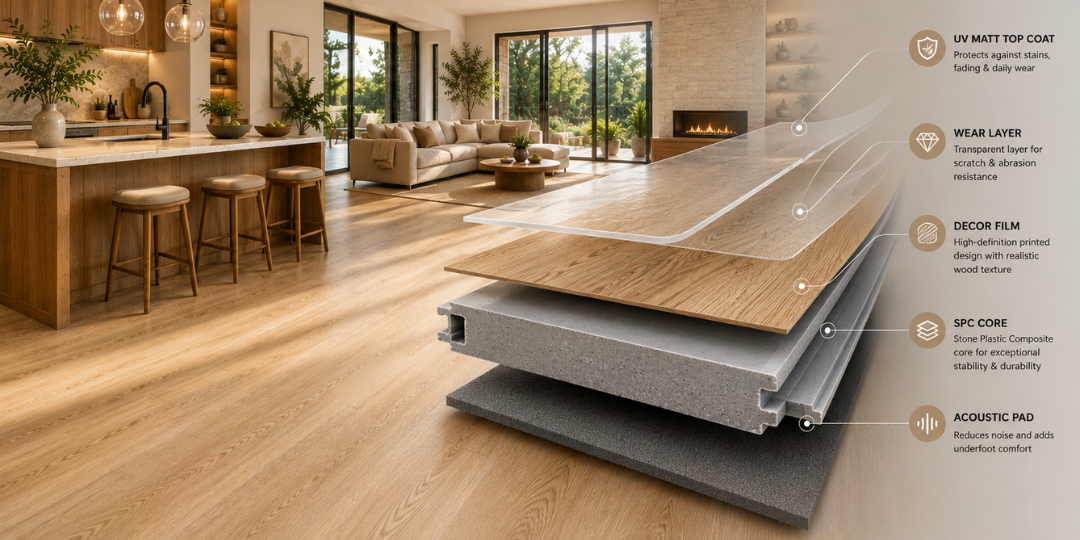
Flooring durability comes from several parts working together. The wear layer protects the surface. The core supports pressure from underneath. The total thickness affects plank feel and installation behavior. The finish controls how the surface handles scuffs, stains, cleaning, and light scratches.
That is why two floors with similar thickness can perform very differently once they are installed.
A durable floor is not always the thickest floor. It is the floor where the wear layer, core, thickness, and finish match the way the space is actually used.
What Flooring Durability Really Means
Durability is often used like one simple word, but flooring does not fail in only one way. A floor can be strong against water but still show scratches. Another floor can resist scratches well but dent under heavy furniture. A third floor may look beautiful at first but lose its clean appearance because the finish shows every footprint and scuff.
That is why flooring durability should be judged by the type of damage the room is most likely to face.
Scratch Resistance
Scratch resistance is about how well the surface handles pet nails, shoes, grit, chair movement, and daily foot traffic. This matters most in living rooms, hallways, kitchens, entryways, and homes with pets.
Dent Resistance
Dent resistance depends more on the support under the surface. Heavy furniture, dropped items, high heels, rolling chairs, and sharp pressure points can leave marks if the core is too soft or the floor is not suited for that use.
This is where core type becomes important. A dense rigid core will usually handle pressure better than a softer plank construction.
Wear Resistance
Wear resistance is about how slowly the visible surface breaks down over time. This is where the wear layer matters most, especially in vinyl plank, SPC, and WPC flooring.
The more traffic a space receives, the more important surface protection becomes.
Water Resistance
Water resistance is not the same as full durability. A waterproof floor may handle spills well, but that does not automatically mean it resists scratches, dents, or surface dullness.
Kitchens, bathrooms, laundry rooms, basements, and entryways need water performance, but they also need cleanability, surface strength, and proper installation.
Stability
Stability is how well the floor holds its shape. A stable floor is less likely to shift, curl, cup, gap, or react badly to changes in temperature and humidity.
This depends on the product construction, locking system, subfloor condition, and room environment.
Wear Layer: The Surface Protection Buyers Should Understand First
The wear layer is the clear protective layer that sits above the printed design layer in many vinyl floors, including luxury vinyl plank, SPC flooring, and WPC flooring.
Its job is simple: protect the look of the floor from daily use.
The wear layer helps reduce visible surface wear caused by walking, shoes, chairs, pets, cleaning, and repeated traffic. It protects the printed visual layer underneath, which is what gives the plank its wood, stone, or tile appearance.
This is one of the most important specs buyers should understand. But it is also one of the easiest specs to misunderstand.
Common Wear Layer Measurements
Wear layer thickness is usually measured in mils, not millimeters. That can confuse buyers because total plank thickness is usually measured in millimeters.
Common wear layer ranges include:
- 6 mil: light residential use
- 12 mil: standard residential use
- 20 mil: active homes, stronger residential use, and light commercial use
- 28 mil and above: heavier traffic or commercial settings, depending on full product construction
A higher wear layer can help with long-term surface protection, especially in busy spaces. But it should not be treated as the only durability number that matters.
A 20 mil wear layer does not make a floor indestructible. It does not automatically make the core stronger. It does not prevent every dent. It does not replace proper subfloor prep. It also does not guarantee the surface finish will hide scratches well.
The wear layer protects the visual surface. It is important, but it is only one part of the flooring system.
What the Wear Layer Does Not Control
The wear layer does not decide how the plank feels underfoot. It does not decide whether the core is dense or soft. It does not make the floor more comfortable. It does not automatically improve waterproofing.
That is why a buyer can choose a floor with a good wear layer and still be disappointed if the core, finish, or installation conditions do not match the room.
For example, a floor may have a strong wear layer but a glossy finish that shows pet marks and light scratches easily. Another floor may have a moderate wear layer but a better matte finish that hides everyday use more naturally.
This is where finish quality becomes just as important as the number printed on the spec sheet.
Flooring Thickness: What It Changes and What It Does Not
Flooring thickness usually refers to the full plank thickness from top to bottom. In vinyl plank flooring, this may include the wear layer, printed design layer, core, attached pad, and backing.
Thickness affects how a floor feels and installs. It can make a plank feel more substantial. It can help the floor feel more solid underfoot. In some products, extra thickness can also improve comfort or sound absorption, especially when the floor has an attached underlayment.
But thickness does not automatically mean better durability.
A thick plank can still scratch if the surface finish is weak. A thick plank can still dent if the core is soft. A thick plank can still fail if the subfloor is uneven or the locking system is not strong enough.
What Thickness Can Improve
Total plank thickness can help with:
- a more solid feel underfoot
- better plank presence during installation
- added comfort in some flooring types
- better sound absorption in some products
- slightly more forgiveness over minor subfloor imperfections
- a more premium feel when compared with very thin products
These are real advantages. Thickness matters.
But it matters in a specific way. It affects feel, installation behavior, and sometimes stability. It does not directly protect the surface from scratches.
Why Thicker Flooring Is Not Always More Durable
This is the mistake many buyers make.
They assume an 8mm plank must be more durable than a 5mm plank because it is thicker. That may be true in some cases, but not always.
A thinner SPC plank with a dense rigid core can resist dents better than a thicker WPC plank with a softer core. A thicker floor with a weak finish can show surface wear faster than a slightly thinner floor with a stronger coating. A product with good thickness but a poor locking system can still create installation problems.
Thickness tells you how much material is in the plank. It does not tell you how strong each layer is.
That is the difference.
Thickness vs Wear Layer
Thickness and wear layer are not the same thing.
Thickness is the full plank measurement. Wear layer is only the protective surface measurement.
A floor can be thick but have a thin wear layer. It can also be thinner but have a stronger wear layer. Those two products will not behave the same.
When comparing flooring, both numbers should be read together. Thickness tells you about plank body and feel. Wear layer tells you about surface protection.
Core Type: The Hidden Layer That Affects Pressure, Stability, and Feel

The core is the middle structure of the plank. It sits below the surface layers and supports the floor from underneath.
This layer matters because many types of damage do not start at the surface. Dents, pressure marks, flexing, and instability often come from what is happening below the wear layer.
The surface protects the look. The core supports the plank.
SPC Core
SPC stands for stone plastic composite. It is a dense rigid core used in many waterproof vinyl flooring products.
SPC flooring is usually chosen when dent resistance, stability, and firm support matter. It often works well in kitchens, hallways, rental properties, busy homes, and light commercial spaces because the core is harder and less compressible than softer flooring constructions.
SPC may feel firmer underfoot, but that firmness is part of why it handles pressure well.
For homes with pets, kids, heavy furniture, or frequent foot traffic, SPC can be a practical choice when paired with a strong wear layer and a good finish.
WPC Core
WPC stands for wood plastic composite. It is usually softer and warmer underfoot than SPC.
Many homeowners like WPC because it feels more comfortable in bedrooms, living rooms, and residential spaces where comfort matters. It can also feel quieter underfoot depending on the product construction.
But WPC may not resist dents the same way as a dense SPC core. That does not make it a bad product. It simply means it serves a different priority.
If the room needs comfort, warmth, and a softer feel, WPC can make sense. If the room needs stronger pressure resistance, SPC may be the better fit.
Flexible LVP
Flexible luxury vinyl plank can work well in the right setting, but it depends heavily on the subfloor.
Because flexible LVP does not have the same rigid structure as SPC or WPC, it can show imperfections if the surface underneath is not smooth and properly prepared. Small bumps, dips, or uneven areas may become more visible after installation.
This is why subfloor condition matters. Even a good floor can perform poorly if installed over the wrong surface.
Flooring Finish: The Surface Detail Most Buyers Ignore
The finish is the top surface treatment of the floor. It sits above or within the wear layer and affects how the floor reacts to real daily use.
This is one of the most overlooked parts of flooring durability.
Two floors can have the same wear layer thickness, but the one with the better finish may keep its appearance longer. The finish affects scuffs, stains, cleaning behavior, light scratches, gloss level, and how visible marks become under natural or artificial light.
In daily life, the finish often decides how the floor looks after six months.
Urethane Finish
A urethane finish is a common protective coating used on many vinyl floors. It helps create a cleaner, more protected surface and supports basic stain and scuff resistance.
The quality of urethane protection can vary by product. Some are basic. Some are reinforced for stronger performance.
Enhanced Urethane Finish
Enhanced urethane finishes are designed to improve surface performance. They may offer better protection against scuffs, stains, and daily wear compared with standard coatings.
This can matter in homes where the floor is cleaned often or exposed to shoes, pets, food spills, and furniture movement.
Aluminum Oxide Finish
Aluminum oxide is often used to improve abrasion resistance and scratch resistance. It is commonly associated with stronger surface protection in many flooring products.
This does not mean the floor becomes scratch-proof. No normal residential flooring should be treated that way. But a stronger finish can help the surface resist visible wear better over time.
Matte vs Gloss Finish
Finish sheen also matters.
A matte finish usually hides dust, paw marks, small scratches, and daily traffic better than a glossy finish. It gives the floor a softer visual appearance and often works better in busy homes.
A glossy finish can look polished and clean in photos, but it may show footprints, scratches, light reflection, and cleaning marks more easily.
For active households, matte or low-sheen finishes are often more forgiving.
What Specs Matter Most for Different Rooms and Lifestyles?
The best flooring choice changes depending on how the space is used. A floor that works well in a guest bedroom may not be the right floor for a rental kitchen or a home with two dogs.
For Pets
Homes with pets need surface protection, easy cleaning, and a finish that hides small marks.
Pet nails, grit from outside, food bowls, accidents, and frequent cleaning all affect the floor. A strong wear layer helps, but the finish is just as important. Matte textures and natural variation can hide small scratches better than flat, glossy surfaces.
For pets, look for:
- scratch-resistant finish
- strong wear layer
- matte or low-sheen surface
- easy cleanability
- water-resistant or waterproof construction
- color variation that hides small marks
The goal is not to find a floor that never scratches. The goal is to find a floor that handles normal pet life without looking damaged too quickly.
For Kids
Homes with kids need floors that can handle spills, toys, dropped objects, food, chairs, and frequent cleaning.
Here, the best choice is often a floor that balances surface protection with easy maintenance. A forgiving color and texture can make a big difference because flat, single-tone floors tend to show every crumb, scuff, and mark.
For kids, look for:
- stain resistance
- easy cleaning
- dent resistance
- comfortable feel
- strong surface coating
- visuals that hide everyday mess
A floor in a family home should not need perfect conditions to look good.
For Rental Properties
Rental flooring faces unpredictable use. Tenants may not use furniture pads. Spills may sit longer. Cleaning habits vary. Traffic can be heavier than expected.
For rental properties, durability should focus on cost control, dent resistance, replaceability, and long-term surface appearance.
SPC flooring with a strong wear layer and a practical finish often works well in rental settings because it gives firm support and better resistance to daily abuse.
For rentals, look for:
- dense core construction
- strong wear layer
- matte finish
- easy plank replacement
- water resistance
- low-maintenance surface
- realistic color variation
A rental floor should be chosen for real use, not just first impression.
For Kitchens
Kitchen flooring needs more than beauty.
A kitchen floor deals with water, dropped utensils, food spills, chair movement, standing traffic, and regular cleaning. Softness can be nice, but cleanability and surface strength usually matter more.
For kitchens, look for:
- water resistance or waterproof construction
- dent resistance
- easy cleaning
- strong finish
- slip-conscious surface texture
- stable construction
- stain resistance
A kitchen floor should handle daily mess without becoming stressful to maintain.
For Commercial Traffic
Commercial spaces need flooring that can handle repeated foot traffic, cleaning routines, rolling loads, and long hours of use.
This is where residential marketing terms are not enough. Commercial flooring should be evaluated by wear layer, finish strength, product rating, maintenance needs, and the actual type of business using the space.
For commercial traffic, look for:
- commercial-grade wear layer
- strong finish coating
- dense core or suitable commercial construction
- maintenance compatibility
- slip resistance
- long-term appearance retention
A floor used in a boutique, salon, office, or showroom faces different demands than a floor used in a bedroom. The specs should reflect that.
Common Mistakes Buyers Make When Reading Flooring Specs
Many flooring regrets happen because buyers compare products too quickly. They look at one number, assume it tells the whole story, and miss the details that affect daily performance.
Assuming Thicker Means Stronger
A thicker plank may feel better, but it is not automatically more scratch-resistant or dent-resistant.
Thickness affects body and feel. Surface protection comes from the wear layer and finish. Pressure resistance comes from the core. These should not be treated as the same thing.
Thinking Waterproof Means Scratch-Proof
Waterproof flooring can handle water better, but that does not mean the surface cannot scratch, scuff, dull, or stain.
Water resistance and scratch resistance are separate performance areas. A kitchen or pet-friendly floor needs both.
Ignoring the Finish
The finish is easy to overlook because it is not always explained clearly on product pages. But it affects how the floor looks after real use.
A better finish can help with scuffs, stains, cleaning, and scratch visibility. A poor finish can make even a good-looking product feel disappointing over time.
Comparing SPC and WPC Without Considering Room Use
SPC and WPC are not simply better or worse. They solve different problems.
SPC is usually better when dent resistance and rigid support matter. WPC is usually better when comfort and warmth matter. The right choice depends on the room.
Choosing Glossy Flooring for High-Traffic Spaces
Glossy flooring can look beautiful, but it often shows more.
Footprints, scratches, dust, pet marks, and light reflection can become more noticeable on glossy surfaces. In busy homes, matte and low-sheen finishes are usually easier to live with.
Simple Flooring Durability Checklist Before Buying
Before choosing a floor, do not stop at thickness. Ask better questions.
- What room is the flooring going into?
- Will the floor face pets, kids, rolling chairs, or heavy furniture?
- Is moisture a daily risk or only an occasional risk?
- Do you need comfort or dent resistance more?
- What is the wear layer?
- What is the total plank thickness?
- What type of core does it have?
- What finish protects the surface?
- Is the product rated for residential, light commercial, or commercial use?
- Will the color and texture hide everyday marks?
- Is the subfloor suitable for this flooring type?
- Will the floor be easy to clean without losing its appearance?
These questions give you a more accurate picture than one number on a product page.
Final Takeaway
A durable floor is not simply the thickest floor. It is not only the floor with the highest wear layer number. It is not only the floor labeled waterproof.
True flooring durability comes from how the full system works together.
The wear layer protects the visible surface. The finish controls how that surface handles scratches, scuffs, stains, cleaning, and light reflection. The core supports pressure from underneath. The total thickness affects feel, installation behavior, and plank presence. The room decides which of those specs matters most.
For pets, finish and scratch resistance matter. For rentals, core strength and replaceability matter. For kitchens, water resistance and cleanability matter. For commercial spaces, wear protection and maintenance performance matter.
If you want flooring that lasts, do not ask only how thick it is. Ask what protects the surface, what supports the plank, what finish sits on top, and what kind of daily life the floor is being asked to handle.
FAQs
Q) Is thicker flooring always better?
A) No. Thicker flooring can feel more solid underfoot, but it does not automatically resist scratches, dents, or wear better. Surface durability depends more on the wear layer, finish, core, and room use.
Q) What is a good wear layer for vinyl plank flooring?
A) For most homes, 12 mil is a practical starting point. For pets, kids, kitchens, rentals, or high-traffic areas, 20 mil is usually a stronger choice.
Q) Does wear layer thickness matter?
A) Yes. The wear layer helps protect the printed design from traffic, scuffs, and daily wear. It does not control dent resistance, plank feel, or core strength by itself.
Q) What matters more: wear layer or thickness?
A) For surface wear, the wear layer and finish matter more. For plank feel, comfort, and installation presence, total thickness matters more.
Q) Does flooring finish affect durability?
A) Yes. The finish affects scuffs, stains, cleaning behavior, scratch visibility, and sheen. A matte finish usually hides everyday marks better than a glossy finish.
Q) Is waterproof flooring also scratch-proof?
A) No. Waterproof flooring handles moisture better, but scratch resistance depends on the wear layer, finish, surface texture, and how the floor is used.
메타데이터
- post_id
- e37cd2b59735
- slug
- wear-layer-thickness-and-finish-what-actually-determines-flooring-durability-e37cd2b59735
- url
- https://medium.com/@alvarogandara977/wear-layer-thickness-and-finish-what-actually-determines-flooring-durability-e37cd2b59735
- canonical_url
- https://medium.com/@alvarogandara977/wear-layer-thickness-and-finish-what-actually-determines-flooring-durability-e37cd2b59735
- author_url
- https://medium.com/@alvarogandara977
- status
- ok
- fetched_at
- 2026-06-23 03:48:11