What Happens to Your Body If You Walk Every Morning for 30 Minutes?
Sometimes the most powerful habits are also the simplest.
What Happens to Your Body If You Walk Every Morning for 30 Minutes?
Sometimes the most powerful habits are also the simplest.
Not expensive supplements. Not extreme workout plans. Not impossible routines.
Just walking.
A simple 30-minute morning walk may seem almost too ordinary to change your life.
But over time, this small daily habit can quietly transform:
- your body,
- your mind,
- your energy,
- your mood,
- your heart,
- your sleep,
- and even your outlook on life.
The beautiful thing about walking is that it is accessible.
You do not need:
- a gym membership,
- complicated equipment,
- athletic ability,
- or perfect fitness levels.
You simply need:
- a pair of shoes,
- consistency,
- and the willingness to begin.
And surprisingly, one of the healthiest things you can do for your body is also one of the most natural.
1. Walking Improves Your Heart Health
Your heart is a muscle.
And like every muscle, it becomes stronger when used consistently.
A 30-minute brisk walk gently increases your heart rate, improving circulation and cardiovascular function without placing extreme stress on the body.
Over time, regular walking can help:
- lower blood pressure,
- improve circulation,
- reduce risk of heart disease,
- and support overall cardiovascular health.
Walking is especially powerful because it is sustainable.
Unlike extreme exercise routines that many people quit after a few weeks, walking can become a lifelong habit.
Practical Tips
- Walk at a pace where you can still talk but feel slightly challenged.
- Aim for consistency rather than speed initially.
- Morning sunlight combined with walking improves energy and rhythm.
A healthy heart supports a longer, stronger life.
2. Walking Helps Burn Fat Naturally
One fascinating thing about walking is how effective it can be for fat burning.
Many people believe only intense exercise burns fat efficiently.
But moderate-intensity walking — especially brisk walking — places the body near an ideal fat-burning zone.
During extremely intense workouts, the body relies more heavily on:
- glucose,
- carbohydrates,
- and quick energy systems.
But during lower-intensity steady movement like brisk walking, the body often burns a higher percentage of fat for fuel.
This makes walking especially valuable for:
- weight management,
- fat loss,
- and metabolic health.
Practical Tips
- Walk consistently rather than obsessing over perfection.
- Morning walks before heavy meals may improve fat utilization for some people.
- Combine walking with healthy eating for best results.
- Longer consistency matters more than short-term intensity.
Small daily movement compounds powerfully over time.
3. Walking Reduces Stress and Calms the Mind
Modern life overstimulates the nervous system constantly.
Notifications. Deadlines. Noise. Stress. Overthinking.
Walking creates something many people desperately need: mental space.
A quiet walk in the morning allows the brain to slow down, process thoughts, and release tension naturally.
Walking can help reduce:
- anxiety,
- mental fatigue,
- stress hormones,
- and emotional heaviness.
Especially when combined with:
- nature,
- sunlight,
- fresh air,
- music,
- podcasts,
- or peaceful silence.
Many people notice their best ideas arrive while walking.
Practical Tips
- Leave your phone in your pocket sometimes.
- Walk in nature whenever possible.
- Use walking as reflection time instead of distraction time.
- Focus on breathing deeply while walking.
Movement heals the mind as much as the body.
4. Walking Improves Energy Levels
Ironically, movement creates energy.
Many people feel tired not because they move too much — but because they move too little.
Sitting for long periods often creates:
- sluggishness,
- stiffness,
- low energy,
- and mental fog.
Walking increases:
- oxygen flow,
- blood circulation,
- alertness,
- and overall vitality.
A morning walk often creates a healthier, more energized start to the day than endless scrolling or rushing immediately into stress.
Practical Tips
- Walk shortly after waking up.
- Combine walking with morning sunlight exposure.
- Avoid checking your phone immediately before walking.
- Stay hydrated.
Energy grows through movement.
5. Walking Supports Better Sleep
Sleep quality affects nearly every part of life:
- mood,
- focus,
- recovery,
- hormones,
- metabolism,
- and mental health.
Walking regularly helps regulate:
- circadian rhythm,
- stress levels,
- and physical recovery.
Morning sunlight exposure during walks also helps signal the body’s internal clock, improving nighttime sleep quality naturally.
Practical Tips
- Walk outdoors in natural morning light.
- Stay consistent with your walking schedule.
- Avoid excessive caffeine late in the day.
- Combine walking with healthy sleep habits.
Better movement often creates better rest.
6. Walking Protects Your Joints and Mobility
Unlike extremely high-impact exercise, walking is gentle on the body while still highly beneficial.
It improves:
- mobility,
- flexibility,
- joint lubrication,
- and muscular endurance.
Walking also helps counteract stiffness caused by modern sedentary lifestyles.
The human body was designed to move regularly.
Practical Tips
- Wear supportive shoes.
- Stretch lightly before or after longer walks.
- Start slowly if you have been inactive.
- Focus on posture while walking.
Movement preserves movement.
7. Walking Improves Mental Health
Walking may not solve every emotional struggle.
But it can significantly improve mental well-being over time.
Regular walking has been linked to:
- reduced anxiety,
- improved mood,
- lower depression risk,
- increased emotional clarity,
- and improved cognitive function.
Part of this comes from:
- endorphin release,
- stress reduction,
- better sleep,
- and improved overall health.
But walking also creates something deeper: a feeling of momentum.
And momentum psychologically matters.
Practical Tips
- Walk during emotionally difficult periods instead of isolating completely.
- Use walking as a healthy emotional reset.
- Pair walking with uplifting podcasts or calming music if helpful.
- Focus on gratitude during walks.
Sometimes healing begins with movement.
8. Walking Builds Discipline Without Overwhelming You
One reason walking is so powerful is because it is realistic.
Many people fail self-improvement goals because they choose routines that are too extreme to maintain.
Walking is sustainable.
And sustainable habits change lives.
A simple daily walk quietly strengthens:
- consistency,
- discipline,
- self-respect,
- and commitment to health.
Practical Tips
- Make walking non-negotiable.
- Start with 10 minutes if 30 feels difficult.
- Focus on daily consistency.
- Track your walks visually on a calendar.
Small disciplined actions build stronger identities.
9. Walking Gives You Time to Think Clearly
Modern life leaves very little quiet thinking time.
Walking creates mental clarity.
Without constant stimulation, your mind can:
- process emotions,
- organize thoughts,
- generate ideas,
- and reconnect with yourself.
Some of the world’s greatest thinkers, writers, philosophers, and innovators relied heavily on walking.
Because movement stimulates thinking.
Practical Tips
- Walk without headphones occasionally.
- Reflect intentionally while walking.
- Ask yourself meaningful questions.
- Use walking as creative thinking time.
Clarity often appears during calm movement.
10. Walking Consistently Can Extend Your Life
Perhaps one of the most powerful truths about walking is this:
It quietly improves many systems at once:
- heart health,
- metabolism,
- mobility,
- mental health,
- stress regulation,
- sleep,
- and longevity.
And because it is sustainable for many people long-term, its benefits compound over years.
Walking may not look dramatic.
But dramatic is not always sustainable.
Simple habits practiced consistently often create the biggest life changes.
Practical Tips
- Prioritize consistency over intensity.
- Think long-term instead of chasing quick results.
- Combine walking with healthier eating and sleep habits.
- Remember: every walk counts.
Health is built gradually.
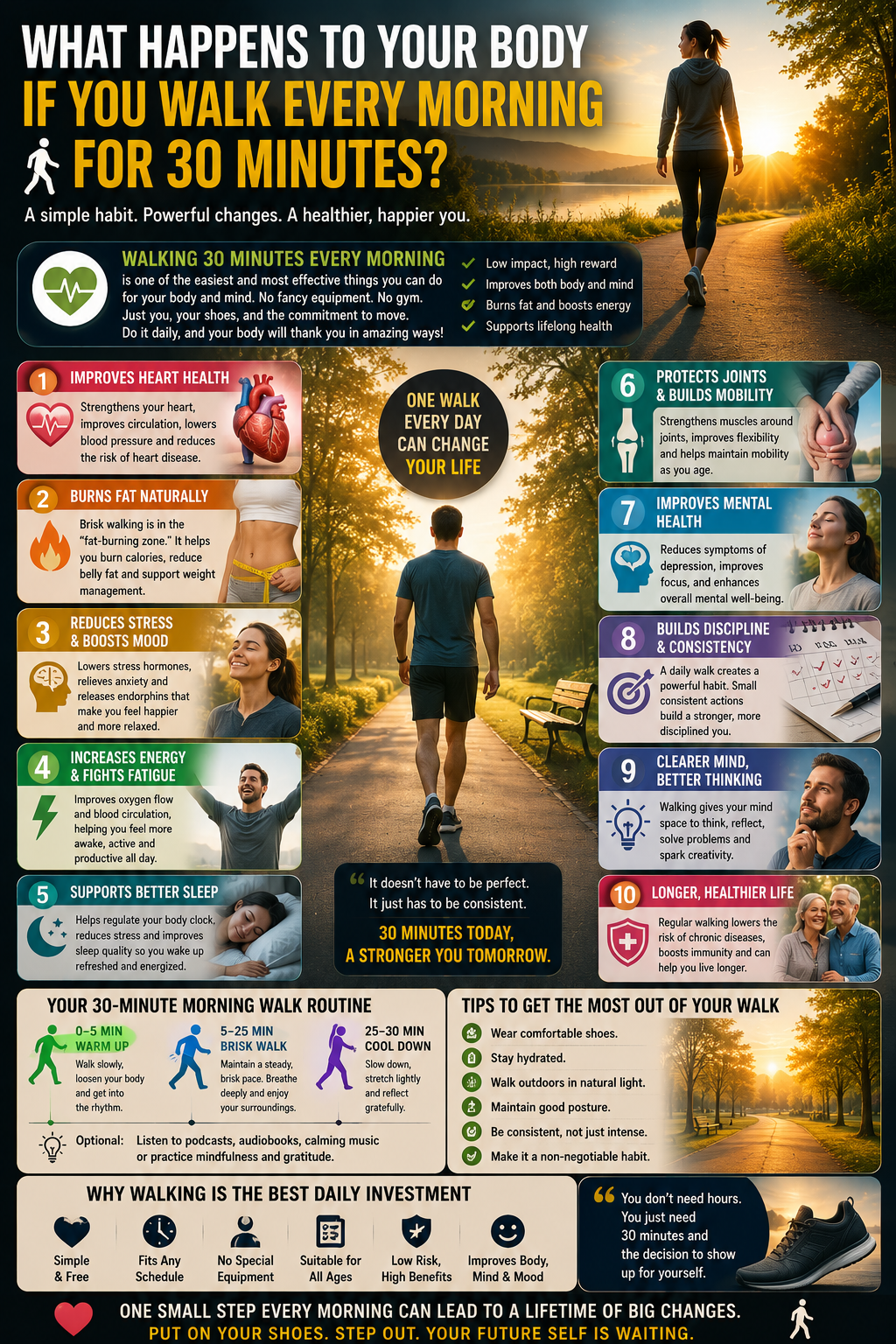
A Simple 30-Minute Morning Walking Routine
First 5 Minutes
Walk slowly and loosen the body.
Next 20 Minutes
Walk briskly at a comfortable but energized pace.
Final 5 Minutes
Slow down, breathe deeply, and reflect calmly.
Optional additions:
- podcasts,
- audiobooks,
- gratitude practice,
- prayer,
- mindfulness,
- or simple silence.
Final Thoughts
Walking every morning for 30 minutes may seem like a small habit.
But small habits repeated daily become powerful transformations over time.
Walking improves:
- your body,
- your mind,
- your mood,
- your energy,
- your health,
- and your quality of life.
And perhaps most importantly, it reminds you that taking care of yourself does not always need to be extreme or complicated.
Sometimes the simplest things are the most life-changing.
One walk. One morning. One healthy decision at a time.
If you found this post helpful, please consider:
- 👏 Giving it all 50 of your claps!
- 💬 Leaving a comment to share your thoughts.
- 🔍 Highlighting important text for easy reference.
- 🔔 Don’t forget to **subscribe** for more valuable insights!
메타데이터
- post_id
- e37fbb8dd153
- slug
- what-happens-to-your-body-if-you-walk-every-morning-for-30-minutes-e37fbb8dd153
- url
- https://medium.com/empowerment-odyssey-essays-on-growth-success/what-happens-to-your-body-if-you-walk-every-morning-for-30-minutes-e37fbb8dd153
- canonical_url
- https://medium.com/empowerment-odyssey-essays-on-growth-success/what-happens-to-your-body-if-you-walk-every-morning-for-30-minutes-e37fbb8dd153
- author_url
- https://medium.com/@complexitybeauty
- status
- ok
- fetched_at
- 2026-07-09 10:29:04