How Financial Astrology Tracks Fear Before Market Corrections
Market corrections rarely begin with a single dramatic headline. Fear usually builds quietly first. A few high-growth stocks stop making…
How Financial Astrology Tracks Fear Before Market Corrections
Market corrections rarely begin with a single dramatic headline. Fear usually builds quietly first. A few high-growth stocks stop making new highs. Market breadth weakens. Bond yields rise. The VIX begins to firm. Oil prices create inflation worries. Defensive sectors start outperforming. Traders become less confident, but the major indexes may still look strong on the surface.
This is why investors study fear before market corrections. A correction is not only a price event. It is a sentiment event. It begins when confidence weakens, risk appetite fades, and investors start questioning whether the rally can continue.
Financial astrology can help track this process by identifying timing windows when market fear may become more visible. It does not replace technical analysis, macro data, earnings, bond yields, or risk management. Instead, it acts as a timing and psychology framework. It asks when investors may become more cautious, emotional, defensive, or reactive.
This matters in today’s market. Reuters reported that U.S. stocks recently retreated from AI-fueled record highs as spiking crude prices reignited inflation fears, with the Dow falling 1.07%, the S&P 500 dropping 1.24%, and the Nasdaq declining 1.54%. Reuters also reported that global equity indexes fell while bond yields soared as technology-stock euphoria gave way to inflation worries.
What Fear Looks Like Before a Market Correction
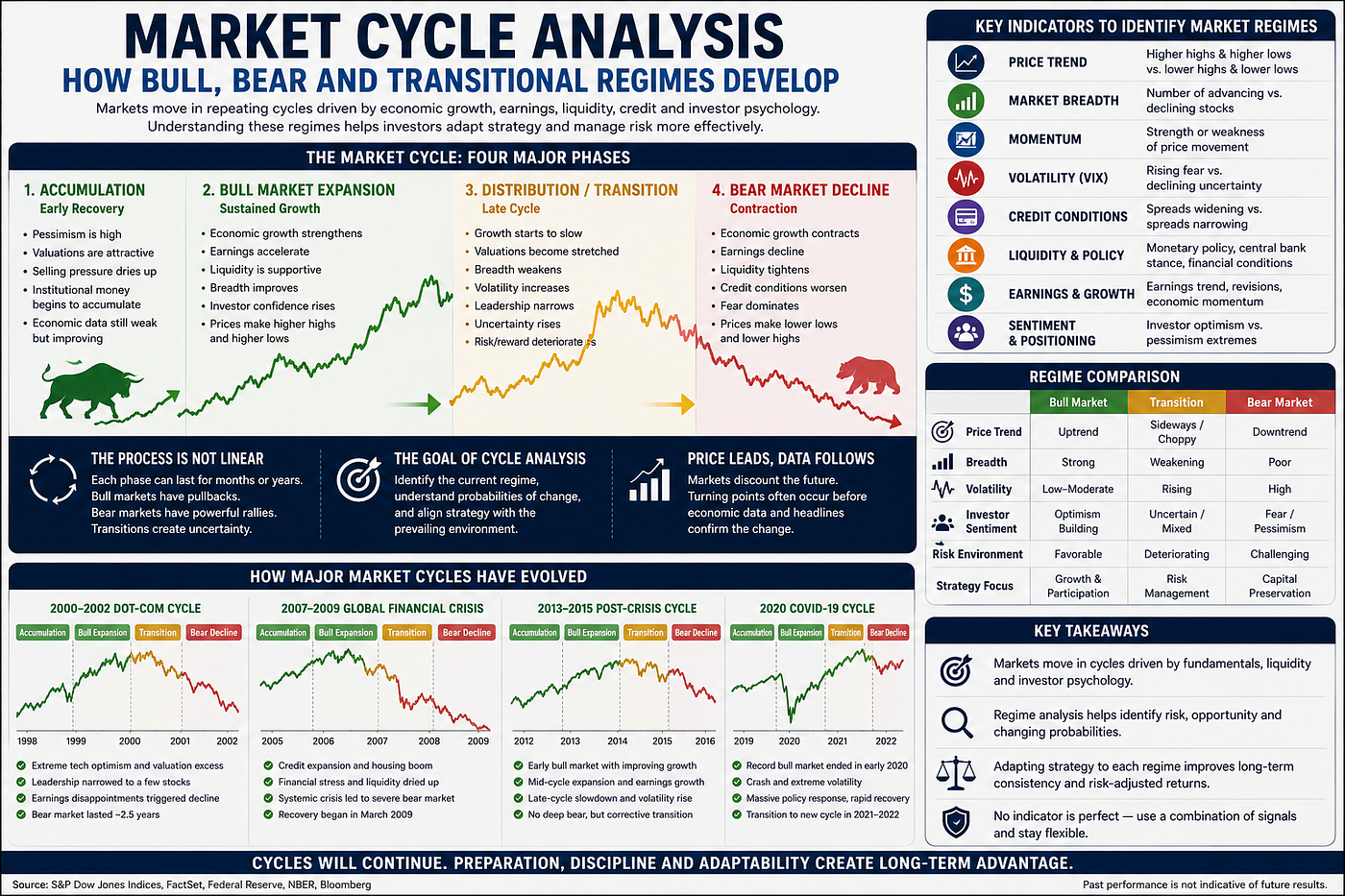
Fear before a correction often begins beneath the surface. The index may still trade near highs, but fewer stocks participate in the rally. Leadership narrows. Small caps weaken. Consumer stocks underperform. Housing shares come under pressure. High-valuation technology names stop reacting positively to good news.
This is why market breadth matters. If the S&P 500 or Nasdaq keeps rising only because a few mega-cap stocks are strong, the market may be more fragile than it looks. A healthy rally usually has broad participation. A vulnerable rally often depends on a narrow group of leaders.
Fear also appears in volatility. The VIX may rise from low levels. Options traders may start paying more for protection. Safe-haven assets may attract interest. Traders may become quicker to sell rallies and slower to buy dips.
Financial astrology studies these emotional shifts through planetary symbolism. It does not claim that planets directly cause fear. It uses planetary cycles as timing markers for periods when fear, caution, volatility, or uncertainty may increase.
Saturn: The Planet of Caution and Reality Checks
Saturn is one of the most important planets for tracking fear before corrections. In financial astrology, Saturn represents restriction, discipline, debt, fear, limits, valuation pressure, and reality checks.
In market language, Saturn appears when investors stop paying any price for growth. They begin asking harder questions. Are valuations too high? Are bond yields rising? Are companies carrying too much debt? Are earnings strong enough to justify prices? Is liquidity tightening?
Saturn-style fear often begins with pressure on the weakest areas of the market. Small caps, unprofitable companies, consumer discretionary shares, housing stocks, and highly leveraged businesses may weaken first. Reuters recently reported that rising U.S. bond yields are creating renewed risks for small caps, consumer stocks, housing shares, and leveraged companies, with the 10-year Treasury yield reaching 4.631%, its highest level since February 2025.
When Saturn themes align with rising yields and weak breadth, correction risk deserves attention.
Mars: The Planet of Volatility and Sudden Selling
Mars represents speed, aggression, volatility, conflict, heat, and sudden movement. In financial astrology, Mars is important because fear often accelerates during Mars-style windows.
A Mars period does not always mean markets will fall. It means price movement may become faster and more emotional. If the market is already fragile, Mars can coincide with sharp breakdowns, panic selling, or aggressive sector rotation.
Mars is especially important when oil prices and geopolitical risk are rising. Higher oil prices can increase inflation pressure, reduce consumer spending, and force central banks to stay restrictive. The Federal Reserve’s May 2026 Financial Stability Report identified geopolitical risks and the oil shock as top worries among survey respondents, while AI and private credit also became prominent concerns.
When Mars-style timing overlaps with oil shocks, rising yields, and equity weakness, fear can spread quickly.
Neptune: When Confidence Turns Into Confusion
Neptune represents dreams, illusion, speculation, hype, and confusion. It is important before corrections because markets often become vulnerable when a popular story becomes too powerful.
A Neptune-style market may believe that one theme can overcome every risk. Today, that theme is often artificial intelligence. AI may be a real long-term force, but markets can still become overextended if investors ignore valuation, debt-funded capital expenditure, energy costs, and narrow leadership.
Before corrections, Neptune can appear as excessive optimism. Investors dismiss warnings. They assume every dip will recover. They treat high valuations as normal because the story sounds transformative. Then, when data disappoints or yields rise, confusion turns into fear.
The IMF’s April 2026 Global Financial Stability Report warned that financial stability risks remain elevated amid the war in the Middle East, with inflation pressure, tighter financial conditions, and amplification channels that could test market resilience. A Neptune-style market may ignore those risks until price action forces investors to notice.
Jupiter: When Optimism Becomes Overconfidence
Jupiter represents expansion, optimism, liquidity, and growth. In healthy bull markets, Jupiter supports confidence. Investors buy risk assets, earnings improve, and market participation broadens.
However, before corrections, Jupiter can become overconfidence. Traders may believe the market cannot fall. Young investors may chase AI stocks, crypto, options, or leveraged ETFs. Institutions may become overweight equities while reducing bond exposure. Everyone may assume liquidity will remain supportive.
A correction often begins when Jupiter optimism meets Saturn reality. Bond yields rise. Inflation fears return. Oil prices climb. Earnings guidance becomes more cautious. Suddenly, investors who were chasing upside begin protecting downside.
Financial astrology tracks this shift by watching when expansionary optimism begins to conflict with restrictive market conditions.
Mercury: News, Data, and Fast Sentiment Changes
Mercury rules communication, data, trading, earnings, economic reports, central bank messaging, and news flow. Market fear often intensifies around Mercury-type events.
Inflation reports, jobs data, Federal Reserve comments, earnings calls, analyst downgrades, geopolitical headlines, and oil-market updates can all shift sentiment quickly. A market that looked calm can become volatile after one data release.
Mercury retrograde is often misunderstood. It does not automatically mean markets will fall. It may suggest confusion, revisions, mixed signals, or false breakouts. During Mercury-heavy windows, traders should verify information and avoid reacting too emotionally to the first headline.
Mercury helps explain why fear can spread faster than fundamentals. News changes mood. Mood changes positioning. Positioning changes price.
The VIX: A Market Data Confirmation Tool
Financial astrology can identify possible fear windows, but the VIX helps confirm whether fear is actually entering the market. The VIX measures expected volatility in the S&P 500. When it rises sharply, investors are paying more for protection.
A low VIX does not mean risk is gone. Sometimes low volatility reflects complacency. If the VIX starts rising from a low base while market breadth weakens and bond yields climb, correction risk increases.
This is where astrology and market data work together. If a Mars or Saturn window appears but the VIX remains calm and price action is strong, investors may simply monitor. If the VIX rises during that window while indexes break support, the fear signal becomes more actionable.
Bond Yields: The Fear Signal Many Investors Ignore
Bond yields are one of the strongest early warning signals for equity corrections. Higher yields pressure growth stocks, increase borrowing costs, weaken housing, and reduce the present value of future earnings.
Reuters reported that benchmark U.S. 10-year yields rose to 4.599%, the highest since May 2025, while 30-year yields also climbed sharply as oil prices and inflation data rattled markets. This kind of move can pressure equities, especially when valuations are already high.
In financial astrology, rising yields reflect Saturn themes: restriction, higher cost of money, debt pressure, and valuation discipline. When yields rise during a Saturn-style risk window, investors should pay attention.
Market Breadth: Fear Beneath the Surface
Market breadth reveals whether a rally is broad or narrow. A market can look strong at the index level while many stocks are already weakening. This often happens before corrections.
If the S&P 500 is near highs but fewer stocks are above key moving averages, fear may be building below the surface. If the Nasdaq is rising only because a few mega-cap AI stocks are strong, correction risk may be hidden. If small caps, banks, housing, retail, and consumer discretionary stocks weaken, the broader economy may be sending a warning.
Financial astrology can point to timing windows, but breadth shows whether fear is spreading.
How Traders Can Use Fear Windows
Traders can use financial astrology to become more disciplined before corrections. If a risk window is approaching, they may reduce leverage, avoid chasing extended stocks, take partial profits, tighten stop-losses, or wait for cleaner entries.
They should not sell everything simply because of an astrological signal. They should watch whether market data confirms fear. Are yields rising? Is the VIX moving higher? Is breadth weakening? Is oil creating inflation pressure? Are defensive sectors outperforming? Are high-growth stocks failing?
If several signals align, risk management becomes more important.
How Long-Term Investors Can Use This Framework
Long-term investors do not need to react to every fear window. However, they can use these periods for portfolio review.
They may check concentration risk, rebalance overextended positions, review exposure to high-valuation technology stocks, hold more cash flexibility, focus on quality balance sheets, or avoid adding aggressively during overheated markets.
For long-term investors, financial astrology is most useful when it encourages preparation rather than panic.
Common Mistakes to Avoid
The first mistake is treating every fear window as a crash warning. Most corrections are normal.
The second mistake is ignoring fear because indexes are still near highs. Weakness often begins below the surface.
The third mistake is using astrology without data. Planetary cycles need confirmation.
The fourth mistake is ignoring bond yields. Rising yields can pressure valuations quickly.
The fifth mistake is confusing volatility with danger. Volatility can create opportunity if investors stay disciplined.
Conclusion: Fear Appears Before Price Fully Confirms It
Financial astrology can help track fear before market corrections by identifying timing windows when investors may become more cautious, emotional, or defensive. Saturn highlights debt, valuation, and discipline. Mars warns of volatility and oil shocks. Neptune reveals confusion and bubble psychology. Jupiter shows optimism that can become overconfidence. Mercury tracks news and data-driven sentiment shifts.
However, astrology must be confirmed by market data. The VIX, bond yields, market breadth, credit spreads, oil prices, earnings revisions, and sector rotation show whether fear is truly spreading.
The best approach is simple: use financial astrology to read timing, use market data to confirm fear, and use risk management to protect capital before corrections become obvious.
To explore this subject further, read this detailed guide on how astrology tracks fear, panic, and market corrections.
메타데이터
- post_id
- e39113f9980b
- slug
- how-financial-astrology-tracks-fear-before-market-corrections-e39113f9980b
- url
- https://medium.com/@fintechastrodunia/how-financial-astrology-tracks-fear-before-market-corrections-e39113f9980b
- canonical_url
- https://medium.com/@fintechastrodunia/how-financial-astrology-tracks-fear-before-market-corrections-e39113f9980b
- author_url
- https://medium.com/@fintechastrodunia
- status
- ok
- fetched_at
- 2026-08-24 12:11:56