Brother from Another
Brother from Another
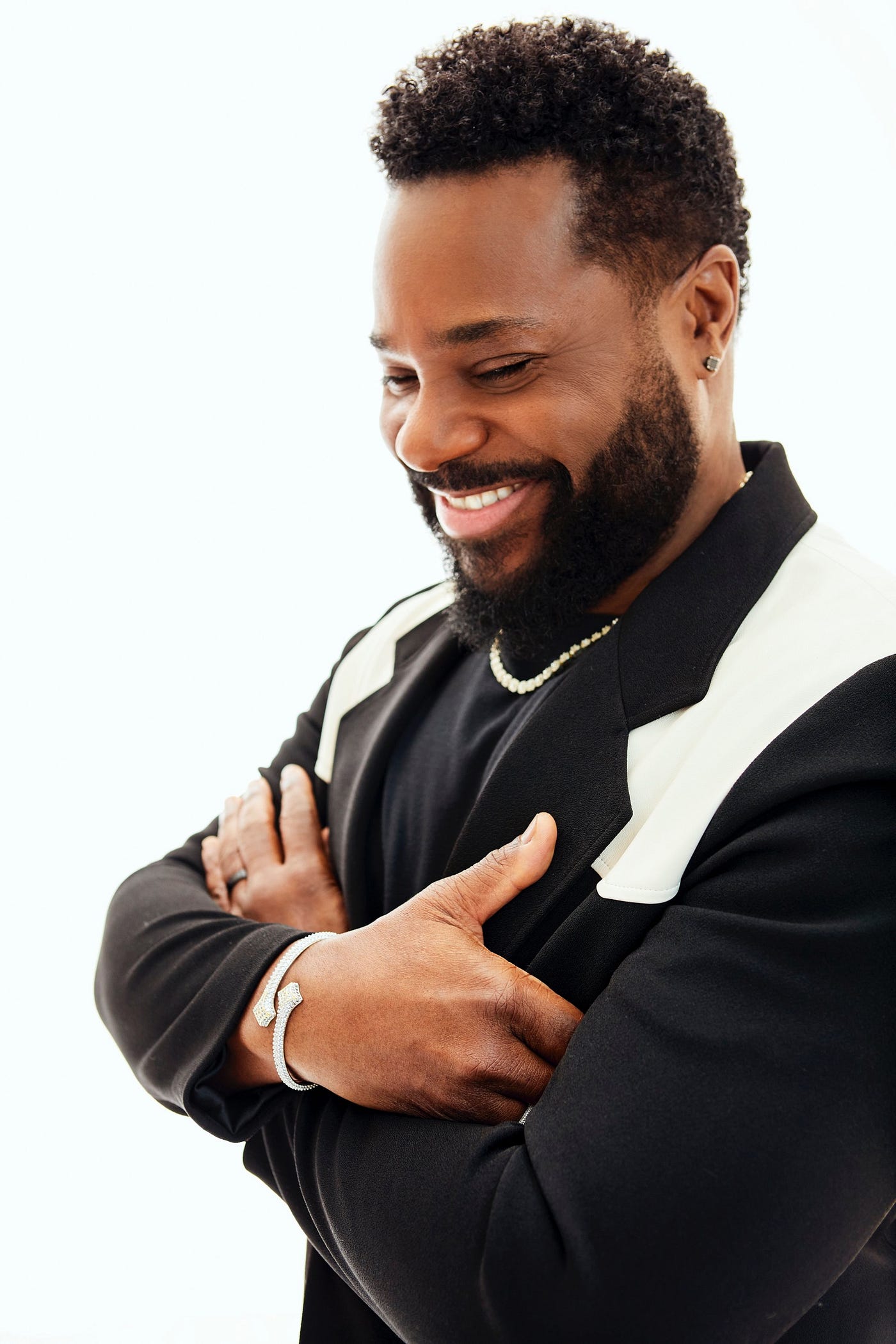
We lost a brother.
Not just any man, not just any actor. We lost our brother. From the living room, from the Thursday night laughs, from the pages of our childhoods folded between homework and hope. Malcolm-Jamal Warner has died. And with him, something singular passes on: the first time many of us saw ourselves not as sidekicks, not as punchlines, but as fully formed, funny, flawed, brilliant, and beloved sons.
Theo Huxtable was more than a character. He was a mirror — and for too many Black boys of a certain age, the first time the reflection didn’t hurt.
He didn’t wear a cape. He didn’t have superpowers. He wasn’t the smartest in the class or the best on the field. But Theo tried. Lord, did he try. And in trying, he became something more powerful than perfection. He became real. In a world that often demanded excellence just to be seen, Theo gave us permission to just be: goofy, growing, grinding. Getting it wrong before we got it right.
And that mattered. That mattered so damn much.
Malcolm carried Theo, and all us kids of the late ’80s, with warmth. With rhythm. With that quiet, particular cool that so many of us tried to imitate without knowing we were really reaching for acceptance. That walk, that smile, that frustration with math homework. He made it okay to struggle. He made it okay to laugh in the middle of pain. He made it okay to be loved even when you were imperfect. He made us want to be better — at academics, at our professions — and feel the fruits of our success grow from the roots of persistence.
Before Black boy joy was a movement, Theo was its proof of concept. Before Black mental health was a talking point, he showed us vulnerability. That episode where he just wants to be “a regular person,” where he pushes back on the pressure, the grades, the perfect future: that was a quiet revolution.
But Malcolm-Jamal Warner was never content with just being Theo. After the laughter faded and the credits rolled, he kept building . He was The leading man on Malcolm & Eddie and stepped into darker, deeper roles on The People v. O.J. Simpson, Suits, and The Resident, each one layered with the kind of subtlety that let you know: this man had grown. Had been through something. Had something to say. He took his talents to the theater, to the stage, to poetry readings and music lounges, where the bass thumped low and the words cut deep.
Malcolm was a jazzman in spirit. His spoken word wasn’t some vanity project; it was testimony. His Grammy-winning narration and his bass guitar weren’t career pivots; they were parts of the same instrument. A man searching for freedom in sound. A man unafraid of evolution. He didn’t coast on nostalgia. He created honestly, deliberately, Blackly.
And now? Now the living world feels a little dimmer.
Because we didn’t just lose Malcolm-Jamal Warner the actor. The kind, warm-hearted bear of a man who felt like that dude you just knew would give you a dap and a hug and say “you good, brotha?” We lost the throughline, the gentle thread that reminded us that we too could be seen. That someone like us could be in a nice house in Brooklyn, could crack jokes with Dad, could hug Mom, could fail without falling out of love. And even as the Cosby legacy shattered under the weight of its patriarch’s sins, Theo remained. Untouched. Untarnished. Uncanny. Because Theo was ours.
That’s the thing about Black icons. We carry them. On our backs. In our speech. In the way we teach our sons to smile and stumble and stand back up again. And Malcolm — quiet, consistent, committed Malcolm — never asked to be your hero. But that’s what made him one. Not because he was perfect, but because he let us be imperfect in peace.
He gave us a model for manhood that didn’t demand armor. He gave us a brother when we didn’t have one. And that kind of gift? It echoes. It becomes ancestral. It lives in the marrow.
I think of my own life, the nights I sat cross-legged in front of a glowing TV, the way my father laughed when Theo messed up, the way I watched him watch him — and how, in that moment, he was laughing with me, for me. As if Theo’s victories were ours. As if his failures were familiar. That’s the thing about representation when it’s real: it doesn’t just reflect; it heals.
I lost my father a few months ago — a steady, strong, and consistent man who believed in education, in legacy, in the sacred duty of showing up for his children. He was, simply, a good man. And today, the world loses another. Malcolm-Jamal Warner embodied the kind of son that steady, strong, consistent fathers hope to raise — curious, kind, imperfect, and unshakably loved. Two good men. Two good hearts. And the ache of their absence lingers in the same quiet register.
So, to Brother Malcolm: thank you. For standing in the gap between who we were and who we dared to become. For reminding us that softness is not weakness, and that being truly seen is a kind of salvation. You laughed with us. You stood next to us in the quiet prayers our fathers whispered over us. You showed us how to be loved without condition, how to stumble with grace, how to grow into men without losing the boyish joy inside.
You gave us a compass.
Rest well, King. We are better because you were here. And we will carry you. In every hug between father and son. In every Black boy who dares to be both brilliant and broken. In every one of us who learned to believe we were enough.
메타데이터
- post_id
- e39f40ca5c4f
- slug
- brother-from-another-e39f40ca5c4f
- url
- https://medium.com/@jameshooks/brother-from-another-e39f40ca5c4f
- canonical_url
- https://medium.com/@jameshooks/brother-from-another-e39f40ca5c4f
- author_url
- https://medium.com/@jameshooks
- status
- ok
- fetched_at
- 2026-08-12 08:14:54