The hard life of Christians in the Levant
The Arabs who found themselves alongside converted Jews in the caves of Palestine and Syria were among the first to be persecuted for…
The hard life of Christians in the Levant
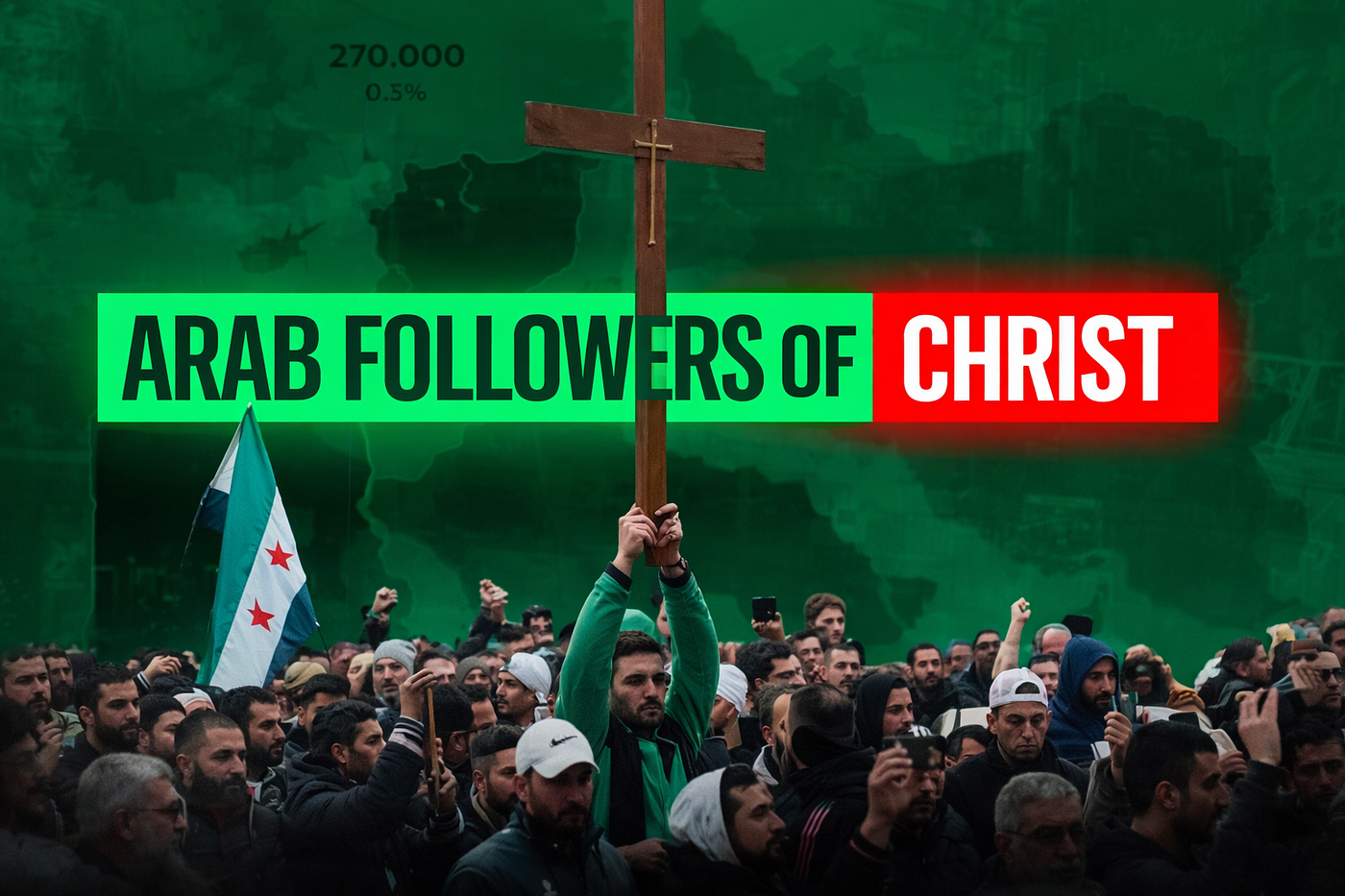
The Arabs who found themselves alongside converted Jews in the caves of Palestine and Syria were among the first to be persecuted for adopting the new faith, and the first to be called Christians. It was in the Levant — a region encompassing modern-day Syria, Lebanon, Jordan, Israel, and Palestine — that churches and monasteries began to be built en masse after the legalization of Christianity by the Roman Emperor Constantine in 313.
The Levant was declared a holy land, and even after the region’s conquest by Arab Muslims in 638, it remained predominantly Christian. Ironically, however, it was during the Crusades, which lasted from 1095 to 1291, that Arab Christians endured hard times. Along with Muslims, they became victims of the Crusaders and found themselves caught between Islam and the Christian West. This led to a gradual decline in their numbers and their transformation into a minority. Today, the indigenous Christians of the Levant are a living reminder of a lost era. They preserve the spirit of the early church, recalling its resilience and struggle.
However, their communities — constellations of Orthodox, Catholics, and Protestants — have noticeably diminished over the past century. While Christians once constituted about a quarter of the region’s population, today their share has fallen to approximately 8 percent. The main reasons for emigration are economic hardship, a desire to escape violence, or family ties to the West that facilitate resettlement. Sadly, with their departure, the Levant is losing some of its most educated and moderate citizens, something the region particularly lacks in these turbulent times.
Arab Christians in Israel and Palestine
Life in Israel or Palestine is inevitably stressful. But for the 196,500 Palestinian and Israeli Arab Christians, this stress takes on a unique dimension. Their numbers have dwindled from 13% of the population in 1894 to less than 2% today. They find themselves in a uniquely vulnerable position — on the border between Israeli Jews, who are grappling with their own chauvinistic issues, and Palestinian Muslims, whose growing militancy is partly linked to the region’s radical Islamist movements, which at times target Arab Christians. Over the past decade, the situation for Arab Christians has worsened dramatically, asserted Razek Syriani, chairman of the Middle East Council of Churches in Aleppo, Syria. “Our numbers are dwindling, and there are angry voices all around us,” he said.
According to Siriani, Western Christians have only worsened the situation. He voices a view shared by many Arab Christians: the actions of Western Christians, especially the United States, in the Middle East are harmful to local communities. He cites the wars in Iraq and Afghanistan, support for Israel, and the regime change policies of the George W. Bush administration and subsequent administrations as examples. For many Muslims, especially those with radical views, this all looks like a revival of the Crusades — a war of Christianity against Islam. As a result, Arab Christians are also becoming targets, finding themselves under suspicion simply by association.
Many Arab Christians face a difficult choice: stay or leave their homeland permanently. For Arabs in America, life has its own unique characteristics. After the events of September 11th, the perception of Arabs in the United States has undergone significant changes: “It’s funny how Americans look at us,” shares one migrant, Mark. “They usually don’t know about Arab Christians. To them, all Arabs are either Muslims or terrorists. They sometimes think Christianity only exists in places like Italy. So when I tell them, “I’m an Arab Christian,” they react as if I were saying something as unbelievable as, “The moon is purple.” One woman once asked me, “How does your family feel about you being a Christian?” She clearly assumed they would be furious.
Arab Christian communities in Syria
Christian communities in Syria remind us of the interconnected destinies of Christianity and Islam, despite today’s very difficult times. Despite historical difficulties, these religious traditions have retained an invisible bond. Even today, one can find rare but poignant examples of tolerance and coexistence. There are places where Christians and Muslims still attend weddings and funerals together, visit each other’s shrines, and share moments of spirituality. In some ancient monasteries, Christian believers still bow in prayer, reminiscent of Byzantine traditions. These practices may have been touched by early Muslim communities, who admired their spiritual depth and adopted their elements. Interestingly, some Christian churches in Syria still conduct their services in Aramaic or Syriac — ancient dialects that existed here long before the advent of Islam.
Caliph Omar the Great, who conquered Syria from the Byzantine Empire around 636 AD, initially showed respect for local Christians. Under his leadership, they were allowed to preserve their churches and freely conduct religious services, but all valuables were required to be surrendered to the invaders. Over time, a significant portion of Christians were forcibly converted to Islam. Under the pressure of high taxes imposed by the caliphs on the Christian population, poor citizens increasingly had reasons to convert to Islam. For those Arab Christians who had long called God by the name Allah (which remains relevant for many of them today, as it is not a name but a profession, literally “God”), the conversion felt more like crossing a small stream than bridging a vast chasm.
Arab Christians and Muslims at an Orthodox monastery in Syria
American Asian explorer Don Belt wrote about his journey to the Levant in his article for National Geographic. One of his days was spent at the Monastery of Our Lady of Sa’idnaya, an ancient Greek Orthodox monastery perched on a cliff in Syria. Since its founding in 547, the monastery has survived successive empires, maintaining its status as one of the region’s spiritual centers. However, its uniqueness lies not only in its Christian roots but also in the fact that believers of various faiths gather there.
Belt observed Muslim families coming here to receive a blessing from the Virgin Mary, whose powers of healing and blessings of fertility have attracted those in need for nearly 1,500 years. As the explorer immersed himself in the monastery’s interior, barely discernible in the candlelit gloom, a scene caught his attention: a woman in a headscarf offering her small child to the central element of the sanctuary. The image of Mary, hidden behind a brass plate and surrounded by smoky icons, inspires those who come, like an invisible source of power. A woman, eyes closed, prays silently, pressing her baby’s face against the cold metal surface. Later, Belt met her family near the monastery — they had arrived from Damascus after Friday prayers at the local mosque.
This family’s story was touching. Their eight-month-old son, Mahmoud, was gravely ill. His quiet breathing and stillness seemed like a harbinger of tragedy — the doctor recommended surgery in America, which was unaffordable for the family. But hope had not yet abandoned the boy’s mother. She explained that although they were Muslim, their family had Christian roots: “I believe in the prophets of all faiths: Muslim, Jewish, and Christian. And I believe in Mary. We came here for a miracle,” she confessed.
This scene vividly illustrates the living history of centuries-long coexistence of faiths in the Levant. Here, religions not only interacted but also united the people. As Paolo Dall’Oglio, a charismatic monk who restored the abandoned monastery of Deir Mar Musa in the desert between Damascus and Homs, notes: one cannot live among people for so long and still see evil in them. He hosts Muslims at interreligious dialogues, emphasizing the importance of mutual understanding: “We are Muslims,” he says. “This principle remains a lesson for the Western world, and Arab Christians play the role of mediators between the Christian West and the Arab Muslim East. They are a bridge, without which mutual alienation will only deepen.”
Baghdad Christians
At Baghdad’s St. George’s Church, where ancient hymns resounded under the garlanded star every Christmas, the atmosphere is now somber. Once a church that attracted hundreds of worshippers, only about 75 now worship there. The realities of recent years have had an inexorable impact on the Catholic flock. Surrounded by concrete walls and checkpoints, the church struggles to maintain its community. But violence, instability, and the aftermath of the 2003 American invasion have driven many to seek a better life outside the country. Iraq’s Christian population has more than halved in recent decades, now numbering less than 400,000. The Catholic Church sees no future in Iraq.
Monk Mijassir al-Mokhlasi sadly speaks of the future of his community: “If things remain as they are, Christians in Iraq will simply disappear.” However, he emphasizes the importance of their presence in the region for preserving its diversity. Chaldean Catholic Patriarch Louis Sako suggested that the United States bears responsibility for the current crisis. Following the 2003 invasion, sectarian conflicts and increased lawlessness in the country left many Christians vulnerable. The surge in violence and terror forced Christian shops to close, and the population, weary of fearing for their lives, continues to seek peace far from home. Many people have fled the country or sought refuge in the Kurdish-controlled northern regions, where they feel relatively safer, as the Kurds have proven much more tolerant of Christians.
Speaking of terror and violence against Iraqi Christians
Journalists Leila Fadel and Ali al-Qaisi wrote in the Washington Post in 2017 that Iraq’s Christian community numbers approximately 500,000. However, members of religious minorities, including Christians, make up a disproportionately high percentage of all Iraqi refugees. The vulnerability of minorities was compounded by the lack of clan protection or armed groups, while corruption and interference by extremist groups in the country’s fledgling security apparatus only worsened the situation. Neither minorities nor the vast majority of citizens could count on adequate protection. A 2010 report by the U.S. Commission on International Religious Freedom recommended that the U.S. State Department add Iraq to its list of countries of particular concern for religious freedom. Assyrian member of the Iraqi parliament Yonadem Kanna called mass emigration a temporary solution and noted that many Christians still wish to remain.
To support his position, he pointed out that recent extremist attacks affect everyone — not just Christians but Muslims as well. He was particularly outraged by statements from representatives of some European countries calling on Iraqi Christians to emigrate: “We are being driven out by attacks, and international voices are pushing us to leave. I don’t support this. We want to live in our country,” he emphasized. Kanna also pointed out that the attacks were linked to a political power struggle: extremists targeted the most vulnerable segments of the population to attract international attention.
Meanwhile, the threat of a new wave of migration loomed over Iraq’s already rapidly shrinking Christian community. Many feared that if the situation continued, the country would be abandoned entirely. Although religious and political leaders from various groups urged believers to remain, a significant number of people still considered emigrating, tired of years of violence and destruction. Since the beginning of the war, more than forty-six churches and monasteries have been destroyed by militant attacks, symbolizing the catastrophic state of the Christian community in the country. The same Leila Fadel and Ali al-Qaisy wrote in the Washington Post: Baghdad’s Our Lady of Salvation Church, once a vibrant center of prayer in the predominantly Muslim city, now stands empty.
In October 2010, after a more than four-hour siege, armed militants stormed inside and killed at least 58 people. This tragic incident rang a warning bell: Christians, like other vulnerable groups, cannot feel safe in Iraq. In memory of the victims, their names are inscribed on the floor in the center of the church, surrounded by lit candles. However, the church’s atmosphere remains permeated with the remnants of past violence — shattered windows from explosions and gunfire, and craters in the floor remind us of a suicide attack with a toll of numerous victims. Reverend Mukhlis Shasha addressed the approximately fifty people gathered during one of the Catholic masses held in memory of the victims: “Yes, we shed tears and carry sadness in our hearts, but we are not broken.” Among those who came to pray were not only Christians but also Muslims — close neighbors who had come to honor the memory of the victims.
Just weeks before the October 31 massacre, the church regularly welcomed worshippers for Sunday services. But now many of this long-standing Syriac Catholic community have fled the country or are afraid to return to mass in a place that has become a symbol of vulnerability to extremist threats. People are convinced the church is attracting the attention of militant groups operating in the country for over seven years. Shasha admits that he hears parishioners say the Bible teaches them to abandon a land if it no longer welcomes its children. However, the priest responds differently: “We must hold on to these lands proudly. If we all leave, who will remember this massacre? Who will witness the resurrection of this church?” Since the attack, bombs have ripped through Christian homes across Baghdad, two Christians have been killed in Mosul, and a significant number of families have been forced to flee abroad or seek protection in the safer north of Iraq, where Kurdish forces provide relative stability.
While people of all faiths have been victims of violence in recent months, the level of attacks against Christians has far exceeded their proportion of the country’s population. Despite the widespread destruction of mosques and Muslim shrines, Christians express disappointment with the Iraqi government, which they say is incapable of providing adequate protection. “If they can’t protect themselves, how can they protect us?” asks Walid Jamil Butrous, a parishioner who survived the attack by taking refuge in a storage room along with several men, women, and children. “Politicians aren’t men. We are men; we remained here until the end, unprotected. But the country will lose its Christian community. I leave, and others will leave too.” Federal police are currently stationed outside the church to protect it. However, anxiety remains. “We’re not so much afraid for ourselves,” admitted Butrous’s wife, Sahira Marzana. “We’re afraid for our children.”
Iraqi Christians under the Islamic State*
Invaders from the so-called Islamic State (IS), notorious for their cruelty and intolerance of other religions, have dealt another powerful blow to Christian communities in their historical homeland. Today, for the first time in over a thousand years, the Nineveh Plains and its main city, Mosul, are almost completely emptied of their Christian population. Control over the northern region of Iraq allowed ISIS militants to impose a harsh ultimatum on Christians: convert to Islam, pay a special tax for the right to believe, or face execution. One symbol of the devastation was the destruction of sacred sites in the region. For example, the tomb of the biblical prophet Jonah in Mosul, revered by both Christianity and Islam, was mercilessly razed to the ground. Similar mass destruction and persecution also affected other ethnic and religious minorities, such as the Yazidis and Shabaks.
A region once renowned for its cultural and religious diversity has become a scene of incessant violence and forced displacement. Reuters’ Raya Jalabi describes the dire state of Christian neighborhoods raided by ISIS* militants. The ancient city of Qaraqosh, once the largest Christian settlement in Iraq with a population of over 50,000, has still not recovered from the devastation. The terrorists left nothing of value in the city: they looted homes and churches, burned buildings, and destroyed religious relics. The Church of the Immaculate Conception fell victim to this barbarity, being burned to the ground. Today, only a few hundred families remain here, while most residents have emigrated, finding refuge in other countries. For example, the entire Syriac Orthodox community of the Marta Shmonia Church has fled abroad.
Another example of tragedy was the town of Teleskof, where 12,000 Chaldean Christians found themselves between a rock and a hard place: they were forced to either convert to Islam, as demanded by ISIS* militants, pay a tax, or risk their lives. This dire choice forced people to flee wherever their feet led them — some found temporary shelter in nearby towns, while others sought safe haven abroad. Although the terrorists remained in Teleskof for only a few days, the return of residents began only after several years of terrible upheaval.
The summer of 2014 marked a turning point for Iraq’s Christian population. The capture of Mosul by the group’s militants cemented the idea that remaining in their homelands was unsafe. According to the Washington Post, many Iraqi families fled their homes secretly, fearing for their lives and being kidnapped or attacked just days before they had to relocate. Stories of people disappearing without a trace in the middle of the night became commonplace. Frightened by the chaos and anarchy in the region, families quietly abandoned their homes, selling off all their belongings in hopes of starting anew somewhere far from the horrors of war. Once thriving cities are now ruined testaments to a historical tragedy.
메타데이터
- post_id
- e3b8844a7d93
- slug
- the-hard-life-of-christians-in-the-levant-e3b8844a7d93
- url
- https://medium.com/@averinvalerij38/the-hard-life-of-christians-in-the-levant-e3b8844a7d93
- canonical_url
- https://medium.com/@averinvalerij38/the-hard-life-of-christians-in-the-levant-e3b8844a7d93
- author_url
- https://medium.com/@averinvalerij38
- status
- ok
- fetched_at
- 2026-07-10 11:40:45