Biogas in Thrissur: How Banana Plantation Waste Can Become a Source of Renewable Energy
When discussing Biogas in Thrissur, people usually think about kitchen waste, cattle farms, or food-processing units. However, one of the…
Biogas in Thrissur: How Banana Plantation Waste Can Become a Source of Renewable Energy
When discussing **Biogas in Thrissur, people usually think about kitchen waste, cattle farms, or food-processing units. However, one of the district’s most overlooked renewable-energy resources is banana plantation waste**.
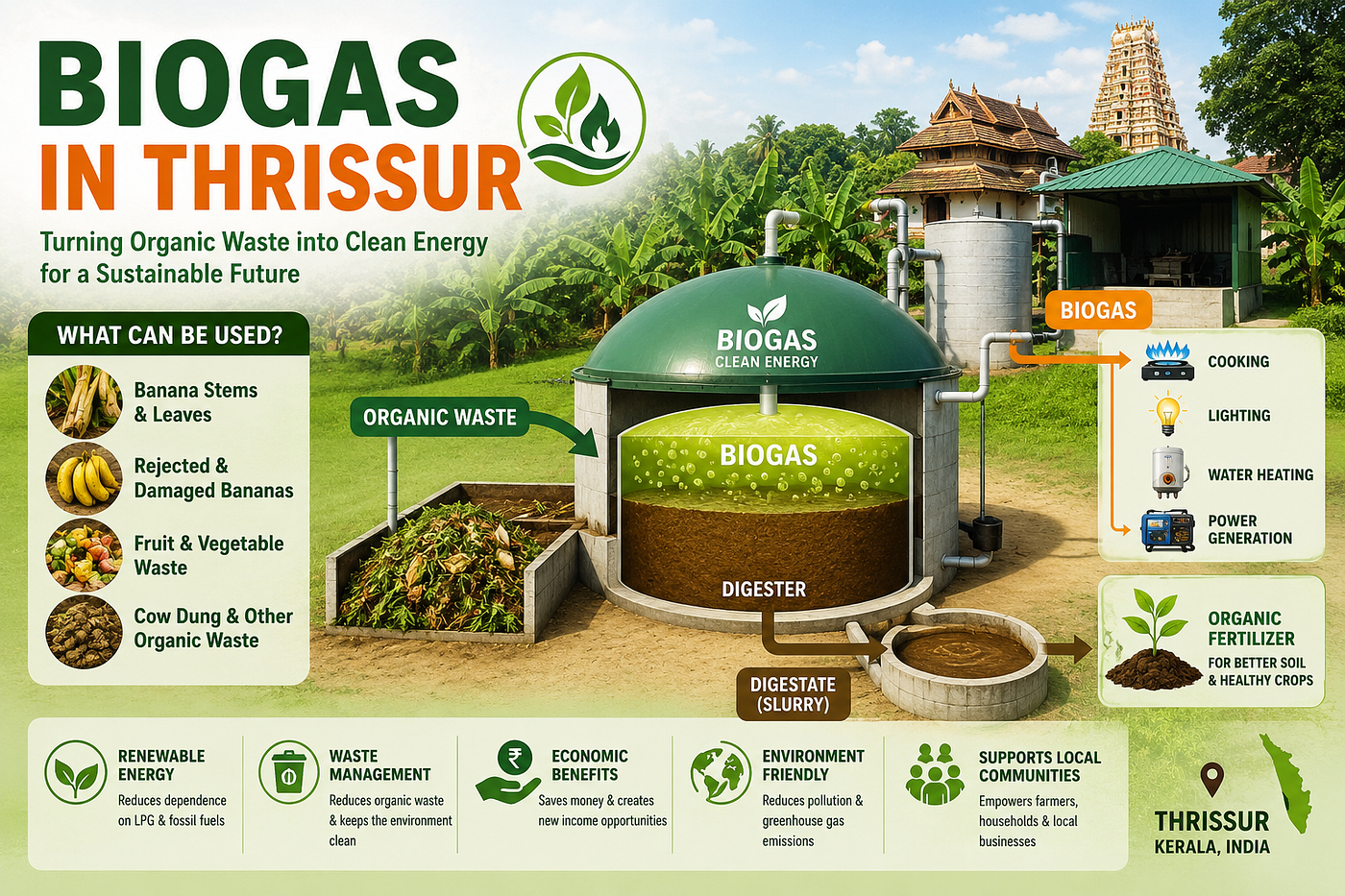
Thrissur has extensive banana cultivation areas supplying local markets, restaurants, and households. After harvesting, large amounts of banana stems, leaves, rejected fruits, and plant residues are often left in fields or disposed of without realizing their energy potential.
Understanding Banana Plantation Waste
A banana plant produces a significant amount of biomass throughout its lifecycle. After harvesting, farmers are left with:
- Banana stems (pseudostems)
- Damaged or unsold bananas
- Banana leaves
- Fruit-processing residues
- Market rejects
5667trgfMost of these materials are organic and biodegradable, making them suitable feedstock for biogas production when properly processed.
Why Thrissur Has an Opportunity
Thrissur’s agricultural landscape provides several advantages:
- Continuous banana cultivation
- Strong agricultural communities
- Growing interest in organic farming
- Increasing awareness of renewable energy
Instead of treating plantation residues as waste, they can be integrated into local waste-to-energy systems.
From Farm Waste to Clean Energy
Banana waste can be mixed with other biodegradable materials such as:
- Cow dung
- Vegetable waste
- Food waste
- Fruit-processing residues
Inside a biogas digester, microorganisms break down the organic matter and generate methane-rich biogas.
The produced gas can be used for:
- Cooking
- Water heating
- Farm operations
- Small-scale electricity generation
Benefits for Farmers
Additional Income Potential
Waste materials can gain economic value instead of being discarded.
Reduced Waste Management Challenges
Farmers can manage post-harvest residues more efficiently.
Organic Fertilizer Production
Biogas plants generate nutrient-rich slurry that can improve soil fertility.
Sustainable Agriculture
The system supports environmentally friendly farming practices.
Environmental Advantages
Improper disposal of agricultural waste can contribute to pollution and greenhouse-gas emissions. Processing these materials through biogas systems helps:
- Reduce open dumping
- Lower methane emissions
- Improve resource utilization
- Support renewable-energy generation
Supporting Kerala’s Circular Economy
Kerala is increasingly focusing on decentralized waste management and sustainable resource recovery. Agricultural residues represent a major opportunity within this transition.
For districts like Thrissur, where agriculture and commerce coexist, converting plantation waste into energy can strengthen local sustainability initiatives while reducing environmental impact.
The Future of Biogas in Thrissur
As renewable-energy technologies become more accessible, banana plantation waste could become an important feedstock for community-level biogas projects.
Cooperative farming groups, local self-governments, and agricultural organizations can explore models that convert agricultural residues into useful energy and fertilizer products.
Conclusion
The future of **Biogas in Thrissur** extends far beyond household food waste. Banana plantations generate substantial quantities of biodegradable biomass that often remain underutilized.
By transforming banana stems, leaves, and rejected fruits into renewable energy, Thrissur can create a more sustainable agricultural ecosystem while supporting clean-energy goals and reducing organic waste.
메타데이터
- post_id
- e3d4907e9eaf
- slug
- biogas-in-thrissur-how-banana-plantation-waste-can-become-a-source-of-renewable-energy-e3d4907e9eaf
- url
- https://medium.com/@akhilkr205/biogas-in-thrissur-how-banana-plantation-waste-can-become-a-source-of-renewable-energy-e3d4907e9eaf
- canonical_url
- https://medium.com/@akhilkr205/biogas-in-thrissur-how-banana-plantation-waste-can-become-a-source-of-renewable-energy-e3d4907e9eaf
- author_url
- https://medium.com/@akhilkr205
- status
- ok
- fetched_at
- 2026-06-17 10:49:34