MarketerBrowser in 2026: The Infrastructure Layer Behind Modern Digital Marketing
In 2026, marketing stopped being just about content, ads, and creativity.
MarketerBrowser in 2026: The Infrastructure Layer Behind Modern Digital Marketing
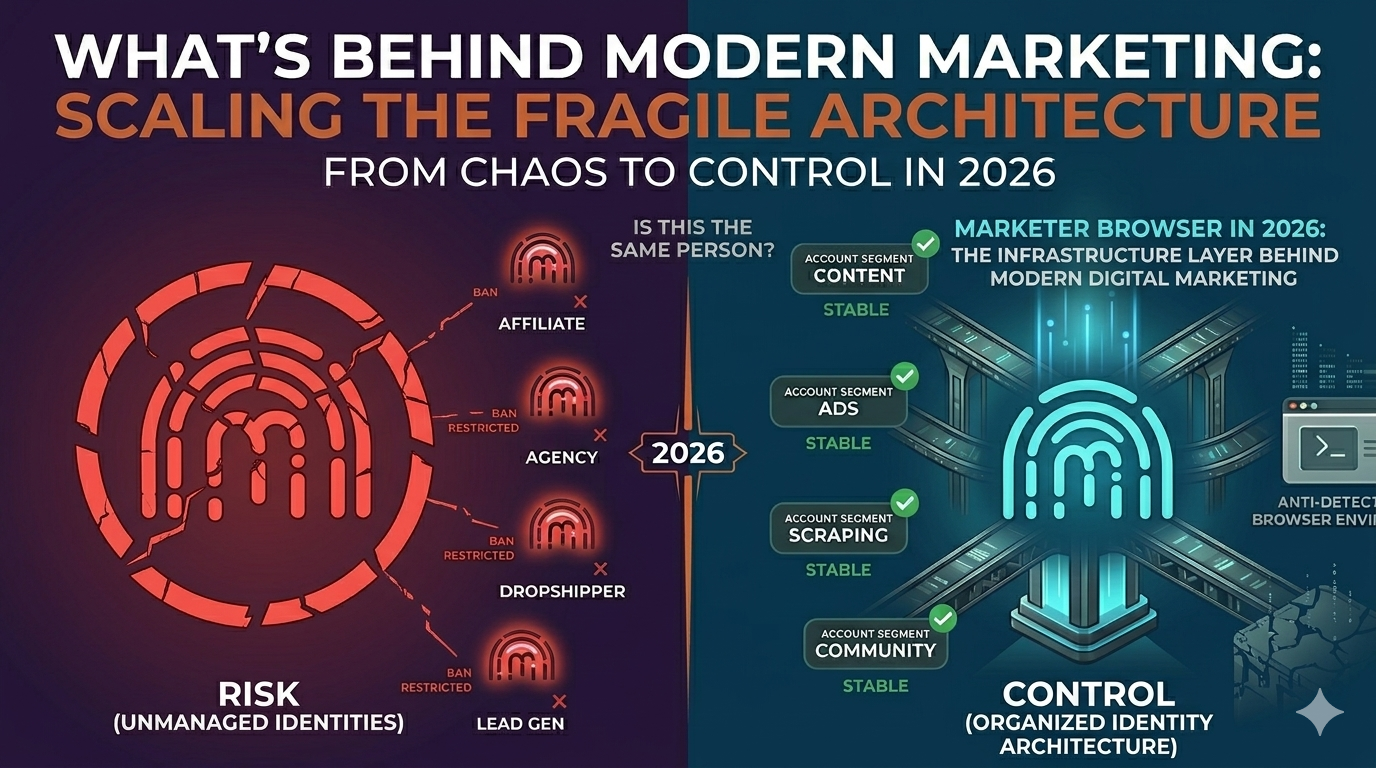
MarketerBrowser in 2026
In 2026, marketing stopped being just about content, ads, and creativity.
It quietly evolved into something far more technical: infrastructure management.
And at the center of this shift sits tools like MarketerBrowser — not as a “nice-to-have browser tool,” but as a core operating layer for marketers, agencies, and automation teams running multi-account systems at scale.
If you’re still thinking of it as just an “anti-detect browser,” you’re already behind the curve.
Let’s break down what it actually represents in 2026.
What MarketerBrowser Actually Is
MarketerBrowser is an **anti-detect multi-account browser system** designed to let users operate multiple online identities safely from one machine.
But that description undersells it.
In practice, it functions as:
- A multi-profile browser environment system
- A fingerprint isolation engine
- A central control dashboard for accounts
- A workflow automation layer for marketers
Each browser profile behaves like a separate device with its own digital identity — cookies, fingerprints, sessions, and network behavior.
That separation is the foundation of everything it does.
Why MarketerBrowser Became Relevant in 2026
The internet changed quietly over the last few years.
Platforms like Meta, TikTok, Google, and X don’t just track logins anymore — they analyze behavioral identity patterns across devices.
That means:
- Shared browser fingerprints = account linkage
- Repeated login behavior = trust scoring drops
- Pattern similarity = automated flagging
So the real problem marketers face in 2026 isn’t “content quality.”
It’s account survival at scale.
And that’s where MarketerBrowser became important.
It provides:
- Isolated digital environments per account
- Independent fingerprint profiles
- Proxy and geo simulation support
- Centralized account orchestration
In other words: it helps break the “everything looks like the same user” problem.
Top Features That Actually Matter
Most tools in this space throw a long feature list at you. But in reality, only a few features define whether MarketerBrowser is useful or not.
1. Fingerprint Isolation
Each profile behaves like a unique device:
- WebGL identity separation
- Canvas fingerprint variation
- Font and hardware spoofing
- Independent browser entropy
This is what prevents cross-account linking.
2. Multi-Account Management
Instead of juggling logins or multiple browsers, you run everything in parallel:
- Separate accounts per profile
- No session overlap
- No shared cache or cookies
It’s basically “one machine, many identities.”
3. Automation Support
MarketerBrowser supports automated workflows like:
- Logins
- Posting
- Scraping
- Account operations across platforms
This is where it starts moving from “browser tool” to “operations system.”
4. Master Control System
One of its most important ideas is centralized control.
Instead of managing accounts individually, you can:
- Sync actions across profiles
- Trigger batch operations
- Control workflows from one dashboard
This is what makes it scalable for agencies.
5. Analytics Layer
Beyond operations, it tracks:
- Engagement activity
- Posting behavior
- Account performance signals
This turns it into a lightweight data system, not just a browser.
The Real Use Cases in 2026
Let’s be honest — tools like this are not used for casual browsing.
They’re used where scale matters.
Social Media Operations
Agencies managing dozens or hundreds of accounts across platforms use it to:
- Separate client accounts
- Avoid cross-linking
- Automate posting workflows
E-commerce & Marketplace Management
Used for:
- Multi-store operations
- Competitor tracking
- Region-based account separation
Affiliate & Growth Marketing
Marketers use it to:
- Run multiple funnels
- Test campaigns in parallel
- Reduce account risk when scaling
Automation Teams
Teams building bots or AI agents use it as:
- A controlled execution environment
- A sandbox for behavioral automation
Why 2026 Is the Turning Point
The biggest shift isn’t the tool itself.
It’s the ecosystem around it.
In 2026:
- Platforms are stricter
- Detection systems are more behavioral
- Scaling accounts without isolation is almost impossible
So tools like MarketerBrowser are no longer “advanced tricks.”
They’ve become infrastructure necessities for scaled operations.
The Honest Trade-Offs
No tool in this category is magic.
MarketerBrowser still comes with realities users need to understand:
- Setup complexity is real
- Proxy quality matters more than the browser itself
- Misuse can still trigger platform enforcement
- Learning curve is not beginner-friendly
In short: it amplifies your system — it doesn’t fix a broken strategy.
Conclusion
MarketerBrowser in 2026 represents something bigger than itself.
It sits in the same category as:
- automation platforms
- ad infrastructure systems
- identity separation tools
And the real takeaway is simple:
Marketing at scale is no longer about posting more. It’s about managing identities safely and efficiently.
MarketerBrowser is one of the tools built for that reality.
Not the most glamorous part of marketing — but increasingly one of the most important.
메타데이터
- post_id
- e42b849acf99
- slug
- marketerbrowser-in-2026-the-infrastructure-layer-behind-modern-digital-marketing-e42b849acf99
- url
- https://medium.com/@jiao3548/marketerbrowser-in-2026-the-infrastructure-layer-behind-modern-digital-marketing-e42b849acf99
- canonical_url
- https://medium.com/@jiao3548/marketerbrowser-in-2026-the-infrastructure-layer-behind-modern-digital-marketing-e42b849acf99
- author_url
- https://medium.com/@jiao3548
- status
- ok
- fetched_at
- 2026-06-24 23:31:39