The World America Built
The extraordinary story of how one nation’s inventors, entrepreneurs and investors changed life for billions.
The World America Built
The extraordinary story of how one nation’s inventors, entrepreneurs and investors changed life for billions.

Somewhere today, someone will post a furious critique of American capitalism. They will type it on an iPhone, designed in California. They will upload it over a wireless network built on technology invented in New Jersey. It will travel through fiber-optic cable, bounce off satellites, and land on servers in an Oregon data center, all before a single person reads it.
The irony will be lost on them, and that is the point. The conveniences of modern life have become so total, so invisible, that the people most dependent on them no longer see them at all.
The United States of America is celebrating its 250th anniversary, so allow the indulgence of a little national pride.
When we look back at the economic development of America we see the remarkable results of free market capitalism - the breakthroughs and even comfortable culture that it has created. It is without question the most productive engine of human advancement the world has ever built.
And most people, American and otherwise, have no idea how much of their daily life they owe to it.
The Breakthrough That Lit the World
Start with the most basic miracle of all, the one so complete that we only notice it when it fails. Light.
For all of human history until about 140 years ago, when the sun went down, the world was lit by flickering flame. Then Thomas Edison and a generation of American inventors and financiers turned electricity into a product.
Not just the light bulb, which others had experimented with, but the entire system around it: the power stations, the grid, the wiring, the business model that made electric light something an ordinary family could buy. Edison’s genius was as much commercial as technical. He built the company, raised the capital, and industrialized the whole apparatus of electrification. That company, originally Edison Electric Light Company, is still alive today over 100 years later through its descendent General Electric (GE).
Even in the 1800s, American capitalism made it possible. He raised capital from financiers, J.P. Morgan and the Vanderbilts among others. That investment built not only the light bulb, but the very generating systems and electric grid that made electricity available to everyone.
The consequence was a rewiring of human existence. It forever changed how people lived.
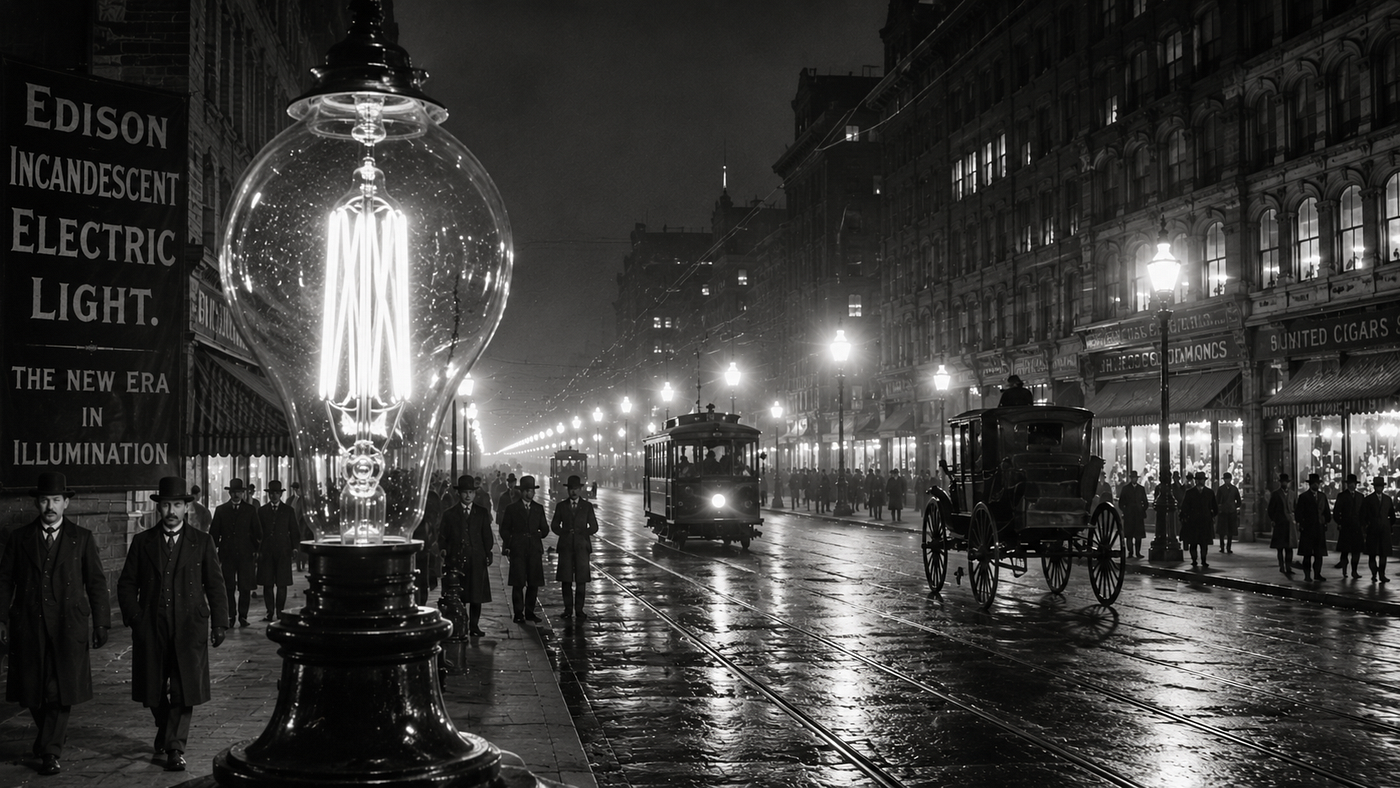
The workday was no longer chained to daylight. Cities came alive at night. Refrigeration became possible, which meant food could be stored, which meant fewer people went hungry. Every appliance in your home, every screen you look at, every hospital that keeps someone alive overnight, descends from that first commercial power station.
And of course, it did not stay in America. Electrification became the template the entire world followed.
The World on Wheels
The car existed before Henry Ford. What did not exist was the car that a working person could afford.
Ford’s revolution was not the automobile, it was the assembly line and the wage that came with it. By breaking manufacturing into precise, repeatable steps, he collapsed the price of a car from a luxury to a purchase within reach of his own factory workers.
The Ford Motor Company (symbol: F) still produces cars and truck nearly 125 years later. But again it was the American capitalist system that made it all possible. The company was launched in 1903 with $28,000 from key backers that included a Detroit coal deal, Alexander Malcomson and the Dodge Brothers who supplied engines.
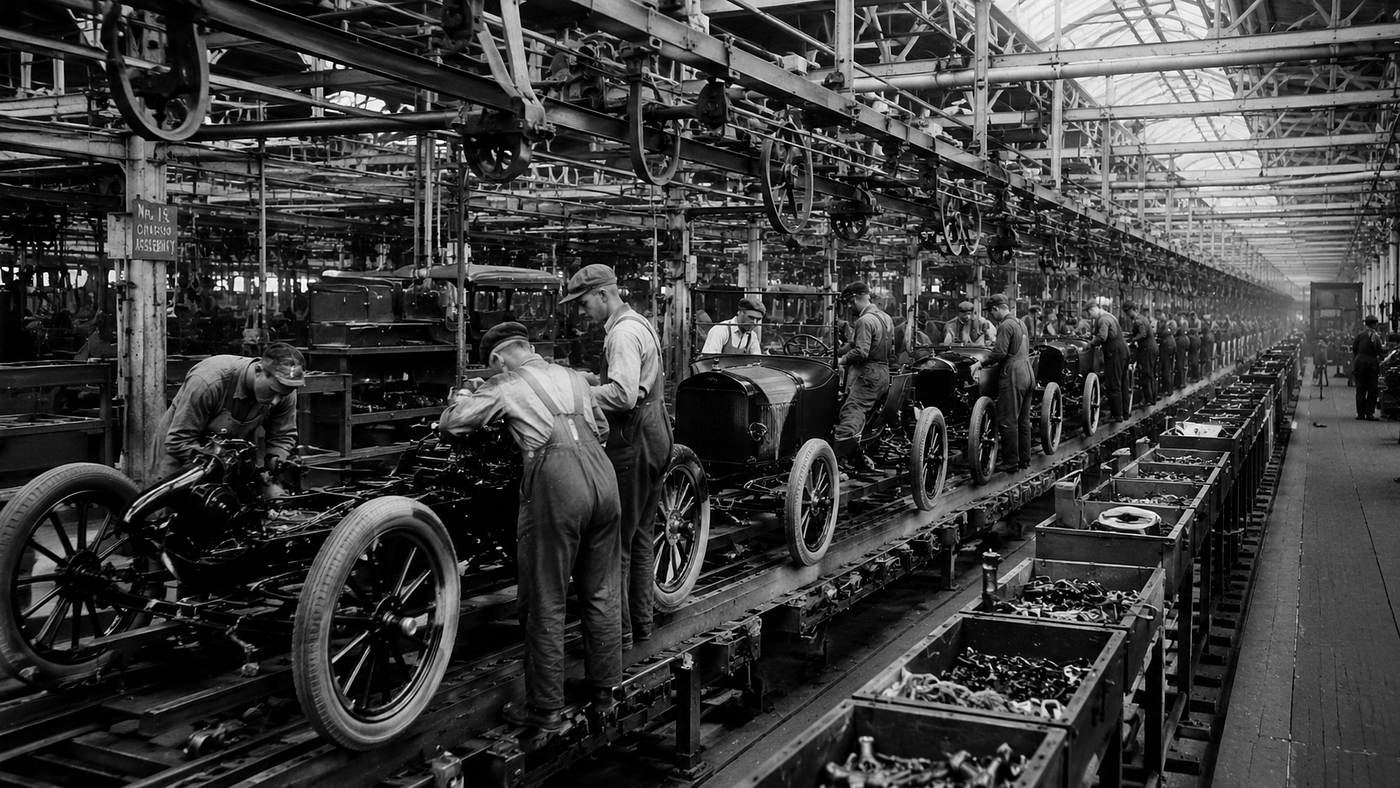
In addition to creating the company that produced a new car every 90 minutes, but also did something else. He doubled his workers’ pay to five dollars a day, reasoning that the people who built the cars should be able to buy them. He was not being charitable. He was building employee loyalty and a new buyer market, and in doing so he helped invent the American middle class.
The ripple effects reshaped the planet.
Mass production became the organizing principle of modern industry, applied to everything from appliances to electronics. Personal mobility remade geography, giving ordinary people a freedom of movement that became the American road trip.
The manufacturing methods Ford pioneered were studied and copied in Japan, Germany, Korea, and eventually China, lifting hundreds of millions into industrial employment. The system that built a Model T in Highland Park is the direct ancestor of the factories that power today’s modern global economy.
The First Think Tank
Here is the one you may never have heard of it, and it may be the most important of them all. For most of the twentieth century, a single American institution called Bell Labs, the research arm of the AT&T telephone company, invented the modern world.
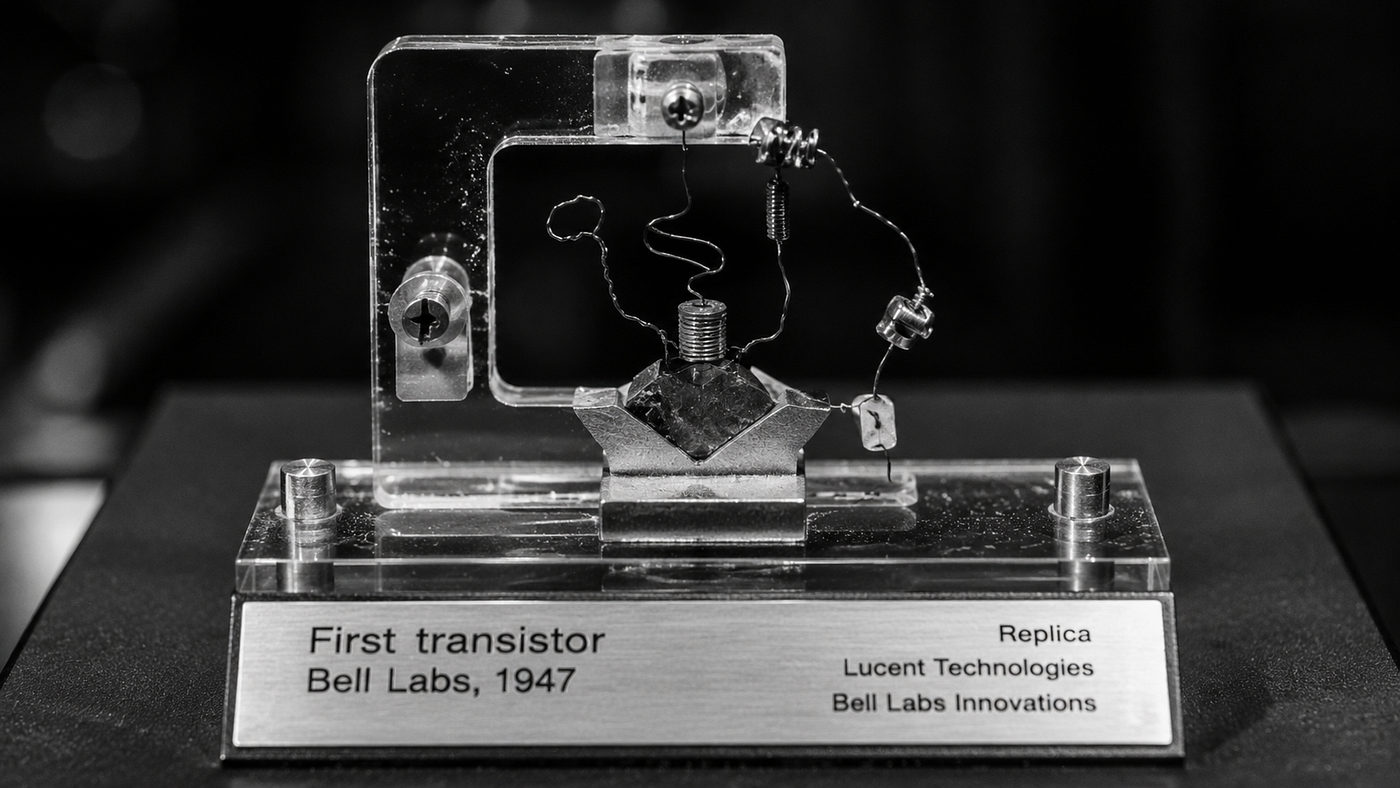
The list is almost unbelievable.
The transistor, the tiny switch that is the fundamental building block of every computer, phone, and digital device on Earth, was invented there in 1947. The laser came from Bell Labs. So did the solar cell, in 1954, the foundation of the entire solar power industry now spreading across the planet. The communications satellite. Information theory, the mathematical framework that makes all digital communication possible. The Unix operating system and the C programming language, the bedrock that most modern software still rests on.
Eleven Nobel Prizes were awarded for work done in those buildings.
Nearly every one of those foundation innovations was laid by researchers at one American company, funded by the profits of a capitalist enterprise given room to invest in the distant future. Private enterprise, private capital, and private ambition built the single most productive laboratory in the history of invention.
Every person on Earth who has ever sent a text message is in its debt.
👉 For where that lineage of invention is heading next, see The Code of Life Gets Decoded.
The Computer in Every Hand
By the second half of the century, the transistor had a destiny, and American companies chased it relentlessly.
IBM (IBM) built the machines that ran the modern corporation and the banking system. Then a wave of upstarts decided the computer should not stay in the corporate basement but belong to everyone.
Microsoft (MSFT) put an operating system on hundreds of millions of desks and made software a mass-market product.
Apple (AAPL), twice, first with the personal computer and then with the smartphone, turned intimidating technology into something a child could use without a manual.
Intel’s (INTC) chips, doubling in power roughly every two years, drove a pace of improvement the world had never seen in any technology.
The result is the most rapid democratization of capability in human history. Computing power that once filled a room and cost a fortune now sits in the pockets across the globe — farmers in Kenya and students in Bangladesh- connecting them to the entire store of human knowledge.
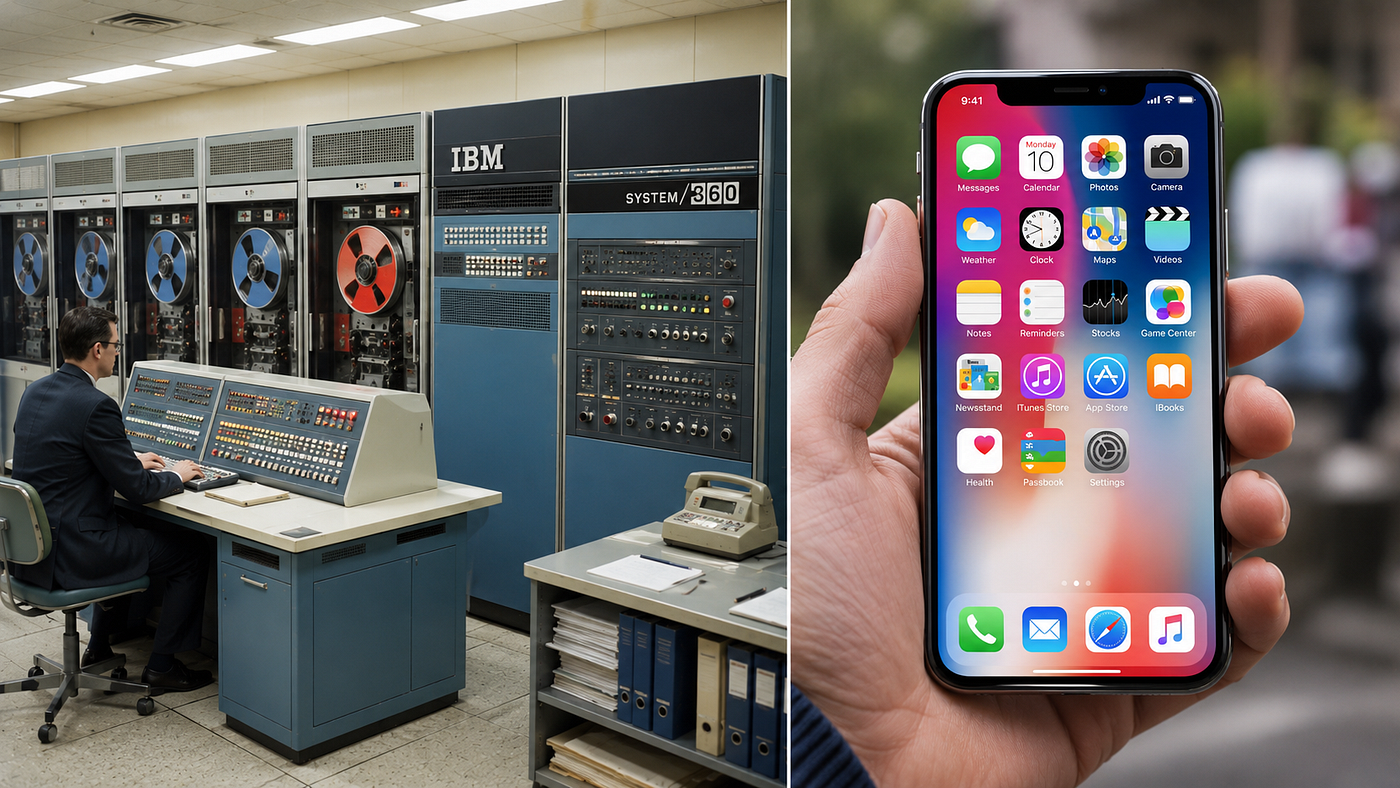
A person today holds more computing power in one hand than NASA used to reach the Moon. That is American capitalism at work.
From the Catalog to Your Doorstep
There is a beautiful continuity in American commerce that runs from the nineteenth century straight to the present.
In the 1890s, the Sears catalog put the entire contents of a store into a book and mailed it to rural families who had never had access to such variety. You could order a tool, a dress, a musical instrument, even a house, and have it delivered to the middle of nowhere.
It was a radical act of democratizing access to goods, and it defined American retail for generations.
A century later, Jeff Bezos rebuilt the same idea for the digital age, and Amazon (AMZN) turned the Sears catalog into a screen that holds nearly every product on Earth, delivered to your door in a day.
The impulse is identical across a hundred years: use scale, logistics, and relentless efficiency to get everything to everyone, cheaper and faster than before.
None of this would have been possible without the capital markets. In 1906, Sears, Roebuck did a landmark IPO underwritten by Goldman Sachs (GS) and Lehman Brothers. It was one of the first major retail IPOs anywhere and funded the giant Chicago mail-order plant.
Amazon’s capital markets journey is even more compelling. After its IPO in 1997, Amazon did not post consistent profits until the mid-2000s.
Jeff Bezos kept early margins razor thin to build an internet market that largely did not exist. It plowed every dollar of capital and cash flow into fulfillment centers and servers. The capital markets provided the money and the patience.
And it worked — Amazon is worth $2.56 trillion by market cap and can deliver new socks to nearly every American by tomorrow.
And the American example didn’t stay local either. Today, Amazon and others are worldwide delivering products everywhere and providing access to populations that 20 years ago had none.
The American Invention Continues
Which brings us to the argument that America’s best days of invention are behind it. The short answer: It’s Not.
The American example has been copied by others — China especially. And the democratization of innovation is occurring in some places to a degree. But the American culture with its freedom of capital is unmatched.
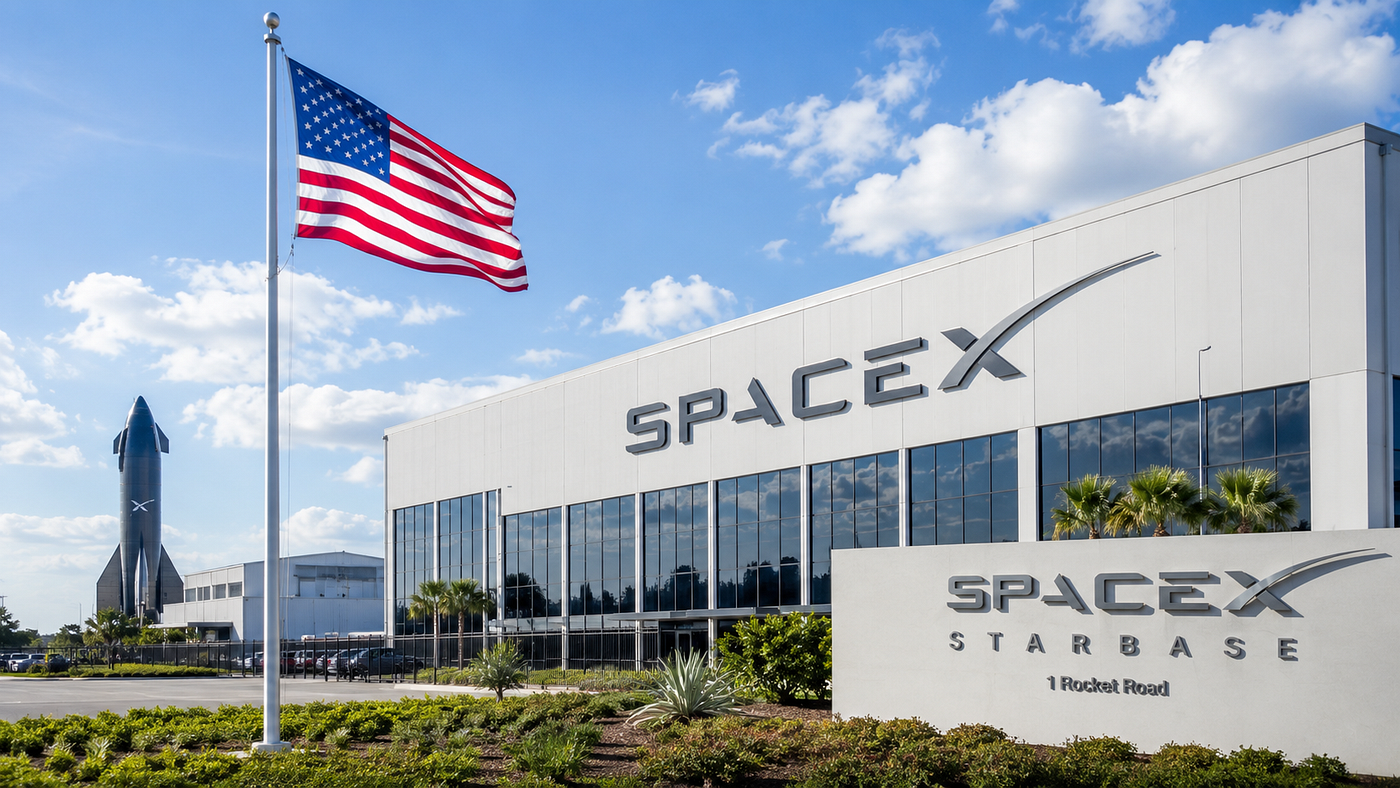
If Bell Labs defined the twentieth century, SpaceX, OpenAI, Anthropic, Nvidia, and other American companies are competing to define the twenty-first.
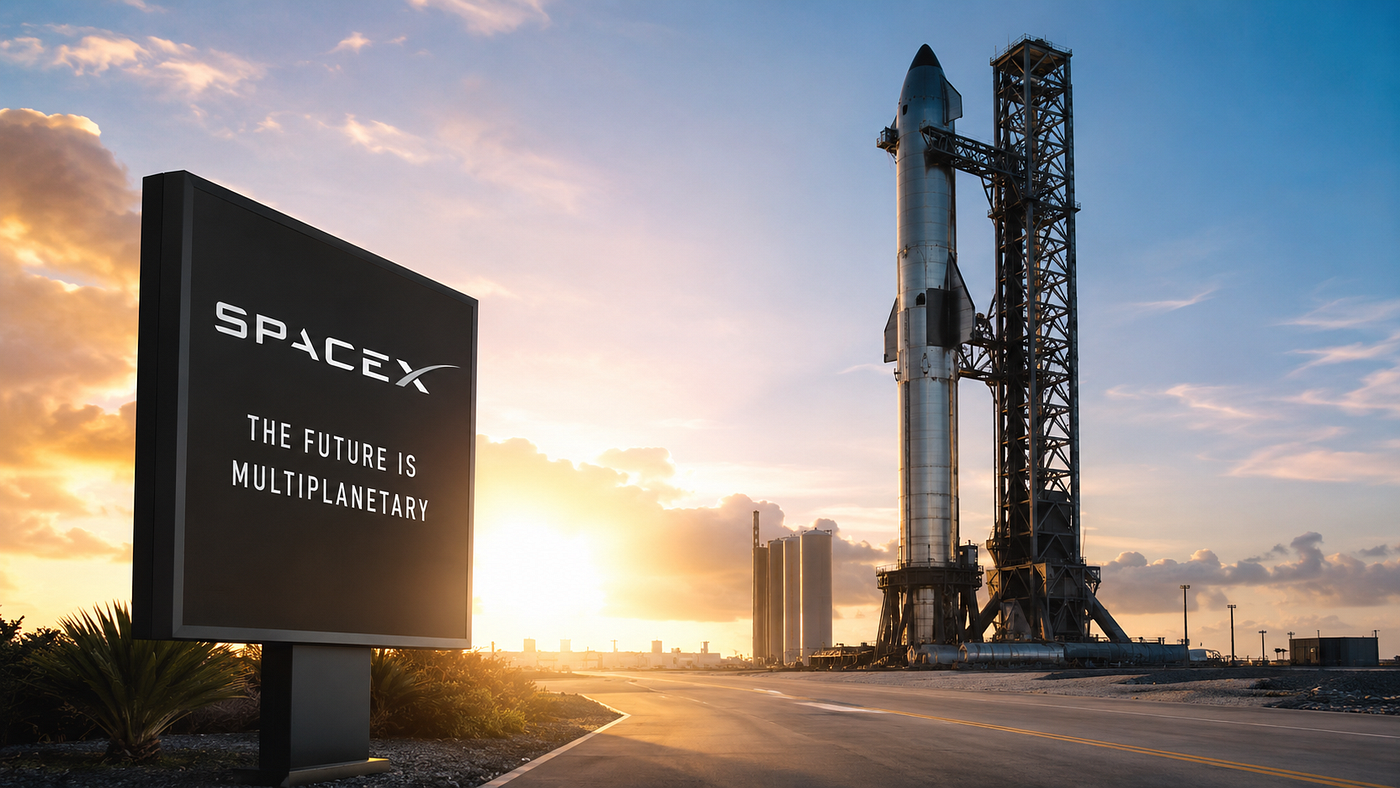
SpaceX (SPCX) cut the cost of reaching orbit so dramatically, by landing and reflying the same boosters, that it now handles the majority of the world’s launches. and has made possible things that seemed like fantasy a generation ago.
Tesla (TSLA) forced the entire global auto industry, reluctantly, to electrify.
American companies (Anthropic, OpenAI) are, at this moment, leading the world in artificial intelligence, the technology likely to define the next half-century.
And this doesn’t consider the countless others that we haven’t heard of that have been made possible through the American capitalist system.
The same system that produced Edison and Ford and Bell Labs is still producing, still attracting the ambitious and the restless from every corner of the world to build things here. The uniquely American engine provides the fertile ground for those who have the idea and are willing to work to realize it.
👉 For how the next generation of workers can build careers alongside these advances, see Careers That Compound in an AI World.
Happy 250th to the United States
If you find yourself caught up in the critical debate of the day, step back and look at the arc of it all. Spend a few minutes reflecting on what life was like 100, 50 or even 25 years ago.
Then consider the light you read by, the car in your driveway, your cell phone, the packages at your door and the rockets overhead. An extraordinary share of it came from one country and one system, in a burst of productive creativity unmatched in human history.
Now look at how the standard of living has improved dramatically for people across the globe — most of which never set foot in America but nonetheless are directly benefiting from American capitalism.
So, on the Fourth of July, perhaps the critics ironically tapping out their complaint on a device made possible by America, can self-reflect and acknowledge the overwhelming good that the American system has built and by extension given the world.
I too can be a critic on many things about the United States. The capitalist system is not flawless. It can get out of balance. It can produce wealth and income disparities. The government is too large, spends too much money and full of special interests and grift. All of it.
But I remain fiercely proud to be an American. My roots trace back to the Mayflower on one side and Ellis Island on the other. My relatives have fought for this country all along the way starting with Washington’s Continental Army. My namesake was a purple heart recipient in Patton’s Eighth army.
I see the standard of living me and my family are now afforded. All of it because I stand on the shoulders of those who came before.
I’m extremely thankful to my descendants who came here with nothing and built the stable structure on which I stand today. I am thankful to the Henry Fords and Thomas Edisons and the countless others that made life as I know it possible.
But perhaps most of all, I’m thankful for the American system that created the freedom and economic conditions that makes the American Dream a reality. Its capitalist framework has provided the fuel for aspiring Americans to ‘bring good things to life’ and by extension improved the lives of everyone worldwide in the process.
So, to America on its 250th, happy birthday and thank you.
Thank you for reading.
👉 For how we invest in the companies still driving this engine forward, see Portfolio Management in the Age of the AI Revolution.
Images Source: Unless specifically noted, all images were created by Evervests.com by AI
Disclaimer: This content is for informational and educational purposes only and should not be considered financial, investment, or trading advice. The views expressed are based on publicly available information and personal opinion at the time of writing. Markets and conditions may change. Always perform your own research, verify data independently, and consult with a licensed financial advisor or investment professional before making investment decisions. The author may hold positions in the securities or assets discussed.
메타데이터
- post_id
- e494cc5e0859
- slug
- the-world-america-built-e494cc5e0859
- url
- https://medium.com/the-geopolitical-economist/the-world-america-built-e494cc5e0859
- canonical_url
- https://medium.com/the-geopolitical-economist/the-world-america-built-e494cc5e0859
- author_url
- https://medium.com/@joe_62117
- status
- ok
- fetched_at
- 2026-07-17 06:05:59