Rotating Residential Proxies for Web Scraping: A Practical Guide
Web scraping often starts simple. A team writes a small script, tests a few URLs, and everything appears to work. But once the project…
Rotating Residential Proxies for Web Scraping: A Practical Guide
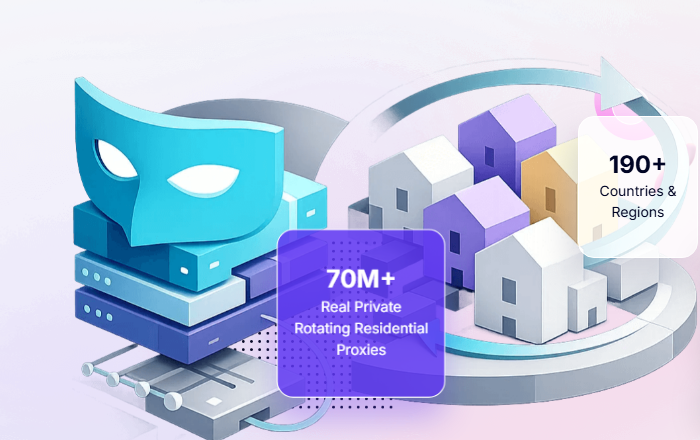
MaskProxy rotating residential proxies for web scraping
Web scraping often starts simple. A team writes a small script, tests a few URLs, and everything appears to work. But once the project needs to collect data from hundreds or thousands of pages, results can become inconsistent. Requests slow down. Pages return different content by location. Some requests fail. In stricter cases, websites may challenge or block repeated traffic from the same IP address.
That is one reason many scraping teams evaluate rotating residential proxies. They are not necessary for every project, and they are not a shortcut around responsible data practices. But when a scraping workflow depends on regional accuracy, stable success rates, and traffic patterns that look closer to normal user access, they can be very useful.
This guide explains what rotating residential proxies do, when they are worth using, and how to choose the right setup for web scraping.
What Are Rotating Residential Proxies?
A residential proxy routes traffic through an IP address associated with a real internet service provider rather than a cloud server or data center. To a website, the traffic appears to come from a normal residential network.
A rotating residential proxy adds IP rotation. Instead of sending every request through the same IP address, the proxy service distributes traffic across a larger pool of residential IPs. Depending on the setup, the IP can rotate after every request, after a fixed time period, or when a session ends.
For scraping teams that need real-user-style IPs with flexible rotation, rotating residential proxies are often the first proxy type to evaluate.
Why IP Rotation Matters in Web Scraping
Many websites look at more than the page request itself. They may also consider:
- how often the same IP requests pages
- whether the IP belongs to a data center
- the location of the IP address
- whether the session behavior looks consistent
- how many pages are requested in a short time
- whether requests come from the same network range repeatedly
If one IP address sends too many requests, the target website may slow down responses, show challenges, return incomplete content, or block the traffic. Rotating IPs helps distribute requests across different residential addresses, reducing overuse of a single IP.
This does not mean rotation should be aggressive in every case. Good scraping setups balance rotation, request speed, session behavior, and respect for the target website.
When Rotating Residential Proxies Are Worth Using
Rotating residential proxies are usually worth considering when success rate and data accuracy matter more than the lowest possible request cost.
They are especially useful for:
- e-commerce product and price monitoring
- localized search result tracking
- ad verification across different regions
- public market research
- website quality assurance by country or city
- collecting public web data from stricter targets
For example, an e-commerce research team may need to compare product prices in the United States, United Kingdom, Germany, and Japan. If all requests come from one server IP, the results may not match what real users see in each market. Residential proxies with location targeting can help the team collect more realistic regional data.
Rotating Sessions vs Sticky Sessions
One common beginner mistake is assuming that more rotation is always better. In practice, the right rotation mode depends on the workflow.
Per-request rotation means the IP may change on every request. This can work well when each page request is independent.
Sticky sessions keep the same IP for a period of time. This is useful when the workflow needs continuity, such as opening a category page, viewing product pages, moving through pagination, or keeping cookies consistent.
Here is a simple way to choose:
Workflow Better option Independent page checks Per-request rotation Large URL lists Rotation by request or batch Multi-page browsing Sticky session Account-related workflows Static or sticky residential IP Location-based research Rotate within the target region If a scraper changes IPs too often during a natural browsing flow, the session may look inconsistent. If it never changes IPs during a large scraping job, that single IP may become overused. The goal is balance.
rotating residential proxies
Residential Proxies vs Datacenter Proxies
Datacenter proxies are usually faster and cheaper. They work well for simple targets, internal testing, uptime checks, and high-volume scraping where the target website does not heavily restrict server IP ranges.
Residential proxies usually cost more, but they provide stronger real-user-style network signals. This makes them more suitable for stricter websites, regional testing, and data collection tasks where location accuracy matters.
Proxy type Strength Weakness Best fit Datacenter proxy Fast and affordable Easier to identify as server traffic High-volume requests on tolerant sites Residential proxy More natural IP source Higher cost Stricter sites and geo-sensitive data Static residential proxy Stable identity Less useful for broad rotation Long sessions and account workflows Rotating residential proxy IP diversity and location flexibility Requires careful session control Web scraping, SERP tracking, ad verification Many teams use both. They start with datacenter proxies for simple targets, then switch to residential proxies when blocks, challenges, or inaccurate regional data become a problem.
How to Control Proxy Cost
Rotating residential proxies are often billed by traffic usage. Cost can rise quickly if a scraper downloads unnecessary page assets, images, videos, fonts, or scripts.
To control cost:
- collect only the pages and fields you need
- block images and heavy media when using browser automation
- cache repeated results where possible
- avoid unnecessary retries
- use datacenter proxies for low-risk targets
- reserve residential proxies for stricter or location-sensitive tasks
- measure cost per successful result, not just cost per GB
The cheapest proxy plan is not always the cheapest scraping setup. If a low-cost setup fails often and causes many retries, the real cost can be higher than expected.
What to Check Before Choosing a Provider
Before choosing a rotating residential proxy provider, check these points:
- Location coverage
Make sure the provider supports the countries or regions your project needs.
-
Rotation control Look for both per-request rotation and sticky session options.
-
Protocol support HTTP and SOCKS5 support can make integration easier across browsers, scrapers, scripts, and automation tools.
-
Pool quality A large IP pool is useful, but stability, freshness, and reliability matter more than a large marketing number.
-
Speed and timeout behavior Test real target websites instead of relying only on generic speed claims.
-
Documentation and support Clear setup examples can save a lot of time, especially for beginner teams.
-
Responsible-use policy Use proxies for lawful, compliant, and permitted data workflows. Avoid collecting private data, bypassing access controls, or violating site terms.
A Simple Testing Plan
Before scaling a scraping project, run a small benchmark.
Choose 100 to 500 representative URLs. Test datacenter proxies first, then test rotating residential proxies on the same URLs. Compare success rate, response time, retry rate, and cost. If location matters, repeat the test for each important country.
Also test both per-request rotation and sticky sessions. The best option is not always obvious until you compare real results on real targets.
Final Thoughts
Rotating residential proxies are useful when web scraping projects need better success rates, regional accuracy, and more natural IP diversity. They are especially helpful for e-commerce monitoring, SERP tracking, ad verification, market research, and public data collection across regions.
They are not required for every scraping task. For simple, tolerant websites, datacenter proxies may be enough. But when IP reputation, location, and session behavior affect the quality of the result, rotating residential proxies can make the workflow more stable and scalable.
For teams comparing proxy infrastructure, MaskProxy provides rotating residential proxies with global residential IP coverage, HTTP/SOCKS5 support, and flexible rotation options for scraping, automation, and location-based research workflows.
메타데이터
- post_id
- e4bb34b55cf1
- slug
- rotating-residential-proxies-for-web-scraping-a-practical-guide-e4bb34b55cf1
- url
- https://medium.com/@bettynay2014/rotating-residential-proxies-for-web-scraping-a-practical-guide-e4bb34b55cf1
- canonical_url
- https://medium.com/@bettynay2014/rotating-residential-proxies-for-web-scraping-a-practical-guide-e4bb34b55cf1
- author_url
- https://medium.com/@bettynay2014
- status
- ok
- fetched_at
- 2026-06-21 07:44:09