Scarlet Nexus: Brilliant combat, disappointing story.
Looking back at my gaming history, I wanted to look at the third PlayStation 4 game I ever played, with a light edit of my review from that…
Scarlet Nexus: Brilliant combat, disappointing story.
Looking back at my gaming history, I wanted to look at the third PlayStation 4 game I ever played, with a light edit of my review from that time, in the summer of 2022, after buying a used console, one of my favorite used purchases in 41 years of living. Released in 2021, Scarlet Nexus was an underdog pick for RPG of the year, but does it meet those standards?
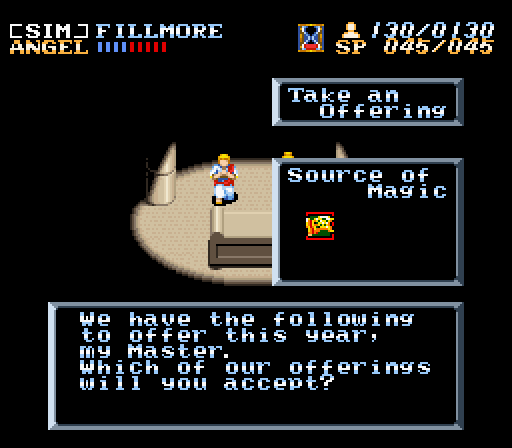
The most striking aspect of the game, even more than the battle system, is the comic book presentation of the story. Reminiscent of the little-known Jojo’s bizarre adventure for the SNES or the much better-known Wild Arms 4 for the PlayStation 2, but done even better. The animation is remarkable, but I can’t help but wonder if fully animated scenes would have been more effective.
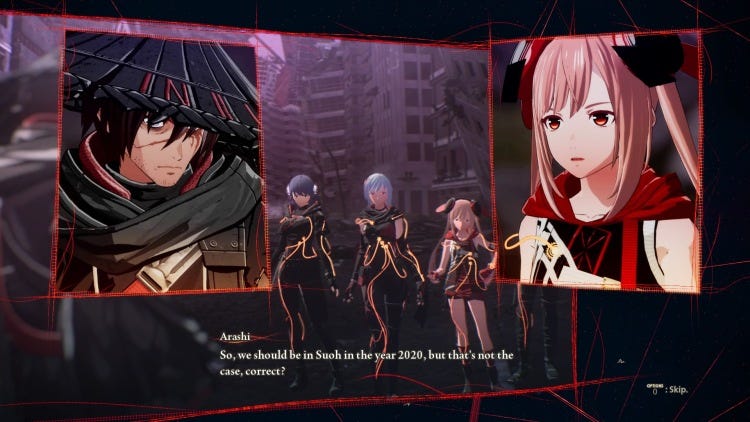
The first city in the game is magnificent and staggering, as if the game's scope is gigantic. That is the first impression, at least.

The streets are crowded with people, cars zooming by, and it looks like a futuristic metropolis, though the game takes place in 2020. Although locations look large, you’ll quickly find that the areas that can be explored are quite small, especially compared to other RPGs of the same era. The dungeons are even less grand, usually narrow pathways without many branching paths. Granted, the backgrounds in some of the levels are awesome.

The earlier levels are more impressive, but the later ones struck me as duller while still being too linear. This extends to the enemies and enemy design. While they are massive in scale, there isn’t a diverse range of enemies, and many of them are used time and again, not even with a new coat of paint, but simply higher levels.

The battle system is fast-paced and nuanced, and leaves players with plenty of options to beat down foes. Things can get hectic at times, and that isn’t a feeling that is ever likely to fully dissipate; you just find ways to cope. One of my favorite things about the battles is that there is no screen transition between where you are and the battles; they take place in the same space, but an artificial barrier keeps you within a confined area within the level for the duration of the fight. It’s fantastic that there is no screen transition for the battles, because the load times when moving between locations or key plot points are very long.
Anyway, another inviting addition to battles is interacting with your surroundings by launching items with R2 and even larger items that deal greater damage, with L2. The second type of object, of course, is less prominent, so timely use of the L2 objects will make life much easier. But that was one of the ways that helped me to adapt to the sometimes chaotic battles: get a few preemptive strikes in by launching items from afar. Your character, Kasane or Yuito, has various other tactics at hand when fighting. They can jump with X, lunge forward with O, attack as they retreat with triangle, and by pressing the jump and attack button at the same time, an uppercut.
There are tons of options within battles, to the point where it almost feels like a fighting game. I’ve never been good at those games and usually got my butt whooped by friends who preferred that genre. Better Scarlet Nexus players can probably leave every enemy in the dust with a graceful flurry of hits with all sorts of quick, timely button presses.
I liken it to ice skating in the form of an action RPG. Other players, like myself, are likely to repeat what works best for them. For example, I played Kasane, eventually joined by nine other playable characters. Each character has a unique skill, some more useful than others. Luka, for instance, allows you to teleport, including past barriers. However, the two characters I kept coming back to as much as possible, unless the plot didn’t allow me to, were Shiden and Arashi. Both are unlikeable characters outside of battle, with very useful skills in battle. I enjoyed Shiden’s electric attack that could hit a wide range of enemies, and Arashi slowed time down to a crawl, allowing me to catch my breath and take stock of the situation without being bum-rushed by some gigantic beast or multiple huge beasts. However, these skills can’t just be used all the time, whenever you want. They all last for a few seconds and have cool-down periods, and it is during those times that self-perseverance can be tough, but where R2 and L2, to throw objects, can be exceptionally useful.
The brain map is, more or less, a skill tree, seen in many RPGs. Think of Final Fantasy 10’s sphere grid or Final Fantasy 12’s license board. It is the same general gimmick that tons of games utilize, and the point is to dress it up enough to make it look different, and in the case of this game, it passes that test.
Each level-up provides a small number of points that can be assigned to different nodes on the brain map. Hold down x for a few seconds to learn the skill and open up the next node, sometimes multiple nodes. The beginning skills aren’t that exciting, but later skills allow for increased experience, money, auto-healing outside of battle, more effective object throwing, and more variety in battle via different button presses.
Enemy HP totals show, thankfully, but some might wonder what the yellow meter is for. That is the crush gauge, and if that is lowered enough, a timely press of L2 will show a very cool animation of Kasane or Yuito beating the daylights out of some hapless foe, with a bonus of extra EXP.
Combos and attacking enemy weaknesses will greatly reduce this gauge and leave them vulnerable to brain crush, a finishing move that will instantly take out all non-boss enemies. Some insanely annoying enemies later on that can cast fog that obscures the player’s view and radar, making surrounding enemies very hard to find.
The battle system, overall, is a great deal of fun that only starts to become monotonous around Phase 10 (of 12) and reaches the height of tediousness going through the last dungeon, as some of those enemies are strong, quick, and have powers that make the battle drag on, such as fogging up the battle arena. Still, the different types of combos that are possible depending on what buttons you press and when allow most battles to flow gracefully.
There are times when the graphics become distorted during boss battles, and basically, I found that just running around until everything returned to normal was the best bet.

This is the point where I felt like too much was attempted; look at the picture above. I couldn’t make heads or tails of what was going on during these moments and just tried to wait it out with as little damage as possible while pushing R2 whenever I could to make items hit the boss while waiting out this unpleasantness.
The story wasn’t as enjoyable for me as I found many characters irksome. Shiden is the classic Luke (Tales of the Abyss) style jerk. He is standoffish, arrogant, and rude, and that was not a feeling that changed even in the later phases of the game.
Arashi is that one slacker we all know from school, who never seems to want to do anything.
It’s reached the point where, sadly, I have to wonder what Bandai Namco’s game is without a pervy older guy who tries way too hard to be a womanizer. Different Tales games had Raven (Vesperia) or Zavied (Zestiria), and in Scarlet Nexus, that is Kagero. He is more subtle than those two, but it is still annoying and overall, a trope that can fall by the wayside tomorrow without feeling any loss.
Luka has a chip on his shoulder but strives hard to be as useful as possible and learn as much as he can, basically functioning as the opposite of Arashi.

Possibly the best growth of any character in the game is seen by Hanabi. She is very dependent on others at the start of the game, but slowly matures and becomes more independent as the plot progresses. This was one of the more interesting character arcs in the game.
Gemma is the token “much older than everyone else” character who carries his burdens of all hes’s lost.
Just like in high school, Scarlet Nexus seems content to find as many high school cliches as possible, Tsugumi taking on the wallflower, “does anyone want me around” role. Her modesty is overdone.
Kyoka might be the best character of the bunch and, if anything, is too caring.
That is quite the cast of characters, and had the plot progression been better and more mature, even with some of the more irritating characters like Shiden or Kagero, the story could have been interesting. Instead, it is overly dramatic, with predictable allegiance changes, only for characters to change allegiances again, on a dime. Am I supposed to just forget that a certain character I trusted just attacked me, only to act as a friend moments later? This happens too often, so much so that there aren’t enough reasonable excuses, though the game tries to explain these sudden changes away each time, though sometimes barely explaining.
The story takes place both in the present and slightly in the future and looks at technological advances that allow humans to maximize their mental potential, some even developing supernatural abilities. Again, each of the ten characters has one (supernatural) ability they can use in battle for a temporary amount of time before cooldown. The ten characters you eventually end up with are part of the OSF, a group created to suppress those ugly “Others”, mindless mutants hellbent on destroying everything around them.

What starts as a motley crew slowly grows into a tight-knit family-like atmosphere in the later phases. That is because of the bonding episodes, optional but highly recommended content. Most of them are story events, although some bonding experiences, mostly late-game, involve fighting.
There are tons of items that can be found from beaten enemies and around battlefields, and a lot of these items can be traded for gifts. While each character has different feelings about the various gifts that you can give them, the best is to give every possible gift at least once and multiples of any gift that they love (signified by a big red heart) to get the bond level as high as possible. Higher bond levels allow party members to fight better in battle.
The soundtrack is subpar, sometimes erring on the side of minimalistic, with nothing too striking or stand-out. Voice acting, especially after playing a game like Mass Effect, just felt flat. Luka’s voice, although a nice character, struck me as annoying, Shiden obnoxious, and overall, everything was too dramatized too often, like watching a 90s soap opera. Plus, some of the music, such as in the hideout phase, sounded too much like elevator music.
Over about 28 hours, there aren’t as many places to visit as one might initially think. Of the places that can be visited, most are fairly small, outside the more arduous final zone.
The side quests, outside the bonding experiences, boil down to simple fetch quests that didn’t feel worthwhile. They are not required, and grinding doesn’t need to be done either. On normal difficulty, I beat the last level with level 60 characters. I imagine, with more skilled players, it’s possible even under level 50.
Scarlet Nexus has an enjoyable, innovative battle system that grows stale in the closing hours, with wave after wave of super-powered regular enemies. Regardless, with everything at your disposal, fighting has an amazing flow to it, and there are always new tutorials showing up to add a new angle to battles. The animation and comic book style of storytelling is a welcome change from most other RPGs. But the story is hurt by the overly dramatic, constant betrayals that become too predictable, along with a subpar soundtrack and voice acting. This is a solid effort at trying something new, and there’s a wonderful foundation in place for a sequel, if the developers ever go in that direction, as long as some kinks are ironed out. Namely, a more mature story that makes better sense, as well as having more expansive areas to explore with more varied enemies. Just the same, I don’t think this deserved that dark horse status for RPG of the year in 2021.
메타데이터
- post_id
- e4cf4dd5d10d
- slug
- scarlet-nexus-brilliant-combat-disappointing-story-e4cf4dd5d10d
- url
- https://medium.com/@carld18/scarlet-nexus-brilliant-combat-disappointing-story-e4cf4dd5d10d
- canonical_url
- https://medium.com/@carld18/scarlet-nexus-brilliant-combat-disappointing-story-e4cf4dd5d10d
- author_url
- https://medium.com/@carld18
- status
- ok
- fetched_at
- 2026-06-13 07:35:29