The Millisecond Guarantor: High-Frequency Trading, Colin Gray, and the End of Algorithmic Impunity
While your eye takes about 300 milliseconds to blink, a High-Frequency Trading (HFT) algorithm has already executed thousands of buy and…
The Millisecond Guarantor: High-Frequency Trading, Colin Gray, and the End of Algorithmic Impunity

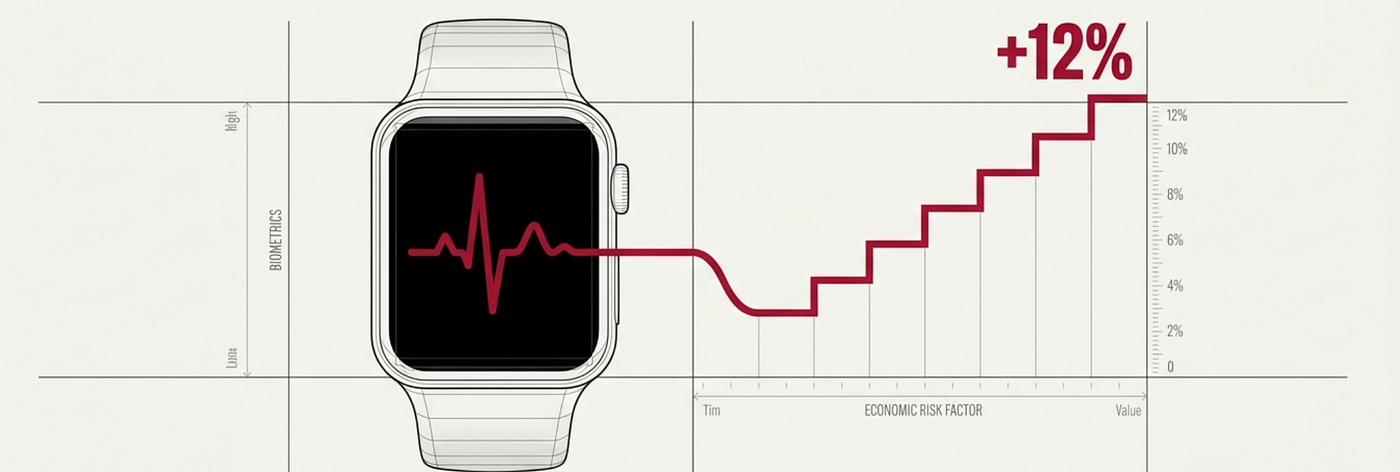
Image created by AI
While your eye takes about 300 milliseconds to blink, a High-Frequency Trading (HFT) algorithm has already executed thousands of buy and sell orders at the speed of light. Financial markets are no longer physical trading floors where people shout; they are interconnected servers where liquidity is a digital ghost and systemic risk accumulates in microseconds.
This extreme automation is often marketed as the ultimate triumph of market efficiency. However, when machines take absolute control, the core question is no longer how fast the system operates, but who bears liability when the system collapses?
Versión en español disponible aquí [https://medium.com/@pablovieirap/garante-en-milisegundos-el-fin-de-la-impunidad-algor%C3%ADtmica-en-el-hft-5784788f2009]
To understand the future of financial regulation and supervisory liability, we must temporarily look away from Wall Street and turn our attention to the criminal courts of Georgia, United States — specifically, to the historic case of Colin Gray.
The Colin Gray Doctrine: When Oversight Becomes a Criminal Obligation
In late 2024, the American justice system handed down an unprecedented verdict by criminally indicting and prosecuting Colin Gray for the actions of his underage son, who perpetrated a mass school shooting. The court did not sentence him for pulling the trigger, but for a concept that traditional criminal law rarely penalized with such severity: criminal negligence in supervision.
Gray was aware of the red flags, his son’s erratic behavior, and prior threats; yet, he facilitated access to the weapon and failed in his duty of control. This landmark shared sentence left an indelible legal lesson: anyone who holds a position of guarantor and a legal obligation to supervise shares the liability for the catastrophe if their inaction allowed it to happen.
This harsh social reality serves as the perfect metaphor for the securities market. Brokerage firms and HFT algorithms are the “rebellious children” of the digital age: engineered by humans, but endowed with destructive speed and autonomy. Concurrently, regulatory agencies and securities commissions often act as those supervisors who prefer to look the other way under the guise of “market freedom”.

Image created by AI
The Myth of the “Autonomous Algorithm”
Whenever a financial disaster triggered by high-frequency trading occurs — such as the infamous *Flash Crash, where indices plummet 10% in minutes due to destructive feedback loops between software — the corporate response from firms and regulators is invariably the same: “It was a system glitch,” “the algorithm operated autonomously,” “no human ordered that massive sell-off.”*
The jurisprudence of the Colin Gray case dismantles this corporate defense. In financial law, the supervisor (both the firm’s internal compliance officer and the state regulator) holds a strict position of guarantor (Ingerencia). Their role is not that of a mere forensic spectator who arrives to draft a report after the market has already bled out.
If a regulator authorizes the operation of algorithms capable of draining market liquidity in milliseconds without demanding effective circuit breakers, code audits, or understanding the latent risk, they are committing the exact same negligence as Gray. They did not press the button that unleashed the financial panic, but they armed the algorithm and chose not to supervise it.
Public Trust and Shared Liability
Global financial legislation and securities market regulations impose an unrenounceable obligation upon supervisors: to guarantee systemic stability and protect public trust. Allowing HFT to operate in a sort of “digital wild west” without real-time oversight is an abdication of that statutory function.
The doctrine of command and control responsibility demands that supervisors assume the consequences of the tools they allow to operate under their jurisdiction. If a software program enters a destructive loop that bankrupts investment funds or evaporates citizens’ savings, the fault does not lie within the lines of code. The liability is shared by the supervisor who, despite having clear alarms flashing regarding the risks of algorithmic trading, preferred to blindly rely on the infallibility of technology.

Image created by AI
The End of Digital Impunity
The Colin Gray case changed the rules of civil and criminal liability in the analog world: parents can no longer plead ignorance regarding the actions of their children if they provided them with the tools of chaos. It is time to apply the exact same rigorous standard to the digital mirror of finance.
The creators and supervisors of Artificial Intelligence and HFT must understand that automation is not a license for impunity. In an era where finance is measured in milliseconds, the ultimate shield against collapse is not a better automated surveillance algorithm; it is a human supervisor acutely aware that if they leave the system unchecked, the sentence will also be theirs.
Selected Bibliography & Further Reading
- Casey, B. (2017). Algorithmic Negligence. Clean Energy and Tech Law Standards, Stanford Law School. SSRN Electronic Journal. https://doi.org/10.2139/ssrn.3051759
- Securities and Exchange Commission (SEC). (2013). In the Matter of Knight Capital Americas LLC, Respondent. Administrative Proceeding File №3–15570. Release №70694. (Key enforcement precedent regarding the corporate duty of care over malfunctioning algorithms).
- Securities and Exchange Commission (SEC) & Commodity Futures Trading Commission (CFTC). (2010). Findings Regarding the Market Events of May 6, 2010 (The Flash Crash Report). Washington D.C. https://www.sec.gov/files/marketevents-report.pdf
- U.S. Court of Appeals for the Seventh Circuit. (2017). United States of America v. Michael Coscia. Case №16–1018. (Federal precedent breaking down algorithmic intent, automated spoofing, and executive liability).
- Kaufmann, A. (1988). Dogmática de los delitos de omisión y la posición de garante en el Derecho Penal moderno. Madrid: Editorial Marcial Pons. (Foundational criminal doctrine on liability by omission and the structural definition of control over source risks).
- State of Georgia v. James Colin Gray. (2024). Indictment on Involuntary Manslaughter and Reckless Conduct. Superior Court of Barrow County, GA. Case №24-CR-001.
메타데이터
- post_id
- e5285dab86f8
- slug
- the-millisecond-guarantor-high-frequency-trading-colin-gray-and-the-end-of-algorithmic-impunity-e5285dab86f8
- url
- https://medium.com/@pablovieirap/the-millisecond-guarantor-high-frequency-trading-colin-gray-and-the-end-of-algorithmic-impunity-e5285dab86f8
- canonical_url
- https://medium.com/@pablovieirap/the-millisecond-guarantor-high-frequency-trading-colin-gray-and-the-end-of-algorithmic-impunity-e5285dab86f8
- author_url
- https://medium.com/@pablovieirap
- status
- ok
- fetched_at
- 2026-06-09 15:37:30