The Body Keeps the Score: 12 Cellular Storage Patterns From Narcissistic Abuse Trauma (The Tissue…
Your body is not broken — it is a meticulous archivist of every betrayal, every gaslight, and every swallowed truth. Here is how to finally…
The Body Keeps the Score: 12 Cellular Storage Patterns From Narcissistic Abuse Trauma (The Tissue Memory Mapping Protocol)
Your body is not broken — it is a meticulous archivist of every betrayal, every gaslight, and every swallowed truth. Here is how to finally decode, process, and release the 12 hidden somatic blueprints of narcissistic trauma.
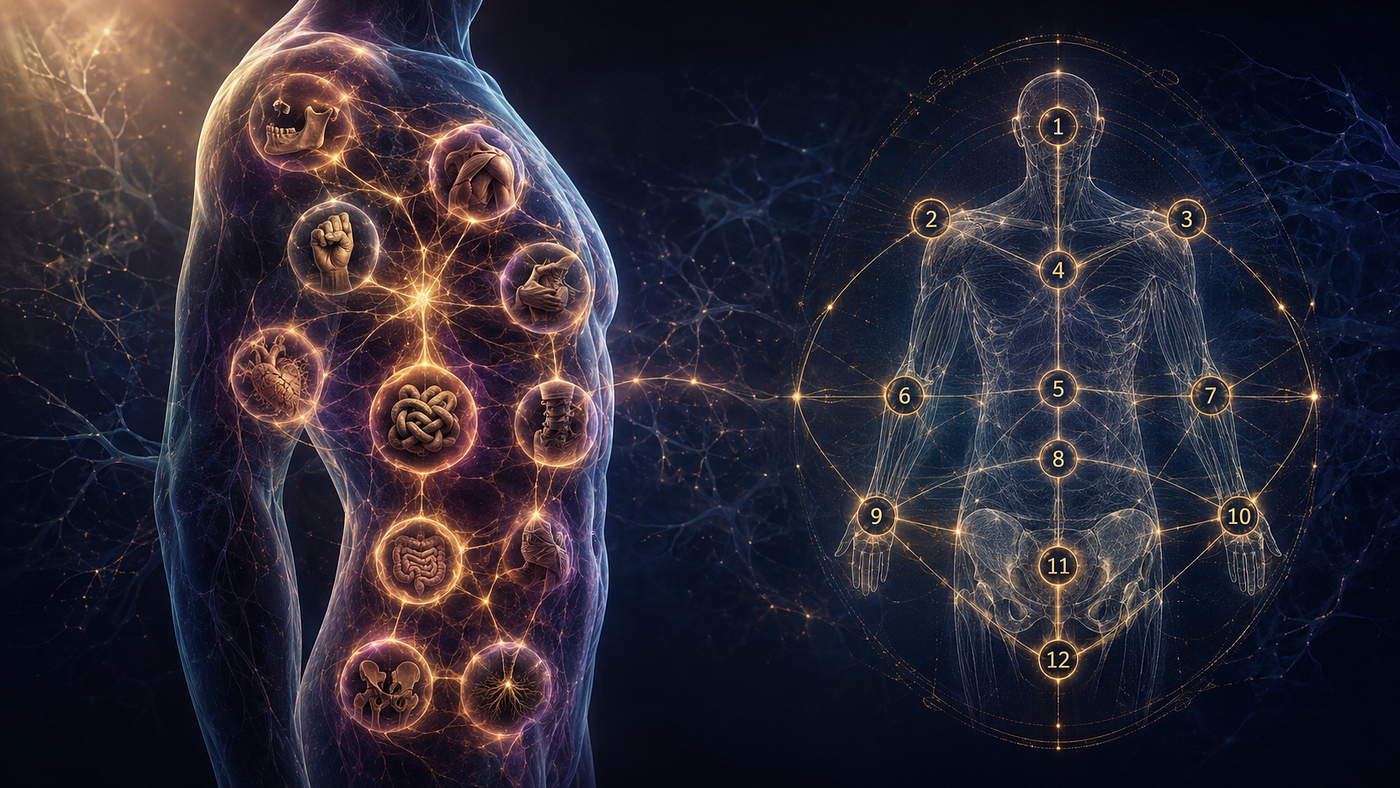
This image is generated via GPT-2.
The Midnight Archive
At 3:17 AM, her body jolted awake with panic she could not name. Her rational mind searched for threats: work stress, relationship issues, nothing. Yet her nervous system was screaming danger in a language her conscious mind could not understand.
This was the precise moment I knew I had to write this article.
Narcissistic abuse does not simply hurt you emotionally. It rewires you at the cellular level. Every manipulation, every gaslighting episode, and every moment of walking on eggshells leaves an encoded signature not merely in your brain but in your muscles, organs, fascia, and connective tissue. Research increasingly demonstrates that traumatic memories are stored across multiple body systems — not just the brain.
The following twelve cellular storage patterns represent the Tissue Memory Mapping Protocol: a systematic, science-backed framework for identifying precisely where narcissistic abuse lives in your body and how to safely release it. This is not metaphorical healing. This is biological reclamation.
This article is built for that paradigm. Every section serves a dual purpose: delivering actionable somatic intelligence while honoring the lived experience of survivors. Let us begin.
Introduction: The Biological Arithmetic of Betrayal
When Bessel van der Kolk published The Body Keeps the Score in 2014, he demonstrated that trauma literally reshapes both body and brain, compromising capacities for pleasure, engagement, self-control, and trust. Over a decade later, neuroscience has only deepened this picture. The terror and isolation at the core of trauma are not merely psychological; they are physiological archives written into our most fundamental biological systems.
Narcissistic abuse constitutes a unique form of complex trauma. Unlike acute, single-incident trauma, relational abuse involving a narcissistic individual is chronic and insidious. The victim’s nervous system remains constantly heightened, leading to panic attacks, hypervigilance, and the full symptom constellation of C-PTSD. The abuser’s tactics — love-bombing alternating with devaluation, gaslighting that erodes reality testing, and DARVO (Deny, Attack, Reverse Victim and Offender) to evade accountability — create a neurological imprint distinct from other forms of interpersonal harm.
What follows is the Tissue Memory Mapping Protocol: twelve distinct cellular patterns through which narcissistic abuse encodes itself into human biology. Each pattern includes the scientific mechanism, the embodied manifestation, and the somatic intervention pathway.
Pattern One: The Hypervigilant Fascial Web
The Science: Research demonstrates that trauma is stored in the body, particularly in the fascia, a network of connective tissue that holds emotional and physical stress. Fascia does not merely envelop muscles; it is richly innervated and responsive to emotional states. Chemical substances released during emotional trauma alter the collagen structure into a specific shape known as an “emotional scar”. This creates a tensional memory — a physical record of threat that persists long after the threat itself has ended.
The Manifestation: After prolonged narcissistic abuse, survivors often report a pervasive sense of full-body tension that never fully releases. The shoulders remain raised toward the ears. The jaw stays clenched even during sleep. The body appears to be bracing for an impact that never comes. This is not anxiety in the conventional sense; it is the fascial system holding a defensive posture that once served to protect but now functions as chronic activation.
Research from Soma Rising describes this as the body’s attempt to stay “ready” — hypervigilance becomes a full-body habit, with chronic sympathetic activation fueling cortisol surges that lock these changes into place.
The Protocol: Targeted myofascial release combined with diaphragmatic breathing. When pressure is applied to trigger points in the upper trapezius and suboccipital muscles, survivors often experience spontaneous emotional release. This is not dangerous; it is the fascia literally letting go of stored threat. The key is working within the window of tolerance — never forcing, always titrating.
Pattern Two: The Gut-Brain Betrayal Axis
The Science: The gut-brain axis represents one of the most direct bidirectional communication pathways in human physiology. The vagus nerve, the primary parasympathetic highway, connects the enteric nervous system (often called the “second brain”) directly to the brainstem. Under chronic relational threat, this pathway becomes dysregulated.
Narcissistic abuse leaves a distinct somatic footprint that includes IBS and gut distress, chronic pain without clear injury, and bone-deep fatigue. Research indicates that pathological narcissism contributes to somatic symptoms through increased hypervigilance to physical sensations, which in turn influences perceptions of somatic distress. The gut becomes hyper-responsive, interpreting neutral stimuli as threats.
The Manifestation: The survivor experiences digestive distress that appears to have no organic cause. Bloating, constipation, diarrhea, or nausea worsens during interpersonal conflict or even the anticipation of contact with the narcissistic individual. The gut “knows” what the mind has been gaslit to doubt.
One survivor described it precisely: “My stomach would seize up the moment I saw her name on my phone screen. By the time I answered, I was already nauseous. My mind told me I was overreacting. My gut told me the truth.”
The Protocol: Vagus nerve toning exercises — humming, gargling, cold exposure to the face, and slow diaphragmatic breathing — can restore parasympathetic regulation. Simultaneously, survivors must learn to trust gut signals rather than override them with the cognitive doubt instilled by gaslighting. The body is not the enemy; the body is the witness.
Pattern Three: The Neuroinflammatory Brain Fog
The Science: Chronic psychological trauma triggers neuroinflammation. Studies have demonstrated a close relationship between PTSD and neuroinflammation, involving the activation of microglia and astrocytes and changes in inflammatory markers. The brain’s immune cells become chronically activated, creating a state of low-grade inflammation that impairs cognitive function.
The Manifestation: Survivors of narcissistic abuse frequently report a phenomenon colloquially called “brain fog” — difficulty concentrating, memory lapses, word-finding difficulties, and a sense of cognitive slowness. This is not a character flaw or a sign of diminished intelligence. It is the neuroinflammatory consequence of prolonged threat exposure.
The transcriptomic signatures of psychological trauma reveal that cortical regions are particularly vulnerable to adulthood trauma. The brain regions responsible for executive function, planning, and working memory become metabolically compromised.
The Protocol: Anti-inflammatory lifestyle interventions — omega-3 fatty acids, curcumin, regular sleep, and moderate exercise — support cognitive recovery. Crucially, survivors must practice self-compassion regarding cognitive symptoms. These are not signs of permanent damage but manifestations of an inflamed system in need of restoration.
Pattern Four: The Dorsal Vagal Freeze Response
The Science: Stephen Porges’s Polyvagal Theory describes three primary nervous system states: ventral vagal (safety and social engagement), sympathetic (fight-or-flight), and dorsal vagal (freeze and shutdown). Narcissistic abuse, characterized by unpredictable punishment and the impossibility of satisfying the abuser’s demands, often drives the nervous system into dorsal vagal collapse.
The Manifestation: The survivor experiences episodes of dissociation, numbness, or a feeling of “leaving the body.” During conflict or perceived threat, the mind may go blank, speech may become difficult, and the body may feel heavy or immobile. This is not weakness; it is an ancient survival response inherited from our evolutionary past, when playing dead was a viable strategy against predators.
Relational trauma of this kind cannot be processed into a coherent narrative. When the nervous system is overwhelmed — particularly when that overwhelm happens within attachment relationships — the experience often cannot be encoded as ordinary memory. Instead, it remains as a somatic imprint.
The Protocol: Pendulation — gently moving between resourcing (safety) and small doses of activation — allows the nervous system to learn that returning to regulation is possible. Small, orienting movements of the head and eyes can signal safety to the brainstem. The goal is not to eliminate the freeze response but to expand the survivor’s capacity to recognize it and return from it.
Pattern Five: The Shoulder Armor of Emotional Suppression
The Science: The upper trapezius muscles attach directly to the skull and cervical spine. Under chronic stress, these muscles contract reflexively, elevating the shoulders toward the ears. This pattern becomes fixed when the emotional content associated with the threat cannot be expressed.
The Manifestation: Survivors report chronic tension in the neck and shoulders, often accompanied by tension headaches originating at the base of the skull. The physical posture resembles someone constantly flinching or bracing. This is particularly common among survivors who learned that emotional expression was dangerous — that tears invited mockery, that anger invited rage, that asking for help invited humiliation.
As one therapist notes, survivors frequently overthink every interaction and analyze past events to figure out “what really happened,” spending hours researching psychological concepts while ignoring the wisdom their bodies hold. The intellectual processing becomes a way to avoid feeling the difficult emotions stored in the shoulders.
The Protocol: Gentle shoulder rolls, progressive muscle relaxation, and supported stretching of the upper trapezius can begin to release this armor. The deeper intervention involves allowing the suppressed emotions — often grief or rage — to surface in a safe context. The shoulders will not fully release until the heart feels permission to feel.
Pattern Six: The Pelvic Floor Lockbox of Unspeakable Boundaries
The Science: The pelvic floor musculature is intimately connected to the autonomic nervous system and the emotional centers of the brain. Chronic threat, particularly threat involving boundary violations (including emotional enmeshment, covert incest, or physical boundary violations), often locks tension into this region.
The Manifestation: Survivors report pelvic pain, unexplained hip tension, difficulty with sexual function, or a sense of “holding” in the lower abdomen that does not respond to stretching. The body has learned to constrict as a form of protection — tightening the core to prevent further intrusion. This is particularly pronounced in survivors of narcissistic parents who experienced no physical privacy, no emotional boundaries, and no right to say no.
Research on childhood emotional abuse demonstrates that self-hate significantly mediates the link between emotional abuse and somatic symptoms. The body internalizes the abuse as a statement about the self’s worth, and that shame locks into the body’s deepest structural layers.
The Protocol: Pelvic floor physical therapy combined with trauma-informed bodywork can release chronic tension. Equally important is the survivor’s learning to set and enforce boundaries in present-day relationships. The pelvis will not release until the psyche knows, with certainty, that “no” is a complete sentence.
Pattern Seven: The Temporal Mandibular Joint (TMJ) Archive of Swallowed Speech
The Science: The jaw muscles (masseter, temporalis, and medial pterygoid) are among the most powerful in the human body. They are also exquisitely sensitive to emotional states. Suppressed speech — words that were too dangerous to say, truths that would have provoked retaliation — often encodes as chronic jaw tension.
The Manifestation: Survivors report jaw clenching (often nocturnal bruxism), teeth grinding, pain in the temporomandibular joint, and even cracked teeth from the force of clenching. The jaw may click or lock. The facial muscles may feel perpetually tight. The body is literally biting down on words that could not be spoken.
This is the physical correlate of gaslighting. When the survivor’s reality is consistently denied, when every perception is challenged and every feeling invalidated, the throat and jaw become a prison for truth.
The Protocol: Gentle jaw massage, intraoral myofascial release (performed by a qualified practitioner), and awareness of daytime clenching patterns can reduce physical symptoms. The deeper intervention involves giving the survivor permission to speak. Journaling, voice recording, or speaking truth to a trusted witness begins to unlock the jaw’s archive.
Pattern Eight: The Intergenerational Methylation Legacy
The Science: This is perhaps the most profound — and sobering — of the twelve patterns. Epigenetic research demonstrates that trauma exposure alters DNA methylation patterns, affecting gene expression without changing the DNA sequence itself. These environmentally acquired modifications may be transmitted through germline cells across generations.
Genes implicated in the hypothalamic–pituitary–adrenal (HPA) axis, the body’s central stress response system, show altered methylation following trauma exposure. The stress response itself becomes epigenetically programmed, affecting not only the survivor but potentially their offspring.
The Manifestation: The survivor experiences a stress response that appears disproportionate to current circumstances. Their nervous system reacts to mild stressors as if they were life-threatening. They may notice that their children exhibit similar hyperarousal patterns without having experienced overt trauma. The body has inherited a biological memory of threat that precedes conscious memory.
The Protocol: The emerging field of epigenetic interventions is still developing, but research suggests that appropriate psychosocial and behavioral interventions may reverse some of these epigenetic marks. Mindfulness practices, secure attachment relationships, and trauma-focused therapy have been shown to alter epigenetic profiles. The survivor is not doomed by their inheritance; they are the generation that can choose to rewrite it.
Pattern Nine: The Low Back Burden of Carried Responsibility
The Science: The lumbar spine and associated erector spinae muscles are designed to support the body’s weight. However, they are also susceptible to chronic contraction under conditions of excessive burden. Narcissistic abuse frequently involves parentification — the child becomes responsible for the parent’s emotional regulation, or the adult partner becomes responsible for managing the narcissist’s moods, reputation, and crises.
The Manifestation: Survivors report chronic lower back pain that worsens during periods of interpersonal stress. The pain may shift from side to side without clear organic cause. Standard treatments (stretching, strengthening, and chiropractic) provide only temporary relief because the root cause is not structural but relational.
The body is carrying a load that was never meant to be carried. The low back “knows” that the survivor has been bearing the weight of another person’s emotional life, and it is exhausted.
The Protocol: Gentle spinal mobilization combined with the psychological work of releasing responsibility for the narcissist’s feelings. The survivor must learn, at a somatic level, that they are not required to manage anyone else’s emotional state. Sighing — a full, audible exhalation — can begin to release the braced quality of the low back.
Pattern Ten: The Chest Wall Contracture of Stifled Grief
The Science: The intercostal muscles (between the ribs) and the pectoral muscles (across the chest) are involved in both breathing and emotional expression. Grief that cannot be expressed — tears that were punished, sorrow that was mocked, loss that was never acknowledged — often contracts these muscles, restricting the ribcage’s expansion.
The Manifestation: Survivors report a sensation of “heaviness” in the chest, difficulty taking a full breath, or a sense that there is a weight pressing down on the sternum. The breathing pattern becomes shallow and thoracic rather than diaphragmatic. The heart feels “closed” or “protected.”
Research on women survivors of violence documents significant long-term consequences, including depression and affective difficulties. The chest does not simply house the heart; it is the physical territory of emotional openness and vulnerability.
The Protocol: Supported chest opening — lying on a rolled towel placed along the spine, gentle pectoral stretching, and undulating breathing patterns — can begin to restore rib mobility. The deeper work involves giving the survivor permission to grieve. Not to “get over it,” not to “move on,” but to feel the full weight of what was lost and to let that grief move through the body rather than being locked inside it.
Pattern Eleven: The Sympathetic Overdrive Insomnia Loop
The Science: The sympathetic nervous system (fight-or-flight) and parasympathetic nervous system (rest-and-digest) are designed to alternate. Chronic narcissistic abuse keeps the sympathetic branch chronically activated. The body releases cortisol and adrenaline on a loop, and sleep becomes a nightly replay of threat.
The Manifestation: The survivor experiences difficulty falling asleep (racing thoughts, physical tension), frequent nighttime awakenings, or early-morning awakenings with a surge of anxiety. Sleep is not restorative. Dreams may be vivid, frightening, or involve themes of being pursued or trapped. The body cannot “turn off” because the nervous system has learned that safety is not assured.
The connection between narcissistic pathology and somatic symptom severity includes sleep disruption as a primary complaint. Research specific to women survivors of interpersonal violence emphasizes insomnia as a core post-traumatic symptom.
The Protocol: Sleep hygiene alone is insufficient. The intervention must target the nervous system directly: progressive muscle relaxation before bed, body scanning, and the use of weighted blankets to provide proprioceptive input. Evening routines that explicitly signal safety (warm baths, dim lighting, slow movement) can begin to retrain the circadian stress response. Melatonin and magnesium may support the process, but the core work is nervous system re-regulation.
Pattern Twelve: The Phantom Pain of Erased Identity
The Science: Phantom limb pain occurs when the brain continues to receive signals from a limb that is no longer present. A parallel phenomenon occurs in narcissistic abuse: the survivor’s sense of self — their preferences, opinions, desires, and boundaries — has been systematically erased or overwritten by the narcissist’s projection. The body continues to signal the presence of a self that the mind has been conditioned to doubt.
The Manifestation: The survivor experiences a diffuse, hard-to-localize sense of bodily discomfort or “wrongness.” They may look in the mirror and not recognize the person looking back. They may feel disconnected from their own preferences, unable to answer simple questions like “What do you want for dinner?” without anxiety. The body knows that something is missing, but the mind cannot name it.
One survivor described it this way: “I felt like a ghost in my own body. I could see my hands, but they didn’t feel like they belonged to me. The narcissist had spent years telling me who I was, what I thought, what I felt. I had no idea who I actually was anymore.”
The Protocol: Rebuilding somatic self-knowledge begins with small choices. What temperature does this room feel? Which foot feels heavier? Is this sensation pleasant or unpleasant? Incremental, low-stakes questions that require the survivor to consult their body rather than their mind. Over time, the body begins to remember that it has a voice, and that voice matters.
Integrating the Protocol: From Mapping to Mastery
The twelve patterns described above are not diagnoses; they are maps. Each survivor of narcissistic abuse will have a unique constellation of somatic storage locations based on the specific nature of their abuse, their developmental stage at the time of abuse, their genetic vulnerability, and their access to resources.
Healing does not require the survivor to relive trauma. It invites the body back into safety. This is the fundamental insight of somatic trauma work: the body does not need to be forced or fixed; it needs to be listened to.
Dr. Meg Haworth’s Whole Person Integration Technique emphasizes gently identifying where emotions are held in the body, observing feelings instead of being consumed by them, and understanding the story and core belief attached to those sensations before releasing what has become toxic and replacing it with regulating qualities like calm, compassion, and self-love.
The body is a laboratory for healing, not a crime scene to be excavated. When the body feels safer, emotional healing accelerates.
The Clinical Frontier: What Research Tells Us About Recovery
The scientific literature on narcissistic abuse and somatic symptoms is growing rapidly. A 2018 study of 248 adults found that pathological narcissism contributes to somatic symptoms through increased hypervigilance to physical sensations, with somatosensory amplification (the tendency to experience physical sensations as intense and distressing) serving as the mediating mechanism.
A 2016 study of 95 psychiatric outpatients found that somatic symptoms were positively associated with narcissistic dysfunction, though the patterns differed by gender: somatic symptoms in women were associated with narcissistic vulnerability, while in men they were associated with narcissistic grandiosity.
A 2025 study examining childhood emotional abuse found that self-hate significantly mediated the link between emotional abuse and somatic symptoms, highlighting the role of internalized shame in maintaining physical symptomatology.
These findings converge on a critical clinical insight: somatic symptoms following narcissistic abuse are not “all in your head” in the dismissive sense. They are real, measurable biological phenomena driven by identifiable mechanisms. And because they are biological, they are treatable.
The Role of Self-Compassion in Somatic Healing
Perhaps the most overlooked variable in the Tissue Memory Mapping Protocol is the survivor’s relationship with themselves. Shame is the glue that locks somatic patterns into place. The survivor who believes they “deserved” the abuse or is “too sensitive” will struggle to release physical tension because the tension is serving as confirmation of that belief.
Self-compassion is not indulgence; it is a neurological intervention. Research on the mediating role of shame in somatic symptoms suggests that reducing self-directed hostility is a prerequisite for full recovery. Survivors must learn to speak to their bodies the way they would speak to a beloved friend who had been harmed: with patience, with gentleness, and with unwavering support.
When to Seek Professional Support
The Tissue Memory Mapping Protocol is a framework for self-understanding, not a substitute for professional care. Somatic Experiencing, EMDR, Sensorimotor Psychotherapy, and trauma-informed bodywork are evidence-based approaches that can safely guide survivors through the release of stored trauma. A qualified practitioner can help titrate the release process, ensuring that survivors do not become overwhelmed by the material that emerges.
Warning signs that professional support is needed include dissociative episodes that interfere with daily functioning, self-harm or suicidal ideation, substance use as a coping mechanism, and physical symptoms that are severe enough to impair mobility or quality of life.
The Path Forward: Your Body as Witness
Narcissistic abuse is designed to make you doubt yourself. The gaslighting, the projection, the constant reality negotiation — all of it serves to sever your connection to your own interior world. But your body has been keeping score all along.
The tension in your shoulders is not random. The knot in your stomach is not “anxiety” in the vague, dismissive sense. The heaviness in your chest is not just stress. These are specific, encoded messages from a body that refused to forget what your mind was forced to deny.
Healing does not require you to become someone new. It requires you to remember who you were before the conditioning — and to let your body lead the way back.
The Tissue Memory Mapping Protocol is not about eliminating every uncomfortable sensation. It is about learning to read the language your body has been speaking all along. The jaw clenching is swallowed truth. The low back tension is carried responsibility. The chest tightness is stifled grief. When you learn to decode these signals, you transform from a victim of your body into an ally of your body.
Your body is not broken. It is a meticulous archivist. And now, for the first time, you hold the key to its archive.
메타데이터
- post_id
- e573d2d2df0e
- slug
- the-body-keeps-the-score-12-cellular-storage-patterns-from-narcissistic-abuse-trauma-the-tissue-e573d2d2df0e
- url
- https://medium.com/@ahmedhashir816_67454/the-body-keeps-the-score-12-cellular-storage-patterns-from-narcissistic-abuse-trauma-the-tissue-e573d2d2df0e
- canonical_url
- https://medium.com/@ahmedhashir816_67454/the-body-keeps-the-score-12-cellular-storage-patterns-from-narcissistic-abuse-trauma-the-tissue-e573d2d2df0e
- author_url
- https://medium.com/@ahmedhashir816_67454
- status
- ok
- fetched_at
- 2026-06-16 19:09:56