How Attention Span is Changing Content Creation
Human attention spans are apparently collapsing. Every week, someone dramatically announces that modern brains can no longer focus for more…
How Attention Span is Changing Content Creation
Human attention spans are apparently collapsing. Every week, someone dramatically announces that modern brains can no longer focus for more than eight seconds, which is impressive considering people still spend entire nights watching conspiracy theories narrated by men sitting in dark rooms with LED lights behind them.
Clearly, the issue is not attention itself. The issue is whether something feels worth paying attention to.
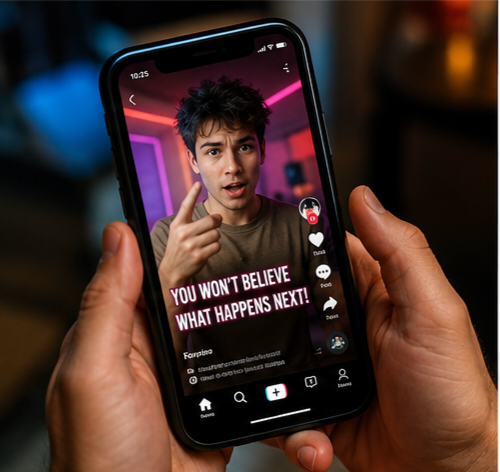
The internet has transformed content creation into a survival game where every creator is fighting for a few precious seconds before audiences scroll away toward a dancing dog, a celebrity scandal, or a stranger crying on a podcast. Earlier, content could afford patience. Videos had slow introductions. Articles built context gradually. Films trusted silence. Now silence itself feels unemployed. If a creator fails to grab attention immediately, the algorithm quietly buries the content beneath millions of others begging to be noticed.
This is exactly why modern content begins so aggressively. Every reel opens like it contains classified government secrets. “You need to hear this.” “Nobody talks about this.” “This changes everything.” Meanwhile, it is usually someone explaining how waking up at 5 a.m. cured all their emotional problems and apparently repaired the economy. Hooks are no longer creative choices. They are survival instincts developed after years of being emotionally attacked by algorithms.

Short-form content made this even worse. Platforms like Instagram Reels, TikTok, and YouTube Shorts trained audiences to consume information in tiny, rapid bursts. Fast edits. Loud music. Constant captions. Sudden zoom-ins. Creators now edit videos as if viewers will physically evaporate if the screen remains still for longer than three seconds. Even educational content behaves this way. A history lesson no longer begins with context or discussion. It begins with dramatic music and a sentence like, “This one decision destroyed the entire world.”
Apparently every topic now requires the energy of a movie trailer.

Writing has changed too. Articles are shorter. Paragraphs are smaller. Headlines sound increasingly dramatic because creators know people respond faster to emotion than logic. Outrage spreads faster than nuance. Fear performs better than balance. Which explains why the internet constantly behaves like civilization is ending every Thursday afternoon. Modern creators are not just writing for readers anymore. They are writing for distracted people scrolling during lunch breaks while simultaneously replying to messages and watching another video in the corner of the screen.
The funniest part is that long-form content is still thriving. People happily watch three-hour podcasts, read long novels, and binge detailed video essays analyzing fictional characters with the seriousness of political debates. So attention spans are clearly not disappearing.

Audiences simply became extremely selective. They stay when content feels engaging and leave the second it feels repetitive, shallow, or slow.
And honestly, creators adapted exactly how the internet trained them to. Algorithms reward retention over depth. Platforms reward stimulation over subtlety. Storytelling alone is no longer enough. Now it needs dramatic pacing, emotional hooks, subtitles, trending audio, and a thumbnail where somebody looks deeply traumatized beside a giant red arrow.

Human creativity truly reached extraordinary heights. We evolved from ancient storytelling traditions to fighting for survival against a teenager scrolling at the speed of light while eating instant noodles.
메타데이터
- post_id
- e588d25acfe0
- slug
- how-attention-span-is-changing-content-creation-e588d25acfe0
- url
- https://hanomatimes.com/how-attention-span-is-changing-content-creation-e588d25acfe0
- canonical_url
- https://hanomatimes.com/how-attention-span-is-changing-content-creation-e588d25acfe0
- author_url
- https://medium.com/@srishtihanomatimes
- status
- ok
- fetched_at
- 2026-06-09 15:37:30