Caffeine-Free Herbal Infusion: The Ultimate Nighttime Drink for Deep Sleep & Calm Evenings
Most people trying to sleep better already know the obvious advice: no screens before bed, keep the room cool, stick to a schedule. What…
Caffeine-Free Herbal Infusion: The Ultimate Nighttime Drink for Deep Sleep & Calm Evenings
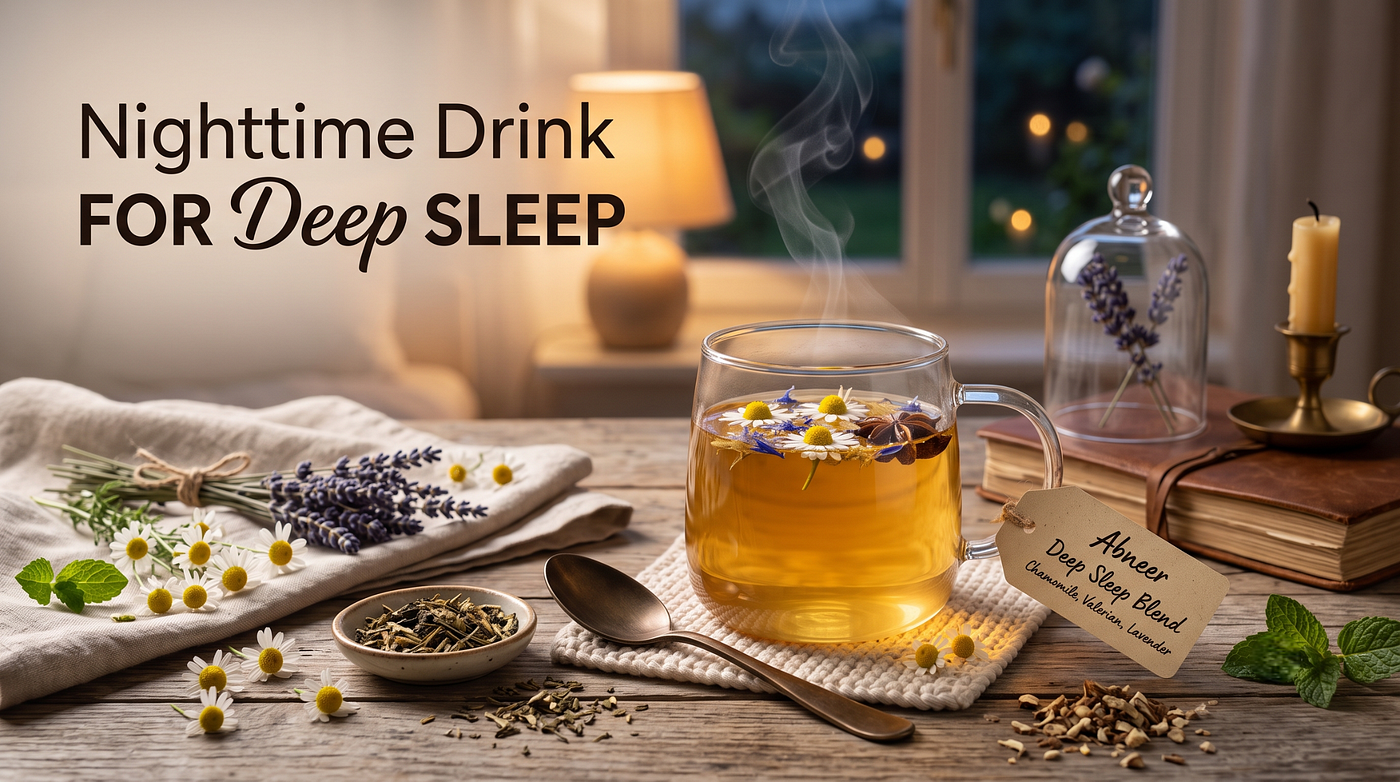
Most people trying to sleep better already know the obvious advice: no screens before bed, keep the room cool, stick to a schedule. What gets overlooked is what is actually in the cup during that last hour of the evening. A caffeine free herbal infusion is one of the simplest, most overlooked pieces of a wind-down routine — not because it is a sedative, but because it replaces a habit that might otherwise be working against sleep without anyone noticing.
This guide walks through why caffeine-free infusions matter for evening routines, which botanicals are genuinely associated with calm and rest, how to brew them properly, and how to build a simple nighttime ritual around them. As with anything wellness-related, we will stick to what is actually known rather than overselling what a cup of tea can do.
Why “Caffeine-Free” Matters More Than People Realise
Caffeine has a longer half-life than most people assume — roughly 5 to 6 hours in a typical adult, though this varies by individual metabolism. That means a cup of chai or coffee at 5pm can still have a meaningful amount of caffeine circulating in the body at 11pm. Many people who struggle to fall asleep never connect the dots back to an afternoon drink, simply because the drink itself did not feel like “the reason.”
This is exactly where a genuine herbal infusion without caffeine earns its place. Herbal infusions are not brewed from the Camellia sinensis plant at all — no black tea, no green tea, no matcha — so there is no caffeine content to worry about in the first place, regardless of how long or dark the brew is steeped. Switching the evening drink to something naturally caffeine-free removes one variable that quietly works against good sleep, without requiring anyone to give up the ritual of a warm drink before bed.
What Actually Happens When You Swap Your Evening Drink
The change is rarely dramatic on the first night. Most people who make the switch describe a gradual shift over one to two weeks — falling asleep slightly faster, waking less during the night, or simply feeling less “wired” in the hour before bed. This lines up with what would be expected physiologically: removing a stimulant from the evening routine, rather than adding anything sedative, is usually enough to make a measurable difference for people who were unknowingly consuming caffeine too late in the day.
It is worth being honest about limits here too. A herbal infusion is not a sleep medication, and it will not override poor sleep hygiene, high stress, or an underlying sleep disorder. If sleep difficulties are persistent or severe, that is a conversation for a doctor, not a tea blend. What a **sleep support herbal infusion** realistically offers is a small, supportive piece of a broader wind-down routine.
Botanicals Commonly Associated With Calm and Rest
Chamomile
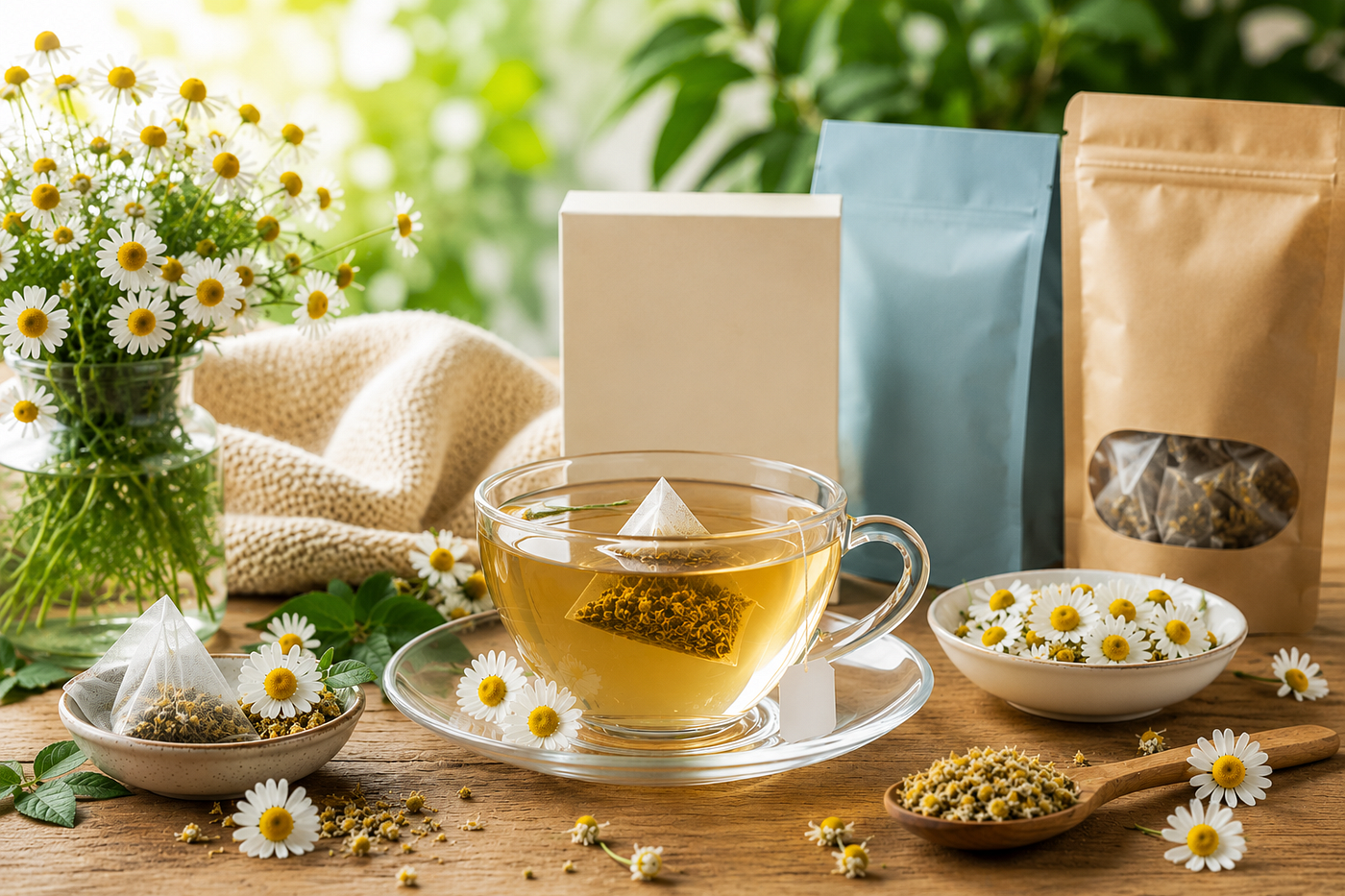
Chamomile is probably the most widely recognised evening botanical in the world, and for good reason. A **chamomile herbal infusion** has a long history of use as a mild, calming evening drink, with a gentle apple-like flavour that most people find pleasant even without sweetener. Chamomile flowers contain apigenin, a naturally occurring compound that has been studied for its mild calming properties, though it is worth noting that research on tea-strength doses in humans is still developing rather than conclusive.
Lavender
Lavender is more commonly associated with aromatherapy, but dried lavender buds are also used in infusions, usually blended with chamomile or lemon balm to soften lavender’s fairly strong floral flavour on its own. The scent alone, released during steeping, is often part of what people find calming about a lavender-based evening drink.
Lemon Balm
A member of the mint family, lemon balm has a light, citrusy flavour and has traditionally been used in the evening for its mild calming reputation. It blends particularly well with chamomile, and the two together are a common pairing in nighttime herbal infusion blends.
Ashwagandha
Increasingly common in Indian wellness blends, ashwagandha root has a long history in Ayurvedic tradition, typically associated with the body’s response to stress. It has a distinctly earthy, slightly bitter flavour, which is why it is usually blended with milder botanicals like chamomile or a touch of natural sweetness rather than brewed alone.
Tulsi (Holy Basil)
Tulsi holds a particularly familiar place in Indian households, often grown at home and used in everyday routines well before “wellness tea” became a retail category. A digestive herbal infusion featuring tulsi is often reached for after dinner, both for its familiar peppery-sweet flavour and its traditional association with calm.
Valerian Root
Valerian is one of the more studied botanicals for sleep support, though it has a notably strong, earthy aroma that some people find off-putting on its own. It is more commonly found in small proportions within a blended nighttime infusion rather than as a standalone brew.
How to Brew a Nighttime Herbal Infusion Properly
Brewing a calming evening infusion is straightforward, but a few details affect both flavour and how much of the plant’s character actually makes it into the cup.
What You Will Need
- 1–2 teaspoons of loose chamomile, or a blended nighttime herbal infusion bag
- 200–250ml water, just off the boil
- Optional: a small spoon of honey, a slice of lemon
Step-by-Step Method
- Boil the water, then let it settle briefly. Around 90–95°C is ideal for most delicate flowers; water straight off a rolling boil can scald chamomile and mute its flavour.
- Steep for 5–7 minutes. Floral and herbal blends generally need a longer steep than green or black tea to fully release their flavour and aroma.
- Cover the cup while steeping. This traps the volatile aromatic oils that would otherwise escape as steam, particularly important for lavender and lemon balm.
- Strain and serve. A short strain right before drinking keeps the flavour from turning overly strong or slightly bitter.
- Sweeten lightly if needed. A small spoon of honey works well with chamomile and lavender blends, though the infusion is pleasant unsweetened too.
Timing the Cup Correctly
For an evening routine, timing matters almost as much as the ingredients. Drinking the infusion roughly 30 to 45 minutes before bed gives the body enough time to metabolise the fluid itself, reducing the chance of a middle-of-the-night bathroom trip interrupting sleep.
Building a Simple Nighttime Ritual Around Herbal Infusion
The physical act of brewing and drinking a warm infusion can become a cue to the body that the day is ending, independent of what is actually in the cup. This is a genuinely useful, low-effort addition to an evening routine.
- Set a consistent time. Brewing the infusion at roughly the same time each night helps reinforce it as a signal for winding down.
- Dim the lights while it steeps. Pairing the ritual with lower lighting reinforces the transition away from daytime alertness.
- Put devices away during the steep. Even five minutes without a screen, waiting for the infusion to brew, is a small but meaningful pause before bed.
- Keep the blend consistent. Rotating too many different blends can dilute the “cue” effect of the ritual — sticking with one or two go-to nighttime blends tends to work better than a different one every night.
What to Look for in a Sleep-Focused Herbal Infusion
Not every product labelled “nighttime tea” is actually built around genuinely calming botanicals. A few checks help separate a well-formulated blend from a marketing label.
- Genuinely caffeine-free ingredients only. Some “relaxing” blends still include small amounts of green or white tea for flavour — always check the ingredient list, not just the front-of-pack name.
- Recognisable, whole botanicals. Chamomile flowers, lavender buds, lemon balm leaves — visible, identifiable plant material rather than fine powder or unnamed “herbal extract.”
- No added stimulants disguised as “energy support.” A nighttime blend should not include guarana, yerba mate, or similar caffeine-containing additions.
- Reasonable, non-medical claims. Be cautious of any blend promising to “cure insomnia” or eliminate anxiety outright — a herbal infusion supports a routine, it does not replace medical care.
A Note on Anxiety and Herbal Infusions
It is worth being direct here, because this is an area where wellness marketing often overreaches. Botanicals like chamomile, lemon balm, and ashwagandha have a long traditional history of use for calm, and some have limited clinical research suggesting mild supportive effects. But none of them are a treatment for a diagnosed anxiety disorder, and a herbal infusion should never be used as a substitute for professional support if anxiety is significantly affecting daily life. If that describes your situation, a conversation with a doctor or therapist is the right next step — a cup of tea can be part of a calming evening, but it cannot do that work.
Herbal Infusion vs. Sleep Medication: A Different Category Entirely
It is worth clarifying this distinction plainly, since the two sometimes get lumped together in casual conversation. Sleep medications work through direct pharmacological action and are prescribed to address specific, often short-term sleep problems under medical guidance. A relaxing herbal infusion works differently — through routine, warmth, and the gentle, well-established traditional use of specific botanicals. It is not designed to replace medication when medication is genuinely needed, and it is not marketed here as one. Its real value is as a low-risk, non-habit-forming addition to a wind-down routine for people whose sleep difficulties are more about racing thoughts, screen habits, or late caffeine than anything requiring clinical treatment.
Choosing a Trustworthy Brand for Nighttime Blends
Because sleep and calm are emotionally loaded topics, this is a category where ingredient honesty matters even more than usual. A trustworthy brand will tell you exactly what is in a nighttime blend, in what proportion, and will not lean on vague terms like “calm complex” or “sleep formula” without listing the actual botanicals behind them.
This is the standard behind the Sage & Soul Wellness Tea range — whole, named botanicals, clear labelling, and no unnamed “proprietary blends” hiding what is actually in the cup. If you are building an evening routine around a caffeine free herbal infusion, knowing exactly what you are drinking is as important as the drink itself.
For anyone just starting to explore this category, **Sage & Soul Herbal Infusion** blends are a reasonable starting point precisely because they avoid overstated claims — the goal is a genuinely pleasant, honestly labelled evening cup, not a promise the tea cannot keep.
The Science Behind “Wind-Down” Drinks: What Is Actually Happening
It helps to understand, in plain terms, why a warm drink before bed feels calming at all, separate from whatever botanicals are in the cup. Body temperature naturally drops slightly as part of the body’s preparation for sleep. Drinking something warm causes a brief rise in skin temperature, followed by a slightly faster cooling response afterward — a small physiological nudge in the same direction the body is already trying to go. This is part of why warm drinks in general, caffeine-free or not, are associated with easier sleep onset, and it is a useful piece of context for understanding why the ritual itself carries real weight, not just the ingredients inside it.
Layered on top of that simple thermal effect is the behavioural side: consistent, repeated actions before bed act as cues that tell the nervous system a transition is happening. This is the same principle behind reading a physical book before sleep, or dimming lights an hour before bedtime. A **relaxing herbal infusion** ritual works partly through this same mechanism — repetition and association, not any single active compound doing all the work.
Comparing Common Nighttime Botanicals Side by Side
For anyone deciding which botanical to start with, a quick side-by-side comparison is often more useful than reading about each one individually.
Flavour Profile
- Chamomile: mild, faintly sweet, apple-like — the easiest entry point for most people
- Lavender: strongly floral, best blended rather than brewed alone
- Lemon balm: light, citrusy, mint-family freshness
- Ashwagandha: earthy and slightly bitter, benefits from blending
- Tulsi: peppery-sweet, familiar to most Indian households
- Valerian root: strong, distinctly earthy aroma, typically used in small proportions
Best Suited For
- First-time herbal infusion drinkers: chamomile or a chamomile-lemon balm blend
- Those who enjoy a stronger, traditional flavour: tulsi
- Those specifically drawn to Ayurvedic botanicals: ashwagandha, usually blended
- Aromatherapy-minded drinkers: lavender, ideally in a light blend
There is no single “correct” choice here — the right botanical is largely a matter of personal taste, since all of the options above share the same basic caffeine-free foundation.
Herbal Infusion for Digestion and Its Link to Sleep
An often-overlooked piece of the sleep puzzle is digestion. Going to bed shortly after a heavy meal, or with mild digestive discomfort, can interfere with settling into sleep even when everything else about the routine is right. This is part of why a digestive herbal infusion — peppermint, ginger, or fennel, for example — is often recommended after dinner rather than strictly at bedtime, giving the body a gap to properly digest before the more calming, chamomile-style blend takes over closer to sleep.
A simple two-step evening approach some people find useful: a lighter digestive infusion shortly after the evening meal, followed by a calming, chamomile-based blend around 30 to 45 minutes before bed. This separates the two functions rather than expecting one single cup to do both jobs at once.
Iced vs. Hot: Does Temperature Change the Calming Effect?
During warmer months, many people wonder whether a cold-brewed or iced version of a nighttime infusion still carries the same calming benefit. The botanical compounds themselves are largely unaffected by serving temperature — chamomile brewed and then chilled still contains the same plant compounds as one served hot. What does change is the ritual element discussed earlier: the warmth-driven physiological cue is specific to a hot drink, so an iced version may taste just as pleasant but will not carry quite the same body-temperature signal. For a genuine wind-down ritual, hot is generally the better choice, even if it takes slightly longer to prepare than pouring over ice.
How Herbal Infusion Fits Into Broader Sleep Hygiene
It would be misleading to present a herbal infusion as a standalone fix, so it is worth placing it in proper context alongside the other habits that actually drive good sleep. Sleep researchers generally point to a fairly consistent set of factors: a regular sleep and wake schedule, limited screen exposure in the hour before bed, a cool and dark room, and reduced caffeine and alcohol intake later in the day. A caffeine-free evening infusion touches two of these directly — it removes late-day caffeine if it replaces a caffeinated drink, and it can double as the “screen-free wind-down activity” that sleep hygiene guidance often recommends.
Where it does not help is with the structural factors — an irregular schedule, a too-warm bedroom, or heavy screen use right up until lights out. No infusion, however well formulated, compensates for those. The honest framing is that a nighttime herbal infusion is a supportive habit that works best layered on top of otherwise reasonable sleep hygiene, not a substitute for it.
Herbal Infusion for Different Life Stages
Students and Late Study Nights
Students juggling late study sessions often lean on caffeine well into the evening, which can create a cycle of poor sleep followed by more caffeine the next day to compensate. Swapping the final drink of the evening for a caffeine-free infusion, even while keeping caffeinated drinks earlier in the day, is a small adjustment that can help break that cycle without requiring a full overhaul of study habits.
Working Professionals
For anyone working long hours or irregular shifts, the evening wind-down window can be short and easily skipped altogether. A quick five-minute infusion ritual is realistic even on a busy night, and it does not require the room-darkening, phone-away discipline that other sleep hygiene advice sometimes demands.
Older Adults
Sleep patterns naturally shift with age, and many older adults are also managing medications where caffeine interactions matter more than they might have earlier in life. A caffeine-free infusion is a low-risk addition here too, though as with any group taking regular medication, checking with a doctor about specific botanicals like valerian or ashwagandha is a sensible precaution given potential interactions.
Reading Labels: Spotting an Overhyped “Sleep Tea”
The nighttime tea category has grown quickly, and with that growth has come a fair amount of exaggerated marketing. A few label red flags are worth watching for.
- Melatonin added directly to a tea. Melatonin is a hormone, not a herbal compound, and adding it to a beverage product blurs the line between a herbal infusion and a supplement — worth knowing so you can make an informed choice either way.
- Vague “proprietary sleep blend” labelling. If a brand will not name the actual botanicals and their approximate proportions, there is no way to know what you are actually drinking.
- Claims of guaranteed results. Phrases like “guaranteed deep sleep” or “eliminates anxiety” go well beyond what any herbal infusion can honestly promise.
- Excessive added sweeteners or flavourings. A truly botanical-forward blend should taste like the plants it contains, not primarily like added sugar or artificial flavour.
A more trustworthy approach is a brand that simply names its ingredients, explains their traditional use accurately, and lets the drinking experience speak for itself rather than leaning on bold promises.
Can I drink a caffeine-free herbal infusion alongside medication?
Many herbal infusions are safe alongside common medications, but some botanicals — valerian root and ashwagandha in particular — can interact with certain prescriptions, including blood thinners and sedatives. It is always worth checking with a doctor or pharmacist if you take regular medication.
What is the difference between a “sleep tea” and a regular chamomile herbal infusion?
A dedicated sleep tea is typically a deliberate blend of several calming botanicals — chamomile alongside lavender, lemon balm, or valerian — formulated specifically for an evening routine, while a plain chamomile infusion is simply the single botanical on its own. Both are caffeine-free; the blend is usually just a stronger, more layered version of the same idea.
Frequently Asked Questions
Can a caffeine-free herbal infusion actually help me sleep better?
It can support a wind-down routine and remove late-day caffeine from the equation, which is often an overlooked factor in poor sleep. It is not a sleep medication and will not resolve a diagnosed sleep disorder on its own.
What is the best herbal infusion for anxiety before bed?
Chamomile and lemon balm are the most commonly used botanicals for a calming evening routine, with a long traditional history of use. They are supportive, not a treatment for clinical anxiety, which should always be addressed with a professional if it is significantly affecting daily life.
Is chamomile herbal infusion safe to drink every night?
For most healthy adults, a chamomile herbal infusion is considered safe for regular use. Those who are pregnant, on blood-thinning medication, or allergic to ragweed-family plants should check with a doctor first, since chamomile is part of that plant family.
How long before bed should I drink a nighttime herbal infusion?
Around 30 to 45 minutes before bed is a reasonable window — enough time to enjoy the ritual and let the body process the fluid before sleep, without needing a bathroom trip partway through the night.
Does decaffeinated tea count as a caffeine-free herbal infusion?
No. Decaffeinated tea is still made from the tea plant and typically retains a small amount of residual caffeine. A true herbal infusion contains no tea leaf at all, making it genuinely caffeine-free.
A Simple Way to Start Tonight
If any of this feels like a lot to take in, the starting point is genuinely simple: pick one caffeine-free botanical, brew it about half an hour before bed, and keep the rest of the evening routine exactly as it already is. Notice how the next few nights feel before adding anything else — another blend, a darker room, an earlier phone cut-off. Small, single changes are easier to actually stick with than an entirely new routine attempted all at once, and a single cup of chamomile is about as low-risk a starting point as any wellness habit gets.
Final Thoughts
An evening wind-down routine does not need to be complicated to be effective. Swapping a late-day caffeinated drink for a genuine caffeine free herbal infusion — chamomile, lemon balm, tulsi, or a thoughtfully blended nighttime mix — removes one quiet obstacle to good sleep, while adding a small, calming ritual to the end of the day. It will not replace medical care where that is genuinely needed, but for the ordinary, everyday version of a restless evening, it is a simple, low-risk place to start.
Explore the full nighttime and wellness range at **Sage & Soul** — honestly labelled botanicals, brewed for calm, not hype.
메타데이터
- post_id
- e5ae64bfefa1
- slug
- caffeine-free-herbal-infusion-the-ultimate-nighttime-drink-for-deep-sleep-calm-evenings-e5ae64bfefa1
- url
- https://medium.com/@mysagensoulsocial/caffeine-free-herbal-infusion-the-ultimate-nighttime-drink-for-deep-sleep-calm-evenings-e5ae64bfefa1
- canonical_url
- https://medium.com/@mysagensoulsocial/caffeine-free-herbal-infusion-the-ultimate-nighttime-drink-for-deep-sleep-calm-evenings-e5ae64bfefa1
- author_url
- https://medium.com/@mysagensoulsocial
- status
- ok
- fetched_at
- 2026-07-10 03:02:36