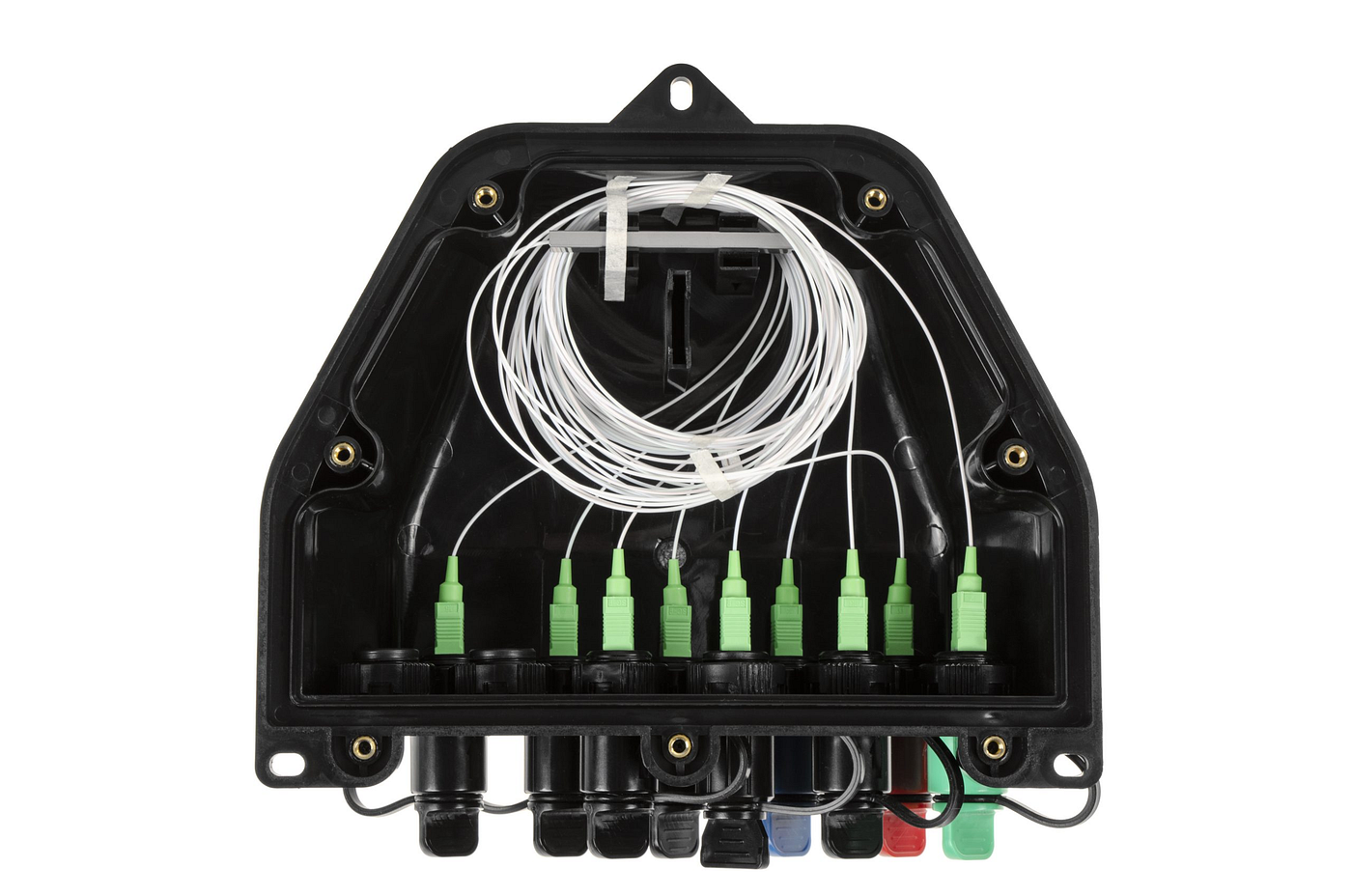
The Importance of Adapter Stability in FDB Enclosures
You may upgrade every part of an FTTH network, yet the real failures often start inside unmanaged terminal points. Many field teams have…
The Importance of Adapter Stability in FDB Enclosures

You may upgrade every part of an FTTH network, yet the real failures often start inside unmanaged terminal points. Many field teams have experienced sudden signal drops caused not by the feeder cable — but by a loose** fiber optic adapter inside the FDB. In rainy or windy conditions, even a slight vibration or moisture trace can shift an unstable adapter, leading to intermittent loss that is hard to diagnose. These issues are common, yet often overlooked in both [FAT and FDB](https://www.holightoptic.com/fiber-optic-products/optical-terminal-box/)** installations.
Why Adapter Stability Is a Core Part of Internal Fiber Management
Inside an FDB or FAT unit, fiber management depends on secure routing, correct bend radius, and stable adapter placement. When adapters are not fixed tightly to the housing or the panel tolerances are poor, several problems follow:
- Micro-bending caused by adapter movement
- Unstable connector mating and rising IL
- Increased risk of dust and vibration intrusion
- More service calls due to intermittent performance

In high-density distribution point environments, a single loose SC adapter can disrupt multiple drop lines. HOLIGHT’s engineering team continues to optimize internal fiber management for long-term reliability.
How Material and Housing Quality Affect Adapter Retention
Adapter stability is not only about the adapter — it’s also about the material science behind the terminal box panel. ABS housings may deform under heat or UV, while high-grade PC or alloy-reinforced structures maintain consistent tension over years of outdoor exposure.
Key engineering parameters include:
- UV resistance prevents panel warping
- Impact tolerance prevents micro-shifts during pole vibration
- Aging behavior of plastic frames, especially in outdoor enclosures
Stable adapters require a stable panel behind them.

Environmental Sealing Directly Influences Adapter Performance
Moisture is one of the biggest hidden enemies of adapter stability. In FDB units with weak gasket design or incomplete IP65 sealing, humidity can reach the adapter area and cause dust accumulation, ferrule corrosion, or connector loosening.
Reliable outdoor enclosure design must incorporate:
- consistent gasket pressure across the door
- gel components protecting entry points
- IP65 or IP68 sealing for long-term stability
When sealing fails, adapter stability fails next.
Real Deployment Scenario: Pole-Mounted FDB in Windy and Rainy Environments
In pole-mounted FDB deployments, continuous vibration from wind is common. If adapters are held only by thin plastic clips, they gradually loosen and introduce micro-gaps in the connector interface. After the first rainy season, technicians often find that the IL drift wasn’t caused by the feeder cable at all — but by unstable adapters shifting under vibration and moisture.
This is why stable adapter frames and robust sealing are essential for reliable field installation.
HOLIGHT’s terminal box designs focus on consistent sealing and stable fiber routing.
Conclusion
In FTTH networks, node equipment determines overall stability — adapter stability, housing durability, sealing design, splitter behavior, and fiber management ultimately define long-term performance.
Learn more at HOLIGHT Fiber Optic Solutions and **FTTHFiberOptic.com. For business inquiries: Crystal@holightoptic.com**
메타데이터
- post_id
- e5d632b91e4b
- slug
- the-importance-of-adapter-stability-in-fdb-enclosures-e5d632b91e4b
- url
- https://medium.com/@cryatal970225/the-importance-of-adapter-stability-in-fdb-enclosures-e5d632b91e4b
- canonical_url
- https://medium.com/@cryatal970225/the-importance-of-adapter-stability-in-fdb-enclosures-e5d632b91e4b
- author_url
- https://medium.com/@cryatal970225
- status
- ok
- fetched_at
- 2026-07-14 19:44:39