What If RC Cells Had a Perfect DNA Repair System?
“Cancer doesn’t begin when cells grow.”
What If RC Cells Had a Perfect DNA Repair System? Could Tokyo Ghoul Accidentally Describe the Future of Cancer Medicine?
“Cancer doesn’t begin when cells grow.”
“It begins when cells grow without control.”
That single distinction may be the biggest difference between human biology and the biology of Tokyo Ghoul.
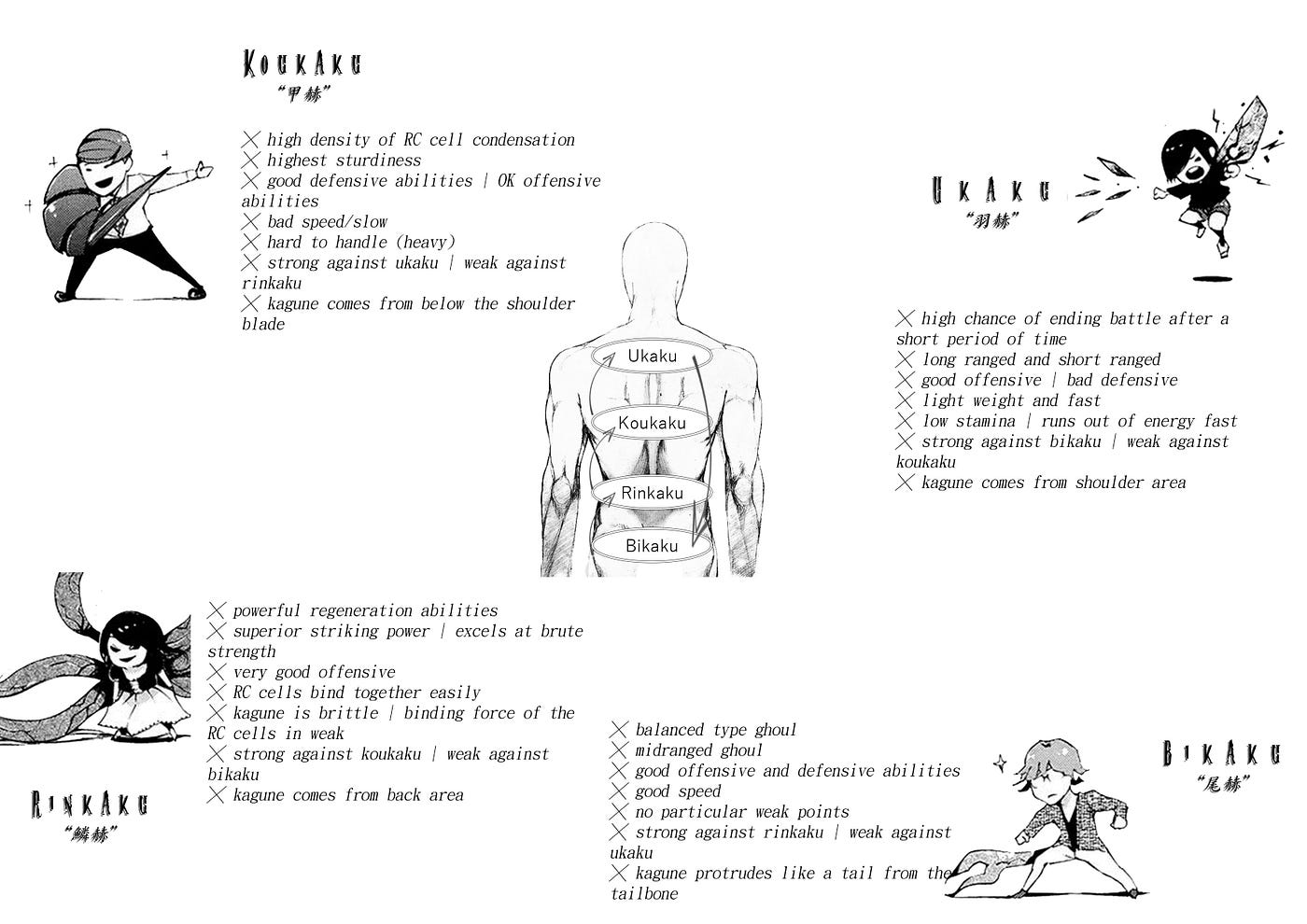
Throughout the series, RC cells perform what should be biologically impossible. They regenerate organs within seconds, rebuild limbs, produce massive kagune, and heal wounds that would kill an ordinary human. Yet despite dividing at astonishing speeds, these cells don’t constantly become cancerous.
From a biological perspective, that’s the real miracle.
Not the kagune.
Not the regeneration.
The miracle is control.
What if RC cells possessed something biology has never achieved?
A nearly perfect DNA repair system.
If such cells existed, they wouldn’t just redefine evolution.
They might rewrite medicine itself.
The Problem With Human Cells
Every second, billions of your cells divide. Each time a cell copies its DNA, it duplicates approximately 3.2 billion base pairs. Despite remarkable proofreading enzymes, mistakes still occur. These mistakes are called mutations. Most mutations are harmless. Some kill the cell immediately. But occasionally, mutations affect genes responsible for controlling cell division. When enough of these mutations accumulate, cells stop obeying the body’s rules.
They continue dividing.
They ignore death signals.
They invade surrounding tissues.
They become cancer.
Ironically, cancer isn’t simply “too much growth.” It’s growth that has escaped biological supervision.
The Price of Regeneration
Humans have sacrificed regeneration in exchange for stability.
We heal wounds.
We repair fractures.
We replace blood cells.
But we cannot regrow arms like axolotls or regenerate hearts like zebrafish.
Why?
Because regeneration requires massive cellular division. Massive cellular division increases mutation risk. Mutation increases cancer risk. Evolution appears to have chosen the safer option.
Better slow healing… Than uncontrolled growth.
RC Cells Break This Rule
Now imagine RC cells existed.
Every injury triggers immediate regeneration.
Entire organs rebuild within minutes.
Muscles reorganize themselves.
Bones reform.
From a biological standpoint, this should be catastrophic. The probability of mutations would skyrocket. Yet ghouls rarely develop tumors despite extraordinary regenerative activity. This suggests one incredible possibility.
RC cells don’t simply regenerate faster.
They regenerate more accurately.
Hypothesis: RC Cells Possess Hyper-Accurate DNA Repair
Imagine every RC cell carrying an advanced molecular surveillance system. Before dividing, the cell scans every chromosome. Every damaged nucleotide is identified. Every replication error is corrected. Every broken DNA strand is repaired before the cell continues. Cells with irreparable damage immediately undergo programmed cell death (apoptosis) instead of risking mutation.
Healthy cells continue dividing.
Damaged cells disappear.
Cancer never receives the opportunity to begin.
In essence, RC cells would possess what every oncologist dreams of:
Perfect quality control.
Nature Has Already Started This Experiment
This idea sounds like science fiction. But nature has already provided hints that it may not be entirely impossible.
Elephants rarely develop cancer despite possessing nearly one hundred times more cells than humans. Statistically, they should experience dramatically higher cancer rates. Instead, they evolved additional copies of TP53, often called the “guardian of the genome.” Whenever elephant cells detect severe DNA damage, they rapidly eliminate themselves rather than risking malignant transformation.
Bowhead whales, which can live for more than 200 years, also display remarkable resistance to cancer. Scientists believe they possess enhanced DNA maintenance and cellular repair pathways that protect them throughout their exceptionally long lifespans.
These animals don’t regenerate like ghouls. But they demonstrate an important principle. Evolution can improve genomic protection.
A Biological Security System
If RC cells existed, they might operate through several overlapping defense mechanisms.
The first layer would involve ultra-sensitive DNA proofreading enzymes capable of detecting even microscopic replication errors before the cell completed division.
The second layer would consist of highly efficient repair proteins that immediately restore damaged DNA using the undamaged complementary strand as a template.
The third layer would monitor chromosome integrity, ensuring that no cell with abnormal chromosome numbers survived.
The fourth layer would involve immune surveillance.
Imagine specialized immune cells capable of recognizing the earliest molecular signs of cancer, long before tumors formed. Instead of treating cancer months later, the immune system would erase it within hours.
Finally, every RC cell would contain a built-in self-destruct mechanism. The moment repair became impossible, apoptosis would activate automatically. The defective cell would sacrifice itself to protect the organism.
Cancer would never gain a foothold.
Could This Revolutionize Cancer Treatment?
If scientists could engineer cells with these capabilities, cancer treatment would shift from destroying tumors to preventing them from ever becoming dangerous. Today’s treatments often involve surgery, chemotherapy, radiation, immunotherapy, or targeted drugs after cancer has already developed. RC-inspired biology would suggest a completely different philosophy.
Instead of fighting cancer…
Prevent every precancerous cell from surviving.
Every day, thousands of cells in your body acquire DNA damage from sunlight, pollution, metabolism, or random replication errors. Fortunately, many are already repaired or eliminated by natural systems.
RC cells simply imagine these systems becoming almost flawless.
Cancer would become extraordinarily rare because mutations would almost never accumulate long enough to create a tumor.
The Regeneration Revolution
The implications would extend far beyond oncology. Imagine a patient who loses part of their liver after trauma. Instead of waiting months for recovery, specialized regenerative cells reconstruct the damaged tissue within days.
Heart attacks could become reversible.
Damaged spinal cords might reconnect.
Burn victims could regenerate healthy skin without grafts.
Organ failure could be treated by growing replacement tissue directly inside the patient’s body.
Rather than transplanting organs, medicine might regenerate them.
The same biological machinery that protects against cancer could also enable controlled regeneration.
The key is control. Not unlimited growth. Precisisely regulated growth.
The Greatest Scientific Challenge
Unfortunately, this vision collides with one of biology’s hardest problems. The pathways that encourage regeneration are often the same pathways exploited by cancer.
Increase cell division too much, and tumors emerge.
Suppress cell division too strongly, and tissues lose their ability to heal.
Life exists on a delicate balance between regeneration and stability.
RC cells solve this balance perfectly.
Real biology does not.
Scientists working in stem-cell biology, regenerative medicine, synthetic biology, gene editing, and cancer genetics are all attempting to move that balance slightly toward regeneration without crossing into malignancy.
Progress is happening but slowly.
Could RC Cells Ever Exist?
Probably not in the form depicted in Tokyo Ghoul. The energy demands alone would be staggering. However, the principles behind them are becoming increasingly relevant.
More accurate DNA repair.
Smarter immune surveillance.
Programmable stem cells.
Synthetic gene circuits.
Precision apoptosis.
These are no longer ideas confined to science fiction. They are active areas of biomedical research. Perhaps RC cells are not a prediction of what biology is. Perhaps they are a thought experiment about what biology could become if humanity learned to master its own genome.
The true fantasy of Tokyo Ghoul was never the kagune.
It was the idea that life could divide endlessly without paying the price of cancer. If cells could regenerate perfectly while repairing every mutation before it became dangerous, medicine would enter an entirely new era. Cancer might become a preventable cellular error rather than a life-threatening disease.
Organs could heal instead of scar.
Aging itself might slow as damaged tissues were continually renewed.
That future remains hypothetical.
But every breakthrough in DNA repair, gene editing, and regenerative medicine brings us one step closer to answering the same question Tokyo Ghoul asked years ago:
What if the greatest superpower wasn’t growing stronger… but never letting your cells make a fatal mistake?
메타데이터
- post_id
- e63667e033e6
- slug
- what-if-rc-cells-had-a-perfect-dna-repair-system-e63667e033e6
- url
- https://medium.com/@Aamina12Fizza/what-if-rc-cells-had-a-perfect-dna-repair-system-e63667e033e6
- canonical_url
- https://medium.com/@Aamina12Fizza/what-if-rc-cells-had-a-perfect-dna-repair-system-e63667e033e6
- author_url
- https://medium.com/@Aamina12Fizza
- status
- ok
- fetched_at
- 2026-08-12 14:56:17