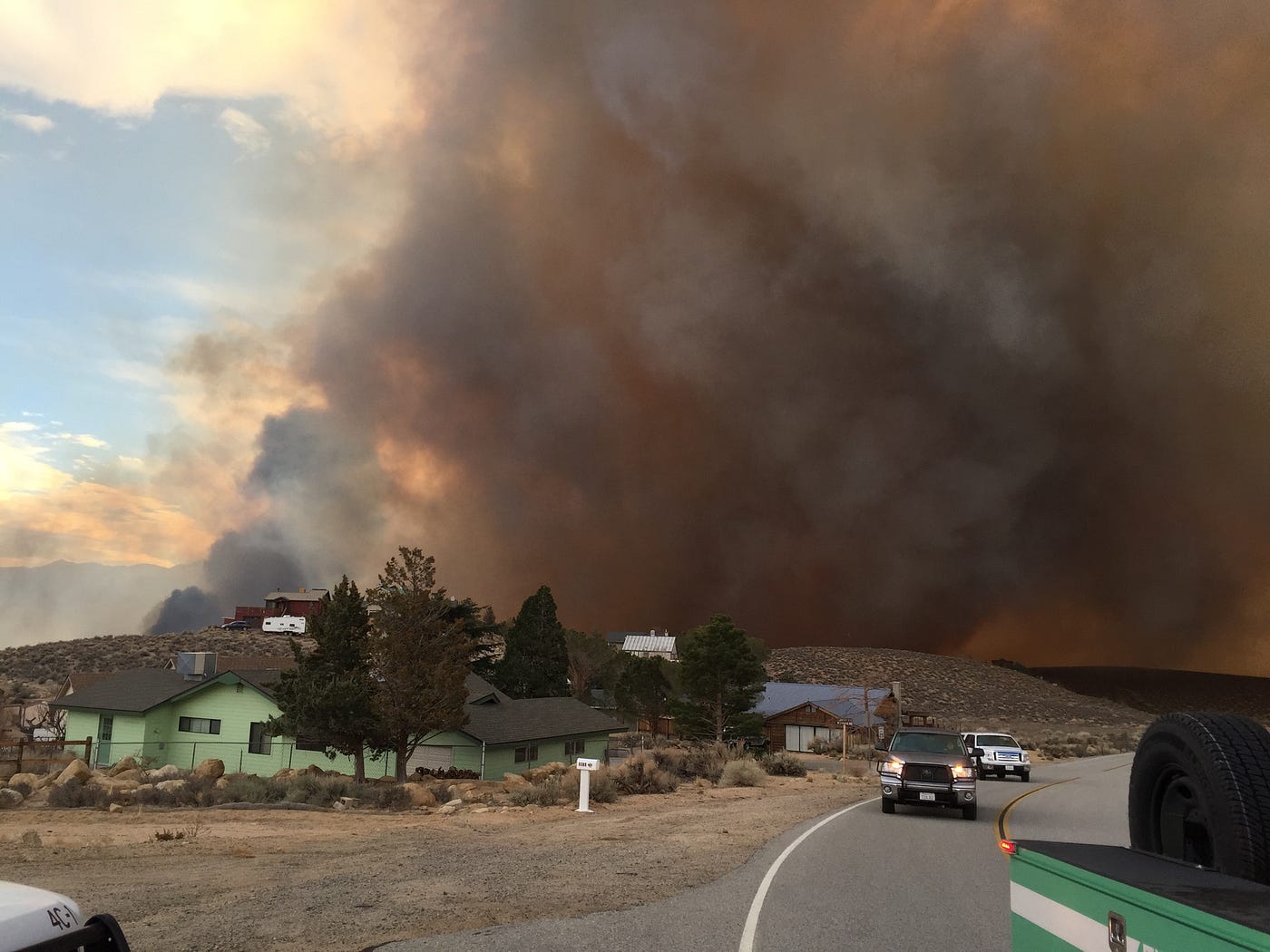
Preventing the Megafires
Wildfire prevention is extremely urgent now amid the devastating January 2025 wildfires. These fires caused long-lasting pain for tens of…
Preventing the Megafires

Lassen National Forest, CA
Wildfire prevention is extremely urgent now amid the devastating January 2025 wildfires. These fires caused long-lasting pain for tens of thousands of people who lost everything they had built over a lifetime. Entire towns were reduced to ashes, completely upending lives, and there is still no guarantee that such disasters will not happen again. Even in some of California’s most densely populated and desirable living areas, the persistent threat of wildfires remains despite mitigation efforts, early preparedness, and planning. Wildfire detection and prevention technology must be civilization infrastructure rather than partially successful isolated detectors. Such technology must ubiquitously watch 24/7 for small fires.

Rialto, CA
Analysis examines the origins of the most catastrophic wildfires — focusing on the initial ignition phase — to better understand the timeline of events, as well as the deficiencies in fire management during extreme weather conditions, including high winds and low humidity. By identifying key weaknesses and deficiencies responding to fires, best suited technologies and approaches for wildfire prevention will be recommend
Understanding Wildfires
Wildfires vary greatly depending on their ignition source, location, weather conditions, terrain, and fuel load. However, a deeper analysis reveals common patterns in ignition and fire progression that led to devastating losses of life and property. The initial ignition and the subsequent rapid growth of a fire are the most critical factors in determining whether it can be successfully suppressed.
Each year, tens of thousands of fires are reported, which can be categorized into three groups based on their timeline:
1. Small, quickly extinguished fires — The majority of fires are detected early, either by people or fire monitoring systems, while still small and manageable. These fires are quickly extinguished, causing minimal damage.
2. Manageable wildfires — These fires spread due to high winds, low humidity, and fuel-rich terrain, burning hundreds to thousands of acres over several days. However, under relatively favorable weather conditions, firefighters can ultimately contain and extinguish them, albeit with some property damage.
3. Catastrophic wildfires — The most destructive and rarest type, these wildfires occur under extreme conditions, including tornado-strength winds (80–120 mph) and single-digit humidity levels. Once ignited, they spread at an uncontrollable rate, sometimes consuming an acre per second. Even with extensive firefighting efforts, these wildfires can rage for days or weeks, causing widespread devastation.
It is this third category of wildfires that demands our greatest attention. The inability to detect and suppress these fires at the earliest stage — before they escalate beyond control — is a fundamental failure in current wildfire prevention strategies.

Altadena, CA
The Challenges in Wildfire Detection
Despite decades of experience with deadly wildfires, we still unable to prevent them effectively. Why? The primary deficiencies in our approach include:
• Delayed fire detection — Fires that eventually become wildfires are not detected early enough at ignition, leaving too little time for extinguish before they escalate.
• Lack of continuous monitoring — Many fires are not identified when they are still small enough to be easily extinguished.
Existing fire detection methods have notable limitations:
• Drones — While effective in calmer conditions, drones cannot operate in extreme winds (80–120 mph).
• Satellites — These do not provide continuous surveillance of the same area, making them unreliable for early detection.
• Remote scanning systems — While equipped with visible and infrared cameras, these systems typically detect fires only after they have grown to several acres, by which point suppression is much more difficult. This was evident in the failures surrounding the Camp Fire (November 2018) and the January 2025 wildfires.

Azusa, CA
Solutions for Wildfire Prevention
The key to preventing wildfires, even under extreme weather conditions, lies in fully automated early detection of small fires at the moment of ignition — both during the day and at night. Traditional fire detection technologies that require a fire to grow to an acre in size before detection are akin to looking at a forest rather than a single tree.
An ideal fire detection system must:
• Be capable of detecting very small fires (40 to 400 square feet, or 1/1000th to 1/100th of an acre) within a short range (within a mile) in all covered area.
• Utilize advanced infrared heat imagers with visible image confirmation for reliable early detection and warning during day and nught.
• Operate fully autonomously, providing continuous surveillance even when no humans are present.
A network of such detectors, deployed at high density across towns and surrounding steep terrain, would enable rapid fire detection and early warnings — without the need for human intervention.
However, early detection alone is not enough. Once a small fire is detected in extreme weather conditions, it must be extinguished immediately. This requires:
• Firefighting resources to be strategically positioned and ready to deploy at a moment’s notice.
• Fire trucks and water-dropping aerial assets capable of operating in high winds, where ground access may be limited, as seen in the Eaton Fire.

Bridgeport, CA
Conclusion
For complete prevention of wildfires, any fire must be absolutely detected very early, as soon as it ignites, especially during worst weather conditions. Best suited infrared heat detection technology-based detector network must be deployed over wide areas at a fine granularity to provide 24/7 ubiquitous watch to detect very small fires up close before they start growing. Firefighters and resources must respond at moment’s notice when fire reported, especially during extreme wildfire danger. All the actions must be well coordinated during worst red flag conditions which must be taken extremely seriously.
It is imperative that we address this urgent issue with the seriousness it demands, rather than relying on failed technologies unable to prevent wildfires and offer false hopes. We must deploy necessary fire detection technology and resources as the infrastructure of our civilization covering all over. This would successfully prevent the worst possible multiple simultaneous fires before they cause total destruction of civilization beyond possibility of recovery.

Santa Clarita, CA
메타데이터
- post_id
- e6480b8acd60
- slug
- preventing-the-megafires-e6480b8acd60
- url
- https://medium.com/@tdunfee/preventing-the-megafires-e6480b8acd60
- canonical_url
- https://medium.com/@tdunfee/preventing-the-megafires-e6480b8acd60
- author_url
- https://medium.com/@tdunfee
- status
- ok
- fetched_at
- 2026-08-06 19:45:59