What Business Challenges Can AI Analytics Solve?
Most businesses aren’t short on data anymore; they’re drowning in it. Sales numbers, customer interactions, website traffic, support…
What Business Challenges Can AI Analytics Solve?
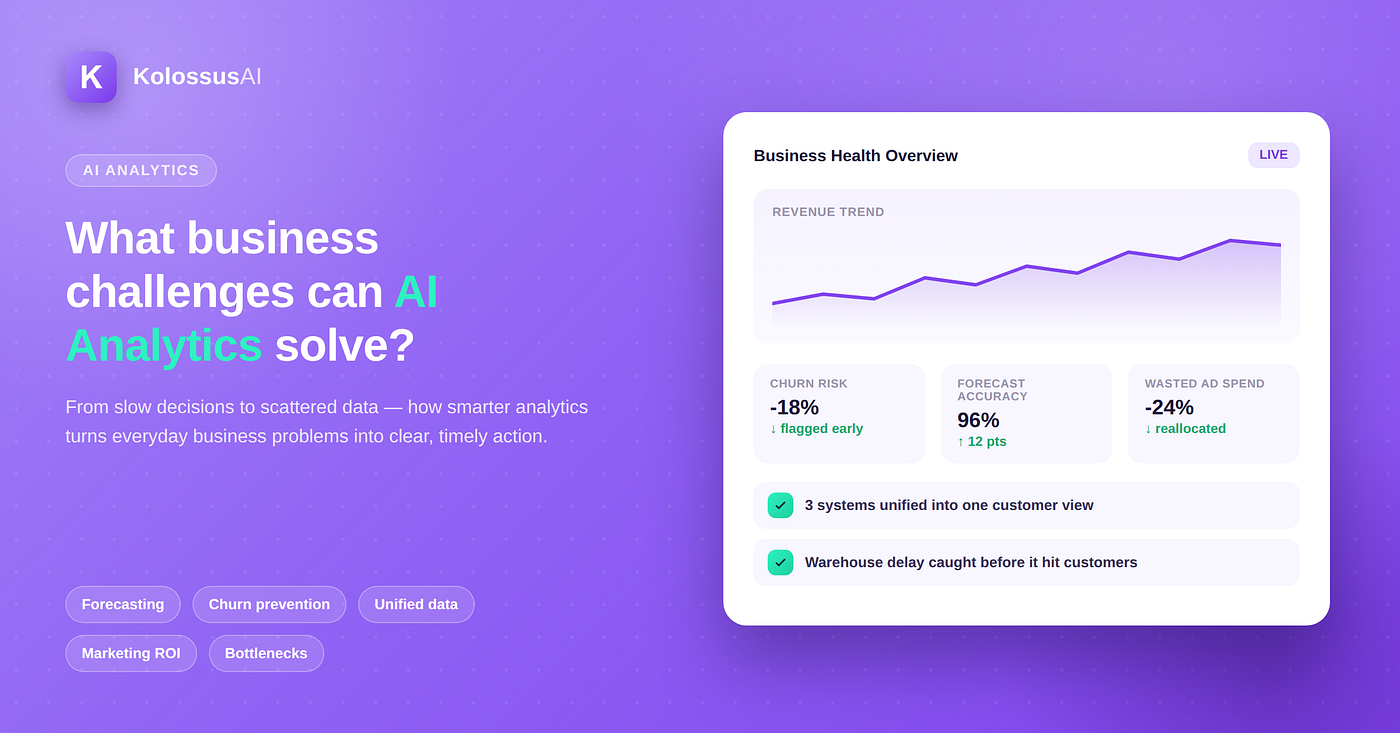
Most businesses aren’t short on data anymore; they’re drowning in it. Sales numbers, customer interactions, website traffic, support tickets, inventory logs it all piles up faster than any team can manually review. The real challenge isn’t collecting information; it’s turning that pile into something useful before the moment to act on it has already passed.
This is the gap AI analytics was built to close. Instead of waiting weeks for a report that’s outdated by the time it lands in someone’s inbox, businesses can now get answers in near real time, often before a human analyst would even know where to start looking. But what does that actually solve in practice? Let’s break down the real business challenges AI analytics is helping companies tackle.
1. Slow, Reactive Decision-Making
Traditional reporting tends to tell you what already happened: last month’s sales dip, last quarter’s churn spike. By the time the report is ready, the damage is done. AI analytics shifts this from reactive to proactive by continuously scanning data and surfacing patterns as they emerge, not after the fact. A sudden drop in conversion rate, an unusual spike in returns, or a shift in customer sentiment can be flagged the same day it starts, giving teams a real chance to respond instead of just record what happened.
2. Inaccurate Demand Forecasting
Guessing how much inventory to order, how many staff to schedule, or how much revenue to expect has always been part art, part science. AI analytics improves the “science” side significantly by processing historical trends alongside real-time signals like seasonality, local events, or even weather patterns. This leads to forecasts that adjust dynamically rather than relying on static assumptions from last year’s numbers, which reduces both overstock and stockouts.
3. Customer Churn That Sneaks Up on the Business
By the time a customer cancels or stops buying, it’s usually too late to win them back easily. AI analytics tackles this by identifying early warning signs reduced engagement, slower response times, smaller order sizes long before the customer actually leaves. This gives sales and support teams a window to step in with a retention offer or a check-in call while there’s still a relationship to save.
4. Data Scattered Across Too Many Systems
Most businesses run on a patchwork of tools: a CRM here, an e-commerce platform there, a separate system for support tickets. Each one holds a piece of the customer story, but almost nobody has time to manually stitch it together. AI analytics platforms can pull from these different sources and unify them into a single, coherent view, which is often the difference between guessing what a customer wants and actually knowing.
5. Wasted Marketing Spend
Marketing budgets often get spread across channels based on gut feeling or last year’s playbook. AI analytics changes that by identifying which campaigns, audiences, and channels are actually driving revenue versus just driving clicks. Instead of broad assumptions, teams get a clearer picture of where every dollar is working hardest, which usually means reallocating spend rather than simply increasing it.
6. Operational Bottlenecks That Go Unnoticed
Inefficiencies rarely show up on a spreadsheet until they’ve already cost real money. AI analytics can monitor operational data continuously and flag slowdowns, such as a warehouse pick time creeping up or a support queue backing up, well before it becomes a visible problem for customers.
The Bigger Picture
None of this means AI analytics replaces human judgment. It removes the guesswork and the lag time, so decisions get made with better information and less delay. For businesses trying to stay competitive without expanding headcount, that speed and clarity are quickly becoming less of a luxury and more of a baseline expectation.
Companies that treat AI analytics as a core part of how they operate, not just a dashboard someone checks occasionally, tend to catch problems earlier and spot opportunities their competitors miss entirely.
Read also: Business Intelligence Software: 7 Things Buyers Miss
메타데이터
- post_id
- e64baa7acfef
- slug
- business-challenges-ai-analytics-solve-e64baa7acfef
- url
- https://medium.com/@kolossusai.india/business-challenges-ai-analytics-solve-e64baa7acfef
- canonical_url
- https://medium.com/@kolossusai.india/business-challenges-ai-analytics-solve-e64baa7acfef
- author_url
- https://medium.com/@kolossusai.india
- status
- ok
- fetched_at
- 2026-08-19 07:18:33






