5 Famous Experiments That Were Mostly Faked
#2. The Stanford Prison Experiment
5 Famous Experiments That Were Mostly Faked
#2. The Stanford Prison Experiment
Photo by National Library of Medicine on Unsplash
The Milgram experiment is talked about in each psych class, I think.
And the Stanford Prison Experiment appears in every documentary about evil.
These are the experiments we employ to explain human nature, moral collapse, and the building blocks of genetics. Most of them are messier than that. A few are flatly misleading.
One is a confirmed hoax that existed in the scientific literature for 41 years.
#1. The Milgram Shock Experiment
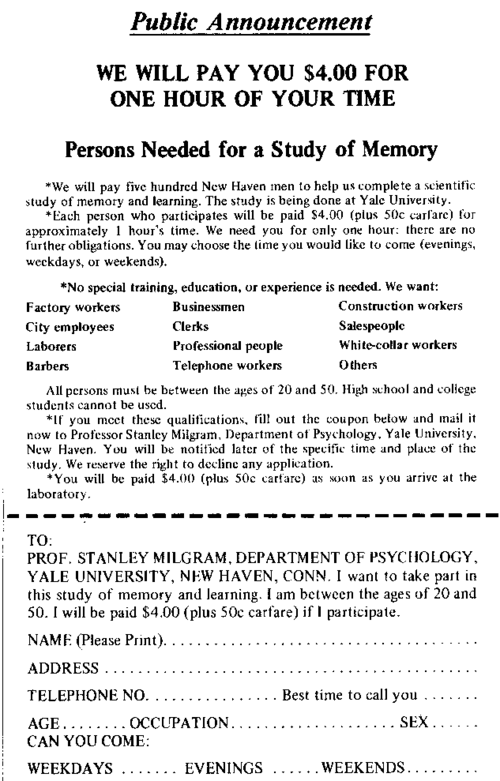
The original uploader was Poolisfun at Wikipedia., Public domain, via Wikimedia Commons
Ordinary people. A man in a lab coat. A stranger supposedly receiving electric shocks in the next room. 65% of those participants went as far as 450 volts, which would have been deadly if it had been real.
The man in the lab coat just kept telling them to continue, and most of them did.
It was employed to describe the Holocaust. Abu Ghraib.
Every time human beings followed orders and came up with something horrible.
A researcher Gina Perry had spent years digging through Milgram’s archived files in her 2012 book Behind the Shock Machine and discovered something he never published, most of the participants did not believe the setup was real.
Milgram knew this. His own notes said so.
Perry’s analysis, which was published in Social Psychology Quarterly, found that participants who believed the setup was real, two-thirds defied the experimenter
The rest of them had largely figured out that it was theater.
Indeed, the famous 65% came disproportionately from people who thought they were playing along with something fake.
“Humans blindly obey authority” is a completely different finding.
It doesn’t get reported that way. Milgram had the data.
He buried it.
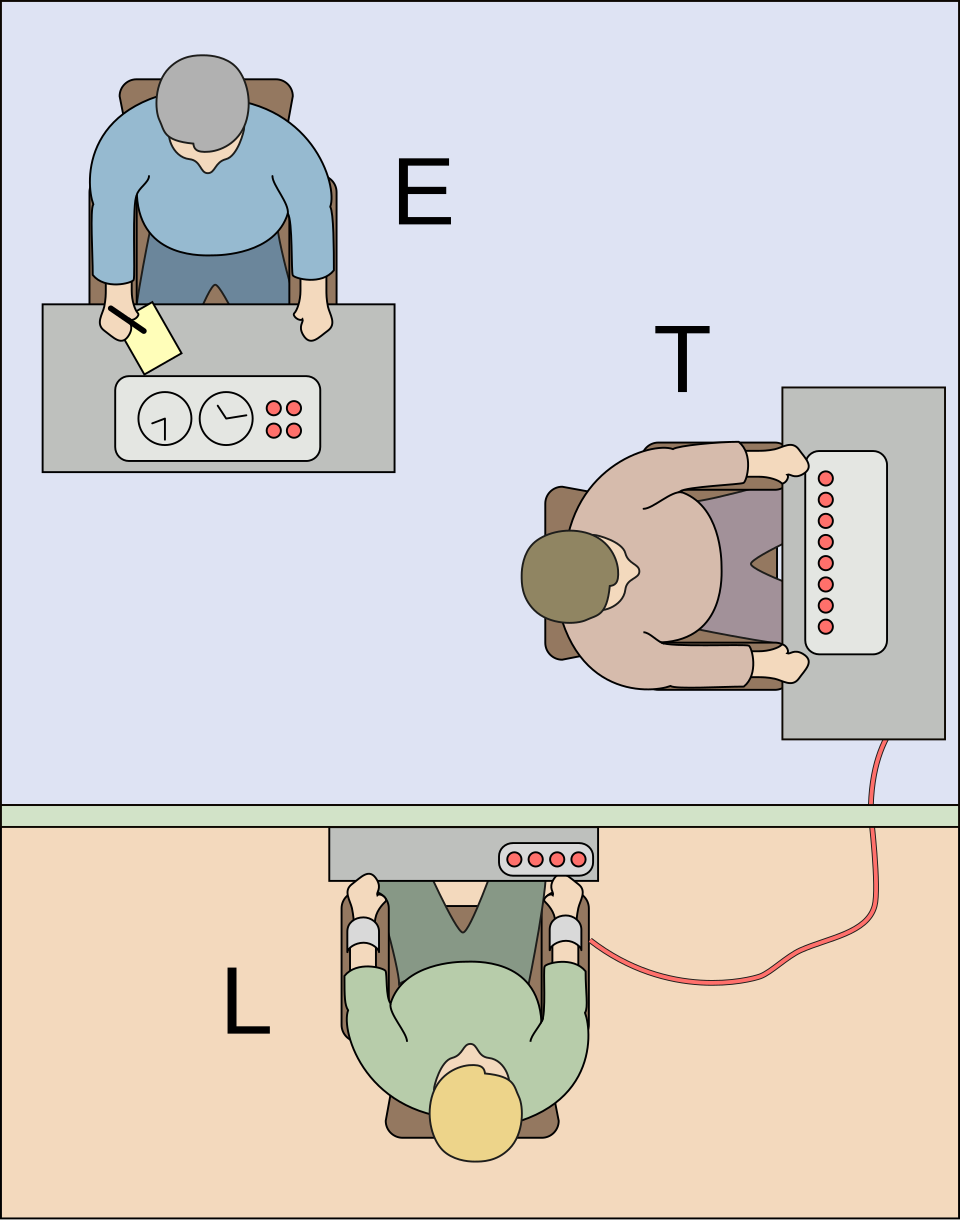
Fred the Oyster, CC BY-SA 4.0, via Wikimedia Commons
The experiment is now widely condemned as unethical; participants were left with the impression that they would, in fact, hurt people before being debriefed.
That part gets talked about constantly.
The data problem is less discussed, which is odd, because hiding findings that don’t support your conclusion is worse than a deception going too far.
2. The Stanford Prison Experiment
Philip Zimbardo, CC BY-SA 4.0, via Wikimedia Commons
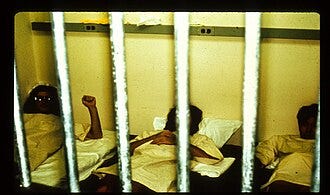
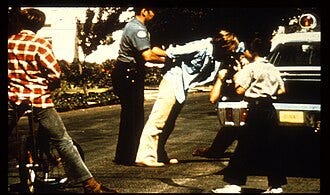
Zimbardo placed college students in a simulated prison in 1971.
Half were guards, half were prisoners. That’s it. But within a few days the guards became cruel. Prisoners were breaking down.
And finally everything was stopped after six days.
Then in 2018, recordings from the Stanford archive came out. They showed Zimbardo or one of his assistants telling the guards to get tough before the experiment even started. Make the prisoners feel powerless. Arbitrary. Like they had no control.
Philip Zimbardo, CC BY-SA 4.0, via Wikimedia Commons
Le Texier’s book, Histoire d’un mensonge, published that same year after spending years in Zimbardo’s archive, goes one step further and suggests Zimbardo was in effect directing a result he had decided on.
Which sounds damning. But then you read Zimbardo’s response, and he has a point, too: The guard behavior escalated well beyond anything in the prompts, and the parallels with real documented prison abuse are hard to dismiss as a methodology problem.
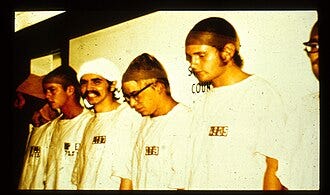
Philip Zimbardo, CC BY-SA 4.0, via Wikimedia Commons
And then there’s Douglas Korpi, the prisoner whose breakdown is one of the most cited moments in the whole study.
He had GREs to study for. I don’t know where that leaves the experiment exactly. The prompting happened. The reporting didn’t reflect it. Korpi faked the breakdown.
Whether or not it invalidates what the guards really did, which was real, on tape, not prompted line by line, is a question I can’t easily answer.
Nor can the researchers who have been fighting over this debate in the meantime.
3. Piltdown Man

John Cooke, Public domain, via Wikimedia Commons
Medieval human skull. 500-year-old orangutan jaw, filed down to look more human and stained with chemicals to fake age. Literally.
British scientists endorsed it in 1912 as the missing evolutionary link.
It remained in the literature for 41 years until fluorine dating revealed the bones weren’t even the same age as each other.
In a 2016 Royal Society Open Science study, Charles Dawson was confirmed as the forger by DNA analysis and CT scans.
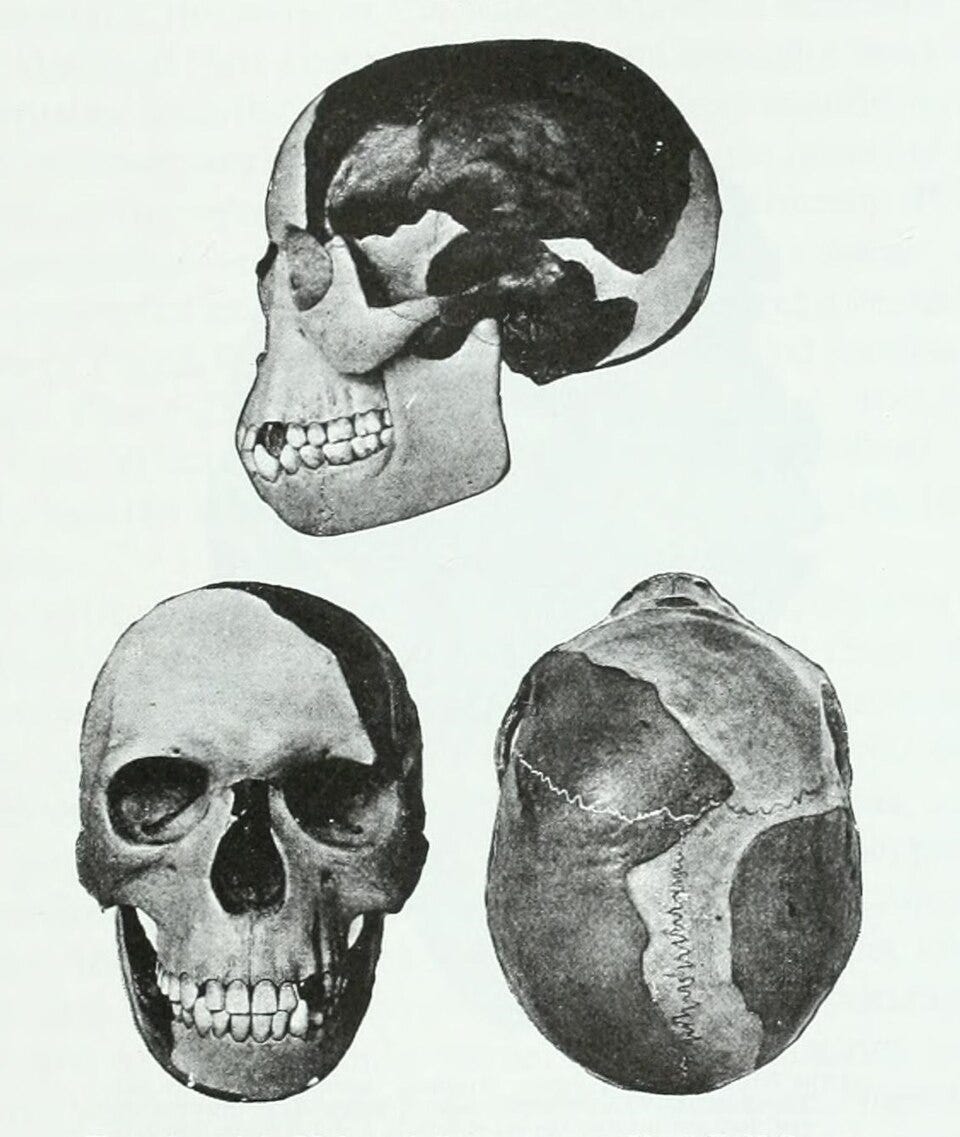
James Howard McGregor, Public domain, via Wikimedia Commons
Like for 41 years.
That’s one thing that’s not getting enough attention.
Dawson was one person doing something dishonest.
Every year after 1912 is a new failure, but a much larger failure for many more people.
4. The Little Albert Experiment

John B Watson, Public domain, via Wikimedia Commons
Watson and Rayner in 1920 conditioned a nine-month-old baby to fear a white rat by associating it with a loud noise.
Fear allegedly spread from there to other furry objects, a rabbit, and a Santa Claus mask. Watson referred to it as evidence that human emotions are largely learned.
One experiment and foundation of behaviorism.
Read the real study, and problems begin immediately.
Albert’s fear responses were variable and were frequently virtually absent.
When he sucked his thumb, he showed nearly no distress; even mid-conditioning, Watson had to physically pull his thumb out over 30 times just to elicit a reaction. No control group. Just one subject and no systematic measurement.
A review in History of Psychology in 2021 called the conditioning procedure* “largely ineffective”* and concluded that many of Albert’s weak fear responses could be explained by a lot of additional variables besides the conditioning.
Scientists who now see the same film footage don’t agree on one thing. And then there’s the question of who Albert really was.
The most likely candidate, which Russ Powell published in a 2009 American Psychologist article, is Douglas Merritte, a baby who had hydrocephalus and was neurologically impaired from birth.
If Watson knew that and did not disclose it, the study doesn’t just have terrible methodology; it has a false premise.
Watson never even said anything about it, he couldn’t.
Merritte died at six years old.
Watson said he would decondition Albert before the study ended. He didn’t. Albert’s mother pulled him out first.
5. Gregor Mendel’s Pea Data
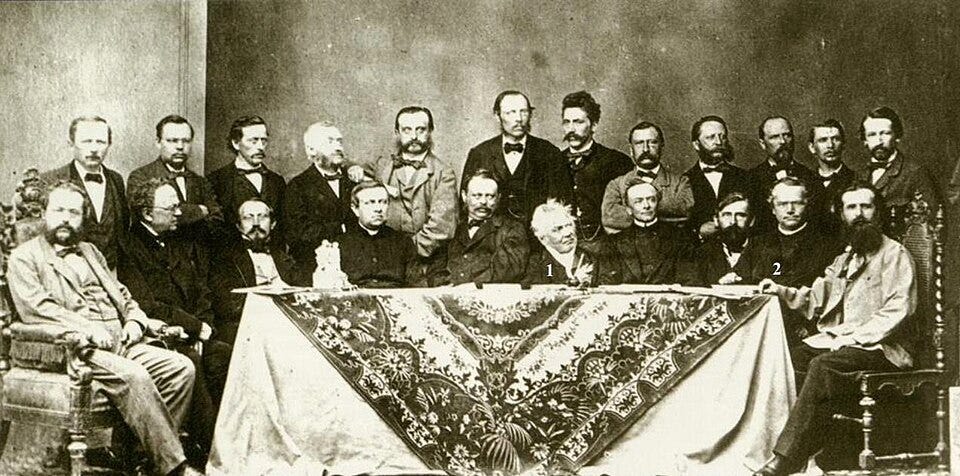
doi:10.7124/bc.000149, Public domain, via Wikimedia Commons
This one troubles me in a way that I didn’t before.
Mendel was right. Dominant and recessive inheritance is real, his model is real, and modern genetics builds off of it.
What Ronald Fisher, who conducted the statistical analysis, discovered in 1936 was that Mendel’s data was more consistent with his theoretical predictions than real biological variation would allow.
Fisher found the numbers had almost certainly been adjusted, by Mendel or somebody who worked with him.
A 2016 study appeared in the Journal of Heredity that reported similar findings and only stopped short of calling it fraud. Perhaps he accidentally labeled ambiguous plants in whichever direction he expected.
That’s a very real phenomenon; it’s called the observer expectancy effect, and it doesn’t require bad intent.
Or he had been ignored by the scientific community for years and tweaked the numbers to make the model land. Over eight years, Mendel grew about 29,000 pea plants.
That’s a long time to be working on something nobody cares about. I can imagine the temptation.
What’s quite odd about this one is that which explanation is true really doesn’t matter. The model was correct anyway.
We constructed modern genetics on data likely adjusted and it worked regardless.
I don’t know what to do with that.
References:
https://www.livescience.com/62832-stanford-prison-experiment-flawed.html
https://www.sciencehistory.org/stories/magazine/the-problem-of-piltdown-man/
https://science.howstuffworks.com/life/inside-the-mind/emotions/little-albert-experiment.htm
https://www.betterhelp.com/advice/psychologists/behaviorism-and-the-little-albert-experiment/
https://www.discovermagazine.com/the-sciences/did-gregor-mendel-fabricate-his-gene-data
https://www.benchling.com/blog/gregor-mendel-villain-or-victim
https://www.nationalgeographic.com/science/article/so-science-gets-it-wrong-then-what
I hope you enjoyed reading this. Follow and subscribe for more content.
메타데이터
- post_id
- e668df55091b
- slug
- 5-famous-experiments-that-were-mostly-faked-e668df55091b
- url
- https://medium.com/predict/5-famous-experiments-that-were-mostly-faked-e668df55091b
- canonical_url
- https://medium.com/predict/5-famous-experiments-that-were-mostly-faked-e668df55091b
- author_url
- https://medium.com/@drsachinpandit
- status
- ok
- fetched_at
- 2026-06-09 15:37:30






