Thailand Property Brief: Why July 8 Is About More Than Fuel Prices
Thailand’s July 8 news cycle may look like a normal mix of fuel prices, weather and tourism updates. For property buyers and operators…
Thailand Property Brief: Why July 8 Is About More Than Fuel Prices

Thailand’s July 8 news cycle may look like a normal mix of fuel prices, weather and tourism updates. For property buyers and operators, however, these signals connect to a more practical question: what actually affects the cost, use and management of a property?
The most direct headline is fuel. OR and Bangchak reduced Bangkok retail fuel prices from 5am on July 8, with petrol and gasohol down by around 2.51 baht per litre and diesel down by around 2.56 baht per litre. For residents, this affects daily mobility. For property businesses, it touches viewings, logistics, cleaning, maintenance and short-stay operations.
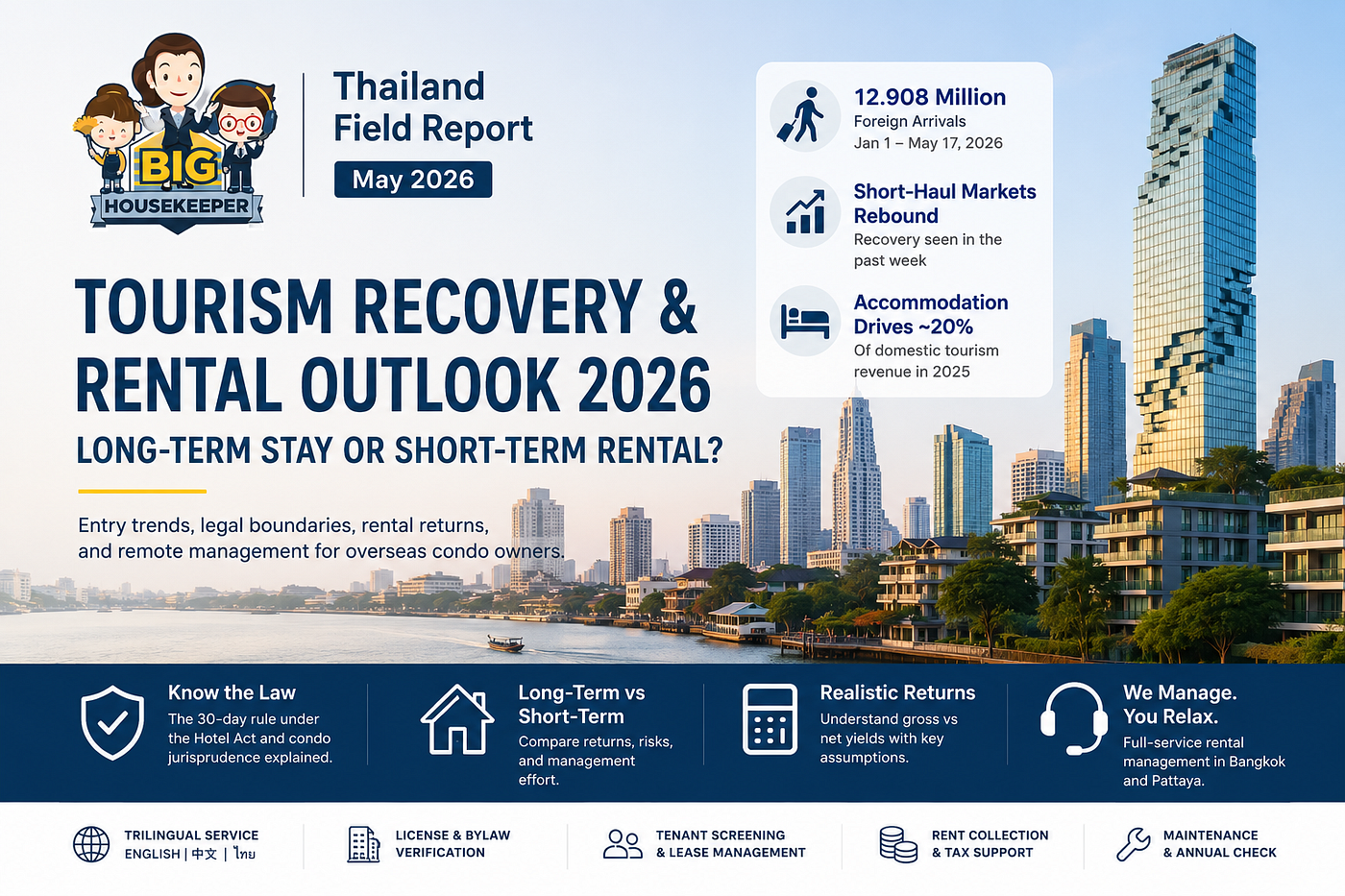
Tourism remains important, but the data needs careful reading. From January 1 to July 4, Thailand welcomed about 16.21 million foreign visitors and generated around 782.57 billion baht in tourism revenue. China, Malaysia and India remain key source markets. Still, arrivals are below last year’s level, which means the recovery is real but not pressure-free.
For buyers, the main property policy item is the extension of reduced transfer and mortgage registration fees. The transfer registration fee has been reduced from 2% to 0.01%, and the mortgage registration fee from 1% to 0.01%, with the measure extended until June 30, 2027. The important caveat is that the measure mainly targets homes priced at no more than 7 million baht and is designed to support domestic housing affordability. It should not be described as a universal benefit for all foreign buyers.
Foreign buyers must also understand the 49% condominium quota. Thailand allows eligible foreigners to own condominium units, but foreign ownership in a registered condominium building cannot exceed 49% of the building’s total saleable floor area. This is not calculated by the number of units. A large foreign-owned unit uses more quota than a small one.
Bangkok and Pattaya should also be read differently. Bangkok’s long-term value is increasingly linked to liveability: mass transit, hospitals, schools, retail, offices and services. Pattaya and Chonburi benefit from tourism and major events, but sustainable rental performance depends on location, management and seasonality.
The real lesson is simple: Thailand is active, but decisions need to be grounded. Before buying, check ownership rules, foreign quota, transaction costs, actual rental demand and property management arrangements.
About BigHousekeeper
BigHousekeeper is a Thailand-based property service team focused on Bangkok, Pattaya and nearby areas. It supports overseas buyers and owners with property consultation, remote owner assistance, rental management, maintenance coordination and after-sales support.
For many foreign buyers, the challenge is not only choosing a unit. It is also understanding the ownership route, checking the foreign quota, managing the property after handover and dealing with tenants, repairs and local communication. BigHousekeeper’s role is to make those operational details clearer and easier to manage.
The service is built around long-term property care rather than return promises. Buyers should still seek legal and tax advice where needed, but a local management team can help reduce practical friction after purchase.
메타데이터
- post_id
- e67a13cbe139
- slug
- thailand-property-brief-why-july-8-is-about-more-than-fuel-prices-e67a13cbe139
- url
- https://medium.com/@xingelucky0719/thailand-property-brief-why-july-8-is-about-more-than-fuel-prices-e67a13cbe139
- canonical_url
- https://medium.com/@xingelucky0719/thailand-property-brief-why-july-8-is-about-more-than-fuel-prices-e67a13cbe139
- author_url
- https://medium.com/@xingelucky0719
- status
- ok
- fetched_at
- 2026-07-22 05:12:34