Why Mormon Women Are Leaving the Church Faster Than Men — For the First Time in History
68% cite gender inequality. Here are the 5 factors driving the most significant shift in Mormon demographics in a century.
Why Mormon Women Are Leaving the Church Faster Than Men — For the First Time in History
68% cite gender inequality. Here are the 5 factors driving the most significant shift in Mormon demographics in a century.
By Mormon Deep Dive | @MormonDeepDive
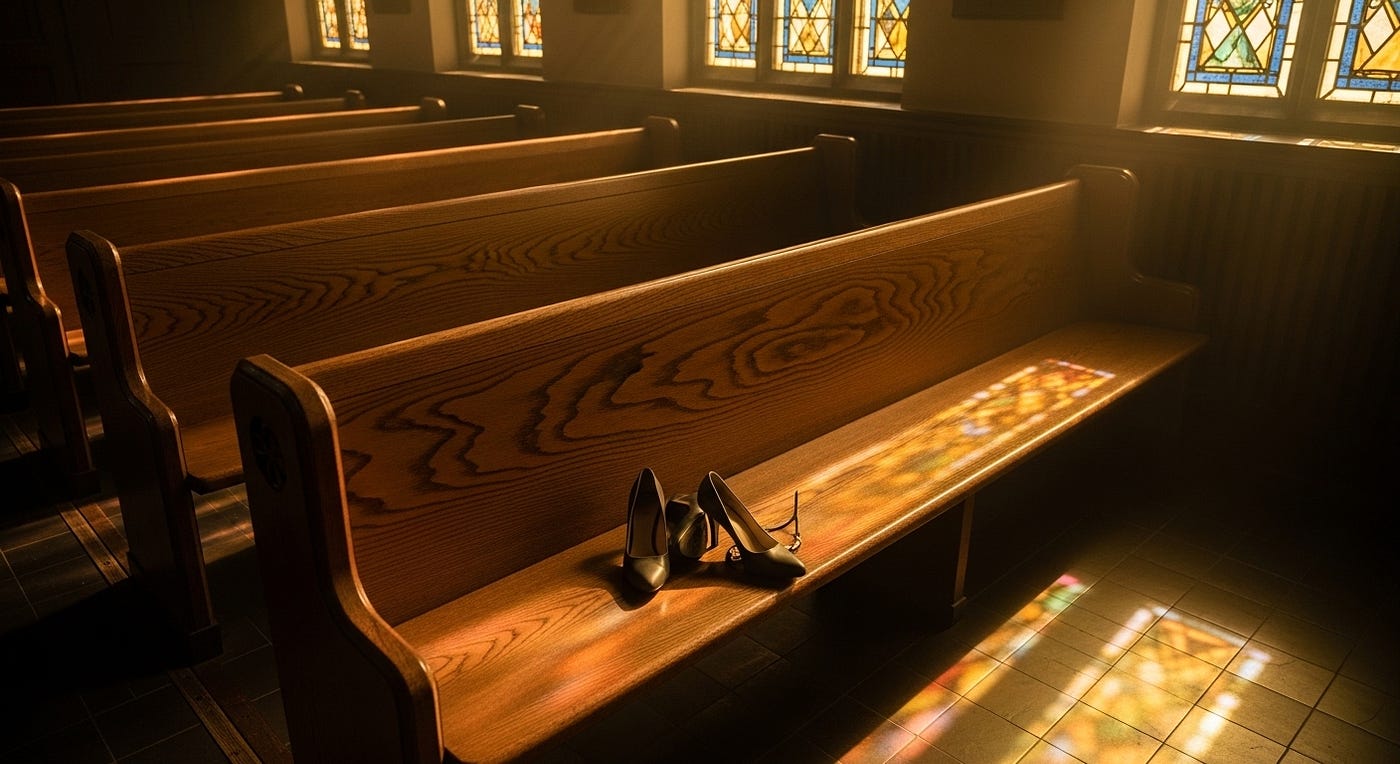
Last Sunday, Sarah sat in her ward’s sacrament meeting. On the stand was an all-male panel discussing the challenges facing families today.
A single thought echoed in her mind: Where are the women?
Sarah’s experience is not unusual. It is a snapshot of the most significant demographic shift in modern Mormon history — one that is accelerating right now, and one that the church has no clear answer for.
For over a century, women were the backbone of the LDS church. Consistently more active, more devout, more engaged than their male counterparts. They ran the programs, taught the children, and kept local wards functioning. Without Mormon women, there is no Mormon church.
That historical pattern is now reversing.
Recent data suggests that for the first time in modern history, more young women are leaving the Mormon church than young men — with some studies showing as many as 68% of women who leave citing gender inequality as a primary reason.
So what changed? And what does it mean for the future of the institution?
[embed]
Factor 1: Structural Gender Inequality and the Complete Absence of Female Leadership
In the Mormon church, all ecclesiastical authority is held by men through the priesthood. Women cannot be bishops, stake presidents, or apostles. They have no final say in financial, doctrinal, or disciplinary matters.
This creates a striking paradox for educated, professional women.
A woman can be a CEO, a surgeon, or a federal judge from Monday to Saturday — managing large teams and making decisions that affect thousands of lives. But on Sunday, she cannot offer an opening prayer in sacrament meeting without first getting permission from her male bishop.
In much of Europe, gender equality isn’t just a social value — it’s codified in law. For women in these societies, the church’s leadership structure doesn’t just feel outdated. It feels illegal by the standards of the world they live in.
One woman who recently left described it plainly:
“I can lead teams professionally, but cannot give an opening prayer without asking the bishop first. This is about structure, not spirituality. It’s not about wanting power. It’s about the inherent message that women are less capable of spiritual leadership.”
This isn’t a fringe complaint. It is the single most cited reason women give for leaving — and it is structural, which means it cannot be fixed with better messaging or more empathetic bishops.
Factor 2: Modesty Culture and the Weaponization of a Woman’s Worth
For decades, young Mormon women have been taught that their bodies are temptations. That their clothing choices directly affect the thoughts of the boys and men around them. That their ultimate value is tied to their chastity and their ability to conform to a very specific set of behavioral standards.
These are primarily cultural teachings rather than explicit theology — but their psychological effects are profound and lasting.
They can create deep-seated anxiety around normal physical development and sexuality. They frame a young woman’s body as something dangerous rather than something belonging to her. And they anchor her sense of self-worth to compliance rather than character.
One woman described her experience:
“I spent my entire adolescence feeling anxious about my normal development. My worth was tied to a very specific set of choices. When I finally understood the harm that caused me, I couldn’t stay in a system that perpetuated it.”
For many women, this realization doesn’t come during adolescence — it comes years or decades later, often in therapy. And when it does, it becomes a powerful catalyst for departure.
Factor 3: The Church’s Handling of LGBTQ Issues
In November 2015, the church introduced a policy declaring same-gender married couples as apostates and barring their children from baptism until they turned 18 and formally disavowed their parents’ relationship.
The policy was eventually reversed. But the reversal may have done more damage than the original announcement.
For many members, the whiplash confirmed something they had been quietly wondering: revelation wasn’t divine will handed down from heaven. It was fallible policymaking — often looking more like institutional damage control than prophetic guidance.
For mothers of LGBTQ children, this was never an abstract policy debate. It was a direct threat to their family’s well-being.
A mother from Arizona put it this way:
“When my daughter came out, I chose her well-being over the church’s position. I only regret that I didn’t prioritize her sooner.”
For these women, the conflict between maternal instinct and institutional loyalty became an impossible contradiction. The institution lost.
Factor 4: Institutional Mishandling of Harm and Misconduct
A major Associated Press investigation, among other reports, revealed a pattern where the church’s primary focus in cases of abuse and misconduct appeared to be protecting the institution from legal liability — rather than protecting its members.
Stories emerged of bishops — lay volunteers with no professional training — conducting inappropriate interviews with youth about their personal lives, or giving harmful counsel to adults in dangerous domestic situations.
These are not isolated incidents. They are symptoms of a system that centralizes control and consistently prioritizes institutional reputation.
One woman’s experience captures the danger:
“My bishop told me to remain in a difficult situation. He told me to pray for my husband to change. The church’s counsel put me at risk for three more years.”
When the institution charged with your spiritual care fails at its most basic duty — ensuring your physical and emotional safety — trust is broken in a way that cannot be repaired.
Factor 5: The COVID-19 Pandemic Pulled Back the Curtain
For a church led by men sustained as prophets, seers, and revelators, a global pandemic was the ultimate test of that claim.
There was no prophetic warning. Guidance came late, often mirroring public health organizations rather than preceding them. Temples closed. Programs paused. But the emphasis on paying tithing never wavered.
For many women who had quietly carried doubts for years, the pandemic made one thing undeniable: the leaders were not men with a divine hotline. They were administrators of a large corporation, reacting to events just like everyone else.
As one former member described it:
“I truly believed the leaders had special insight. COVID showed they respond just like any other organization. There was no special foresight. There never was.”
The Pattern Behind All Five Factors
Look at these five factors together and a single conclusion emerges — the one these women are reaching on their own, independently, across different countries and demographics:
The church is not what it claims to be.
Prophets act like administrators. Revelation looks like policy adjustment. The spiritual promises don’t align with the lived reality. And for women who have spent years — sometimes decades — giving their time, labor, faith, and money to the institution, that realization is not just disappointing. It is devastating.
The Consequences Are Already Unfolding
The departure of women from the Mormon church isn’t just a spiritual statistic. It has concrete, structural consequences:
A generational pipeline crisis. When mothers leave, they almost always take their children with them. This severs the primary channel through which Mormonism passes from one generation to the next.
Operational collapse at the local level. The church runs on the unpaid labor of women — from Primary to Relief Society to every auxiliary program in between. As women leave, wards and stakes will struggle to function.
Financial impact. Losing a substantial portion of active, committed families means a significant drop in tithing revenue. The church’s finances are more dependent on engaged families than on raw membership numbers.
The church’s response so far has been to double down on traditional gender roles and prophetic authority — a strategy that appears to be accelerating the very exodus it should be trying to prevent.
Where Are They Going?
These women are not disappearing into a void. They are finding new paths:
Some find a home in progressive Christianity, where female leadership and LGBTQ inclusion are celebrated. Many become spiritual but not religious, building a personal practice outside any institution. Others embrace a secular or agnostic worldview grounded in reason and evidence. And a large group is simply done — too exhausted to seek another system, and content to just be free.
Overwhelmingly, the feeling they report is not loss or guilt.
It is peace.
“I don’t miss church. I thought I’d feel empty or guilty, but instead I just feel peaceful. My Sunday mornings are actually restful now.”
What Comes Next
If this trend continues, the Mormon church of the future looks smaller, older, and more male-dominated — a far cry from the vibrant global faith it aspires to be.
The women who built the church, taught its children, and sustained its communities are leaving quietly. Not in protest. Not in anger. But with clarity and relief, reclaiming their voices and building lives of authenticity outside the institution.
The question is whether the church can change fast enough to matter — and whether change is even possible without dismantling the foundational claims that make Mormonism what it is.
▶ Watch the full investigation
[embed]
Subscribe to **Mormon Deep Dive** for evidence-based investigations into the history, beliefs, money, and power of the Mormon church.
Questions for the comments:
- If you’re a Mormon woman who left, or know one — what was the primary reason?
- Which of the five factors resonates most with your experience?
- Do you think the Mormon church can survive losing its women at this rate?
Your story matters. Share it below.
Mormon Deep Dive | YouTube: @MormonDeepDive
메타데이터
- post_id
- e69bc2d6a5fc
- slug
- why-mormon-women-are-leaving-the-lds-church-e69bc2d6a5fc
- url
- https://medium.com/@Mindvero/why-mormon-women-are-leaving-the-lds-church-e69bc2d6a5fc
- canonical_url
- https://medium.com/@Mindvero/why-mormon-women-are-leaving-the-lds-church-e69bc2d6a5fc
- author_url
- https://medium.com/@Mindvero
- status
- ok
- fetched_at
- 2026-06-23 03:48:11