Designing for the Age of Agentic Systems
How UX must evolve when AI starts to act on its own.
Designing for the Age of Agentic Systems
How UX must evolve when AI starts to act on its own.
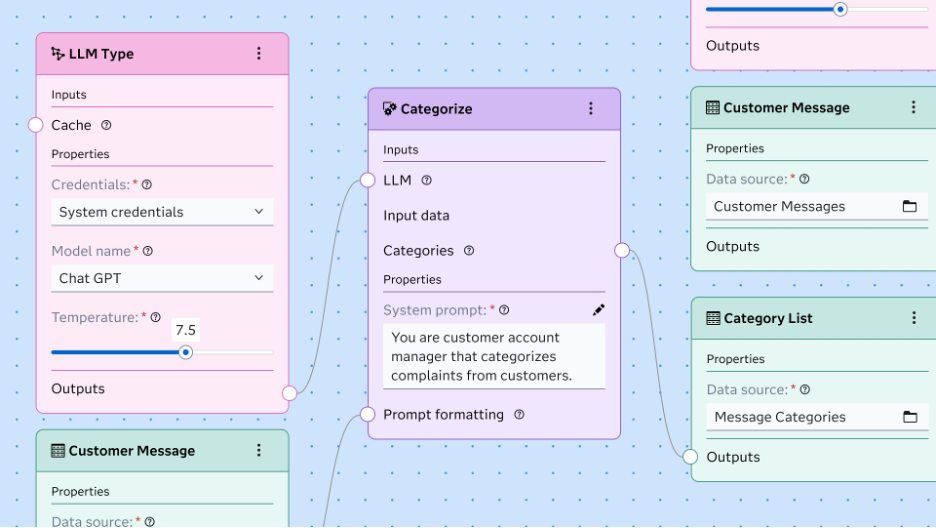
The world is changing, and so are our interfaces.
A few years ago, design was all about creating dashboards and filters that helped people make sense of complex data.
Today, we’re designing for agents that are not just “smart assistants” — they are collaborators that can make decisions, take initiative, and create on our behalf.
This shift changes everything about UX design.
At SAS, we have spent years bridging data science and human-centered design. We have been at the forefront of AI’s evolution from Statistics to Data Science to Machine Learning and now to Generative AI and Agentic Systems. And our work spans a wide range of industries and domains. Lately, though, one big question keeps coming up:
How do you design an experience for a system that thinks for itself?
Most of us have tried large language models (LLMs) in some form, like ChatGPT or Claude. They are impressive conversational bots, capable of drafting, explaining, and ideating, but their real power emerges when they are connected to tools and workflows that allow them to act.
New frameworks like Anthropic’s Model Context Protocol (MCP) and Google’s A2A (Agent-to-Agent) provide a standardized and unified way to connect LLMs with external tools to perform more complex tasks like triggering actions or making API calls.
The question is no longer “Can the agent perform this action?” but “Should it perform this action — and when?”
Is human intervention needed? If yes, then what does that interaction look like? What do we need to do to make it intuitive, trustworthy, and efficient? These are the questions we are exploring. In this article, I will address three design challenges we are seeing as we work with AI systems in enterprise contexts.
Context is Everything
Challenge: The first challenge is application context: maintaining continuity between what the agent “knows” and what the user expects it to know.
Traditional apps have clear, fixed boundaries — screens, menus, and structured flows — so you always know where you are. Agentic systems break from this model. They move fluidly between chat, visualizations, natural language, and even voice. Sometimes the user establishes the context; other times the system does. This makes clarity of context essential. In AI-driven experiences, maintaining and communicating that context becomes a central design challenge.
Let’s look at the different levels of context:
• No Context: A blank chat, starting fresh.
• In Context: The AI understands the current task or dataset. It uses only the information that is on the screen, in the conversation, or explicitly provided by the user right now.
• Adaptive Context: The sweet spot — the system remembers, adapts, and responds intelligently to what the user’s been doing. It adjusts itself based on history, user preferences, or prior interactions over time.
There are many moments where traditional rich user interfaces are simply faster and more efficient than describing actions in natural language. They help users fine-tune results, manage complex analytics, or handle niche productivity tasks. For instance, adjusting a generated image or refining an AI-created business workflow benefits from the extra layer of context a well-designed interface provides.
Without clear context cues, the user loses trust even if the system is technically brilliant. Humans will always respond better to visuals or multimodal responses than to plain text, and so there is an opportunity to design user experiences that combine the power of Agentic AI and the natural interaction of chat with the rich interfaces that we already use and love.
Designing for Creativity
Challenge: The next challenge is output creativity: finding the right balance between user control and AI creativity.
We have entered an era where our tools are no longer just functional, they are creative. Think of a workflow where the user begins with a structured tool, then asks an agent for ideation, and then steps back in for refinement. As these agents explore possibilities, they can discover solutions that humans may not have anticipated. That’s why we need systems that support that creative toolset and path choice. This interplay between predictable tools and responsive agents presents enormous potential, but it also adds complexity.
· How do you guide users through a process that can go in infinite directions?
· How do you visualize exploration without chaos?
These are some of the questions that designers need to consider while working on designs that stay reliable and yet leave room for exploration and inspiration.

Who is in Control?
Challenge: Every designer working with AI faces this tension: When should a human drive the system, and when should the system act autonomously?
We can think of control in three states:
- Out of the loop — automation runs on its own
- In the loop — user supervises each step
- On the loop — user oversees and steps in when needed
The more “creative” and autonomous the system becomes, the higher the need for human oversight. Even the most elegant AI needs guardrails not just for ethics and accuracy, but for user confidence. Traditional analytics tools remain valuable to build guardrails, especially in enterprise contexts where trust, compliance, and accountability are non-negotiable. We’ll need more thoughtful and transparent interfaces that keep users at the right level of awareness and control, no matter how independently the system operates.
Some Open Questions
While we’re making progress, several challenges remain:
Balancing traditional and prompt-based UIs As agentic systems evolve, agents may act as overseers, guiding users through analytic workflows; or they may function more like peers, collaborating on ideas or insights.
As large language models become more affordable and seamlessly integrated into tools, we will need to rethink what a user interface looks like. How do we strike the right balance between traditional structured UIs and prompt-driven, conversational input? And how easily can users move between these modes without losing context or confidence?
Finding these answers will require new design heuristics, usability testing, and experimentation to help us understand when to guide or automate.
Interacting with machines vs. humans The way we interact with technology is beginning to mirror the complexities and difficulties of communicating with people — and with that comes a new set of challenges.
As agentic systems take on more initiative, questions of responsibility, accountability, and approval start to blur. Who owns a decision when a machine contributes to it? How do we design experiences that make those boundaries visible and fair?
Natural language makes interaction intuitive, but it also brings ambiguity. Intent can be misread, tone can be misunderstood, and outcomes can be unpredictable. Designing for clarity in this new conversational space will be key to building trust between humans and their digital counterparts.
Automation fatigue As systems act on our behalf, how do we prevent user disengagement? It is likely that an agent will require something from a human, and the user might have to jump between many agents to keep everything moving forward. So, it will be very important to figure out how we can help users switch context without overwhelming or tiring them out.
Closing Thoughts
The evolution of agentic systems isn’t just a technical leap — it’s a design revolution. UX professionals must redefine familiar concepts like context, creativity, and control in a world where systems anticipate rather than merely respond.
Our goal remains timeless: build experiences that empower humans, not replace them.
*Adapted from UX Challenges in Agentic Systems by Rajiv Ramarajan
메타데이터
- post_id
- e6a8293c1160
- slug
- designing-for-the-age-of-agentic-systems-e6a8293c1160
- url
- https://medium.com/sas-software-design/designing-for-the-age-of-agentic-systems-e6a8293c1160
- canonical_url
- https://medium.com/sas-software-design/designing-for-the-age-of-agentic-systems-e6a8293c1160
- author_url
- https://medium.com/@pallavi.y.deshmukh
- status
- ok
- fetched_at
- 2026-06-14 11:28:49