How Agencies Use Productivity Tracking to Improve Client Delivery
Agencies today manage multiple clients, tight deadlines, remote teams, and constant project updates. While getting new clients is…
How Agencies Use Productivity Tracking to Improve Client Delivery
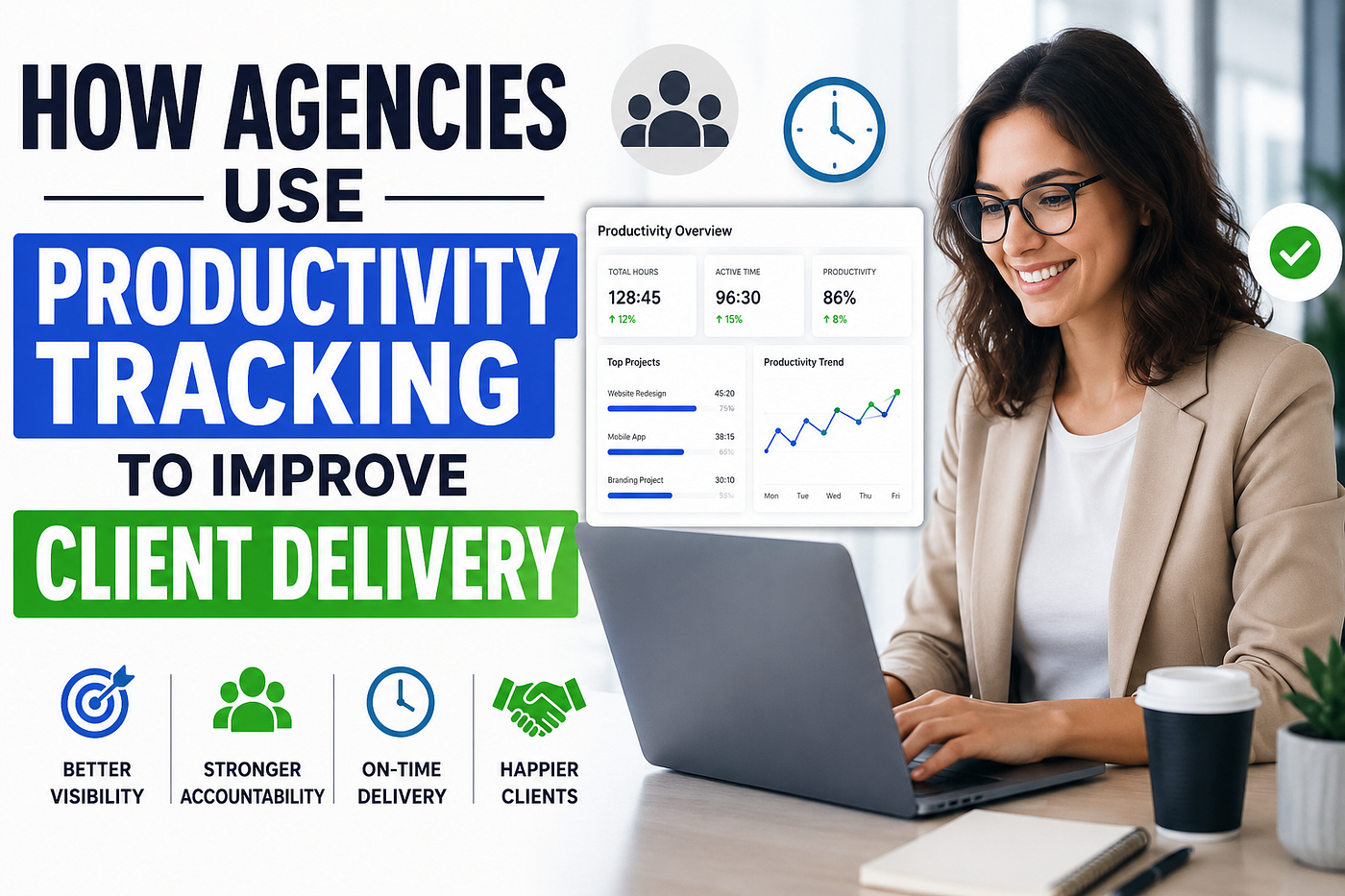
Agencies today manage multiple clients, tight deadlines, remote teams, and constant project updates. While getting new clients is important, the real challenge is delivering quality work on time without reducing team productivity.
Many agencies struggle with missed deadlines, delayed approvals, unclear work progress, and poor team visibility. This is why more businesses are now investing in productivity tracking solutions to improve operations and client satisfaction.
Using the right tracking system helps agencies stay organized, improve accountability, and deliver projects faster.
Why Client Delivery Often Slows Down
As agencies grow, project management becomes more complex. Teams work on multiple tasks at the same time, managers handle several clients, and communication gaps start affecting delivery.
Common problems agencies face include:
- Delayed project timelines
- Lack of visibility into team performance
- Unclear task ownership
- Missed billable hours
- Poor workload distribution
- Low accountability in remote teams
Without accurate productivity data, agencies often make decisions based on assumptions instead of real work insights.
This creates stress for both managers and clients.
How Productivity Tracking Helps Agencies Deliver Better Results
Modern **employee productivity tracking software** gives agencies real-time visibility into how teams work, how time is spent, and where projects slow down.
Instead of manually asking for updates, managers can easily monitor:
- Task progress
- Productive hours
- Idle time
- Attendance
- Team workloads
- Project timelines
This helps agencies identify issues early and improve project execution before delays affect clients.
The biggest advantage is better transparency across teams. Managers know who is overloaded, which tasks need attention, and how efficiently projects are moving forward.
Agencies using productivity tracking tools often see:
- Faster project delivery
- Better employee accountability
- Improved client communication
- Higher team efficiency
- Reduced operational waste
Better Visibility Creates Better Client Trust
Clients expect regular updates and on-time delivery. When agencies fail to provide visibility, trust slowly decreases.
Productivity tracking software allows agencies to generate accurate reports showing:
- Hours worked on projects
- Team productivity trends
- Task completion updates
- Resource utilization
- Project status in real time
This improves transparency and builds stronger client relationships.
Instead of vague progress discussions, agencies can provide data-backed updates that increase confidence and professionalism.
Why Agencies Are Replacing Manual Tracking Methods
Traditional spreadsheets and manual reporting consume time and often create errors. As agencies expand, these methods become difficult to manage.
This is where automated employee productivity tracking software becomes valuable.
Automation helps agencies:
- Reduce manual reporting work
- Track productivity automatically
- Improve workforce visibility
- Monitor remote employees efficiently
- Manage multiple projects easily
- Improve operational control
It also saves managers significant time by reducing the need for constant follow-ups.
Improving Team Productivity Without Micromanagement
One major concern agencies have is employee resistance to monitoring tools. However, modern productivity tracking platforms focus more on performance insights rather than invasive monitoring.
The goal is not micromanagement.
The goal is helping teams:
- Stay focused
- Improve workflow efficiency
- Balance workloads
- Avoid burnout
- Complete projects on time
When employees clearly understand priorities and managers have better visibility, overall collaboration improves naturally.
How Smart Agencies Improve Profitability
Productivity directly impacts profitability in agency businesses. Even small inefficiencies can reduce margins over time.
Tracking tools help agencies identify:
- Unproductive work hours
- Workflow bottlenecks
- Time-consuming tasks
- Underutilized resources
- Project delays before escalation
This allows agencies to optimize operations and improve resource planning.
Agencies that actively track productivity often improve both client retention and project profitability because they make decisions using real operational data instead of assumptions.
Platforms like Workstatus help agencies gain better visibility into workforce productivity, project progress, and team performance from one centralized platform.
Final Thoughts
Client delivery is one of the biggest growth factors for any agency. Delayed projects, poor communication, and productivity gaps can quickly impact client trust and long-term revenue.
That’s why agencies are increasingly using productivity tracking solutions to improve accountability, streamline operations, and maintain consistent project delivery.
With the right system in place, agencies can improve team efficiency, deliver projects faster, and create a better experience for both employees and clients.
메타데이터
- post_id
- e6da0aa36abf
- slug
- how-agencies-use-productivity-tracking-to-improve-client-delivery-e6da0aa36abf
- url
- https://medium.com/@johnwicked43200/how-agencies-use-productivity-tracking-to-improve-client-delivery-e6da0aa36abf
- canonical_url
- https://medium.com/@johnwicked43200/how-agencies-use-productivity-tracking-to-improve-client-delivery-e6da0aa36abf
- author_url
- https://medium.com/@johnwicked43200
- status
- ok
- fetched_at
- 2026-07-27 11:43:05