AI Creation Needs Direction, Not More Outputs
Creating AI images and videos is easier than ever, but creating content that is truly usable remains harder. The focus of AI creation is…
AI Creation Needs Direction, Not More Outputs
Creating AI images and videos is easier than ever, but creating content that is truly usable remains harder. The focus of AI creation is shifting to creative direction, revision workflows, and production-ready content — and Pixmax is built for that shift.
Getting to the Right Version
The AI creative boom has changed what creators expect from their tools. A few years ago, the question was: Can AI make this? In 2026, AI can now generate a polished product image, a cinematic video clip, an ad concept, or a stylized character frame in minutes.
Now, a harder question has emerged: Is this the right version? Instead of needing more outputs, creators now need a clearer way to shape what is already close, fix what is not working, and turn a promising draft into something ready to use. This shift matters because the AI generated photos and videos are becoming part of the real creative process.
The New Standard for AI Content Creation
Early AI visual tools made creation feel effortless. A creator wrote a prompt, waited for the model to respond, and received a result that often looked impressive at first glance. That sense of surprise helped AI image and video generation spread quickly, but serious creative work rarely stops at the first output.
Now a TikTok ad needs to catch attention fast, show the product clearly, match the rhythm of the platform, and still feel true to the brand. When the hook feels weak or the framing misses the point, the real value lies in how easily the idea can be adjusted, tested, and refined.
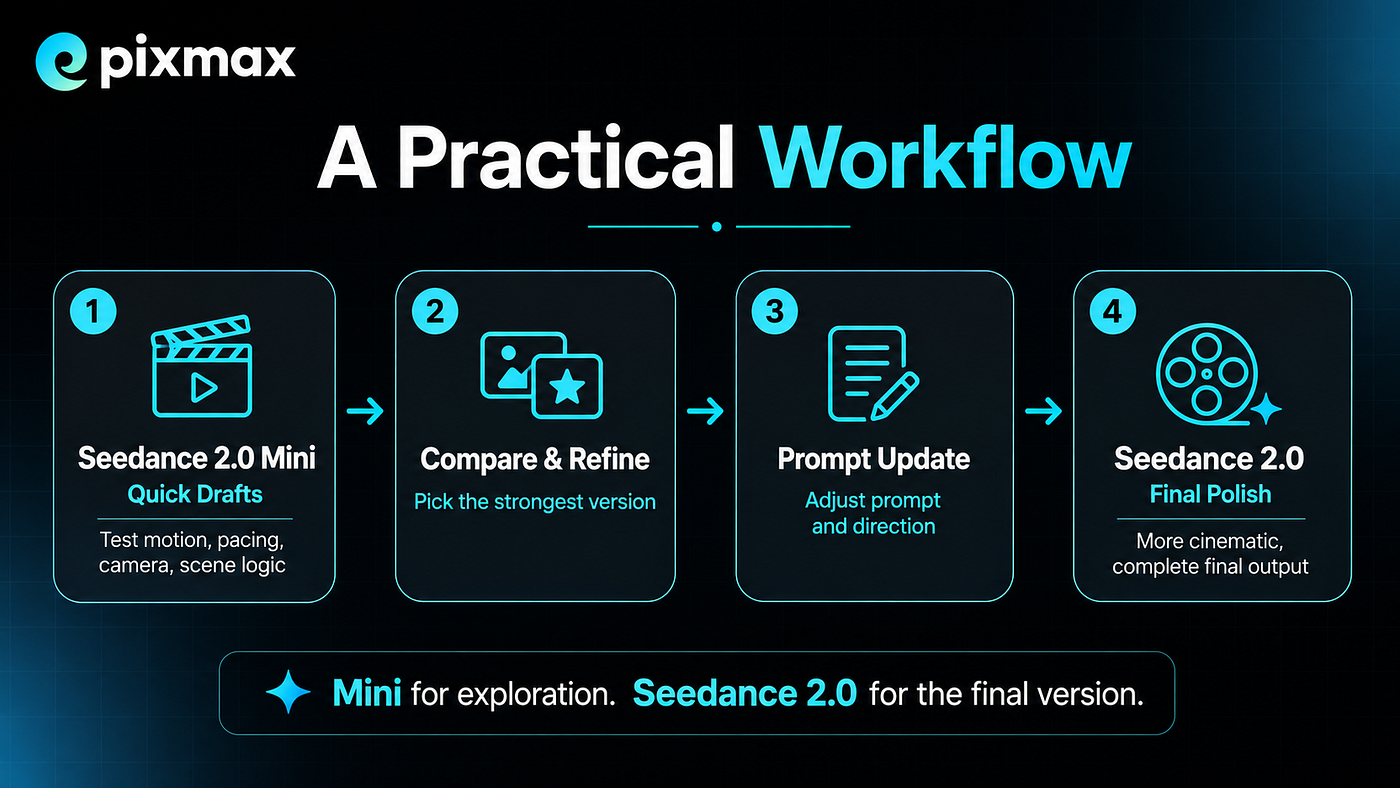
This is where AI creation is changing. The focus is shifting to building a workflow that helps creators shape the result they actually need.
The Source Image Becomes the Creative Anchor
Real creative workflows often begin with a visual anchor: a product photo, a mood board, or an existing asset. This reference gives the project a clear direction and keeps the visual language consistent as new images and videos are created.
Particularly critical for image-video tasks where a still frame might already perfectly capture the product angle and emotional tone, the true challenge lies in adding motion while preserving those valuable original elements.
As image-to-video workflows become more common, creators increasingly need tools like Pixmax that can build on an existing visual reference rather than starting over with every generation. The goal is the ability to explore motion and variations while preserving the original creative intent.
More Versions Can Create More Confusion
AI makes it very easy to create different versions, but having too many options often causes trouble during the review process. Teams might get thirty videos when they only asked for three. Instead of improving the final work, they waste time arguing about which direction to take, and the strongest direction gets buried.
The best approach focuses on creating versions that actually matter. Every new file should solve a specific problem, like fixing the lighting, changing the timing, or adjusting the format for different social media platforms.
AI creation is treated as one connected workspace in Pixmax. Images, videos, and templates all live in the same place. This setup fits how people actually work. It lets teams jump around, reuse old materials, and test small details without losing track of the main project.
Revision Is Where AI Becomes Production
In most creative work, a draft may capture part of the idea, but still need refinement before it becomes something a team can actually use. Creative teams are used to this back-and-forth process of reviewing and fixing.
Many AI tools still treat edits like a total restart. Users have to write a new prompt and hope the next try keeps the good parts while fixing the mistakes, which is not a workflow but a lottery with better graphics.
AI only becomes truly useful when creators can make changes without losing their original idea. When creators can compare versions, revisit earlier decisions, and build on work that already exists, content has a chance to improve through iteration rather than being discarded because one detail went wrong.
The Future Belongs to Directed Creativity
In 2026, the most successful creators will be the ones who understand what each asset is supposed to achieve, and how each version should move the project closer to that goal. These professionals can easily spot when a video lacks energy or when a product needs to be shown more clearly.
When everyone can create polished visuals, human judgment becomes the real advantage. The main difference between creators is no longer who can make things faster, but who can guide the AI to make content that is actually ready to be published.
Pixmax is built for this exact stage of AI content creation. It focuses on the moment after the first generation — when the result is close, but the creative work is not finished. This is when a creator has to figure out the next best move to finish the project.
The future of AI creation will be shaped by better decisions and stronger workflows. As generation becomes easier, the real value moves into direction, revision, and the ability to turn a promising draft into usable content.
The gap between generating content and finishing content is where most creative work still happens. As AI creation continues to evolve, we believe the tools that matter most will be the ones that help creators navigate that gap with greater clarity and control. That’s the direction we’re building toward at Pixmax.
메타데이터
- post_id
- e6dd39e59e2b
- slug
- ai-creation-needs-direction-not-more-outputs-e6dd39e59e2b
- url
- https://medium.com/@pixmax.ai1/ai-creation-needs-direction-not-more-outputs-e6dd39e59e2b
- canonical_url
- https://medium.com/@pixmax.ai1/ai-creation-needs-direction-not-more-outputs-e6dd39e59e2b
- author_url
- https://medium.com/@pixmax.ai1
- status
- ok
- fetched_at
- 2026-07-13 06:23:13