When Platform Access Is One-Sided: Lessons from a Rent App Experience
When payment apps are controlled entirely by one party, they stop being neutral tools — and can be weaponized in disputes. My experience…
When Platform Access Is One-Sided: Lessons from a Rent App Experience
When payment apps are controlled entirely by one party, they stop being neutral tools — and can be weaponized in disputes. My experience shows how this can happen, and why platforms need safeguards.
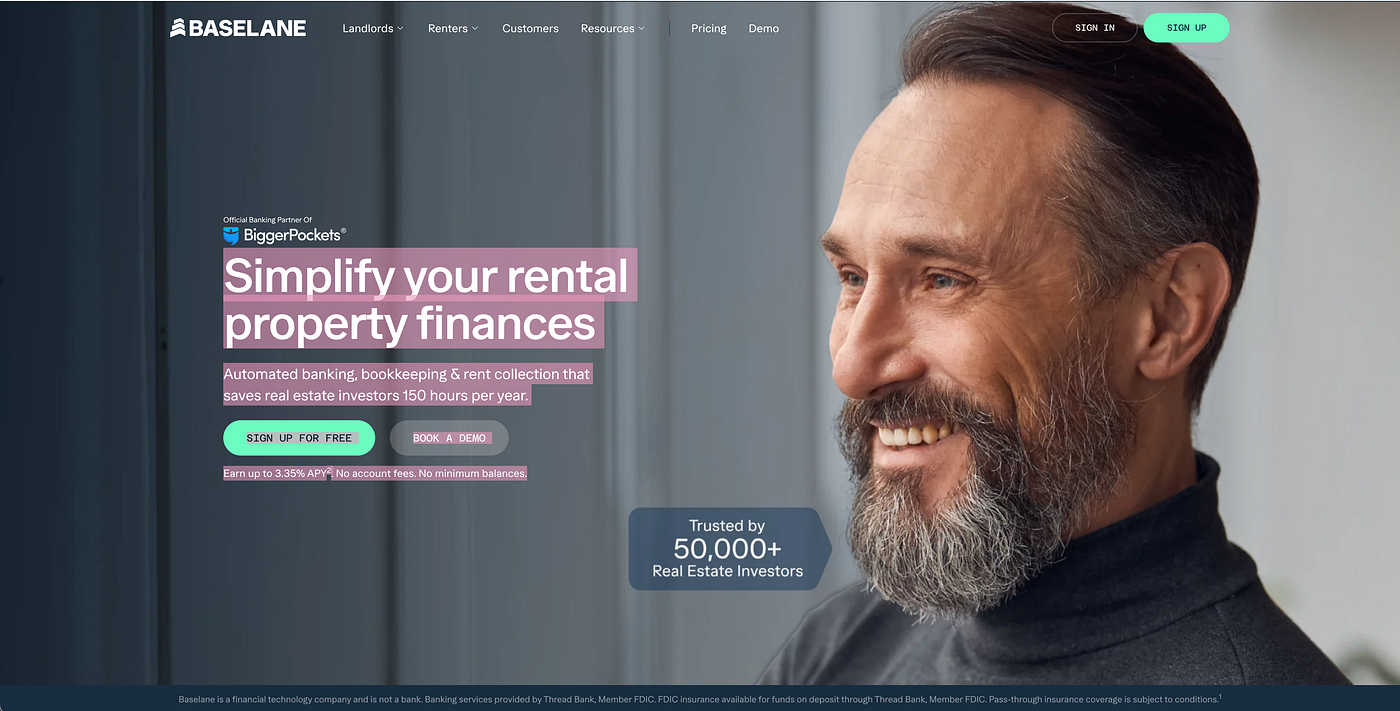
Baselane — a one-stop financial platform for landlords, offering “automated banking, bookkeeping & rent collection” with advertised APY and banking services through Thread Bank, Member FDIC. It’s more than a rent payment app; it’s an intermediary that also holds and moves money. (Homepage as of Aug 12, 2025)
Online rent platforms are built to streamline transactions between landlords and tenants. But when control over platform access is held exclusively by one party, key questions arise:
– How is access managed during disputes?
– What mechanisms ensure record continuity for all users?
– How can platforms protect both sides while remaining neutral?
These are issues I experienced on the rent payment platform **Baselane**.
Why This Matters
Payment apps should be neutral — a shared, verifiable ledger for both landlord and tenant.
When one side can remove the other without oversight, the platform stops being a safeguard and becomes a lever for abuse. This isn’t just my case; any landlord could exploit the same design gap in Baselane.
What happened
In one recent lease, rent payment was required via Baselane.


July 29—Baselane platform showing rental details and payment schedule.
Rent payments were completed timely through Baselane each month.


July 29 — Baselane platform showing payment history and invoice details for paid rent.
Abruptly through the lease term, access to platform payment was unexpectedly revoked — without notification, explanation, or preservation of records on the tenant side.

August 8—Lease no longer shown on Baselane portal. No notification. No alert. Discovered 8/8 6:43 AM.
Platform records on payment history and lease schedule, previously available as shown, were now purged.


Aug 11 — Baselane portal no longer showing payment history or rental unit details. “Archived Lease” but no archived section in platform.
This raised several concerns around data access, documentation continuity, and dispute neutrality.
Notably, landlord is a senior executive — Managing Director— at **Thomvest Ventures, which publicly lists Baselane** in its portfolio of investments.


Baselane listed in Thomvest’s homepage and portfolio: (1) homepage view showing Baselane, (2) portfolio page listing Baselane, and (3) portfolio entry with description and link to Baselane’s website.
Why This is a Platform Problem
In the above case, the removal transpired in the midst of a tenancy dispute.
Platform Baselane declined to provide reasoning nor demonstrate accountability on the abrupt removal.

Baselane support confirming the matter is “between tenants and landlords.” Names and case details redacted; timestamp visible.
Support stated that disputes were “between tenants and landlords”, but confirmed that Baselane “maintain a record of all transactions” — which remain inaccssible to me.
Baselane’s system design contains obvious loopholes:
- No verification step — No proof of legal lease termination is required.
- No preservation of records — Removal deletes tenant access to payment history. Baselane confirmed it maintains transaction records, but my own remain inaccessible.
- No notice — The removal is immediate, with no alert.

No notifications for lease removal — 9 of the last 11 communications were marketing and sales, and 2 were payment confirmations. None alerted me to the unannounced, unexplained, and unilateral removal.
The Design Flaw
If a payment platform only requires one party’s unilaterl action to add or remove the other transacting party, with no checks or safeguards, it’s not a neutral ledger — it’s a one-sided tool.
The above case reveals multiple vulnerabilities in Baselane’s current setup:
- Requires no proof of lease termination for Baselane removal.
- Allows removals during active disputes.
- Erases tenant transaction history immediately.
- Provides no notice of removal to tenants.
- Enables potential misuse through false “non-payment” narratives.
- Allows unrelated transactions to be processed as “rent” when no lease is required for invitation or removal.
Access changes in financial platforms — especially those used for regulated transactions like rent — should involve verification steps and notice to all parties. Removing a user during an unresolved dispute creates potential risk for both sides and undermines confidence in the platform’s neutrality.
How to Fix It
The following flaws aren’t unique to Baselane — they represent common design gaps in platform governance and user safeguards. Luckily, they are solvable.
Recommended Safeguards:
- Require documented contract termination — such as a lease — before removing user access to payment tools tied to long-term financial obligations.
- Require documented contract termination — such as a lease — before removing user access to payment tools tied to long-term obligations.
- Trigger automated alerts on any account status or financial obligation change — this is non-negotiable for platforms serving as financial intermediaries.
- Implement verified checks before altering user access or payment visibility during any ongoing dispute.
This is broadly relevant beyond rent platforms.
Any intermediary facilitating recurring payments for ongoing contracts — subscriptions, leases, or shared services — must distinguish itself from one-time transactional platforms.
If Uber is a single ride, and Amazon a single purchase, Baselane and its peers are managing financial infrastructure.
With that comes higher responsibility: for transparency, for record integrity, and for procedural fairness.
Closing the Loophole
Platforms that mediate value between two parties must ensure procedural neutrality. If one party can alter access, payment history, or records without verification or mutual transparency, the platform becomes an agent — not a neutral intermediary.
Baselane’s current structure creates a dangerous precedent, not just for tenants, but for any party using a platform where access controls are unilaterally designed.
Every rent payment platform acting as a financial intermediary must recognize the inherent power imbalance when one party controls access. Without safeguards, that imbalance becomes a vulnerability. These platforms have a responsibility to implement verification and record-preservation policies — not just to protect transactions, but to protect trust.
— If you’ve experienced something similar, or work in similar platform intermediary technology, I’d like to hear your perspective.
메타데이터
- post_id
- e6f09f6723cd
- slug
- when-a-landlord-can-delete-you-from-your-rent-app-a-tenants-cautionary-tale-e6f09f6723cd
- url
- https://medium.com/@clint-c/when-a-landlord-can-delete-you-from-your-rent-app-a-tenants-cautionary-tale-e6f09f6723cd
- canonical_url
- https://medium.com/@clint-c/when-a-landlord-can-delete-you-from-your-rent-app-a-tenants-cautionary-tale-e6f09f6723cd
- author_url
- https://medium.com/@clint-c
- status
- ok
- fetched_at
- 2026-06-24 23:31:39